Monsoon Storm Damage Repair
Monsoon storm damage repair in Phoenix: we tarp, document and fix roofs hit by microbursts, haboobs and flying debris. Call (602) 878-3594.
Learn moreRoof Repair
Tile Roofing
Flat & Foam Roofing
Shingle & Metal Roofing
Replacement & Inspections
Solar, Vents & Extras
Phoenix neighborhoods
Valley cities
Counties
Desert Roof Guide
Monsoon wind, hail and falling branches can damage a Valley roof in minutes. Here is how a typical homeowner's roof claim moves from the first photo to the finished repair.
By Lamar Baskin, Desert Roof Guide EditorUpdated October 13, 20266 min read
The short version
A typical Arizona roof claim follows a clear order: photograph the damage, take reasonable steps to prevent more damage, report the claim to your insurer, meet the adjuster, review the scope of loss, then schedule repairs. Your payout usually reflects your deductible and, on many policies, depreciation. Your own policy and your insurer decide what is covered. This guide explains the process, not your rights or your policy.
We are roofers, not lawyers, public adjusters or insurance agents. We can tell you what storm damage looks like on a Valley roof, how to protect your home, and what an adjuster typically looks for on a roof. We can't tell you what your policy covers, whether a claim is worth filing, or how much you will be paid. Your homeowner's policy and your insurer decide coverage, and only your policy documents and your agent or insurer can answer those questions.
With that said, the general process is similar from company to company, and knowing it ahead of time makes a stressful week a lot easier. Here it is in the order most homeowners experience it.
Photos and video are the foundation of any claim. Start inside: ceiling stains, dripping water, wet insulation, damaged belongings. Then go outside and shoot the roof from the ground, along with anything in the yard that came off it, such as tile pieces, shingles, flashing or chunks of foam. Note the date and time of the storm and what you saw, like hail size, wind direction or a tree limb coming down.
Don't climb on a wet or damaged roof to get better pictures. A roofer can document the roof surface safely, and photos from someone who knows what storm damage looks like often carry more detail. Keep everything in one folder on your phone or computer so it is easy to share later.
Most policies expect homeowners to take reasonable steps to protect their property from further damage after a loss. In practice that means getting water stopped. A tarp over a damaged slope, a temporary patch on a punctured foam roof, or clearing a clogged scupper that is backing water into the house all count as mitigation.
Keep receipts for tarps, buckets, fans, and any emergency service you pay for, and photograph the temporary repairs. Don't rush into permanent repairs before the adjuster has seen the damage unless your insurer tells you to, since that can make the loss harder to evaluate. Our emergency dry-in service documents the condition of the roof before and after the temporary work, which gives you a clean record.
Call your insurer or agent, or use their app or website, and report the loss. Have your policy number, the date of the storm, a short description of what happened and your photos ready. You will get a claim number. Write it down along with the name of anyone you speak with, and keep notes of every call, including the date and what was said.
Many policies have time limits for reporting a loss, so don't sit on it. Ask the insurer what happens next, whether they want any estimates from you, and when to expect the adjuster to reach out. If the storm hit a wide part of the Valley, adjusters may be busy for a while, and that is normal.
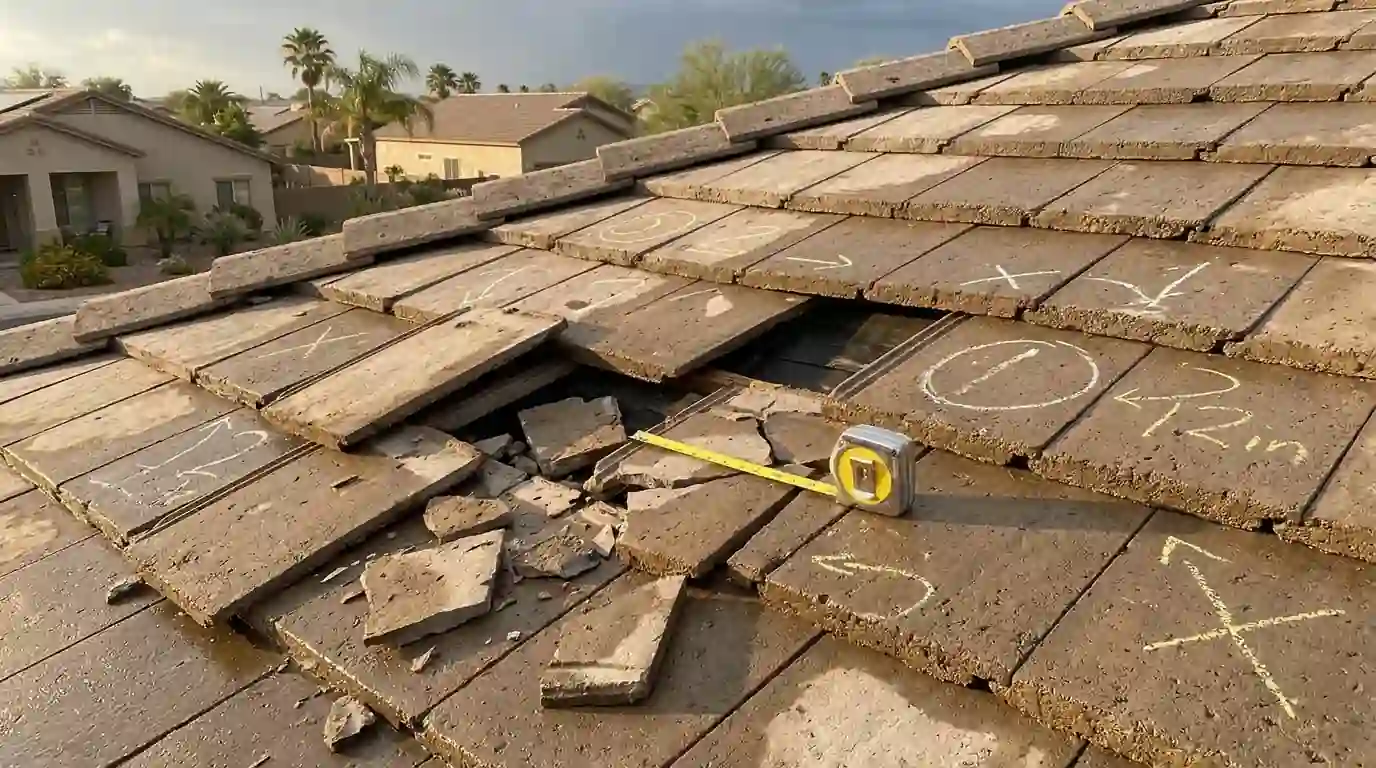
An adjuster, either an employee of the insurer or an independent adjuster working for them, will schedule a time to inspect the damage. They usually look at the roof, check the interior, and take their own photos and measurements. On tile roofs they will look for broken and displaced tiles; on shingle roofs, for creased, missing or bruised shingles; on flat roofs, for punctures, split seams and coating damage.
It often helps to have your roofer on site for the visit. The roofer can point out damage the adjuster might not see from a quick walk, explain how the roof is built, and answer technical questions. The adjuster still makes the insurer's determination. Our crew's role at that meeting is to show the roof clearly, not to argue coverage.
After the inspection, the insurer usually sends a scope of loss: a line-by-line list of what they agree to pay for, with quantities and prices. Compare it carefully to what your roofer found. Look for missing items like underlayment, flashing, ridge pieces, permit costs or the detach and reset of solar panels. If something seems missing, ask your insurer how to submit additional information.
Two numbers shape the check. Your deductible is the amount you pay before the policy pays; it is subtracted from the claim. Depreciation reflects the age and wear of the roof. On many policies the insurer first pays the actual cash value, which is the replacement cost minus depreciation, and may release the withheld depreciation later once the work is completed and documented. Other policies pay actual cash value only. Your policy wording decides which applies, so read it or ask your agent.
Once you know the scope, schedule the work. Make sure the repair estimate matches what the roof actually needs, not just what fits the scope, and talk with your insurer if the two don't line up. On tile roofs in Valley heat, damage often exposes older underlayment that was wearing out anyway, which can raise questions about what the storm caused versus normal aging. A clear, photo-backed estimate helps everyone sort that out.
Keep every invoice, completion photo and permit record, since the insurer may ask for them before releasing any remaining funds. If you are still in the middle of a leak, start with our guide to handling a leak tonight. When you are ready for an inspection after storm damage, our monsoon damage repair crews can document the roof and write up the repair. Call (602) 878-3594 any time, day or night.
A deductible is part of your agreement with your insurer, and it is your responsibility to pay it. Be cautious of anyone offering to cover or waive it. We price the repair honestly and leave the deductible between you and your insurer, as your policy describes.
That depends entirely on your policy and on the cause. Many policies distinguish sudden damage, like wind or hail, from gradual wear and aging. Only your insurer can determine coverage. A roofer can describe what caused the damage and what the roof needs, which helps you have that conversation.
It varies. After a widespread storm, adjusters may take longer to schedule visits, and back-and-forth on the scope can add time. A small, well-documented claim can move in a few weeks. Keep the roof protected while you wait, and keep notes of every contact with your insurer.
Monsoon storm damage repair in Phoenix: we tarp, document and fix roofs hit by microbursts, haboobs and flying debris. Call (602) 878-3594.
Learn moreHail damage roof repair in Phoenix: honest checks after a hailstorm, clear photos of real impacts, and repairs to tile, foam or shingle. Call us 24/7.
Learn moreWind damage roof repair in Phoenix: lifted tiles, torn shingles and peeled flat roof edges fixed and fastened to resist the next gust. Call (602) 878-3594.
Learn moreEmergency roof repair in Phoenix: a live person answers 24/7, and we tarp or seal the leak the same night when it is safe. Call (602) 878-3594.
Learn more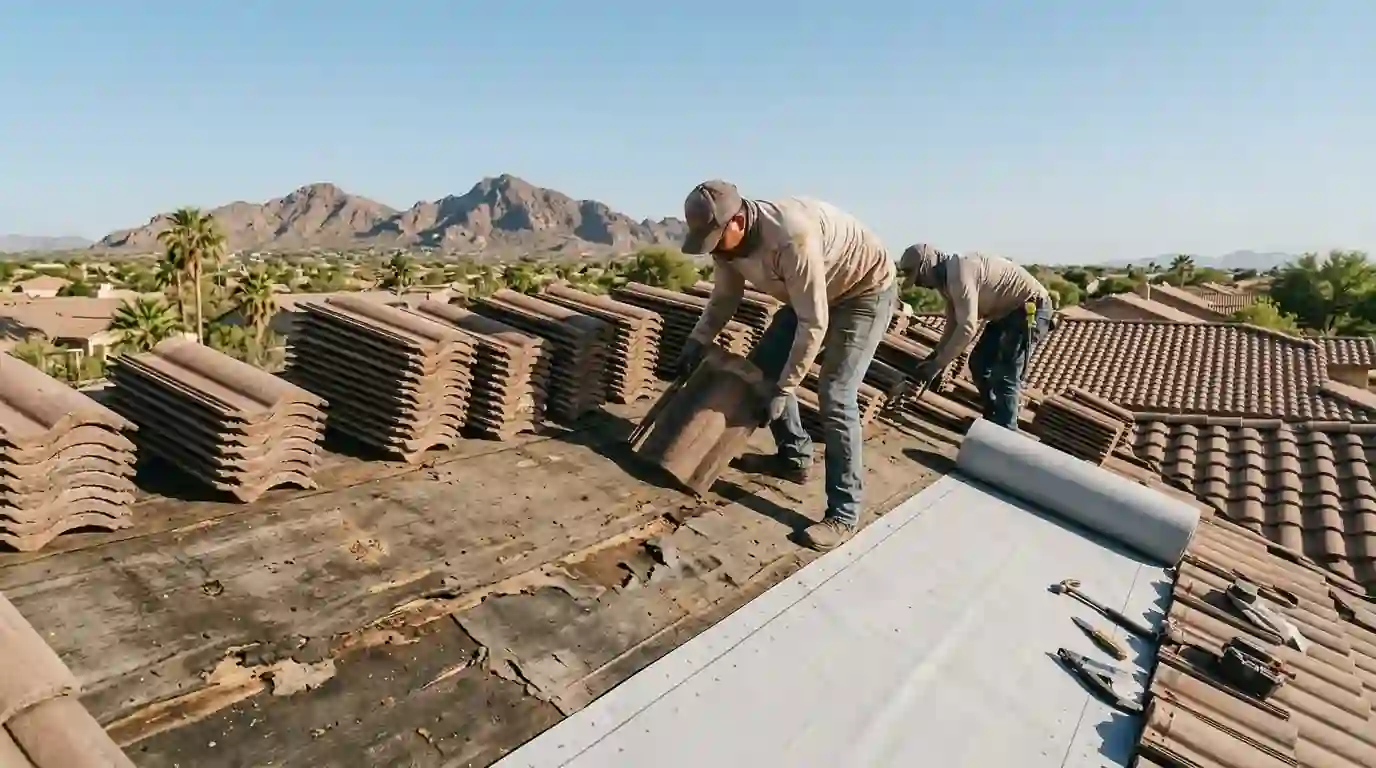
May 11, 2026
Concrete and clay tile can outlast the house, but the felt under it usually gives out around 20 to 25 years in Valley heat. Here's how to read the signs and plan ahead.
Read the guide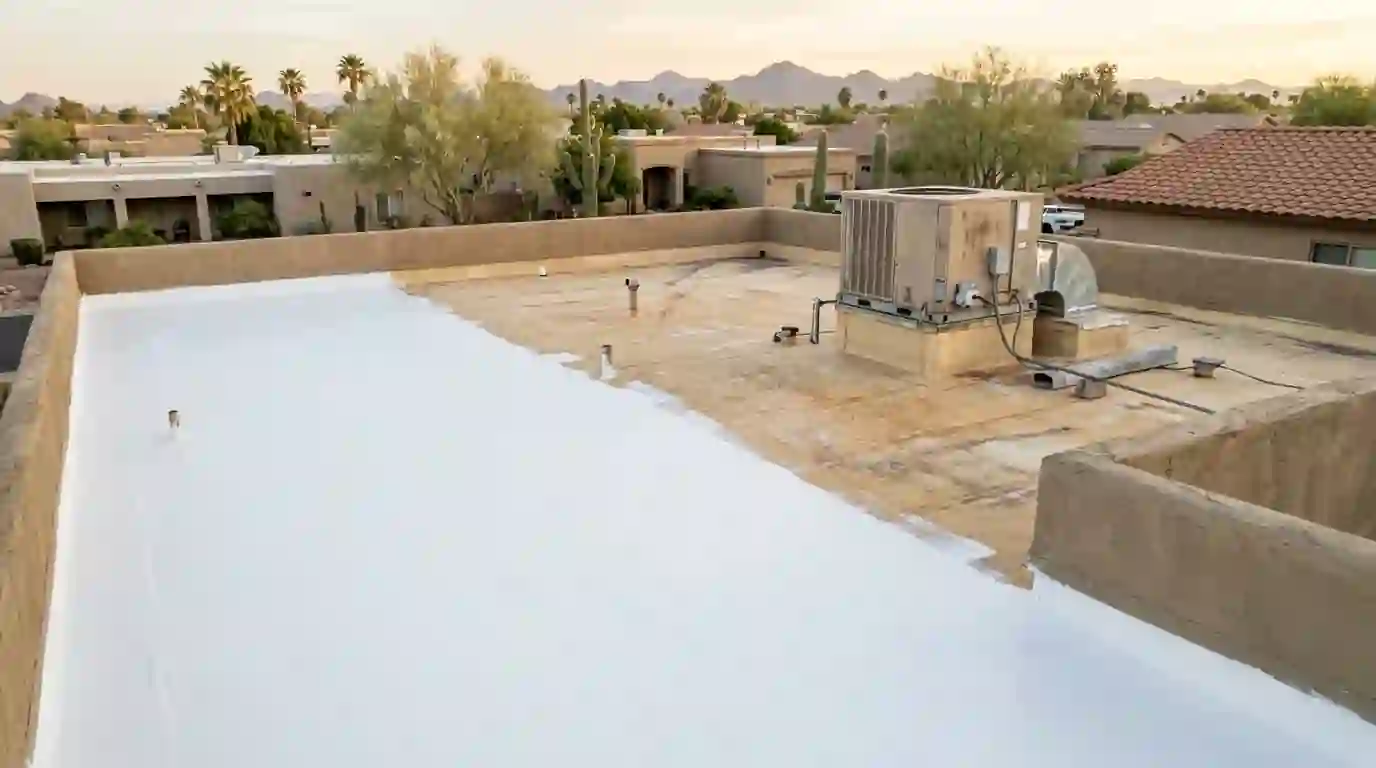
June 2, 2026
A foam roof can last decades in Phoenix, but only if its coating is renewed every 5 to 10 years. Here's how to read the surface and time the next recoat.
Read the guide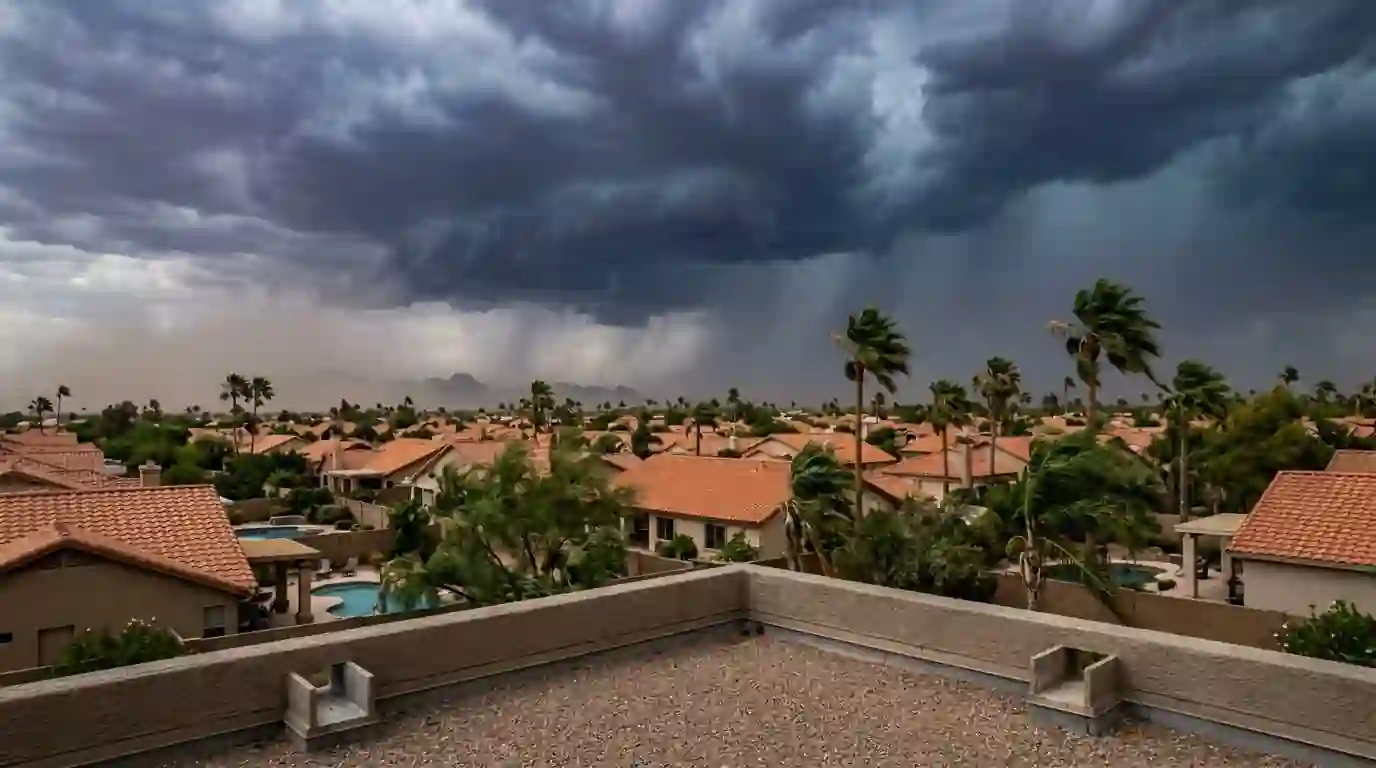
June 9, 2026
Monsoon storms bring wind, dust, hail and sudden downpours. This checklist covers what to look at on your roof before mid June and what to leave to a roofer.
Read the guideCall (602) 878-3594. We answer around the clock and can usually tell you over the phone whether it needs a visit.