Straw poking out under tiles
Twigs, grass and feathers hanging from the open curves at the bottom row mean a nest sits just inside the eave, often well up the slope.
Roof Repair
Tile Roofing
Flat & Foam Roofing
Shingle & Metal Roofing
Replacement & Inspections
Solar, Vents & Extras
Phoenix neighborhoods
Valley cities
Counties
Tile Roofing
Birds moving in under the bottom row of tile is one of the most common complaints on Valley tile roofs. We pull out the nests and debris, check the underlayment they've been sitting on, and close the eave with bird stop shaped to your tile profile.
Short answer
Bird stop, also called eave closure, is a formed strip installed along the eave of a tile roof that fills the open curves under the first course of tile. On many Phoenix homes it was skipped, damaged or knocked loose over the years. Fitting it closes the gaps pigeons and sparrows use to get under the tile, while weep openings still let water drain out at the edge.
Materials we install and repair across the Valley
Bird stop is preventive work, so the best time to add it is before nesting gets heavy. These are the clues that birds have already found a way in, or soon will.
Twigs, grass and feathers hanging from the open curves at the bottom row mean a nest sits just inside the eave, often well up the slope.
Steady early morning chirping or scratching right at the roof edge, rather than out in the trees, points to birds living under the tile.
White streaks on the wall or window sills under one stretch of eave show where birds come and go. They tend to use the same openings every day.
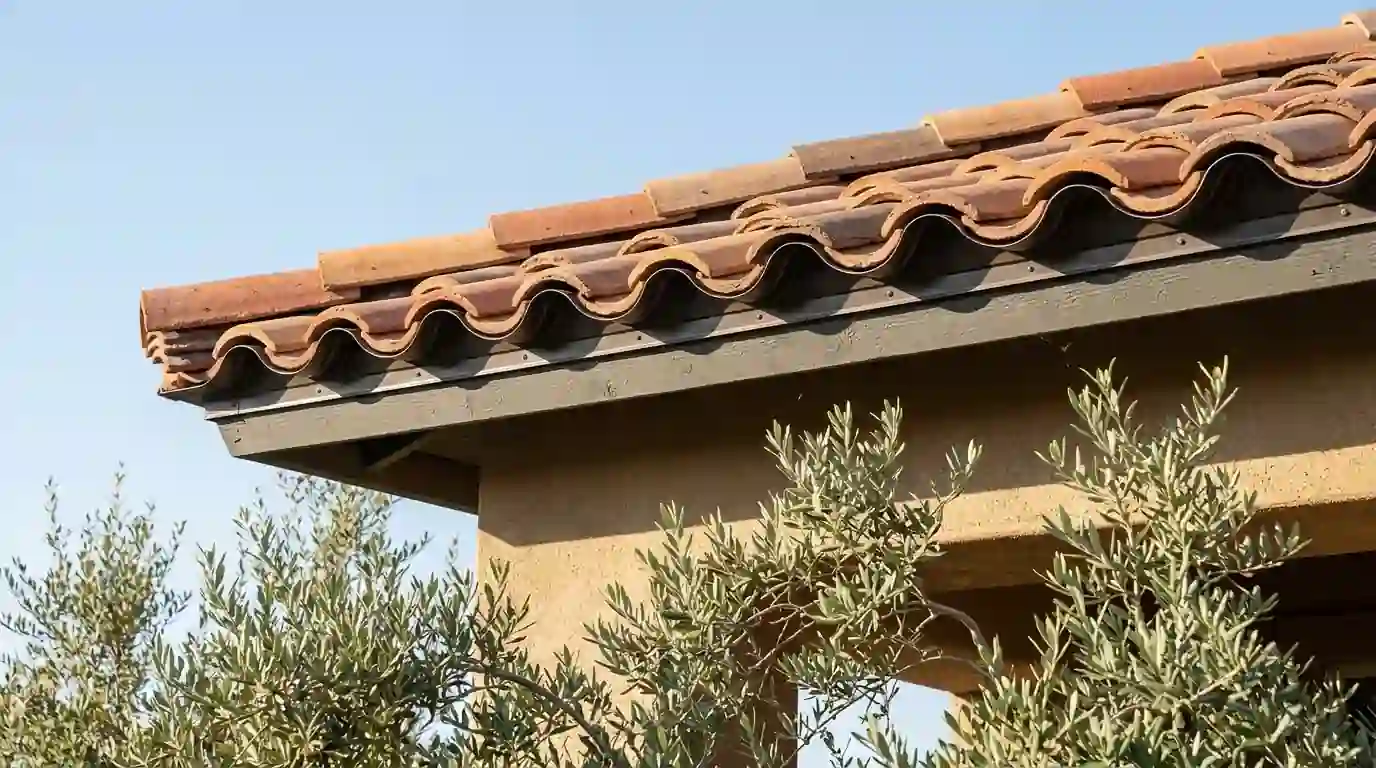
Stand back and look at the bottom row. If you can see a dark half-circle under each tile, there's no closure there, or it has fallen out.
Old metal bird stop gets bent by painters and ladders. A strip sagging away from the tile leaves openings big enough for a pigeon.
If underlayment is due or tiles are being reset anyway, adding bird stop during that job costs far less than a separate trip later on.
S-shaped and barrel-shaped tiles leave a hollow under each curve. At the eave, that hollow opens straight to the outside unless something closes it. To a sparrow or a rock pigeon, it's a shaded tunnel that stays cooler than the open air in the afternoon, sits up off the ground away from cats, and leads into a dry space on top of the underlayment. Once one pair nests there, others follow, and the same spots get used season after season.
The damage builds quietly. Nest material blocks the channels water uses to run off the underlayment, so monsoon rain backs up behind the debris instead of draining at the edge. Droppings are acidic and break down felt faster, and that paper is already the weak link in Valley heat, often wearing out around 20 to 25 years even while the tiles look fine. Mites and insects living in old nests can find their way into soffits and attics too. Our article on why pigeons get under the eaves covers the habits behind it.
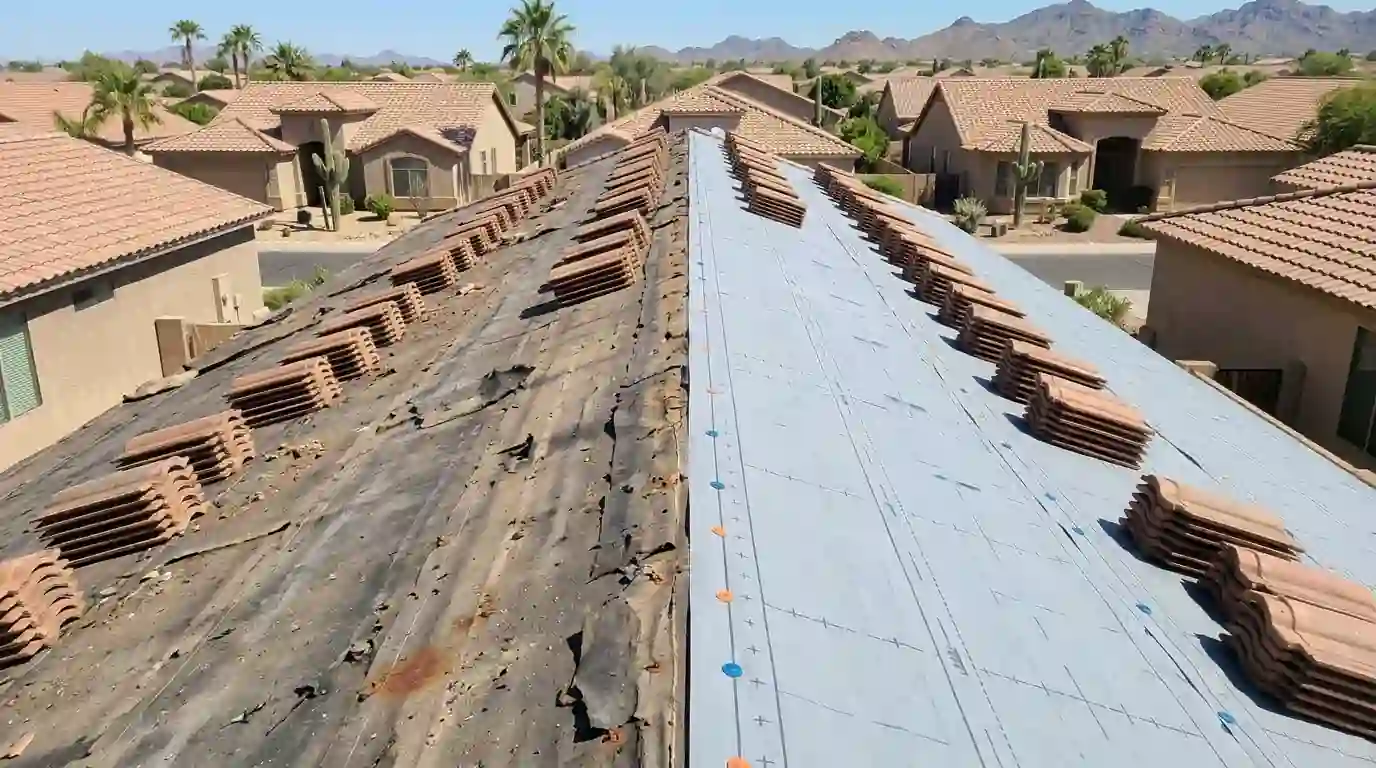
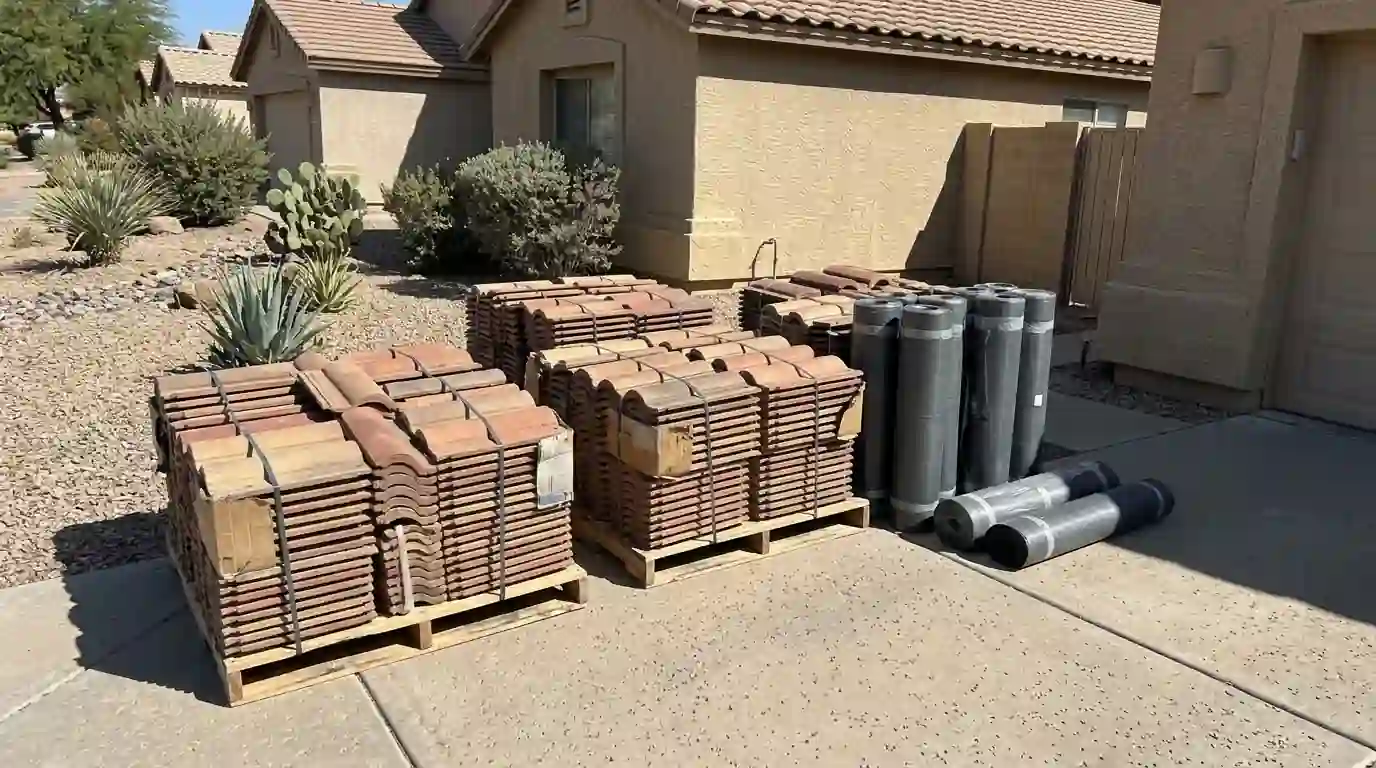
For tile work we source concrete tile from Eagle Roofing and Westlake Royal when a profile is still made, and we lay synthetic or two-ply underlayment from makers such as Polyglass under it.
Closing an eave over an active nest traps birds and debris inside, so cleanout always comes first. We lift the bottom row of tile along every affected run, pull nests and loose material out by hand, and reach as far up each channel as we can. Waste is dampened to keep dust down, bagged and taken off the property. Where nesting runs deep, the second course comes up too. Eggs or chicks change the timing, and we'll talk through options before disturbing an occupied nest.
With the tile up, we get a rare look at the underlayment along the roof edge. That's where water collects, and where nests sit. If the felt is brittle, torn or pitted by droppings, we patch it before relaying tile, or tell you plainly when the whole field is close to the end of its life. Cracked tiles at the eave are swapped for matching profiles, and our tile replacement crews keep spares on hand for the common Valley shapes.
Closure comes in a few forms. Pre-formed metal strips are cut to a specific tile profile, with tabs that fill each curve and weep holes that let water out. Other closures use a raised formed edge that sits against the tile without sealing the drainage path. Where gutters run along the eave, the closure has to work with the gutter so water still lands in it. We match the piece to your tile, whether it's a low flat concrete tile, a classic S tile or a tall barrel clay tile.
Color matters on HOA homes. Metal bird stop can be painted or ordered in a finish close to the tile, so the eave doesn't show a bright stripe of bare steel from the street. On older homes where the first course was set in mortar, we usually replace broken mortar with a matching closure rather than re-mortaring, since mortar cracks in Phoenix heat and lets birds back in. We also screen any gable vents or ridge gaps birds are using elsewhere, so they don't just move up the roof.
Both jobs keep pigeons out, but they close different spaces. Bird stop closes the open curves under the tile at the roof edge. Solar bird proofing closes the gap between an array and the roof surface, using mesh clipped to the panel frames. A roof with panels can need both, since birds pushed out from under the array often try the eave next, and the reverse happens just as often. If nesting is centered on the panels, mesh guards around the array are the right fix, and we can do both on one visit.
Spikes, gels and plastic predators get sold for the same problem, but none of them close an opening. Spikes on the eave edge stop perching, not birds walking into the tile channel just below. Gels lose their grip in summer sun, and decoy owls stop working within weeks. A closure fitted to the tile, with a clean roof edge, is what keeps the eave empty next nesting season.
Call (602) 878-3594 any time. Tell us where you see birds coming and going, the tile type, and whether there are gutters or solar panels on that side.
We look at every eave run, check for open curves and loose closure, and photograph nests, droppings and tile damage so you see what we see.
Bottom rows come up along affected runs. Nests and debris are removed by hand, dampened, bagged and hauled off, with channels cleared as far up as we can reach.
Torn or brittle felt at the edge gets patched, and cracked eave tiles are replaced with matching pieces before anything goes back down.
Closure matched to your tile profile is fastened along the eave, the tile is relaid over it, and weep openings are checked so water still drains.
We walk the yard and look up at every run for gaps, then send you photos of the cleaned channels and the finished eaves.
Typical range in the Phoenix area
$545 to $2,160
for most homes, cleanout and closure
Bird stop is priced mostly by the running foot of eave, plus the time it takes to clear out what the birds already built. A newer single-story home with light nesting on one side is a short job. A two-story home with years of nesting along every eave, plus felt repairs at the edge, takes much longer.
Ranges are typical figures for Valley homes, not a quote. We price your roof after we see it.
Most of our tile roof bird stop & eave closure calls come from these parts of the Valley. We also cover every other area on our service area list, from Anthem and Cave Creek down to Casa Grande.
Yes, the two names describe the same part: the piece along the bottom edge that fills the open curves under the first row of tile. Some builders call it an eave riser or eave closure, and roofers around the Valley often just say bird stop. Whatever the name, the job it does is the same.
Some tract homes got closure on the front elevation only, others none at all, depending on builder and year. On other homes it was bent or pulled out during gutter or paint work. Either way, it can be added without replacing the tile.
Not when it's the right kind. Proper closure has weep openings or a raised profile, so water running down the underlayment still drains out at the eave. That's one reason we don't pack the curves with mortar or spray foam. Blocking the drainage path completely can push water back under the tile in a heavy storm.
We work around nests with eggs or chicks rather than seal over them. Often that means closing the empty runs first, then returning to the occupied section once the young have left, so nothing gets sealed in.
Usually, yes. A gutter sits below the tile edge and doesn't close the curves under the first course, so birds walk in just above it. The gutter can also hide the openings from the ground, which is why nesting goes unnoticed. Closure goes on above it, and water still drains in.
Pigeons nesting under your solar panels in Phoenix? We clean out nests and droppings, then clip mesh to the panel frames with no drilling. Call us 24/7.
Learn moreCracked or missing roof tiles in Phoenix? We match the profile and color, replace single tiles and check the felt below. Call (602) 878-3594 day or night.
Learn moreTiles fine but the felt under them is shot? We lift and relay Phoenix tile roofs with new two-ply or synthetic underlayment. Call (602) 878-3594 any time.
Learn moreTile roof leaking or tiles slipping in Phoenix? We trace the leak to the underlayment, reset or swap tiles and seal it the same week. Call (602) 878-3594.
Learn moreCall us any hour. A real person answers, asks a few questions about your roof and sets up a visit.