Large, open commercial roofs
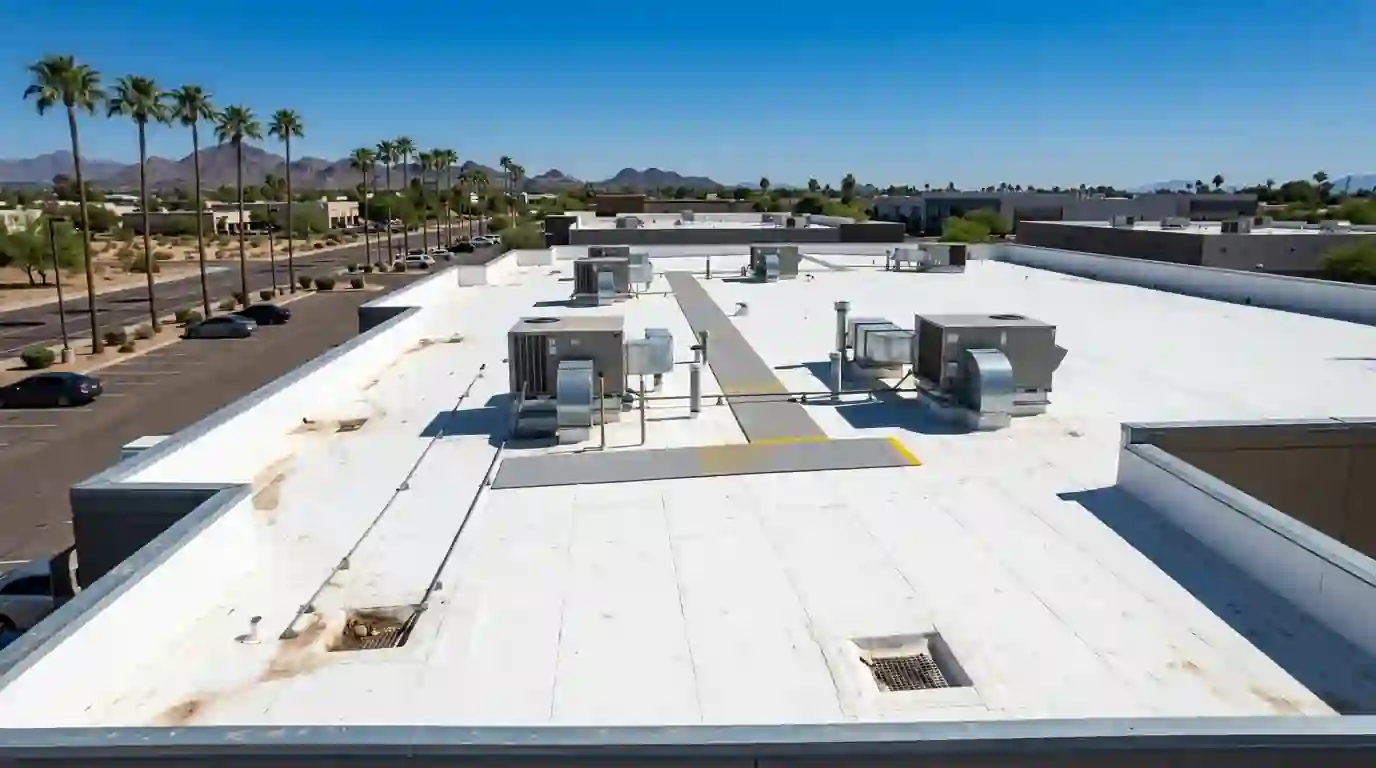
Warehouses, offices and retail buildings with wide, simple roof areas can be covered quickly and economically with large TPO sheets.
Roof Repair
Tile Roofing
Flat & Foam Roofing
Shingle & Metal Roofing
Replacement & Inspections
Solar, Vents & Extras
Phoenix neighborhoods
Valley cities
Counties
Flat & Foam Roofing
TPO is the bright white membrane you see across Valley warehouses, offices and shopping centers, and on a growing number of flat-roof homes. It reflects summer sun, welds into strong seams and goes on quickly over large areas. We install and repair TPO roofs throughout the Phoenix metro.
Short answer
TPO (thermoplastic polyolefin) is a single-ply roofing membrane, usually white, installed over insulation on low-slope roofs. Seams are welded with hot air so they fuse into one piece. In Phoenix, TPO's reflective surface helps keep roofs cooler, and it suits commercial buildings and some flat-roof homes. Proper insulation, seam welding and edge details decide how long it lasts in Valley heat and monsoon wind.
Materials we install and repair across the Valley
A TPO roof starts with the deck, then rigid insulation boards, often polyiso, fastened or adhered in place. Tapered boards build slope toward drains where the deck is dead flat. The TPO membrane is then rolled out over the insulation and either mechanically fastened along the seams, fully adhered with bonding adhesive, or in some cases ballasted. Each method suits different decks, wind exposures and budgets. Metal decks on older Valley warehouses usually take fasteners well, while lightweight concrete or gypsum decks may call for adhesive.
Seams are where TPO shines or fails. Our crews weld the overlaps with hot-air welders that melt the two sheets together into a single piece. Each seam is probed afterward to catch any gaps. Perimeter edges, parapets, curbs, drains and pipe penetrations get prefabricated or field-made flashings welded to the field membrane. Done right, the result is a continuous white roof with very few weak points.
Recover jobs follow a slightly different path. When an existing roof is dry and sound, we can lay a cover board over it and install TPO on top, which avoids the cost and mess of tearing off old layers on an occupied building. We confirm the deck can take the added weight and that the building has not already reached the limit on roof layers. For businesses that cannot shut down, recover work also keeps the interior dry and operating throughout the project, since the old roof stays in place as a second barrier until the new one is complete.
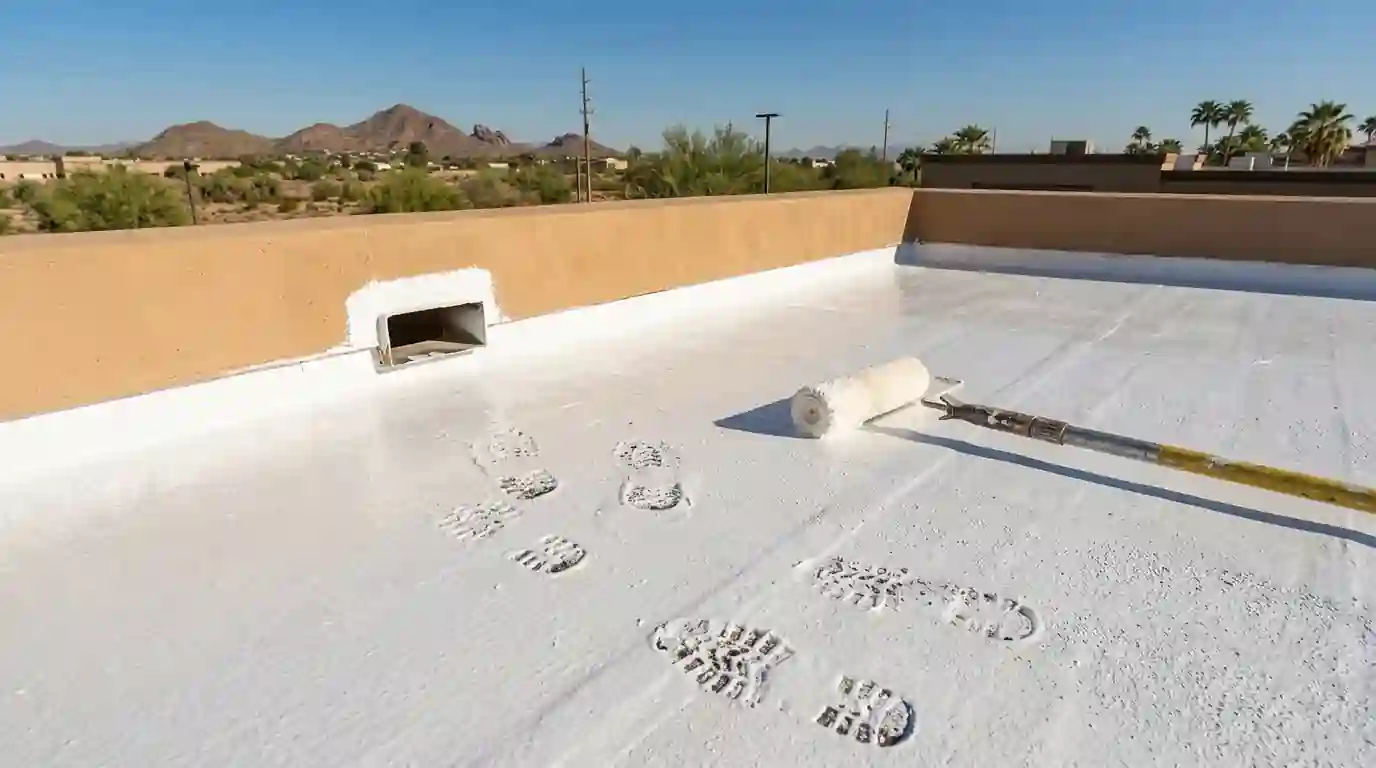
On flat and foam roofs we use coating systems from Gaco, Henry and Tremco, and single-ply membranes such as Carlisle TPO where a membrane is the better fit.
White TPO reflects a large share of sunlight, so the roof surface stays far cooler than dark asphalt systems on a July afternoon. That reduces heat load on the building and slows aging of the membrane itself. Thicker membranes resist UV and punctures better over time, and we usually recommend heavier sheets for Valley roofs that will see decades of sun. The price difference between a thin and a thick sheet is small next to the cost of an early replacement.
Monsoon gusts are the other test. Wind uplift pulls hardest on corners and perimeters, and mechanically fastened TPO needs the right fastener pattern there. Fully adhered systems resist flutter well. We also check that edge metal, parapet caps and coping are secured, since a loose edge lets wind get under the membrane. After a big storm, a quick look at corners and edges costs little, and our wind damage repair service handles anything that lifted.
Most TPO repairs involve punctures from dropped tools or debris, seams opened by poor original welds, and flashing failures at curbs. Because TPO is thermoplastic, clean, sound membrane can be welded to with new patches, which makes repairs strong and long lasting. Very old or heavily weathered TPO can be harder to weld, and in that case we use compatible primers and tapes or discuss restoration options like silicone restoration coating on a dry roof.
Solar arrays sit well on TPO when the mounts are designed and flashed for single-ply roofs. We coordinate with installers so attachments are flashed with TPO details rather than generic sealants. Keeping drains clear, limiting foot traffic to walkway pads, and checking seams before monsoon season covers most maintenance. Tenants and vendors who go on the roof should know where the pads are and what not to drop. Building owners managing several properties can pair this with our scheduled roof maintenance plans so nothing gets missed between storms.
TPO works best on certain buildings and certain budgets. These are the projects where we usually recommend it.
Warehouses, offices and retail buildings with wide, simple roof areas can be covered quickly and economically with large TPO sheets.
TPO comes white from the factory, so you get reflectivity without needing a coating, which keeps summer roof temperatures far lower than dark membranes.
Contemporary Valley homes with clean flat rooflines often use TPO for its smooth look and good performance under solar arrays.
Older single-ply, built-up or mod bit roofs on commercial buildings are often replaced with TPO for a fresh reflective surface.
TPO goes over rigid insulation boards, which is a chance to raise the roof's insulation level and build slope at the same time.
Typical range in the Phoenix area
$7.35 to $12.60
per sq ft installed with insulation
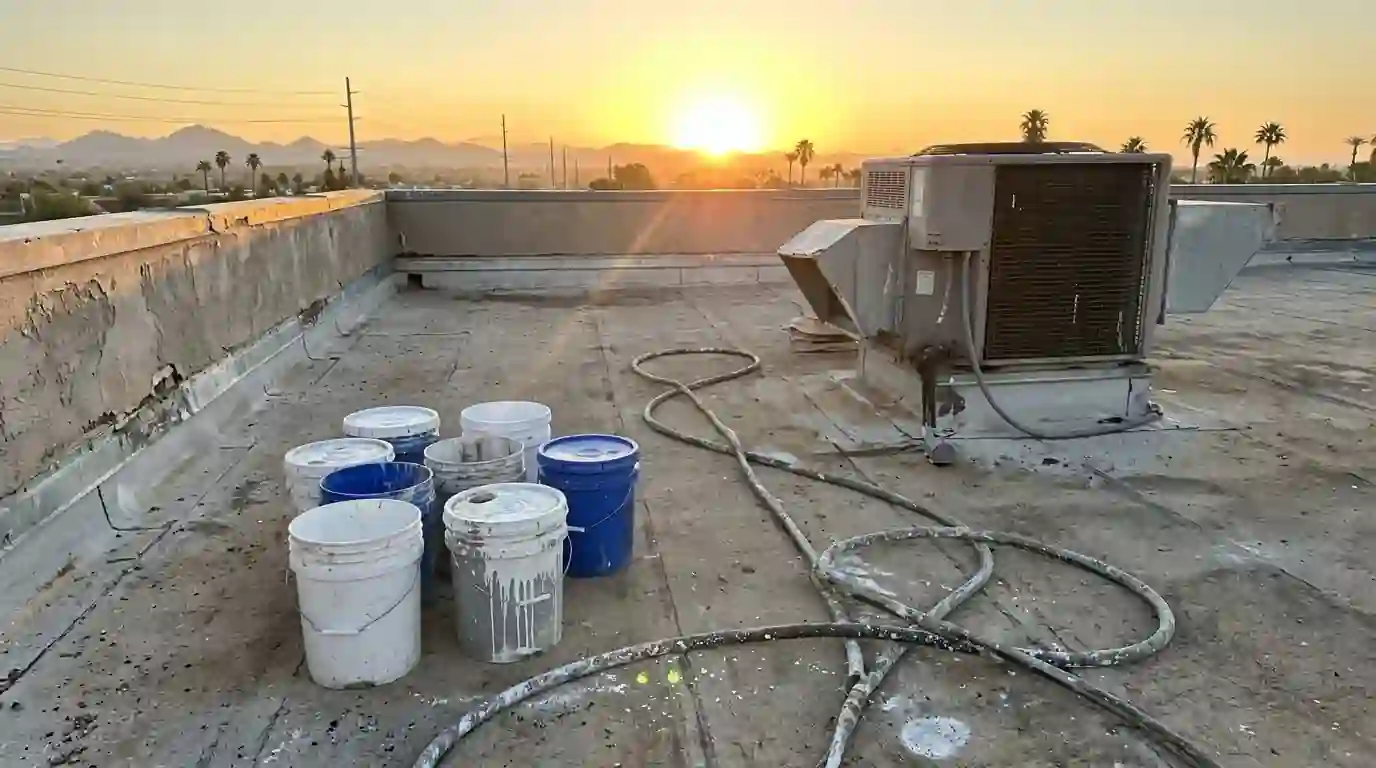
TPO is one of the most cost-effective systems for large flat roofs, and price per square foot falls as roof size grows. The biggest variables are tear-off, insulation thickness and membrane thickness. These ranges reflect typical 2026 Valley commercial and residential projects.
Ranges are typical figures for Valley homes, not a quote. We price your roof after we see it.
Phone (602) 878-3594. Tell us the building type, roof size, current roofing and any leak history so we can plan the site visit.
We measure, cut cores to check existing layers and moisture, inspect drains and edges, and note equipment and solar that will need work around.
You get a written scope covering tear-off or recover, insulation thickness, membrane thickness, attachment method and edge details, with pricing.
Old roofing comes off or is prepared for recover, the deck is repaired, and insulation and tapered boards go down to set drainage.
TPO sheets are rolled out, fastened or adhered, and every seam is hot-air welded and probed. Flashings at curbs, walls and drains are welded in.
We inspect seams and edges, water-test drains, clean the site and provide product details and photos for the building's records.
Most of our tpo roofing calls come from these parts of the Valley. We also cover every other area on our service area list, from Anthem and Cave Creek down to Casa Grande.
A well-installed TPO roof commonly lasts around 15 to 25 years here, depending on membrane thickness, installation quality, foot traffic and maintenance. Thicker membranes and fully adhered systems tend to hold up longer under intense Valley sun.
It can be, especially on modern flat-roof homes or where a smooth white surface is wanted under solar panels. Foam is often a better fit on older parapet homes with ponding and many penetrations. We compare both for your house.
Sometimes. If the existing roof is dry, well attached and code limits on layers allow it, TPO can go over it with a cover board. We take core samples to check for moisture before recommending a recover.
It gets dusty, like any roof here, which lowers reflectivity somewhat. Rain and periodic cleaning restore much of it. Even dusty, white TPO runs far cooler than dark roofing on summer afternoons, and a gentle wash after haboob season helps.
We clean the area, prep the membrane, then hot-air weld a new TPO patch with rounded corners over the puncture. On older membrane we may use a primer or compatible tape. Welded patches become part of the roof rather than sitting on top.
Commercial roofing in Phoenix: TPO, foam and coatings for flat roofs, rooftop unit flashing and repairs scheduled around your business. Call us 24/7.
Learn moreReplacing a worn flat roof in Phoenix? We compare foam, TPO, mod bit and built-up for your home, fix slope and drains, then rebuild. Call (602) 878-3594.
Learn moreSilicone roof coating for Phoenix flat roofs that pond or bake: holds up to standing water and UV over foam, TPO and metal. Call (602) 878-3594 any hour.
Learn moreModified bitumen roofing for Phoenix flat roofs: tough layered membrane, reflective cap and no-flame options. Call (602) 878-3594 any day.
Learn moreCall us any hour. A real person answers, asks a few questions about your roof and sets up a visit.