Cracks after an AC service
HVAC technicians walk straight to the rooftop unit and often step on the tile middles. A trail of cracked tiles along that route is very common.
Roof Repair
Tile Roofing
Flat & Foam Roofing
Shingle & Metal Roofing
Replacement & Inspections
Solar, Vents & Extras
Phoenix neighborhoods
Valley cities
Counties
Tile Roofing
A handful of cracked tiles does not mean you need a new roof. It means you need the right replacement tiles, set correctly, with a quick look at the layer underneath. We source matching tile for Phoenix homes and swap broken pieces without disturbing the rest of the roof.
Short answer
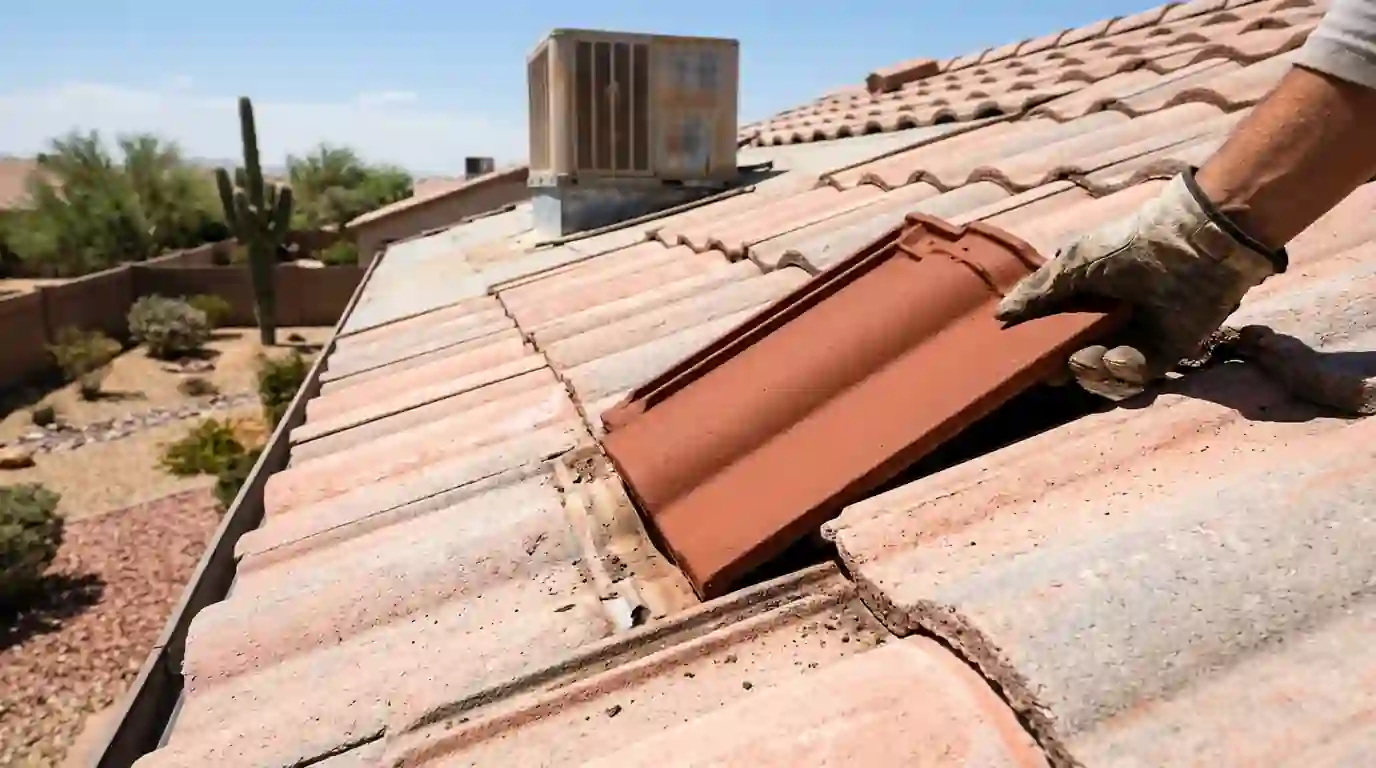
Replacing a broken roof tile in Phoenix means identifying the manufacturer and profile, sourcing a matching tile, sliding out the broken piece and its neighbors, checking the underlayment, and fastening the new tile so it locks into the course. Most homes need anywhere from a few to a few dozen tiles. When a color is discontinued, we can borrow tiles from a hidden slope to keep visible faces uniform.
Materials we install and repair across the Valley
The back of most concrete tiles carries a stamp with the manufacturer and sometimes the plant and year. We pull a broken piece, read that stamp, and identify the profile: flat, low S, high S or barrel. Profile matters more than color, because a tile with a different curve will not interlock with its neighbors and will leave gaps that let in rain and nesting birds.
Color is the harder part. Many Valley neighborhoods were roofed with blends that have since been discontinued, and tiles fade differently depending on which way the slope faces. When a current product matches, we use it. When it does not, we look for salvage stock from other roofs, or we take tiles from a back slope or under a patio cover and put the new ones there, so the faces the street sees still match.
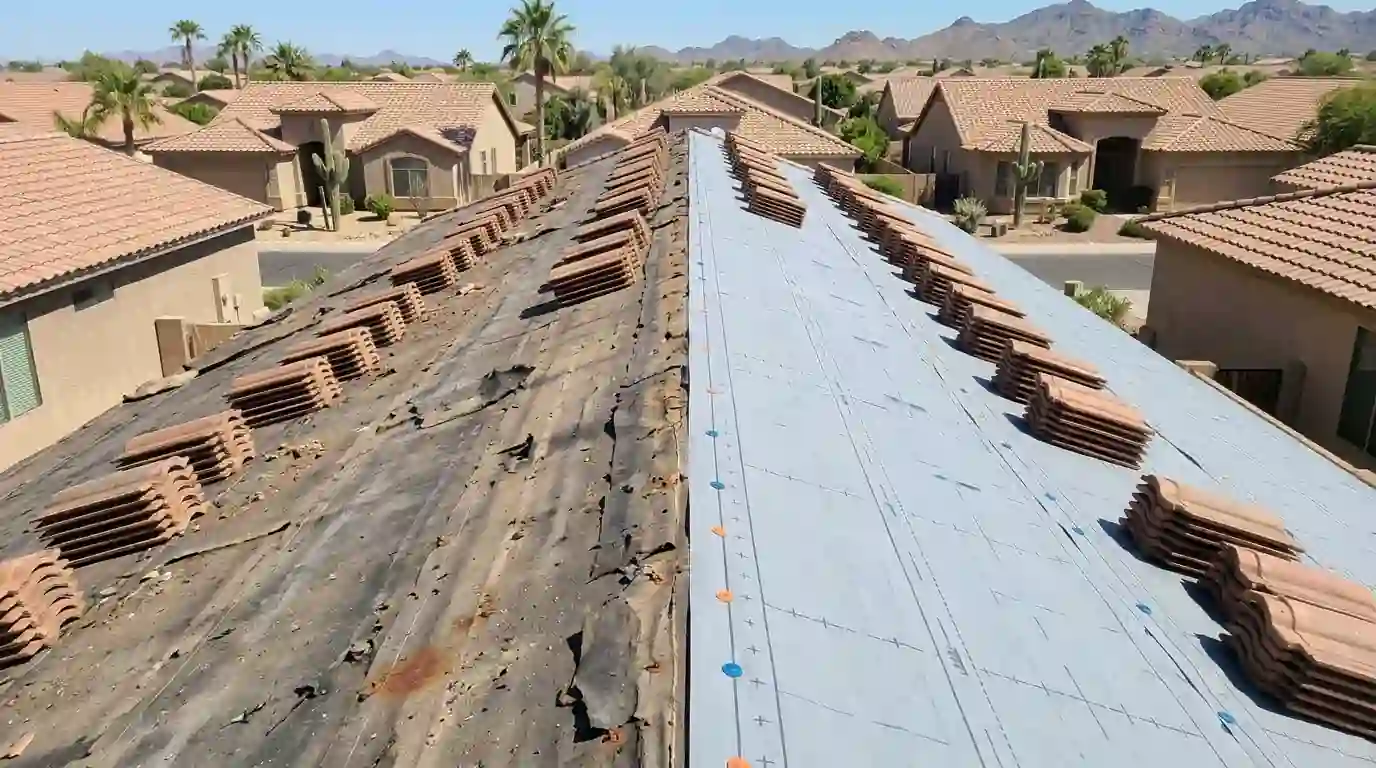
For tile work we source concrete tile from Eagle Roofing and Westlake Royal when a profile is still made, and we lay synthetic or two-ply underlayment from makers such as Polyglass under it.
Concrete tiles interlock along the sides and overlap the course below. To get a broken one out, we gently lift the tiles above it with wedges, cut or pull the old fastener, and slide the broken piece free. Pieces that are cracked through usually come out in parts, so we work slowly to avoid damaging the felt underneath. Any tile we lift to reach the broken one gets checked for hairline cracks before it goes back down.
Before the new tile goes in, we look at what the broken one was protecting. Felt exposed to sun through a crack for a year or two can be badly degraded, and a quick patch at that point saves a leak later. The new tile is set into the interlock, fastened with a nail, screw or clip as the original system requires, and the courses above are lowered back into place. If the felt looks tired well beyond the broken area, we will point you to our underlayment replacement option rather than keep swapping tiles on a failing base.
One cracked tile rarely causes an immediate leak. The danger is time. Every storm drives water through the crack onto the same small patch of felt, and every summer bakes that patch harder. After a couple of monsoon seasons, the felt splits and water reaches the deck. By the time a stain shows on the ceiling, the plywood may be soft and the fix is bigger.
Broken tiles also invite pests. Pigeons and sparrows nest in the open space under a missing tile or a gap at the eave, and their debris blocks drainage. If birds are already a problem, our crews add bird stops during the visit. For leaks that are already showing inside, our tile leak repair service is the better starting point, since it covers the underlayment and flashing work that a simple tile swap does not.
This service suits roofs where the damage is spotty and the underlayment is still healthy. These are the situations we see most around the Valley.
HVAC technicians walk straight to the rooftop unit and often step on the tile middles. A trail of cracked tiles along that route is very common.
Monsoon hail can chip noses and corners off concrete tile. Small chips are cosmetic, but cracks running the full length let water through.
A eucalyptus or pine limb dropped in a storm can shatter a cluster of tiles in one spot while the rest of the roof stays untouched.
Finding tile pieces in the yard after wind usually means a fastener let go. The open spot needs a replacement before the next rain.
Patches done with whatever tile was handy stand out from the street. Swapping them for better matches can help before a sale.
Before new equipment goes on, broken tiles under the work area should be replaced so they are not trapped under panels for years.
Typical range in the Phoenix area
$365 to $1,190
for roughly 5 to 30 tiles on one visit
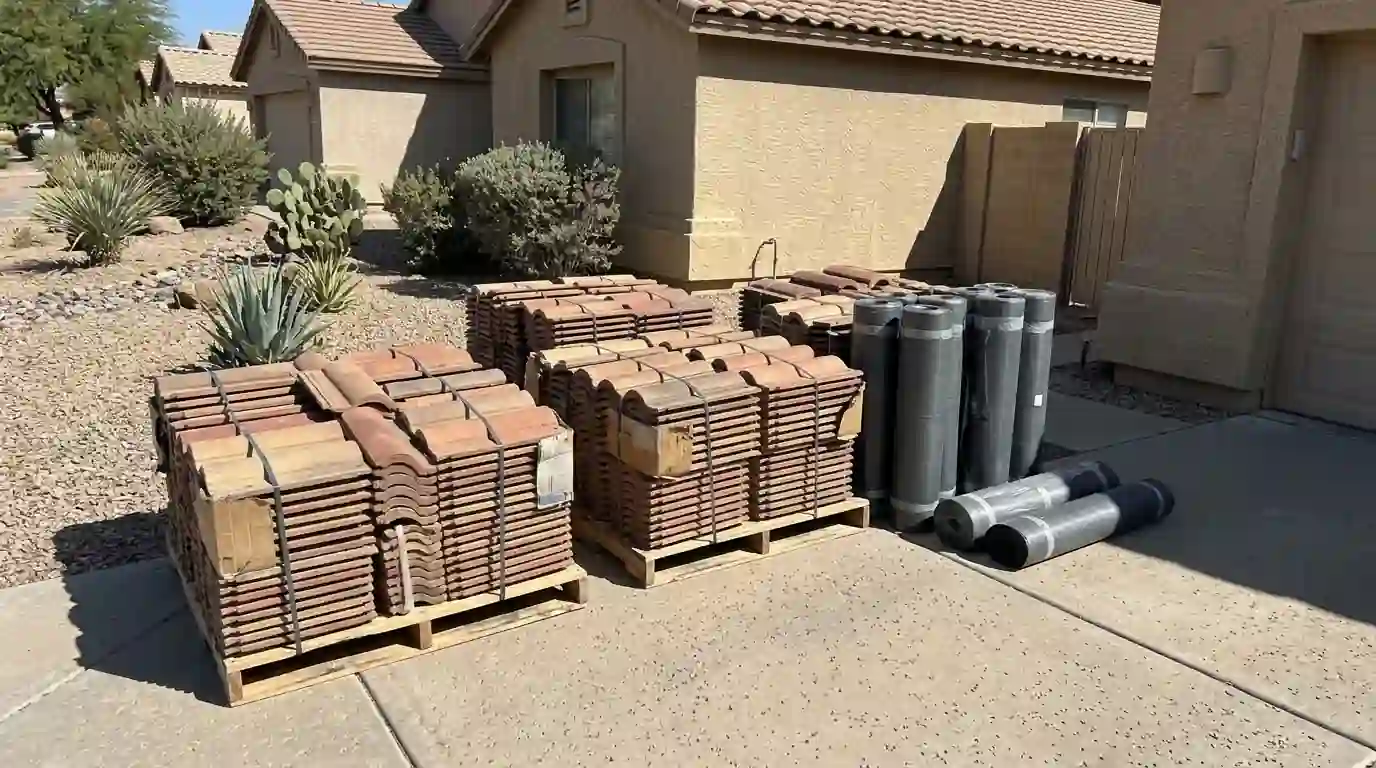
Tile replacement is usually priced by the visit plus the number of tiles, because getting a crew on the roof is part of the work whether we replace three tiles or thirty. Matching difficulty is the biggest variable on Phoenix homes built in the 1980s and 1990s.
Ranges are typical figures for Valley homes, not a quote. We price your roof after we see it.
Call (602) 878-3594 and tell us roughly how many tiles look broken and where. Photos from the ground or a drone help us bring the right stock.
On the first visit we read the stamp on a broken piece, measure the profile and note the color blend so we can source an exact or closest match.
We check current lines and salvage stock. If no match exists, we plan which hidden tiles can be moved to the visible slopes.
Broken tiles come out, felt underneath is checked and patched where needed, and new tiles are fastened into the interlock with the right hardware.
We walk the rest of the roof for other cracks, photograph everything we replaced, and point out any wider issues so nothing comes as a surprise later.
Most of our broken roof tile replacement calls come from these parts of the Valley. We also cover every other area on our service area list, from Anthem and Cave Creek down to Casa Grande.
Often, yes. We first try salvage stock from other Valley roofs that used the same blend. If that fails, we take matching tiles from a hidden slope, such as above a patio cover, and place the closest new color there. That keeps the faces the street sees consistent.
There is no fixed number. The deciding factor is the felt under the tiles. If it is still flexible, replacing even several dozen tiles makes sense. If it is brittle across the roof, money spent on tiles is better put toward an underlayment replacement that reuses your good tile.
Usually a little, at first. New concrete tile has not faded under Arizona sun, so it can look a shade richer. Most blend in within a few years. Where appearance matters most, we move older tiles to the front and put the new ones on less visible slopes.
That is between you and the HVAC company, and many will cover it if you show them the damage soon after their visit. We can photograph and document the broken tiles along the service path and give you a written description to share with them.
It is possible on a single-story roof, but walking concrete tile without breaking more is harder than it looks, and the interlock and fasteners vary by system. A misplaced foot can crack three tiles to fix one. Ladder falls are also a real risk on curved tile surfaces.
Tile roof leaking or tiles slipping in Phoenix? We trace the leak to the underlayment, reset or swap tiles and seal it the same week. Call (602) 878-3594.
Learn moreTiles fine but the felt under them is shot? We lift and relay Phoenix tile roofs with new two-ply or synthetic underlayment. Call (602) 878-3594 any time.
Learn moreHail damage roof repair in Phoenix: honest checks after a hailstorm, clear photos of real impacts, and repairs to tile, foam or shingle. Call us 24/7.
Learn moreCall us any hour. A real person answers, asks a few questions about your roof and sets up a visit.