Soft or spongy spots
If the roof flexes or feels springy under a roofer's step, the sheathing below has rotted or delaminated.
Roof Repair
Tile Roofing
Flat & Foam Roofing
Shingle & Metal Roofing
Replacement & Inspections
Solar, Vents & Extras
Phoenix neighborhoods
Valley cities
Counties
Roof Repair
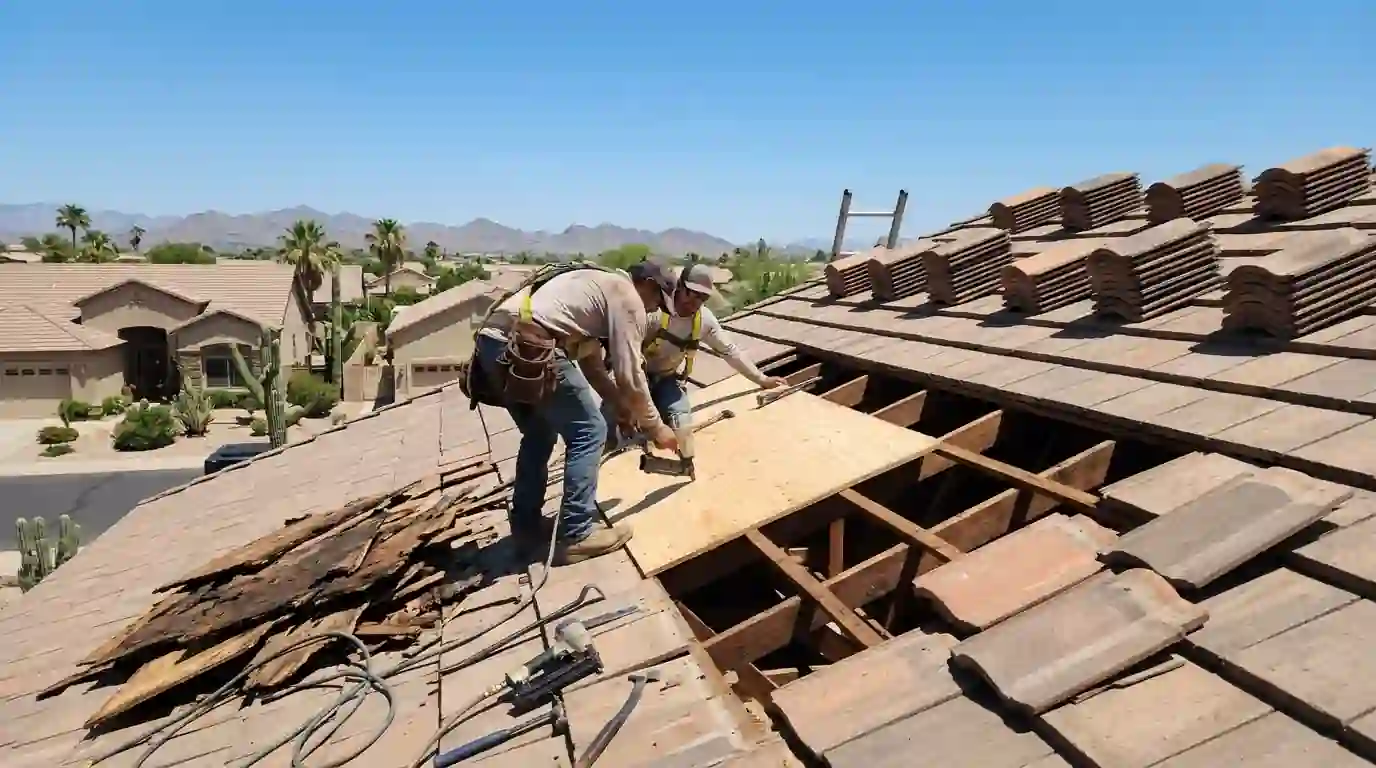
A soft spot underfoot on a roof means the wood beneath the covering has given way. Long, slow leaks rot the sheathing, and heat and age delaminate it. We open the roof, cut out damaged decking, fix the framing if needed and rebuild every layer above it.
Short answer
The roof deck is the plywood or OSB sheathing nailed to the rafters or trusses under your tile, foam or shingles. In Phoenix, decks fail mostly from slow leaks that rot or delaminate the wood, especially under old tile underlayment and on flat roofs that pond. Repair means removing the covering, replacing the damaged sheathing and rebuilding above it. Most deck repairs run $685 to $3,940 depending on area and roof type.
Materials we install and repair across the Valley
In a dry climate, people assume roof wood stays sound forever. Most of the time it does. Trouble comes from water that gets in and stays. On tile roofs, felt that has worn out after 20 to 25 years of Valley heat lets water reach the deck at every crack and nail hole. Each monsoon storm wets the wood a little more, and the attic heat does not always dry it before the next storm. Over a few seasons, that wood softens around the leak.
Flat roofs have their own pattern. Standing water after storms, blocked scuppers and worn coating can soak the deck under foam or built-up layers for years before anyone notices. Older homes with plank decks, common under some original flat roofs in central Phoenix, can have gaps and rot at plank ends. OSB, used on many newer homes, swells and loses strength when wet more readily than plywood.
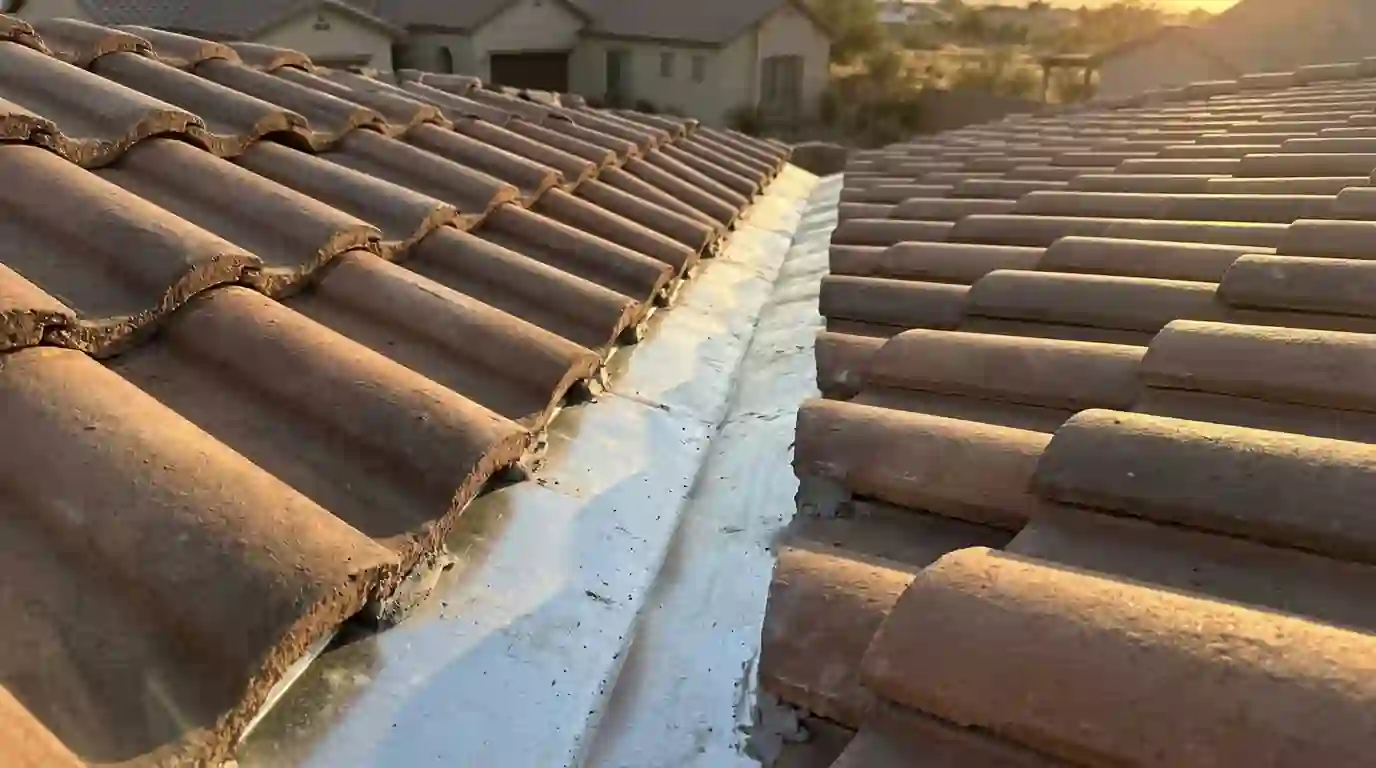
On repairs we match what is already on the roof, from Eagle and Westlake Royal concrete tile to GAF and Owens Corning shingles, and we seal flashing with roof-grade products from Henry and Tremco.
On a tile roof, we lift and stack tiles over the damaged area plus a margin, remove the old felt and find the edges of the soft wood. We cut back to the nearest rafter or truss on each side so the new panel lands on framing, then check the framing itself for rot. New plywood goes down with the right nailing pattern and spacing for expansion. Fresh underlayment laps over the old, and the tiles are relaid. If felt across the roof is near the end, our tile underlayment replacement may make more sense than repeated deck patches.
On foam or built-up flat roofs, we cut through the roofing layers to expose the deck, replace the bad section, and rebuild the roof system above it with new foam and coating or new plies. On shingle roofs, we strip shingles over the area, replace the deck and reshingle with matched courses. In every case, we photograph the damaged wood before it is removed so you can see why it was replaced.
Sometimes the sheathing is only the first sign. If rafters or trusses below are also soft, cracked or sagging, they need sistering, where new lumber is fastened alongside the old, or replacement. Truss repairs on modern homes may need an engineered repair detail, and we tell you if that is the case before going further. Heavy concrete tile adds load, so a sagging truss under tile is not something to ignore.
If deck damage is widespread across the roof, replacing the deck section by section stops being efficient. At that point a full re-roof with new sheathing is usually the better value, and our roof replacement service covers that work and the permit process most Valley cities require for a full re-roof. We show you the photos and both prices so the choice is yours.
Once the roof is open down to the wood, every layer above is easy to inspect. We look at the felt around the opening to see how far its wear extends, check the flashing at any nearby wall or vent, and look at the tiles or foam for the original water path. Fixing the deck without closing that path only buys time, so the source gets repaired in the same visit.
We also look at attic ventilation from inside. A hot, poorly vented attic bakes the underside of the deck and the felt above it, which speeds aging in Valley summers. If intake or exhaust vents are blocked or missing, adding them while the roof is open costs far less than doing it later as a separate job. We point out what we find and price it separately.
Deck damage is often hidden until you walk on it or look from the attic. These signs suggest the sheathing needs to be checked.
If the roof flexes or feels springy under a roofer's step, the sheathing below has rotted or delaminated.
A dip in the ridge or a sag between rafters, seen from the street, can mean the deck or framing has weakened.
From the attic, dark or black areas on the underside of the deck show where water has soaked it over time.
Plywood that is peeling apart in layers, visible from the attic, has lost strength and will not hold fasteners.
Water that pools in the same spot every storm on a flat roof often sits over a sagging deck.
Roofing nails pushing up or loose fasteners at the surface can mean they no longer have solid wood to bite into.
Typical range in the Phoenix area
$685 to $3,940
per deck repair, most homes
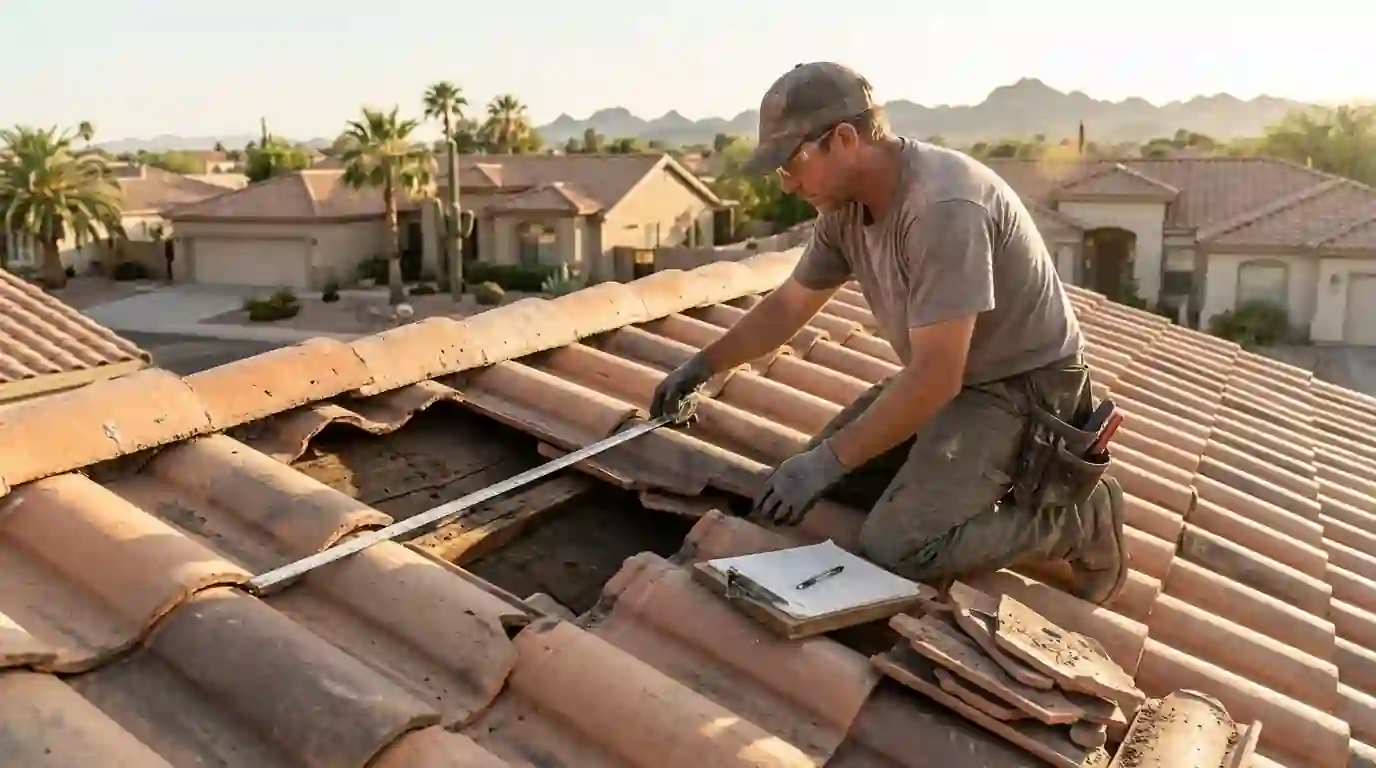
Deck repair costs depend on the area of sheathing replaced, the roof covering that must be removed and rebuilt over it, and any framing work. The range below reflects typical Valley repairs in 2026. Most single-panel repairs sit near the low end.
Ranges are typical figures for Valley homes, not a quote. We price your roof after we see it.
Call (602) 878-3594 and tell us about soft spots, sagging or attic stains. Photos from the attic are very helpful.
We check the underside of the deck from the attic, then walk the roof to map the soft area and its likely water source.
Tiles are lifted and stacked, or foam, plies or shingles are cut back, to expose the damaged sheathing and margins.
Damaged sheathing is cut back to framing and replaced; any rotted rafter or truss is sistered or repaired before new wood goes down.
New underlayment, flashing and the roof covering go back on, matched to the rest of the roof in profile and color.
You get photos of the damaged wood, the new deck and the finished roof, and we clear all debris from the site.
Most of our roof deck & sheathing repair calls come from these parts of the Valley. We also cover every other area on our service area list, from Anthem and Cave Creek down to Casa Grande.
Please do not. A soft deck can give way, and on tile roofs you can crack tiles and fall through. Look from the attic with a flashlight instead, and call us to check the roof surface safely.
Both are used. Plywood generally handles occasional wetting and holds fasteners a bit better, while OSB is common on newer builds and costs less. For repairs, we usually match thickness and use plywood where the area tends to get wet.
From the attic, look at the rafters or trusses under the sag. If they are straight and the plywood between them dips, it is the deck. If the framing itself bows or is cracked, it needs structural repair.
Many Valley cities require a permit for a full re-roof, and some have rules for structural repairs. A small sheathing repair often does not, but rules vary by city. We check what applies to your address before starting.
Dry air does not help if water keeps getting in. A slow leak under old tile felt or a flat roof that ponds every storm can keep the wood damp for long stretches. Over years, that is enough to rot sheathing.
Roof leak repair in Phoenix: we trace the water to its true entry point on tile, foam, shingle or flat roofs and fix the cause. Call us 24/7.
Learn moreTiles fine but the felt under them is shot? We lift and relay Phoenix tile roofs with new two-ply or synthetic underlayment. Call (602) 878-3594 any time.
Learn moreFull roof replacement in Phoenix for tile, shingle, foam and metal: tear-off decisions, permits, deck repair and clean job sites. Call (602) 878-3594.
Learn moreFlat roof leaking in Phoenix? We find the source on foam, built-up, mod bit or TPO roofs and fix ponding, seams and drains. Call (602) 878-3594 24/7.
Learn moreCall us any hour. A real person answers, asks a few questions about your roof and sets up a visit.