Upstairs rooms never cool down
If second-floor bedrooms stay hot hours after sunset while the AC runs nonstop, heat stored in an attic with little airflow is usually part of the reason.
Roof Repair
Tile Roofing
Flat & Foam Roofing
Shingle & Metal Roofing
Replacement & Inspections
Solar, Vents & Extras
Phoenix neighborhoods
Valley cities
Counties
Solar, Vents & Extras
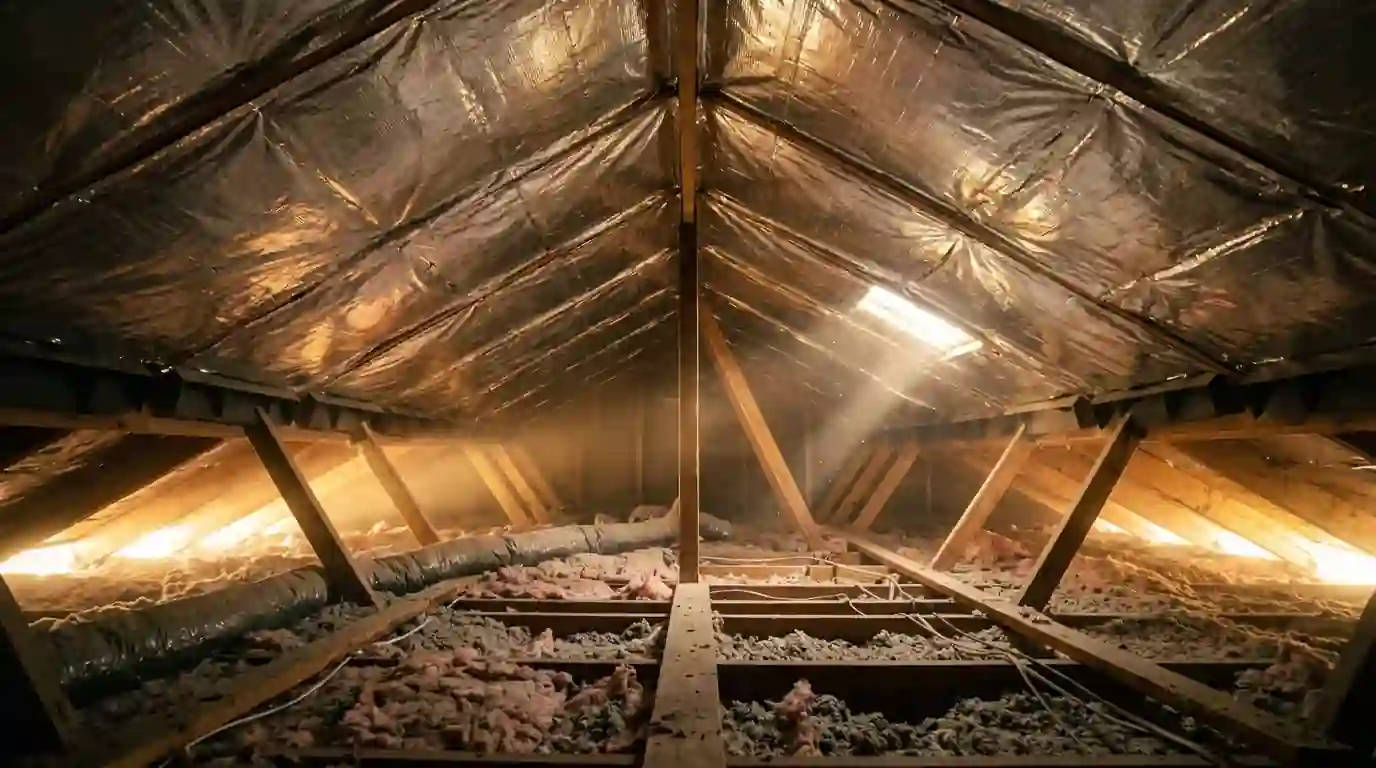
On a July afternoon, the attic over a typical Phoenix home can climb past 140 F, baking the underlayment from below and pushing heat down through the ceiling. We balance intake and exhaust ventilation and install radiant barrier so the attic runs cooler and the roof ages more slowly.
Short answer
In Phoenix, attic ventilation works best when intake at the soffits or lower roof matches exhaust near the ridge, so hot air keeps moving out instead of sitting under the deck. Radiant barrier, a reflective foil layer under the rafters or on the deck, blocks much of the sun's radiant heat before it reaches the attic floor. Together they lower attic temperatures and ease the load on your air conditioning.
Materials we install and repair across the Valley
This is preventive work, so the clues are usually comfort problems and roof wear rather than a leak. Any of these is a good reason to have the attic looked at.
If second-floor bedrooms stay hot hours after sunset while the AC runs nonstop, heat stored in an attic with little airflow is usually part of the reason.
A ceiling that feels warm on a summer evening means the attic above is radiating heat down through thin or compressed insulation.
Brittle, cracked felt under tile or shingles well before 20 years can point to an attic that traps heat and cooks the roof from both sides.
Soffit vents painted shut, covered by insulation or missing entirely leave exhaust vents with nothing to pull from, so the attic barely moves air.
A turbine next to a power fan next to a ridge vent can short-circuit airflow, with one exhaust pulling air in through another instead of from the eaves.
A re-roof or underlayment job opens up the deck, which makes it the cheapest time to correct vent sizes and add radiant barrier to the decking.
With summer highs above 110 F and roof surfaces reaching 150 F to 170 F, the space under the deck in an Arizona home can easily top 140 F to 150 F on a July afternoon. Heat soaks into the rafters, the sheathing, the underlayment and any ductwork running through the attic. Ducts in that space are a big deal here, because cold air from the AC picks up heat on its way to the rooms before it ever reaches a vent.
Trapped heat also shortens the life of the roof. Felt and synthetic underlayments break down faster when they're cooked from above by the sun and from below by a stagnant attic. On tile roofs, where the tile itself can outlast the underlayment by decades, a cooler attic helps that underlayment reach the full 20 to 25 years instead of failing early. We look at ventilation on every roof inspection for that reason, not just when a homeowner asks about comfort.
Skylight work uses units from makers such as Velux, and the flashing and sealants we use around panels, vents and patio covers come from Henry and Tremco roof lines.
Good attic ventilation is a loop. Cooler air enters low, through soffit vents or low-profile intake vents near the eaves, and hot air leaves high, through ridge vents, off-ridge vents or roof-mounted exhaust. The two sides need to be roughly balanced. Too much exhaust with too little intake and the attic starts pulling air from the house itself, including conditioned air through ceiling gaps and light fixtures. That's a common result when someone adds a powered fan to an attic with blocked soffits.
We start by measuring the attic floor area and counting existing net free vent area at both ends. Then we look for blockages: insulation packed against the soffits, eave vents painted over, or vent screens choked with dust after years of haboobs. Often the fix is opening up intake and adding baffles so insulation stays clear, rather than cutting more holes in the roof. Where exhaust is short, we add vents matched to the roof type, with tile vents that blend into concrete or clay tile and low-profile metal vents on shingles.
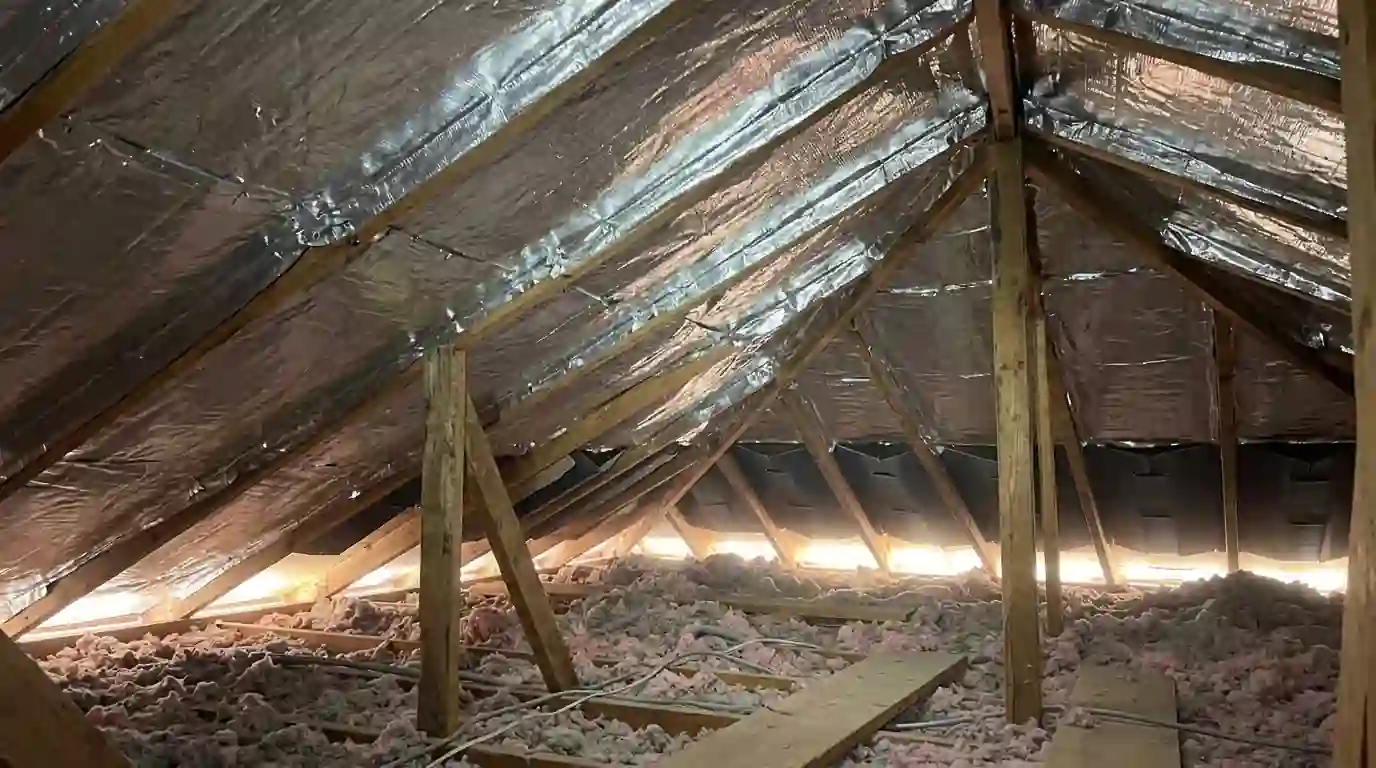
Most of the heat a Phoenix attic picks up arrives as radiant energy from the hot underside of the roof deck. Radiant barrier is a reflective foil or foil-faced material that turns much of that energy back instead of letting it reach the insulation and ductwork. It works best with an air gap on at least one side and the shiny face toward open air. It doesn't replace insulation. It cuts the heat insulation has to stop.
There are two common ways to add it. In an existing attic, foil sheets are stapled across the underside of the rafters, leaving the vent path open from soffit to ridge. During a full roof replacement, radiant barrier sheathing, with foil already laminated to the deck panels, can go down in place of standard plywood or OSB. We avoid laying foil directly on top of attic insulation, where dust collects quickly in the Valley and cuts down how well it reflects.
The most common one is the power attic fan installed to solve a hot attic without any added intake. It pulls conditioned air out of the house, runs up the electric bill and can even draw dust in through gaps. A close second is mixing exhaust types on one roof, so a turbine and a ridge vent pull against each other. We also see bathroom and dryer vents ending in the attic, dumping humid air under the deck, when they should run all the way outside.
On tile roofs, we sometimes find vents that were never flashed into the underlayment correctly, which causes leaks every monsoon season. When a vent is leaking, that's a flashing repair first and a ventilation question second. For more on how heat reaches the roof itself, our article on cool roof coatings in Phoenix covers the outside half of the problem.
Call (602) 878-3594 any time. Tell us which rooms run hot, the roof type and the home's age, and we'll set a time to check the attic and roof.
We measure the attic, count intake and exhaust vent area, check insulation depth and ductwork, and look for blocked soffits, mixed vents and moisture.
You get a plain explanation of what's out of balance and a priced plan, whether that's clearing intake, adding exhaust, radiant barrier or a mix.
We clear blocked soffit vents and install baffles so insulation stays out of the airflow path from the eaves up toward the ridge.
New exhaust vents are flashed into the roof to match the material, and radiant barrier is fastened under the rafters with the vent path left open.
We confirm air is moving from intake to exhaust, check each new vent from the roof side and clean up the attic access and the work area.
Typical range in the Phoenix area
$740 to $3,860
for a typical single-family attic
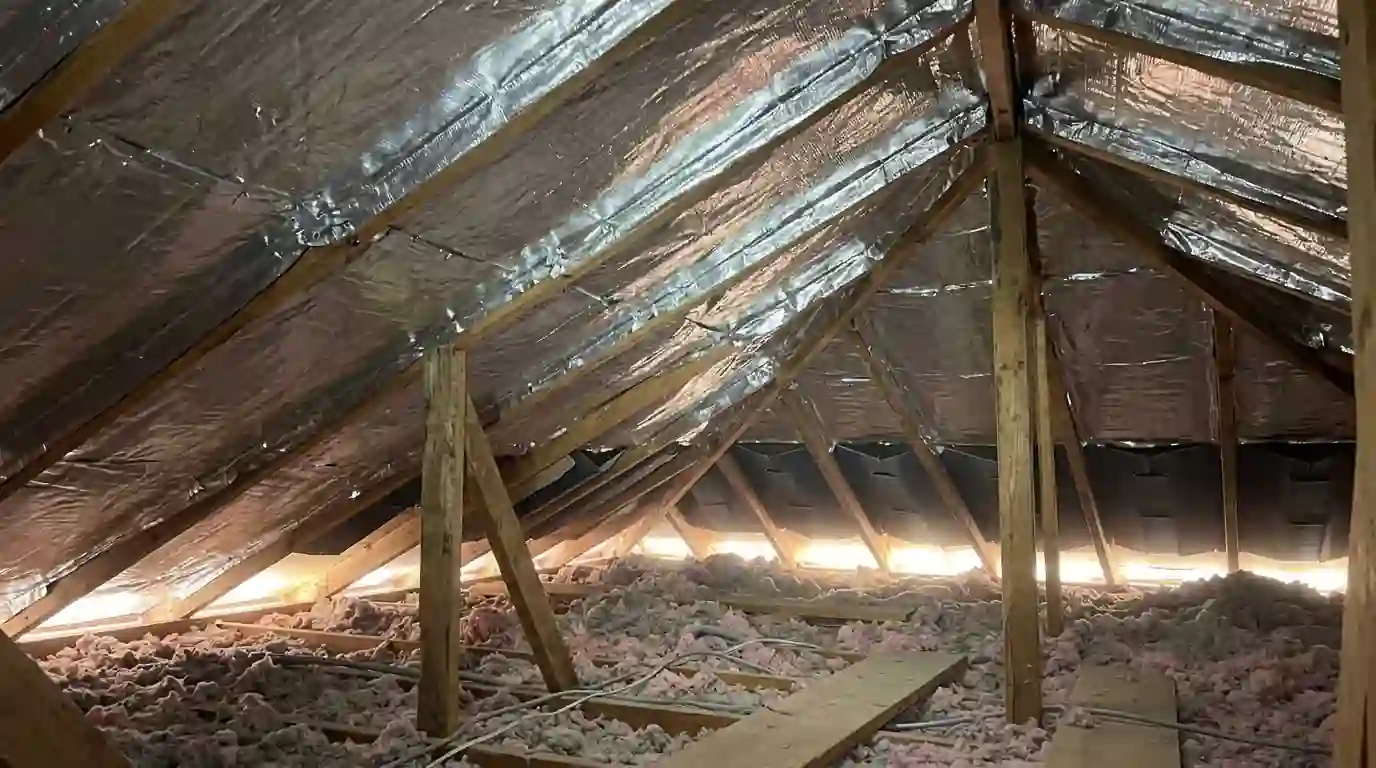
Small fixes like clearing soffits and adding a few exhaust vents land at the low end. Full radiant barrier coverage in a large attic, plus new tile vents flashed into the roof, lands at the high end. Radiant barrier sheathing during a re-roof is priced as part of that roof job.
Ranges are typical figures for Valley homes, not a quote. We price your roof after we see it.
Most of our attic ventilation & radiant barrier calls come from these parts of the Valley. We also cover every other area on our service area list, from Anthem and Cave Creek down to Casa Grande.
It helps most in hot, sunny climates like ours, where most attic heat arrives as radiant energy from the roof deck. Installed with an air gap and the reflective face open to the air, it lowers attic temperatures and the heat reaching ducts and insulation. It works alongside insulation and ventilation rather than replacing either one.
Only if the attic has enough intake to feed it. Without matching soffit or low vents, a fan pulls cooled air from your living space through ceiling gaps. On many Valley homes, opening blocked intake and balancing passive exhaust does more good than a fan, without the added electric bill or noise.
It can help. Underlayment cooked from both sides breaks down faster, so a well-ventilated attic takes some of that stress away. It won't stop UV and heat from aging the felt at gaps in the tile, but it gives the underlayment a better chance of reaching its normal lifespan instead of failing early.
It depends on the attic floor area, roof shape and vent type, not a fixed number. A common rule of thumb calls for a set amount of net free vent area per square foot of attic, split roughly evenly between intake and exhaust. We measure the attic and count what you already have before recommending anything.
If a re-roof is a year or two away, radiant barrier sheathing installed with the new deck is the cleanest option. If the roof has many years left, stapling foil under the rafters now gives you the benefit right away without touching the roof surface at all.
Phoenix roof inspections after monsoon storms, before buying or before solar: photos, attic checks and a plain written report. Call (602) 878-3594.
Learn moreFull roof replacement in Phoenix for tile, shingle, foam and metal: tear-off decisions, permits, deck repair and clean job sites. Call (602) 878-3594.
Learn moreTiles fine but the felt under them is shot? We lift and relay Phoenix tile roofs with new two-ply or synthetic underlayment. Call (602) 878-3594 any time.
Learn moreLeaking, crazed or overheating skylight in Phoenix? We reflash curbs, replace sun-damaged domes and fit low-E units and sun tunnels. Call (602) 878-3594.
Learn moreCall us any hour. A real person answers, asks a few questions about your roof and sets up a visit.