Rust streaks running down the roof
Orange stains spreading from the cooler stand across tile or coating mean the cabinet is shedding rust, and the water that carried it has been sitting on the roof.
Roof Repair
Tile Roofing
Flat & Foam Roofing
Shingle & Metal Roofing
Replacement & Inspections
Solar, Vents & Extras
Phoenix neighborhoods
Valley cities
Counties
Solar, Vents & Extras
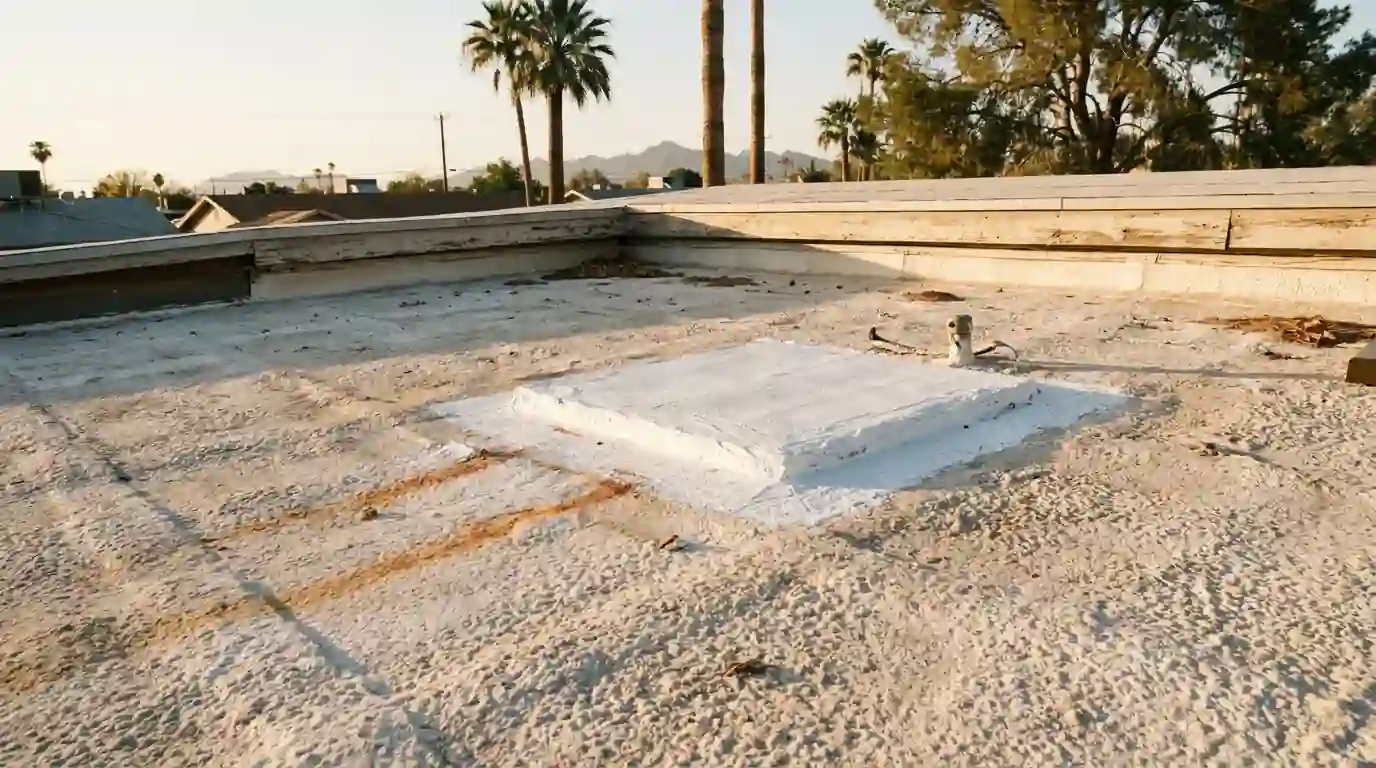
A swamp cooler nobody has run in years is still a heavy, rusting box sitting over a hole in your roof. We take it down with its stand, seal the duct opening, repair soft decking and patch the roof so it matches everything around it.
Short answer
Removing an unused evaporative cooler from a Phoenix roof usually takes one visit. Once the water supply is shut off and the power is disconnected, we drain and lower the cooler and its stand, frame and deck over the duct opening, then patch the roof in the same material, whether that's concrete tile, foam, shingle or a flat membrane. The finished patch is sealed and water tested before we leave.
Materials we install and repair across the Valley
Evaporative coolers were the standard way to cool a Phoenix house for decades, and they still work well in the dry months before monsoon humidity arrives. Many homes built from the 1950s through the 1980s had one set on the roof, usually on a steel stand over a downflow duct cut through the ceiling. When owners added refrigerated air, the cooler was often just switched off and left in place, because taking it down meant someone had to deal with the hole underneath.
That leftover box keeps working against the roof. Supply lines weep, pans rust through, and the stand legs press into tile or foam under a few hundred pounds of steel and pads. The duct opening below is often blocked with nothing more than a scrap of plywood, a bag of insulation or a register cover. In winter that open duct pulls warm air out of the house, and in summer it lets attic heat drift back down. Our guide to keeping or removing a rooftop cooler goes deeper if you're still deciding.
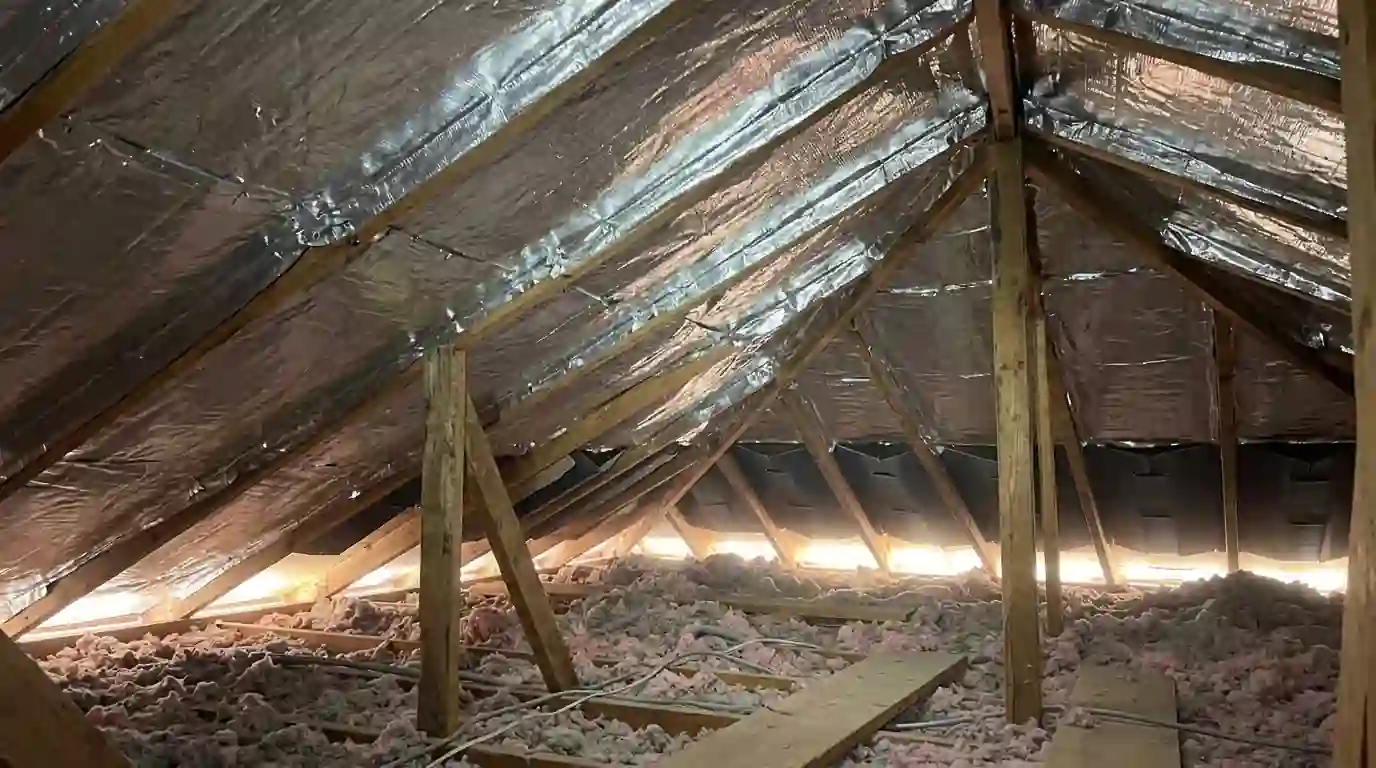
Skylight work uses units from makers such as Velux, and the flashing and sealants we use around panels, vents and patio covers come from Henry and Tremco roof lines.
Once the cooler and stand are down, the real roofing work starts. We pull out the old curb or wood frame around the duct and look at the rafters or trusses on either side. If the opening falls between framing members, we add blocking so the new decking has solid support on every edge. Plywood or OSB matched to the existing thickness goes in next, fastened to that blocking, so the patch sits flush with the deck around it and won't dip under foot traffic later.
Inside, the ceiling register usually stays put until you decide what to do with it. Some owners have a drywall contractor close it, others leave it as a return. When the cooler fed ductwork running through the attic, or a heat pump shares the same trunk line, your HVAC company handles the duct side. We coordinate the timing with them so the duct is capped or rerouted before we close the roof, and our work stays on the deck and above. If water has already rotted sheathing past the opening, our sheathing repair work covers the wider area first.
Tile roofs take the most care. The cooler usually sat above several rows of tile, and those pieces have often faded, cracked or slipped from their battens. We pull back the surrounding field, lay underlayment over the new decking, and lap it under the paper above and over the paper below so water sheds downhill. Then tile goes back, with cracked pieces swapped for matching profiles. Concrete tile fades in Valley sun, so when we can, we borrow spares from a hidden plane such as the back of a garage, which blends far better than a fresh tile off a pallet.
On a foam roof, we cut back the coating and foam in a square around the old opening and spray fresh foam to the same thickness, so no low spot forms. Base and top coats follow, feathered into the existing surface. Membrane roofs get a patch of the same material lapped well past the new decking, and shingle roofs get shingles woven in so the courses run straight. If the surrounding foam is already chalky, pairing the job with a fresh coat over the whole roof is worth considering.
The patch we redo most often was built from the top only: a sheet of metal screwed over the hole with roof cement smeared around the edges. Roof surfaces here can run 150 F to 170 F in July sun, so that cement shrinks, cracks and lets the first monsoon storm into the ceiling. Leftovers cause trouble too. A water line cut short and left to drip, or stand bolts pulled with their holes left open, become leak points. We cap the line properly and flash every hole the stand left behind.
Plenty of Valley homes switched to refrigerated air long ago and left the old cooler in place. These signs say it's doing more harm than good.
Orange stains spreading from the cooler stand across tile or coating mean the cabinet is shedding rust, and the water that carried it has been sitting on the roof.
A ring or bubble in the ceiling of the room or hallway below the cooler almost always traces back to the duct curb, the drain line or a rusted pan.
If refrigerated air does all the cooling and the cooler just sits there switched off, it's dead weight perched over an opening that was never meant to be permanent.
Decking that flexes underfoot near the cooler legs has usually soaked up years of overflow. It needs attention before the rot spreads or someone steps through.
If new underlayment, a re-roof or a foam recoat is coming, removing the cooler first is the cheapest moment to close the opening and roof straight over it.
Typical range in the Phoenix area
$685 to $2,370
per cooler, removal and roof patch
The cooler itself comes down quickly, so most homes fall in a fairly narrow band. The spread comes from what's underneath: how big the duct opening is, whether the decking has rotted, and which roof material has to be matched. A cooler on a single-story foam roof is the simple case, and a big unit on a two-story clay tile roof sits near the top.
Ranges are typical figures for Valley homes, not a quote. We price your roof after we see it.
Call (602) 878-3594 any hour. Tell us the roof type, whether the cooler still runs and whether it feeds attic ductwork, and we'll set a time to come look.
We look at the stand, curb, decking and nearby tile or coating, and at the duct from inside when there's access, so the scope is clear before work starts.
The cooler's water supply is shut off and the power disconnected before anyone touches the cabinet. Any shared ductwork is lined up with your HVAC company ahead of time.
The cooler is drained, lowered from the roof with straps or a lift, and hauled away along with the stand, pads and old supply lines.
We add blocking, install new decking over the opening and patch the roof in matching tile, foam, membrane or shingle so it sheds water like the rest.
We run water over the patched area, check the ceiling below for any sign of it, and send you before and after photos of the finished spot.
Most of our swamp cooler removal & roof patch calls come from these parts of the Valley. We also cover every other area on our service area list, from Anthem and Cave Creek down to Casa Grande.
Most single-cooler jobs take one day. Foam and shingle roofs are often done by mid-afternoon, while tile runs longer because surrounding rows come up and go back down. Wider rot in the decking, or a separate HVAC visit for the ductwork, can push it to a second day.
You can, but we rarely suggest it. The stand keeps pressing into the roof, its bolts remain open holes, and the duct opening underneath stays exactly where it was. Most of the leak risk lives in the stand and curb rather than the cabinet, so taking everything down and closing the deck is what actually ends the problem.
Usually, yes. An open cooler duct lets warm air escape in winter and attic heat drift down in summer, and many owners find the room below feels steadier afterward. How much depends on how well the duct was blocked before, so we don't promise any change on your bill.
Some Valley HOAs want to hear about any exterior change, even removing equipment, and mostly care that the patch matches the roof. Check your rules before the work date. We can give you a short written description of the patch and materials for the board.
We shut off the supply, cut the line back to a point where it can be capped cleanly, and seal the roof penetration it ran through. If the line continues to a valve inside the house or along an exterior wall, we show you where it ends so a plumber can remove the rest if you want it gone completely.
Roof deck repair in Phoenix: soft, sagging or rotted sheathing replaced under tile, foam or shingle before it spreads. Call (602) 878-3594 day or night.
Learn moreFoam roof turning brown, blistered or pecked in Phoenix? We clean, patch and recoat before UV eats the foam. Call (602) 878-3594 any hour to set a visit.
Learn moreTile roof leaking or tiles slipping in Phoenix? We trace the leak to the underlayment, reset or swap tiles and seal it the same week. Call (602) 878-3594.
Learn moreRoof leak repair in Phoenix: we trace the water to its true entry point on tile, foam, shingle or flat roofs and fix the cause. Call us 24/7.
Learn moreCall us any hour. A real person answers, asks a few questions about your roof and sets up a visit.