Stain near an exterior wall
Water showing near the wall line often comes from a parapet cap, wall flashing or a scupper on a flat roof, not the field of the roof.
Roof Repair
Tile Roofing
Flat & Foam Roofing
Shingle & Metal Roofing
Replacement & Inspections
Solar, Vents & Extras
Phoenix neighborhoods
Valley cities
Counties
Roof Repair
A ceiling stain tells you where water landed, not where it got in. We trace leaks back to the real entry point on tile, foam, shingle and flat roofs across Phoenix, then fix the cause so the stain does not come back after the next storm.
Short answer
Most roof leaks in Phoenix come from torn or worn underlayment under tile, failed flashing at walls and pipes, cracked foam coating, or blocked drains on flat roofs. The drip inside is often several feet from the entry point. We trace the path, confirm it with water testing when needed, and repair the source. Typical leak repairs run $415 to $1,960, depending on roof type and what we find underneath.
Materials we install and repair across the Valley
The shape and location of the damage inside often says a lot about the source on the roof. These are the patterns we look for first.
Water showing near the wall line often comes from a parapet cap, wall flashing or a scupper on a flat roof, not the field of the roof.
Leaks near vents and fans usually trace to a cracked pipe boot, a dried sealant ring or flashing that was never set under the tiles correctly.
If it only leaks in a hard downpour, water is likely overrunning a valley, backing up behind debris or blowing sideways under tiles.
A slow leak can wet insulation for months before it shows on drywall. A musty attic or closet smell is worth a look before the monsoon.
Drips at the skylight may come from the curb flashing, the lens seal or condensation, and each needs a different fix.
A ring that gets bigger every monsoon means the leak is steady and the decking above is likely staying damp between storms.
Call (602) 878-3594 and describe where the stain or drip is, when it appears and your roof type. Photos of the stain help us plan.
We look at the stain, measure it from walls and check the attic above to see the wet path on the decking or insulation.
On the roof, we work upslope from the stain, lifting tiles or probing coating until we find the true entry point and any related damage.
When the source is unclear, a controlled hose test isolates one area at a time while someone watches inside for the first drip.
We repair felt, flashing, coating or boots at the entry point, then rebuild the surface so the fix holds in heat and storms.
You get photos showing where the water got in, what was damaged and how it was repaired, plus notes on any other weak spots we saw.
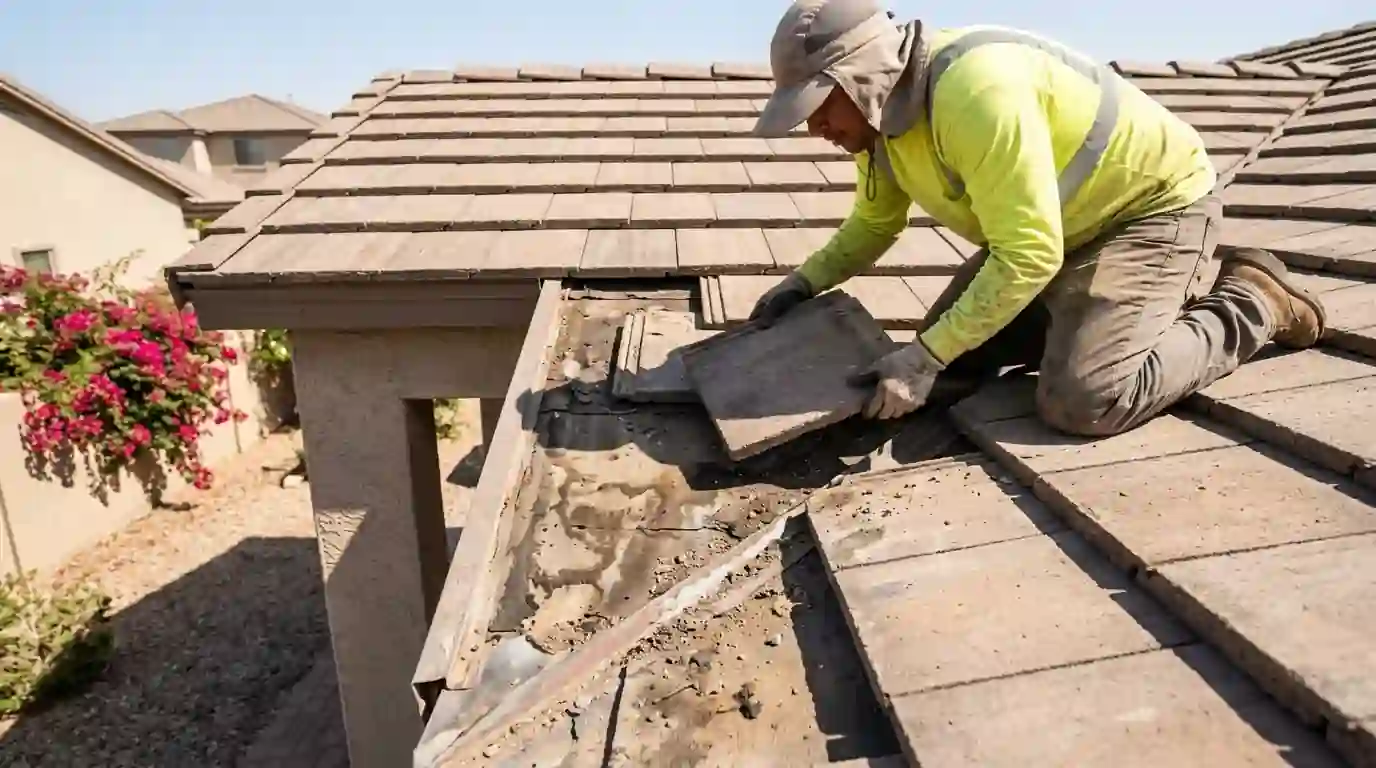
On tile, the visible surface is not the waterproof layer. The underlayment beneath does that job, and tiles are mostly sun and wind protection. Water that slips past a cracked or shifted tile runs down the felt until it finds a tear, a nail hole or a gap at a flashing, then drops through. So we start at the stain, measure its position from the walls, and then lift tiles upslope from that point until we find wet felt or a stain trail on the deck.
Valleys, the low points where two slopes meet, are the most common culprit, followed by the edges around chimneys, vents and solar mounts. Debris and dust build up in valleys and slow water down, which lets it creep sideways under the tiles. If the felt is brittle across the whole roof, finding one hole is only part of the answer, and our underlayment replacement service may be the lasting fix.
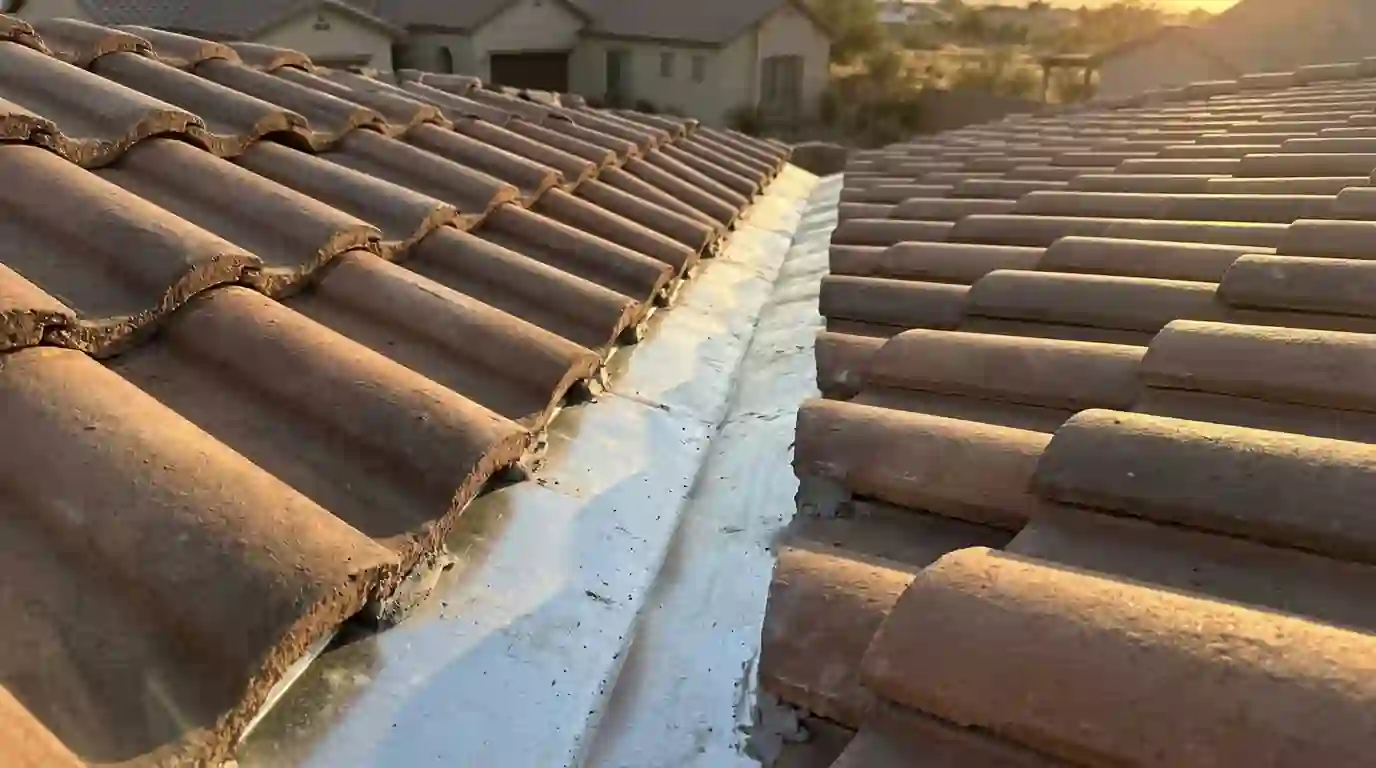
On repairs we match what is already on the roof, from Eagle and Westlake Royal concrete tile to GAF and Owens Corning shingles, and we seal flashing with roof-grade products from Henry and Tremco.
On a foam or flat roof, the surface is the waterproof layer. Leaks usually come from cracked or worn coating, bird pecks, foot traffic damage, blisters, or water that ponds because a scupper is blocked. Water on a flat roof can travel inside the roof layers before it finds a way down, so the entry point is often some distance from the drip. We look for soft spots, coating cracks and low areas where water sits.
Foam roofs need recoating every 5 to 10 years depending on the coating, and many leaks we see trace to a coating that has simply worn thin. If the foam beneath is dry and sound, a recoat solves it. If it is wet or crushed, that section is cut out and refilled first. Our foam recoat page explains how we decide between a spot repair and a full new coat.
Shingle leaks tend to be easier to find but easier to get wrong. A missing tab is obvious. A nail that backed out under a shingle, lifting it just enough to wick water, is not. Heat in the Valley makes shingles soft in summer and brittle in winter, and the seal strips that bond each course can let go after a few years. We check the nail line, the step flashing along walls and the drip edge at the eaves.
Where a shingle roof meets a stucco wall, the flashing should tuck behind the stucco or a counterflashing. Many homes have flashing that was simply caulked to the wall face. That caulk fails in the sun, and water runs down behind the shingles. Fixing that properly means cutting a groove or adding a metal counterflashing, not adding more caulk. A proper counterflashing sheds water on its own and does not depend on sealant at all.
Some leaks only show in wind-driven rain, which is common during monsoon cells. When tracing does not reveal a clear source, we run a controlled water test: we soak one small area at a time with a hose, starting low and moving up, while someone watches inside. It takes patience, but it isolates the exact point instead of guessing. It is the slowest part of leak work and often the most valuable.
Water testing works best on a dry day so new water is easy to spot. We do not test right after a storm, when everything is still damp. If you want to understand roof condition more broadly first, a full roof inspection looks at every slope and gives you photos of other areas that may leak next. A test also confirms the repair: after the fix, we run water over the same spot to make sure it stays dry inside.
Typical range in the Phoenix area
$415 to $1,960
per leak, most homes
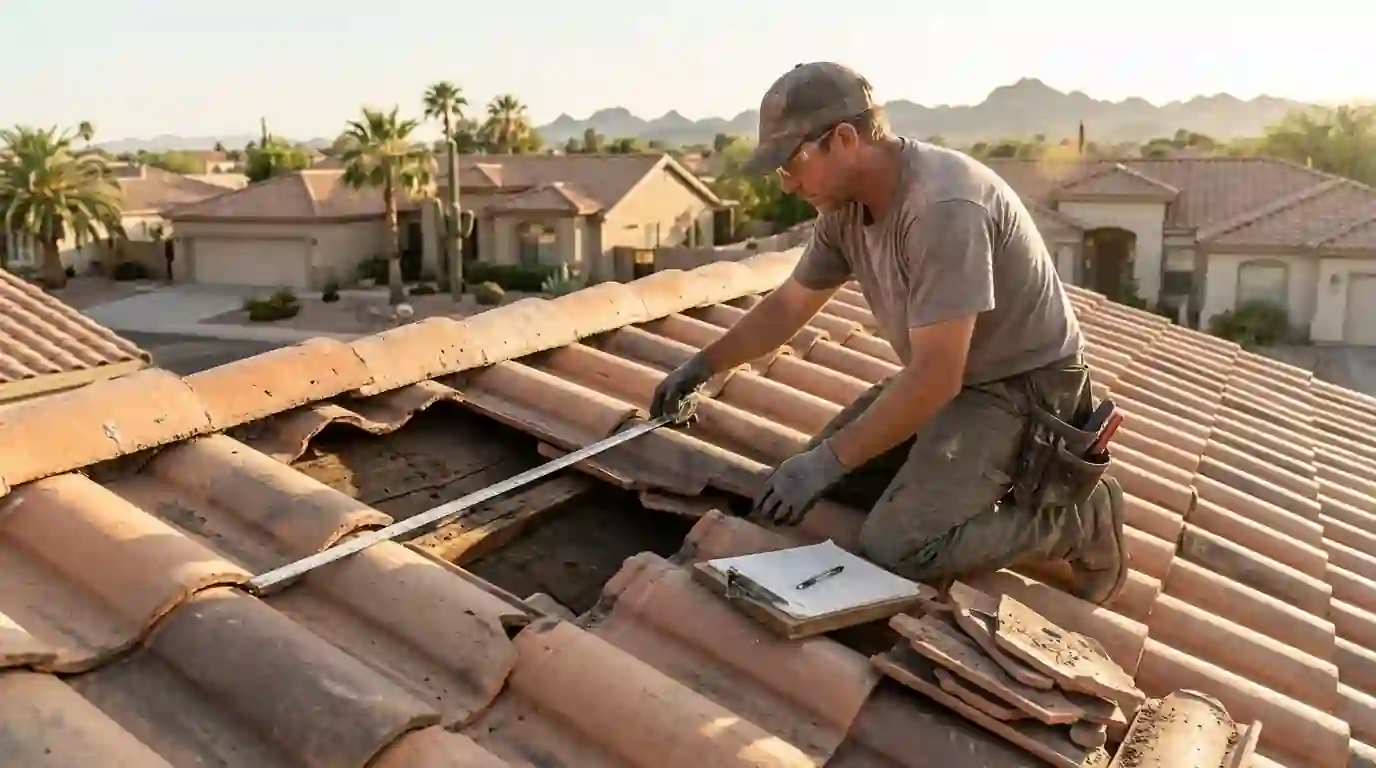
Leak repair cost depends on how hard the source is to reach and how much water damage is underneath. A cracked pipe boot is quick. A valley leak under tile that has soaked the deck takes more lifting, more felt and sometimes new sheathing.
Ranges are typical figures for Valley homes, not a quote. We price your roof after we see it.
Most of our roof leak repair calls come from these parts of the Valley. We also cover every other area on our service area list, from Anthem and Cave Creek down to Casa Grande.
Monsoon rain often comes sideways with strong gusts. That pushes water under tiles and up past laps that handle normal rain fine. Debris in valleys also slows runoff. We look at the exposed side of the roof facing the storm and check valleys, edges and flashing there first.
Yes. Rooftop and packaged units have condensate lines and curbs that can leak or drip onto the roof. Sometimes the drip is not the roof at all, but a clogged condensate line backing up. We check the unit's curb flashing and drain before opening the roof.
A roof leak usually appears after rain or monsoon storms and dries between them. A plumbing leak shows up on dry days, often near bathrooms, and keeps spreading. If the stain grows with no rain, call a plumber first. If it grows after storms, call us.
Rarely for long. Sealant on top of tiles does not fix torn felt below, and Phoenix heat cracks most sealants within a season or two. Lasting tile leak repair means lifting tiles, replacing the damaged underlayment and relaying the tiles properly.
Most leak repairs are finished in one visit of two to five hours. Larger valley repairs or leaks with deck damage can take a full day. If we need to order matching tiles, we secure the area and return when they arrive.
Emergency roof repair in Phoenix: a live person answers 24/7, and we tarp or seal the leak the same night when it is safe. Call (602) 878-3594.
Learn moreRoof flashing repair in Phoenix: we fix the metal at walls, valleys, vents and chimneys where most roof leaks start. Call (602) 878-3594 any hour.
Learn moreTiles fine but the felt under them is shot? We lift and relay Phoenix tile roofs with new two-ply or synthetic underlayment. Call (602) 878-3594 any time.
Learn moreFlat roof leaking in Phoenix? We find the source on foam, built-up, mod bit or TPO roofs and fix ponding, seams and drains. Call (602) 878-3594 24/7.
Learn moreCall us any hour. A real person answers, asks a few questions about your roof and sets up a visit.