Ponding you cannot fully fix
Some roofs have low spots from structure or design that would cost too much to re-slope. Silicone handles that standing water without softening.
Roof Repair
Tile Roofing
Flat & Foam Roofing
Shingle & Metal Roofing
Replacement & Inspections
Solar, Vents & Extras
Phoenix neighborhoods
Valley cities
Counties
Flat & Foam Roofing
Some flat roofs always keep a little water after a storm, and acrylic coatings struggle there. Silicone does not. It resists ponding and UV, holds its flexibility in extreme heat, and can extend the life of foam, membrane and metal roofs. We apply it thick, on clean, repaired surfaces.
Short answer
Silicone roof coating is a high-solids coating applied over foam, single-ply, modified bitumen, built-up or metal roofs. In Phoenix it suits roofs with ponding or heavy sun exposure because it resists standing water and UV breakdown better than acrylic. It costs more up front, often stretches the time between recoats, and generally can only be recoated with more silicone later, so it is a long-term choice.
Materials we install and repair across the Valley
Silicone is not always the answer, but on certain roofs it clearly outperforms acrylic. These are the cases where we recommend it.
Some roofs have low spots from structure or design that would cost too much to re-slope. Silicone handles that standing water without softening.
Most coatings will not stick to existing silicone, so a foam roof coated in silicone before will need silicone again for a lasting bond.
Large, low-slope roofs on Valley warehouses, offices and strip centers benefit from silicone's long recoat interval and its tolerance for ponding water.
An aging but dry single-ply or mod bit roof can often be restored with silicone instead of being torn off.
Silicone is softer and picks up dirt, so it suits roofs that are not walked often or that get designated walk pads.
Silicone coatings are inorganic at their core, which is why sunlight barely affects them. Where acrylics slowly chalk and thin under UV, silicone holds its thickness much longer. It also stays flexible across the full swing from cold January nights to 170-degree July afternoons, so it moves with the roof instead of cracking. That flexibility does not fade much with age, which is part of why it holds up so well on roofs that see full afternoon sun on every face.
The biggest advantage on Valley flat roofs is water resistance. Monsoon storms can leave water sitting in low spots for days, especially on older roofs with sagging decks or undersized scuppers. Silicone does not soften or re-emulsify when wet the way acrylic can. Acrylic coatings in those same spots tend to soften, whiten and wear through first. That makes silicone a strong choice for roofs we cannot fully re-slope, and a common pick for commercial roof restoration on large open buildings.
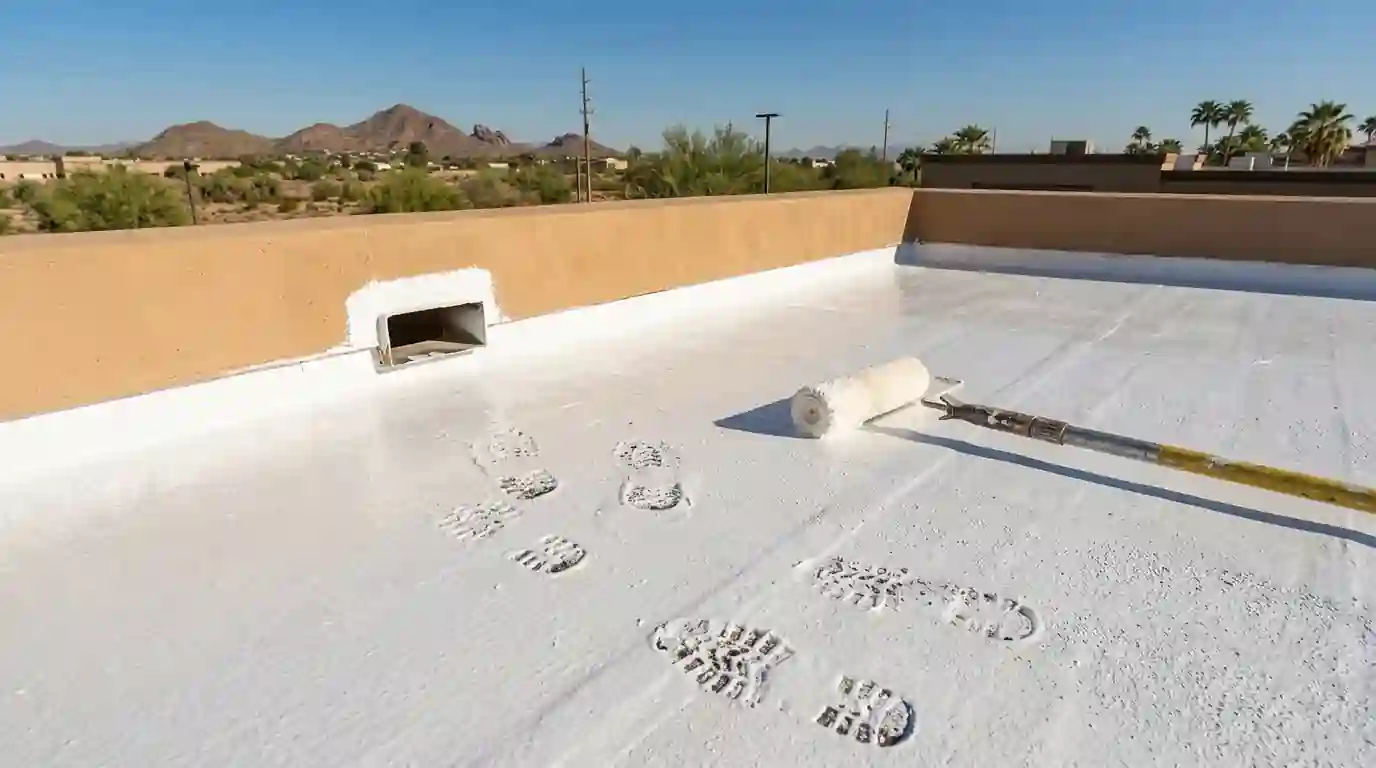
On flat and foam roofs we use coating systems from Gaco, Henry and Tremco, and single-ply membranes such as Carlisle TPO where a membrane is the better fit.
Silicone has quirks, and we would rather you hear them from us before the job than discover them after. Its surface collects dust, so a white silicone roof in the Valley turns light gray fairly quickly, which reduces some of its reflectivity until rain or a rinse cleans it. It is also slippery when wet, and it tears more easily than acrylic under heavy boots, so we add walk pads around equipment that gets serviced often. On homes, we suggest owners keep their trips onto a silicone roof to a minimum and call us for anything beyond clearing a scupper.
The bigger long-term issue is recoating. Very few products bond to cured silicone except more silicone. Once you choose it, future recoats will be silicone too. That is fine for most owners, since silicone usually stretches the interval between coats, but it is worth knowing before you commit. If your roof drains well and you want the lower cost and easier recoats, our acrylic elastomeric option may suit you better.
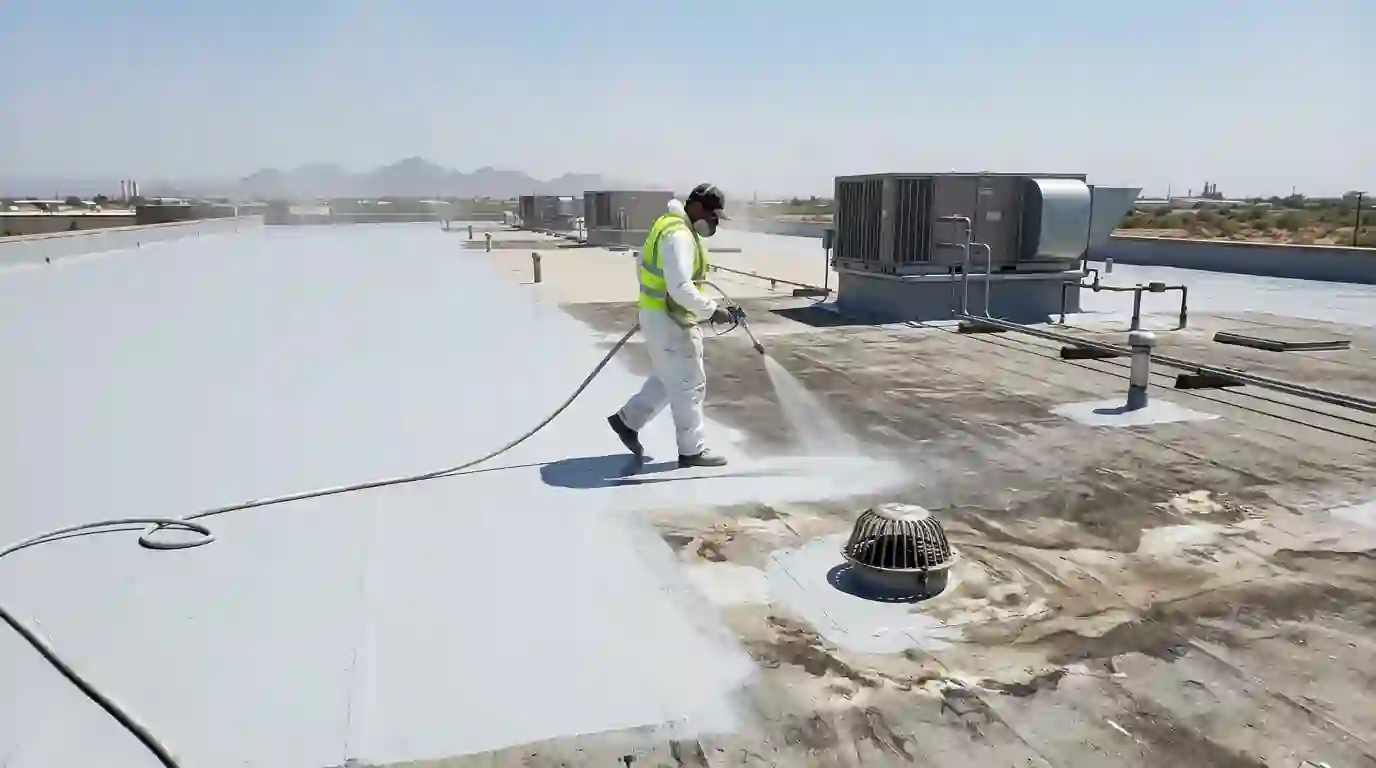
Silicone sticks well to clean, dry surfaces and poorly to anything else. We pressure wash and let the roof dry completely, then clean again where needed, because Valley dust settles fast. Some surfaces, such as aged built-up roofs, need a primer to block asphalt bleed or improve bond. We run a small adhesion test whenever the existing surface is uncertain, and we wait for the result before ordering the full batch of material.
Repairs come before coating. Wet foam or insulation is cut out and replaced, open seams on single-ply roofs are welded or reinforced, and blisters are repaired. Silicone often goes on in a single thick pass rather than two thinner ones, sometimes with granules broadcast into it for traction and wear. We check thickness as we go, since the life of the coating tracks directly with how much material is actually on the roof.
On foam roofs, silicone is a common choice for the top coat, especially where ponding is unavoidable. If your foam roof is due, see our recoat service for foam roofs, which covers the repair steps in more detail. We can usually tell you on the first visit whether your existing foam coating is acrylic or silicone, and that alone often settles which product goes on next.
Phone (602) 878-3594. Tell us the roof type, whether it ponds, and any leak history. We schedule a visit to inspect and check for trapped moisture.
We look for wet areas and failing seams, and run an adhesion test on unknown surfaces so the right primer or prep is planned.
The surface is pressure washed and dried completely. Silicone will not bond to dust, chalk, bird droppings or damp material, so this step is never rushed.
Wet sections, blisters and open seams are repaired, and flashing, curbs and penetrations get reinforced details before any coating is applied.
Primer goes on where needed, then silicone at the specified thickness, often with granules, checked with a wet mil gauge throughout the whole roof.
We add walk pads at service areas, inspect the finished roof and record product, thickness and date for your future recoat planning.
Typical range in the Phoenix area
$2.35 to $4.65
per sq ft of roof surface
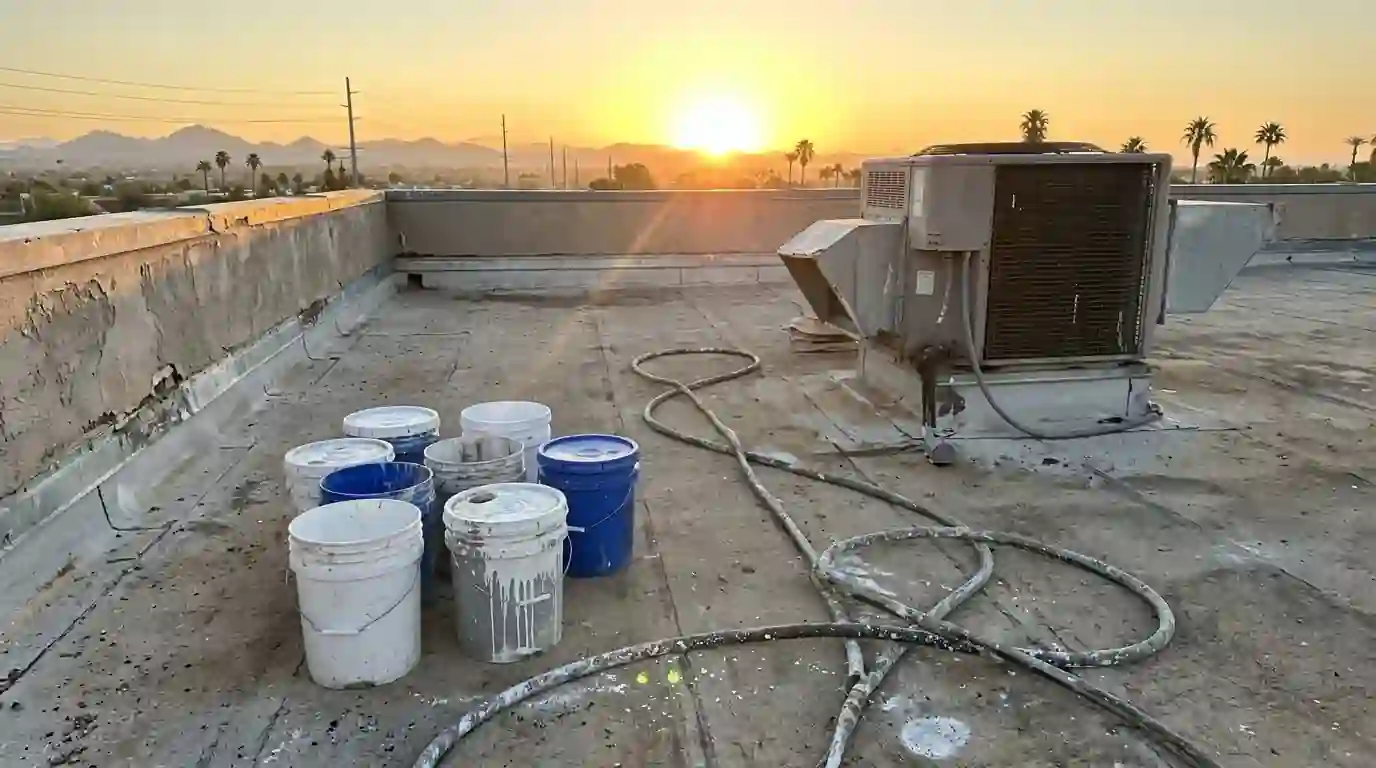
Silicone costs more per gallon than acrylic and is usually applied thicker, so prices run higher. The difference is often recovered through a longer interval before the next recoat. These ranges reflect typical Valley residential and light commercial work in 2026.
Ranges are typical figures for Valley homes, not a quote. We price your roof after we see it.
Most of our silicone roof coating calls come from these parts of the Valley. We also cover every other area on our service area list, from Anthem and Cave Creek down to Casa Grande.
Silicone often lasts longer between recoats than acrylic, commonly toward the upper end of the 5 to 10 year range or beyond, depending on thickness and traffic. It resists UV and ponding well. Regular checks and keeping the surface clean help it reach its full life.
Silicone surfaces hold onto dust, and Valley dust is constant. The roof is still protected, but dirt lowers reflectivity. Rain or a gentle rinse restores some brightness. Granules in the top coat can help hide dirt and add some wear resistance.
Usually not without significant work. Very few coatings bond to cured silicone, so future recoats are typically silicone as well. In some cases a special primer allows other products, but we plan on silicone staying silicone.
It can be, if the TPO is dry, the seams are sound or repaired, and the membrane still has some life left. Silicone restores UV protection and can delay a tear-off. Wet insulation under the TPO must be found and replaced first.
Yes, especially when wet or dusty. We add granules to the surface where traffic is expected and install walk pads around AC units and roof hatches so technicians have safe footing and the coating is not worn by repeated steps.
Acrylic elastomeric roof coating for Phoenix flat, foam and metal roofs: bright white, flexible in heat, fairly priced. Call (602) 878-3594 any time.
Learn moreFoam roof turning brown, blistered or pecked in Phoenix? We clean, patch and recoat before UV eats the foam. Call (602) 878-3594 any hour to set a visit.
Learn moreTPO roofing for Phoenix commercial and flat homes: white single-ply membrane, hot-air welded seams, cooler in summer. Call (602) 878-3594 any time.
Learn moreCommercial roofing in Phoenix: TPO, foam and coatings for flat roofs, rooftop unit flashing and repairs scheduled around your business. Call us 24/7.
Learn moreCall us any hour. A real person answers, asks a few questions about your roof and sets up a visit.