Leaks in several places
When water shows up in more than one room after a monsoon, the problem is usually spread across the roof system, not a single failed spot.
Roof Repair
Tile Roofing
Flat & Foam Roofing
Shingle & Metal Roofing
Replacement & Inspections
Solar, Vents & Extras
Phoenix neighborhoods
Valley cities
Counties
Replacement & Inspections
Replacing a roof is the biggest roofing decision most Valley homeowners make, and the right answer depends on what is up there now. Concrete tile, shingle, foam, built-up and metal each age differently in our heat. We replace all of them and help you decide what goes back on.
Short answer
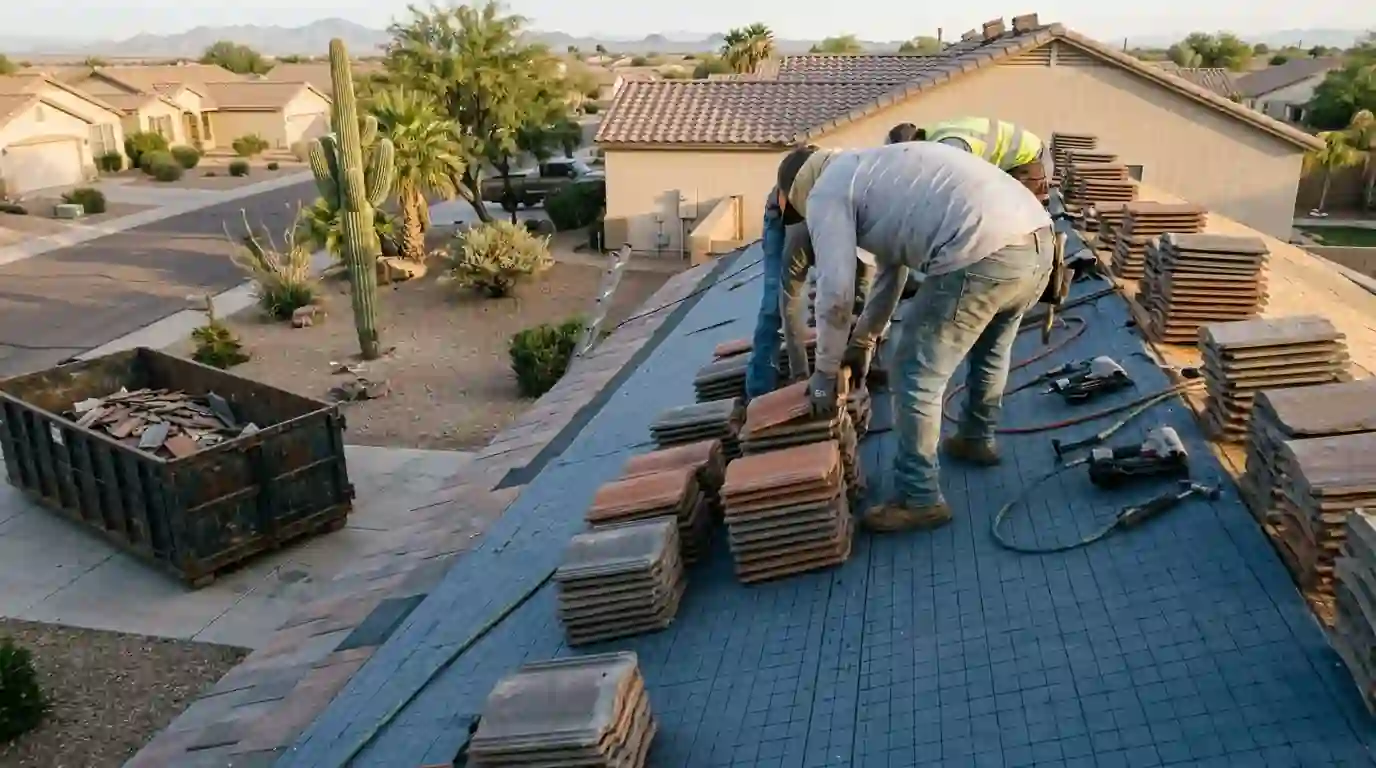
A roof replacement in Phoenix means removing the old system down to the deck or to the underlayment, repairing what is underneath, and installing a new roof matched to the home. Tile roofs often keep their tiles and get new underlayment. Shingle roofs are usually torn off. Foam roofs can often be recoated or overlaid instead. Many Valley cities require a permit for a full re-roof.
Materials we install and repair across the Valley
The tear-off decision is where a replacement project is won or lost. For asphalt shingles we almost always strip to the deck, because a second layer traps heat and hides damage. For concrete tile, the tiles themselves often have decades left, so the usual job is to lift and stack the tiles, remove the worn underlayment, repair the deck, lay new underlayment and battens, and reset the original tiles with new ones mixed in for any that break. That is a tile underlayment replacement, and it is often the best value in the Valley.
Foam roofs are different again. If the foam is mostly dry and sound, we can often clean it, repair damaged spots and add a fresh layer of foam and coating rather than tearing it all off. Built-up and older flat roofs usually come off down to the deck. We probe, cut test spots where needed and take moisture readings before recommending anything, so the plan matches what is really under the surface.
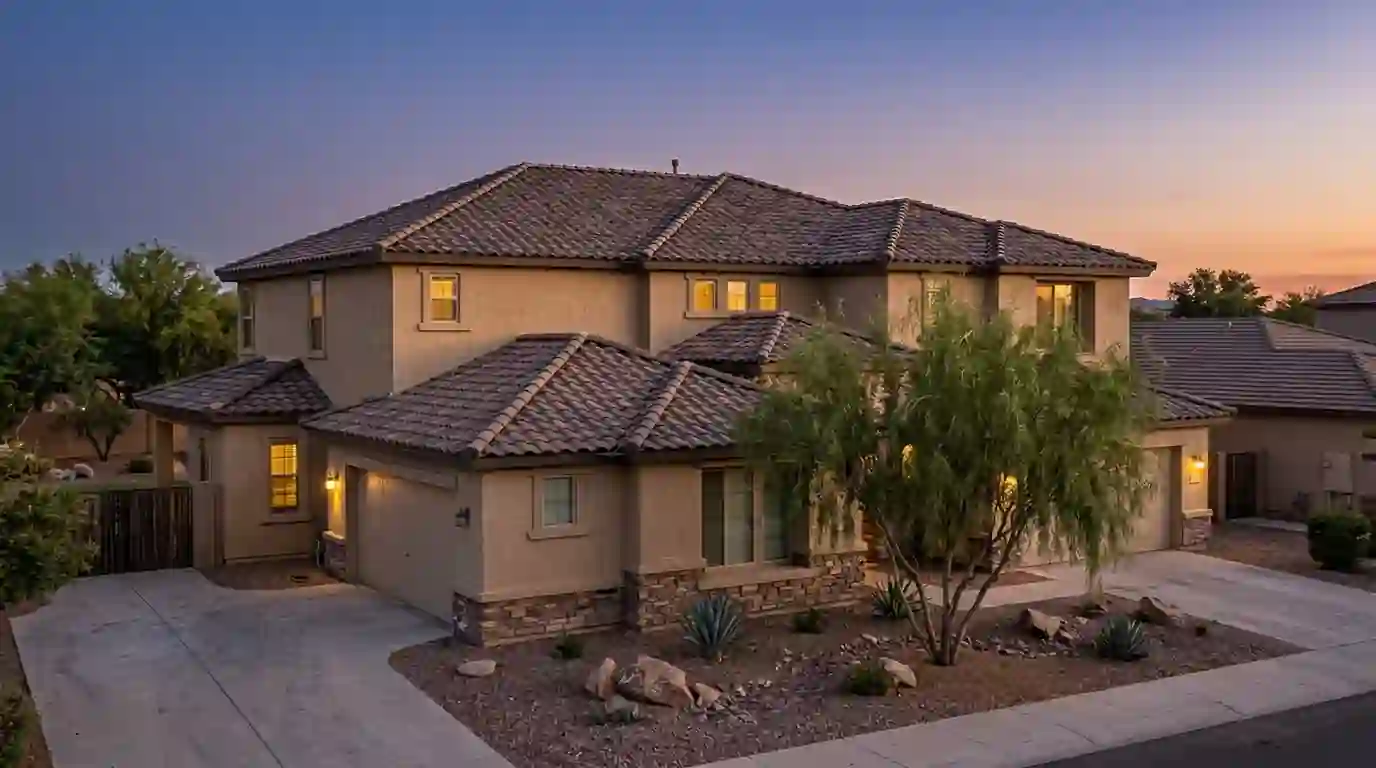
On full replacements we price the roof in more than one material when it helps, for example Eagle or Westlake Royal tile against GAF or CertainTeed shingles, so you can compare.
Replacement is a chance to rethink the roof, not just repeat it. A shingle house might be a candidate for stone-coated steel or standing seam metal. A low-slope addition with a leaky rolled roof might do far better with foam or a single-ply membrane. Weight, HOA rules, budget, solar plans and how long you expect to stay all shape the answer. We lay out two or three realistic options with honest costs, and our article on what a new roof costs in Phoenix gives the bigger picture.
Heat performance should be part of that choice. Light, reflective surfaces lower roof temperatures and slow aging of whatever sits underneath. Adding ridge or off-ridge vents, opening blocked soffits or laying a radiant barrier during the tear-off costs much less than doing it later. Owners in older central Phoenix neighborhoods like Encanto often have mixed roofs, with pitched sections and flat sections, and we plan both together so the transitions do not leak.
Many Valley cities require a permit for a full re-roof, and some require inspections at certain stages, such as after the deck and underlayment are down. We pull the permit where it is needed and schedule inspections so the crew is not waiting on a closed roof. If you are in an HOA, approval usually has to be in hand before the permit means anything, so we start that paperwork the week you decide.
On the day work starts, we protect landscaping, pool equipment and AC units, cover the pool if it sits close to the roof edge, and set a dumpster or trailer where it will not crack the driveway. Crews dry in the roof at the end of each day, and during monsoon season we watch the radar closely. If a storm cell builds unexpectedly, we tarp everything before we leave. Magnet sweeps for nails happen daily, not only on the last day.
The most expensive mistake is replacing tiles that did not need replacing. Plenty of homeowners are sold a whole new tile roof when the original tiles could have been reset over new underlayment for much less. The opposite error happens too: covering bad decking to hold a low bid. Ask any roofer how they price deck repair before you sign, and make sure the contract spells out the underlayment type and every flashing component.
Skipping the attic is another miss. A new roof over a hot, poorly vented attic ages faster than it should. So does ignoring the gutters, fascia and patio tie-ins that let water reach the new roof edge. We include those in our walkthrough, and if you are not sure your roof is really done, a stand-alone roof inspection is a sensible first step before committing to a full replacement.
Some roofs need a patch, others need a fresh start. These are the patterns that tell us replacement is the better use of your money.
When water shows up in more than one room after a monsoon, the problem is usually spread across the roof system, not a single failed spot.
On many Valley tile roofs the underlayment, not the tile, is what fails, commonly around 20 to 25 years, and it shows up as random leaks.
Bald patches, curled tabs and shingles that crack when lifted mean the whole surface has aged out and patches will not hold much longer.
A foam roof whose coating has worn through, with exposed tan foam turning dark or pitted, may be past the point where a simple recoat helps.
A deck that gives when you walk on it has been wet for a while. Rotted sheathing needs to come out, and that means opening up the roof.
Paying for a repair every season or two on an aging roof adds up fast, and a new system resets the clock and stops the cycle.
Typical range in the Phoenix area
$12,460 to $38,790
per typical single-story home
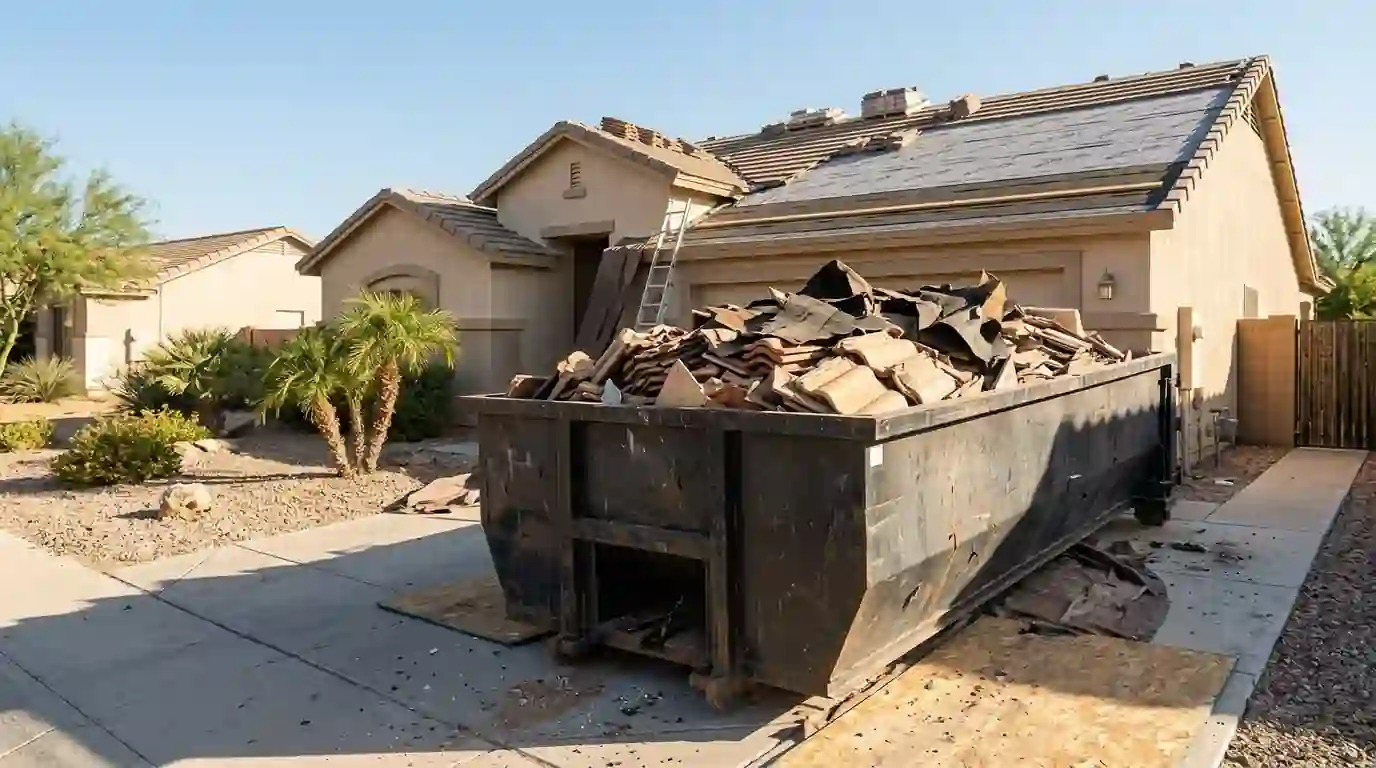
Replacement costs vary more than almost any other roofing job because the roof type, tear-off method and deck condition change so much from house to house. The range below covers most single-story Valley homes, from a tile underlayment reset at the low end to a full tear-off and new premium system at the top.
Ranges are typical figures for Valley homes, not a quote. We price your roof after we see it.
Call (602) 878-3594 at any hour. Tell us the roof type, age and what you are seeing, and we schedule a full inspection at your home.
We walk the roof, check the attic, test suspect areas and photograph everything so the recommendation rests on what is actually there.
You get a written scope with materials, underlayment, flashing, venting and deck repair pricing spelled out, plus alternatives where they make sense.
We prepare HOA paperwork, file the permit where required, order materials and set start dates around heat, monsoon forecasts and your schedule.
Crews remove the old system, repair the deck, install the new roof and dry it in each day, with daily cleanup and magnet sweeps.
We pass the final city inspection, walk the finished roof with you, hand over photos and product paperwork, and register warranties where offered.
Most of our roof replacement calls come from these parts of the Valley. We also cover every other area on our service area list, from Anthem and Cave Creek down to Casa Grande.
Many Valley cities do require a permit for a full re-roof, and the rules differ by city and by scope of work. We check the requirements for your address, file the permit when one is needed and schedule any required inspections. Small repairs usually do not need one, but a full replacement often does.
Often, yes. Concrete tiles commonly outlast the underlayment under them, so we lift and stack them, replace the underlayment and battens, then reset them. Expect some breakage, which we replace with matching tiles. If many tiles are cracked, faded or a discontinued profile, a mix of reused and new tile may be the answer.
Most single-story homes take two to five working days of roof work, depending on roof type and size. Tile resets take longer than shingle roofs because every tile is handled twice. HOA approval and permits can add time before the start date, so we begin that paperwork right away.
Yes, with planning. We watch forecasts closely, open only as much roof as we can dry in that day, and keep tarps staged on site. Afternoon storms often build after crews have finished, since summer work starts at dawn. If a strong cell is forecast, we adjust the schedule rather than gamble with an open roof.
If your roof has less than about ten years left, it usually makes sense to replace it first. Removing and reinstalling an array later costs real money, and solar panels can outlast an aging roof by many years. We can coordinate timing with your solar company so the new roof and the array line up.
Tiles fine but the felt under them is shot? We lift and relay Phoenix tile roofs with new two-ply or synthetic underlayment. Call (602) 878-3594 any time.
Learn moreAsphalt shingle roofs for Phoenix homes, chosen and vented for 160 F roof decks: cool-rated colors, sealed ridges, solid nailing. Call (602) 878-3594.
Learn moreReplacing a worn flat roof in Phoenix? We compare foam, TPO, mod bit and built-up for your home, fix slope and drains, then rebuild. Call (602) 878-3594.
Learn morePhoenix roof inspections after monsoon storms, before buying or before solar: photos, attic checks and a plain written report. Call (602) 878-3594.
Learn moreCall us any hour. A real person answers, asks a few questions about your roof and sets up a visit.