Water dripping through a light fixture
Water near wiring is a safety issue first. Turn off that circuit at the breaker, keep people clear and call us so we can stop the source from above.
Roof Repair
Tile Roofing
Flat & Foam Roofing
Shingle & Metal Roofing
Replacement & Inspections
Solar, Vents & Extras
Phoenix neighborhoods
Valley cities
Counties
Roof Repair
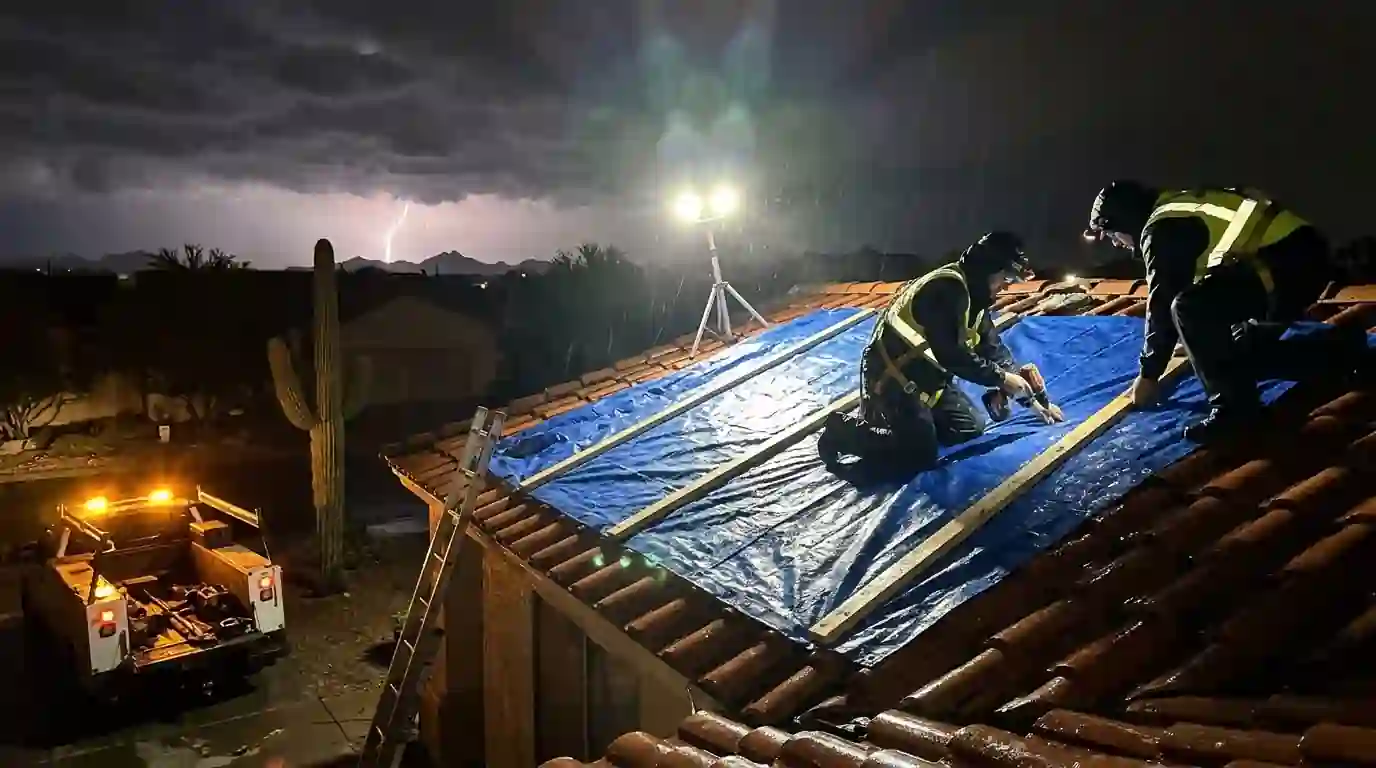
Water coming through the ceiling at 11 p.m. does not wait for business hours, and neither do we. Our phone is answered 24/7, and when it is safe to get on the roof, we tarp, seal or cover the opening that night to stop more water from getting in.
Short answer
For a roof emergency in Phoenix, call (602) 878-3594 at any hour. A person answers, asks a few quick questions and dispatches a roofer. If lightning or high wind makes the roof unsafe, we talk you through protecting the inside first and arrive as soon as conditions allow. Emergency tarping or sealing typically runs $465 to $1,380, and permanent repairs are priced separately once the roof is dry.
Materials we install and repair across the Valley
Not every roof issue needs a night visit. These are the situations where waiting until morning usually costs more than calling now.
Water near wiring is a safety issue first. Turn off that circuit at the breaker, keep people clear and call us so we can stop the source from above.
A drywall bubble full of water can drop without warning. Poke a small hole at the low point over a bucket to drain it, then call.
Wind can strip a section bare, leaving felt or decking open to the next rain band. Exposed areas need cover before the storm cell returns.
Branches from mesquite, eucalyptus or pine can punch through decking. We cut back what is safe, cover the opening and assess structural damage once it is clear.
Multiple leaks at once usually mean a large area of the roof was compromised, often a lifted section, blocked drain or failed coating on a flat roof.
After a fire, a fallen solar panel, a dropped satellite dish or other impact, an open roof needs to be closed fast to protect what is inside.
A dispatcher answers live, asks about the leak, the roof type and any safety risks, then gives you an arrival window and inside steps to limit damage.
A roofer heads out with tarps, battens, sealants and lighting sized for your roof type, so the first visit can close the opening.
We check for live wiring near water, wet roof conditions and lightning. If the roof is unsafe, we protect the interior and wait for the cell to pass.
The damaged area gets covered or sealed with anchoring that does not damage good tiles or shingles, then we check the attic for remaining drips.
You get photos of the damage and the temporary cover, plus a note on the likely permanent fix, which is useful for any insurance claim.
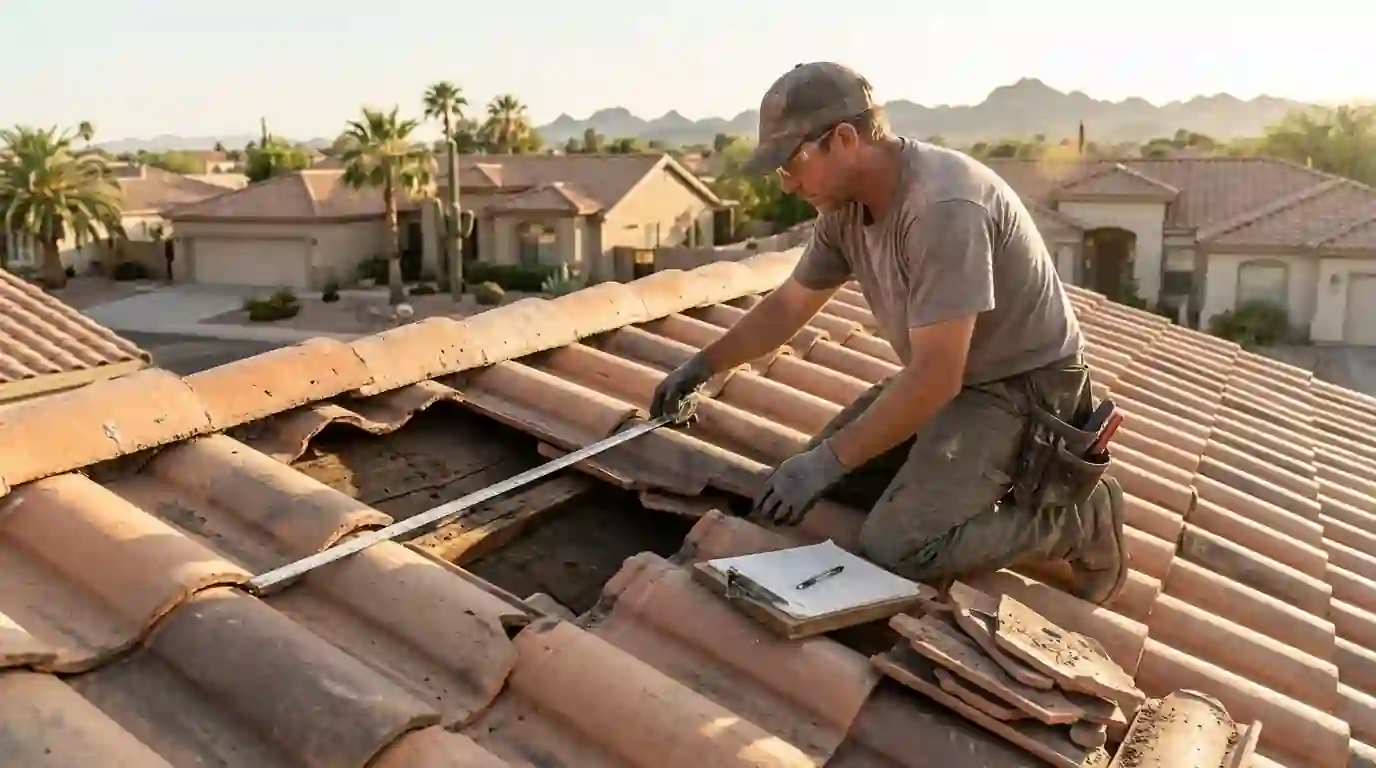
Once the roof dries, we return to open up the area, check underlayment and decking, and price the lasting repair before any work begins.
When you call at night, a dispatcher picks up, not a recording. We ask where the water is showing, what kind of roof you have, whether power is affected and whether anyone is at risk. That short call tells us what to load: tarps sized for tile or flat roofs, sandbags or batten strips for anchoring, sealant rated for wet surfaces, and the right ladders. It also lets us tell you what to do inside while the roofer drives over.
Inside, the goal is to limit damage. Move electronics and furniture, set out buckets and towels, and drain any water bubble in the ceiling with a small hole. Turn off breakers to rooms where water is near fixtures. Take a few photos of the stains and the wet areas, since those are useful later if you open a claim. Do not climb onto a wet roof in the dark. That is our job, and we have the gear for it.
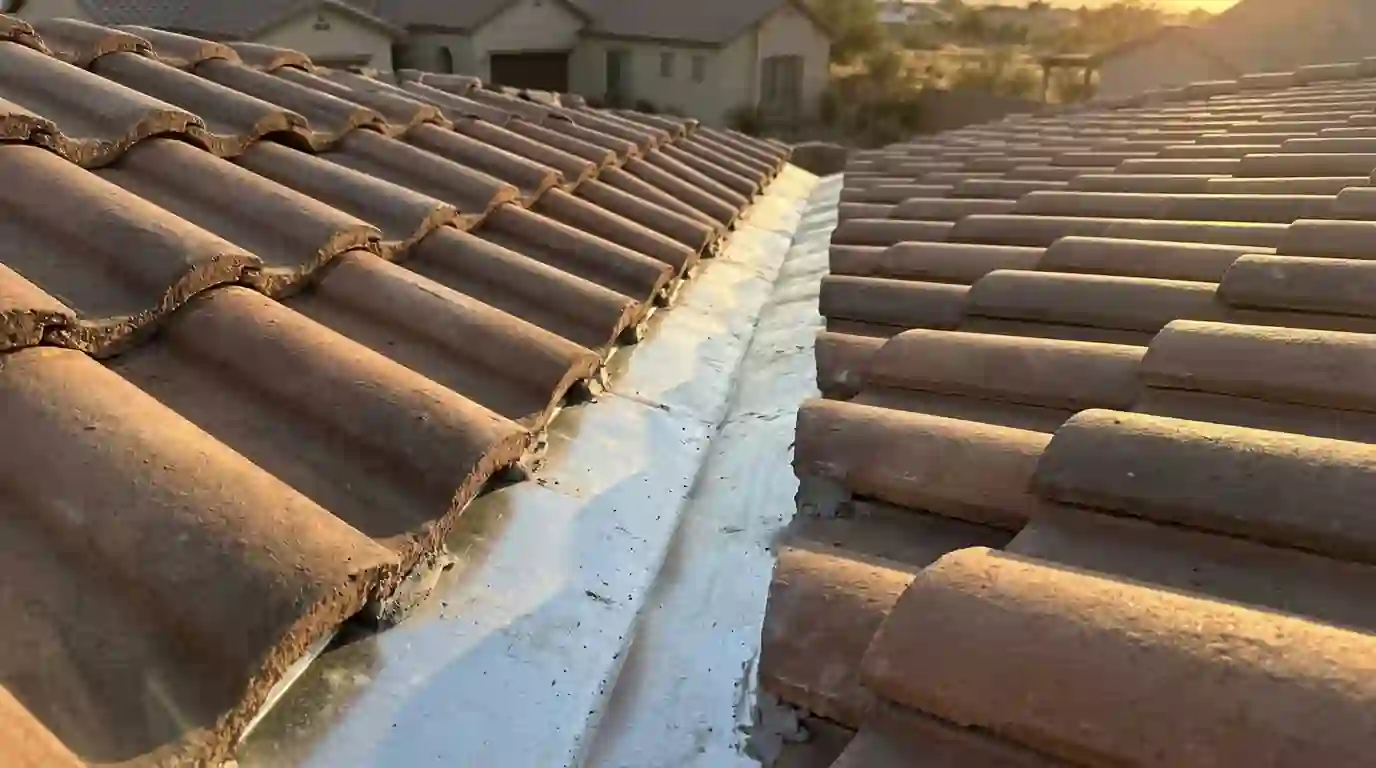
On repairs we match what is already on the roof, from Eagle and Westlake Royal concrete tile to GAF and Owens Corning shingles, and we seal flashing with roof-grade products from Henry and Tremco.
Tarping is not just throwing plastic over the house. On a tile roof, we stretch heavy reinforced tarps over the damaged area and secure them with batten boards and weights so we are not driving nails through good tiles. On shingle, we fasten through wood strips at the edges so wind cannot get under the sheet. On a foam or flat roof, a fast-cure sealant or a weighted membrane often works better than a tarp, which tends to catch wind on a low slope.
At night we work with headlamps and floodlights, and we only go up when footing is safe. During an active lightning storm we wait. Monsoon cells usually pass within an hour, so a short wait is better than a fall. Once the cover is on, we photograph it and check the attic for any remaining drip points. You get a clear note on what was done and what the permanent fix will involve.
Emergency work stops the water. It is not the repair. Tarps in Phoenix sun break down fast, often within weeks, so we schedule the permanent fix as soon as the roof dries out. That visit includes lifting tiles or cutting out damaged foam to see how far the water traveled, checking decking for soft spots, and pricing the full repair. If the leak came from a storm, our monsoon damage repair work covers how we document storm damage for a claim.
If water reached the attic or walls, insulation and drywall may need drying or removal to prevent mold. We point out what we see, and you decide who handles the interior. For a step-by-step guide to the night itself, our post on what to do when the roof leaks after a storm covers the inside checklist in more detail. Wet blown-in insulation also loses most of its value and can sag onto the drywall, so it is worth checking with a flashlight once the drip stops.
Typical range in the Phoenix area
$465 to $1,380
per emergency tarp or seal visit
Emergency pricing covers the night or weekend dispatch, materials for the temporary cover and the time to secure it safely. It does not include the permanent repair, which we price after we can see the full damage in daylight on a dry roof.
Ranges are typical figures for Valley homes, not a quote. We price your roof after we see it.
Most of our emergency roof repair calls come from these parts of the Valley. We also cover every other area on our service area list, from Anthem and Cave Creek down to Casa Grande.
Yes. Our line at (602) 878-3594 is answered 24/7, including holidays and monsoon nights. A person takes the details, tells you what to do inside right away and dispatches a roofer to your address. You can also send photos once we answer, which helps the roofer pack the right gear.
Usually a few weeks, sometimes less. UV and roof heat break down tarp fabric quickly, and monsoon gusts work at the anchors. That is why we schedule the permanent repair as soon as the roof is dry instead of leaving a tarp up for months.
Stop the water first. Most policies expect you to take reasonable steps to prevent further damage, and an emergency tarp is one of them. Take photos, call us to cover the roof, then call your insurer with the photos and our written note in hand.
Often, yes. If the leak is beside or below the array, we can usually tarp around the panels or seal at the mounts. If the opening is directly under the panels, we cover what is reachable and plan panel removal for the permanent repair.
Turn off that circuit at the breaker panel, keep everyone out of the room and put a bucket under the drip without touching the fixture. Then call us. Do not switch the light on to check it, even after the dripping stops.
Roof leak repair in Phoenix: we trace the water to its true entry point on tile, foam, shingle or flat roofs and fix the cause. Call us 24/7.
Learn moreMonsoon storm damage repair in Phoenix: we tarp, document and fix roofs hit by microbursts, haboobs and flying debris. Call (602) 878-3594.
Learn moreWind damage roof repair in Phoenix: lifted tiles, torn shingles and peeled flat roof edges fixed and fastened to resist the next gust. Call (602) 878-3594.
Learn morePhoenix roof repair for tile, foam, shingle and flat roofs. We find the real failure, fix it to match, and photograph it. Call (602) 878-3594.
Learn moreCall us any hour. A real person answers, asks a few questions about your roof and sets up a visit.