Emergency Roof Repair
Emergency roof repair in Phoenix: a live person answers 24/7, and we tarp or seal the leak the same night when it is safe. Call (602) 878-3594.
Learn moreRoof Repair
Tile Roofing
Flat & Foam Roofing
Shingle & Metal Roofing
Replacement & Inspections
Solar, Vents & Extras
Phoenix neighborhoods
Valley cities
Counties
Desert Roof Guide
Water dripping through the ceiling at 10 at night is stressful. Here is a calm, hour-by-hour plan for Phoenix homeowners, from the first bucket to the permanent repair.
By Lamar Baskin, Desert Roof Guide EditorUpdated September 8, 20266 min read
The short version
If your roof leaks during a Phoenix monsoon storm, protect people and belongings first: shut off power to wet ceiling fixtures, move valuables, catch the water, and relieve a bulging ceiling with a small hole into a bucket. Don't climb onto a wet roof at night. Take photos, then call a roofer for an emergency tarp or dry-in once it is safe, and schedule a full inspection after the storm.
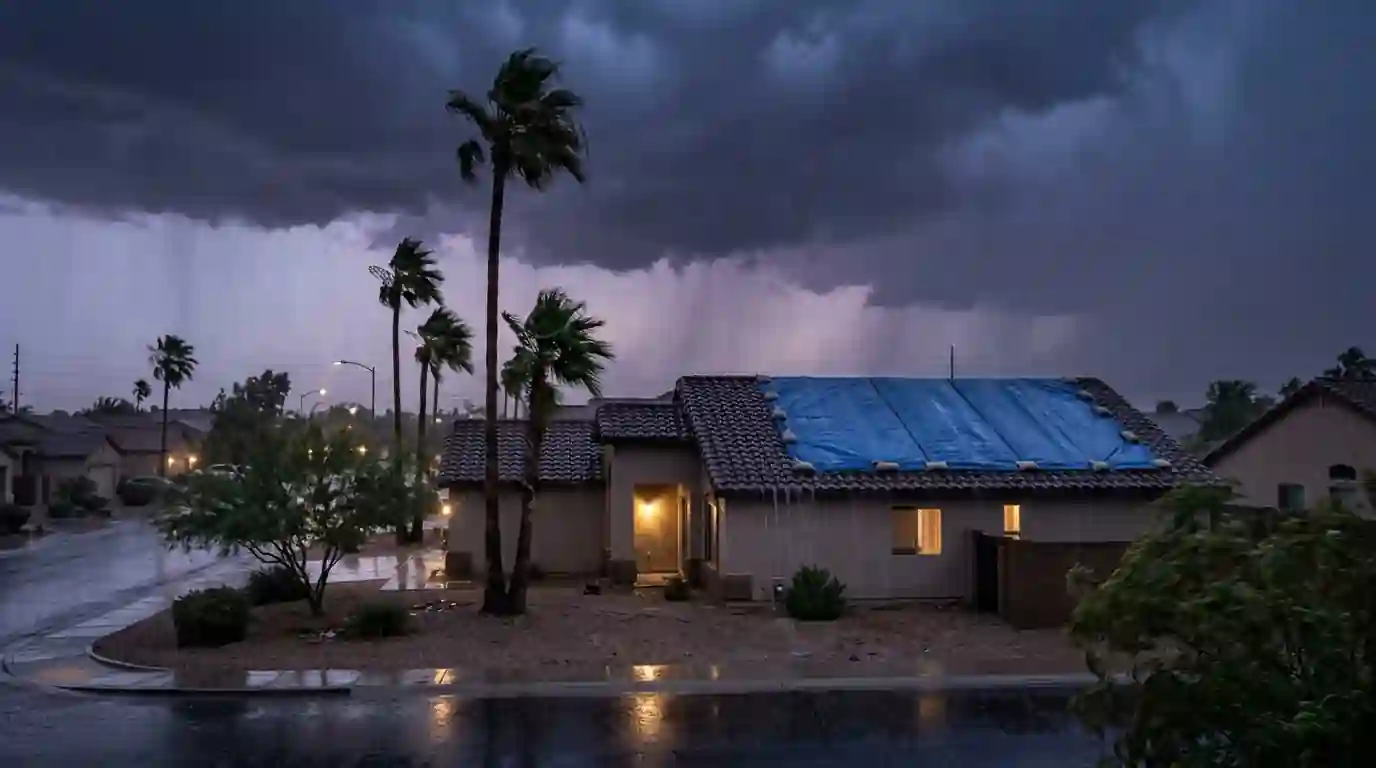
Monsoon storms tend to hit in the late afternoon or evening, which means many leaks are discovered after dark. Before anything else, think about electricity. If water is coming through near a light fixture, ceiling fan or outlet, turn that circuit off at the breaker panel. Don't stand in water to do it. If you are not sure which breaker controls the room, turn off the main and use flashlights.
Then go after the water. Move electronics, rugs, furniture and anything you care about out of the drip zone. Put down a bucket, a trash can or a storage tote, with a towel inside to stop splashing. Lay old towels around it. These steps sound basic, and they matter more than anything else you will do tonight.
A ceiling that bulges downward is holding water above it. Left alone, it can give way all at once and drop wet drywall and insulation into the room. The safer move is to control where the water comes out. Put a bucket under the lowest point of the bulge, stand to the side, and poke a small hole with a screwdriver. The water drains into the bucket instead of spreading across the attic and pulling the whole ceiling down.
Have a second bucket ready, since the first one can fill fast. Once the flow slows, you will have a better idea of how much water came in. If the bulge is large or the drywall is already cracking around it, keep everyone out of the room and wait for help rather than trying to manage it yourself.
We get it: you want to find the hole and cover it. But a wet tile roof in the dark is one of the most dangerous places you can stand. Concrete and clay tiles are slick when wet, loose tiles shift underfoot, and lightning often lingers after the heavy rain passes. Flat roofs have their own hazards, including skylights you can't see well and soft spots on a waterlogged deck.
Tarping a roof properly takes ladders, the right fasteners and someone who knows how to secure a tarp without breaking more tile. That is exactly what emergency roof crews are for. We answer (602) 878-3594 around the clock, and when it is safe to work, we send a crew to dry the area in. Until then, stay inside and keep the water contained.
Photos and video taken during the leak are more useful than anything you can reconstruct later. Capture the drip, the stain, the bulge, any wet furniture and the outside of the house if you can do it safely from the ground. Note the time. If you know the storm brought strong wind or hail, write that down too, along with anything you saw blow off the roof.
This record helps the roofer figure out where water entered, and it helps if you decide to talk to your insurer. Our walkthrough of the roof claim process explains how that documentation gets used, but the short version is simple: more photos, with time stamps, are always better.
In daylight, walk around the house and look up. You are looking for clues, not making repairs. Note anything that is clearly out of place and take photos before you clean anything up. The yard often tells the story: shingle pieces, broken tile shards or a chunk of foam on the ground point straight at the damaged area.
Inside, check the attic if you can get there safely by its access hatch. Look for wet insulation, dripping from the underside of the deck and staining around vents and pipes. Wet insulation should come out and dry, since it holds moisture against drywall and wood for days, and that is how mold gets started in a closed space.
Most monsoon leaks are not random. On tile roofs, the underlayment beneath aging tile is usually the real failure, often around 20 to 25 years in Valley heat, and a heavy, wind-driven storm finds every brittle spot at once. On flat roofs, water backs up behind clogged scuppers and canales after a dust storm fills them with grit, then finds a crack at the parapet. Flashings at walls, chimneys and skylights are also frequent culprits.
Knowing the likely cause shapes the fix. A slipped tile is a quick repair. Failed underlayment over a whole slope is a bigger job, and patching one spot at a time just moves the leak. Our leak repair work starts by tracing water to its true entry point, which is often a few feet uphill from where it showed up on the ceiling.
A tarp or temporary dry-in buys time. It is not a repair. Within a few days, the damaged area should be inspected properly, the cause identified and a real repair scheduled. Monsoon season runs June 15 to September 30, so if the roof leaked once, the next storm will test the same weak point. For homeowners who want to get ahead of next summer, our pre-monsoon roof checklist is a good place to start.
Expect a typical post-storm leak repair to run somewhere around $485 to $1,690, depending on roof type, how far the water traveled, whether tile or decking needs replacing and how hard the area is to reach. Larger underlayment or deck repairs cost more. Whatever the scope, you will get the range and the reasons before work starts.
We don't recommend it, especially at night or while the roof is wet. Tile is slippery and breaks easily under foot, and a tarp that isn't fastened properly can blow off in the next gust. Contain the water inside and call for help. A crew can tarp the roof safely once conditions allow.
It depends on how widespread the storm was, since a big monsoon cell can damage roofs across a whole part of the Valley at once. We answer calls 24/7 and prioritize active leaks into living space. Call early, describe what you see, and we will tell you plainly when a crew can be there.
Not always. Small stains on drywall that dries quickly can often be sealed and repainted. Drywall that sagged, softened or stayed wet for days usually needs to come out, along with any wet insulation above it. Let it dry fully before deciding, and check for musty smells over the following week.
Emergency roof repair in Phoenix: a live person answers 24/7, and we tarp or seal the leak the same night when it is safe. Call (602) 878-3594.
Learn moreRoof leak repair in Phoenix: we trace the water to its true entry point on tile, foam, shingle or flat roofs and fix the cause. Call us 24/7.
Learn moreMonsoon storm damage repair in Phoenix: we tarp, document and fix roofs hit by microbursts, haboobs and flying debris. Call (602) 878-3594.
Learn moreTile roof leaking or tiles slipping in Phoenix? We trace the leak to the underlayment, reset or swap tiles and seal it the same week. Call (602) 878-3594.
Learn more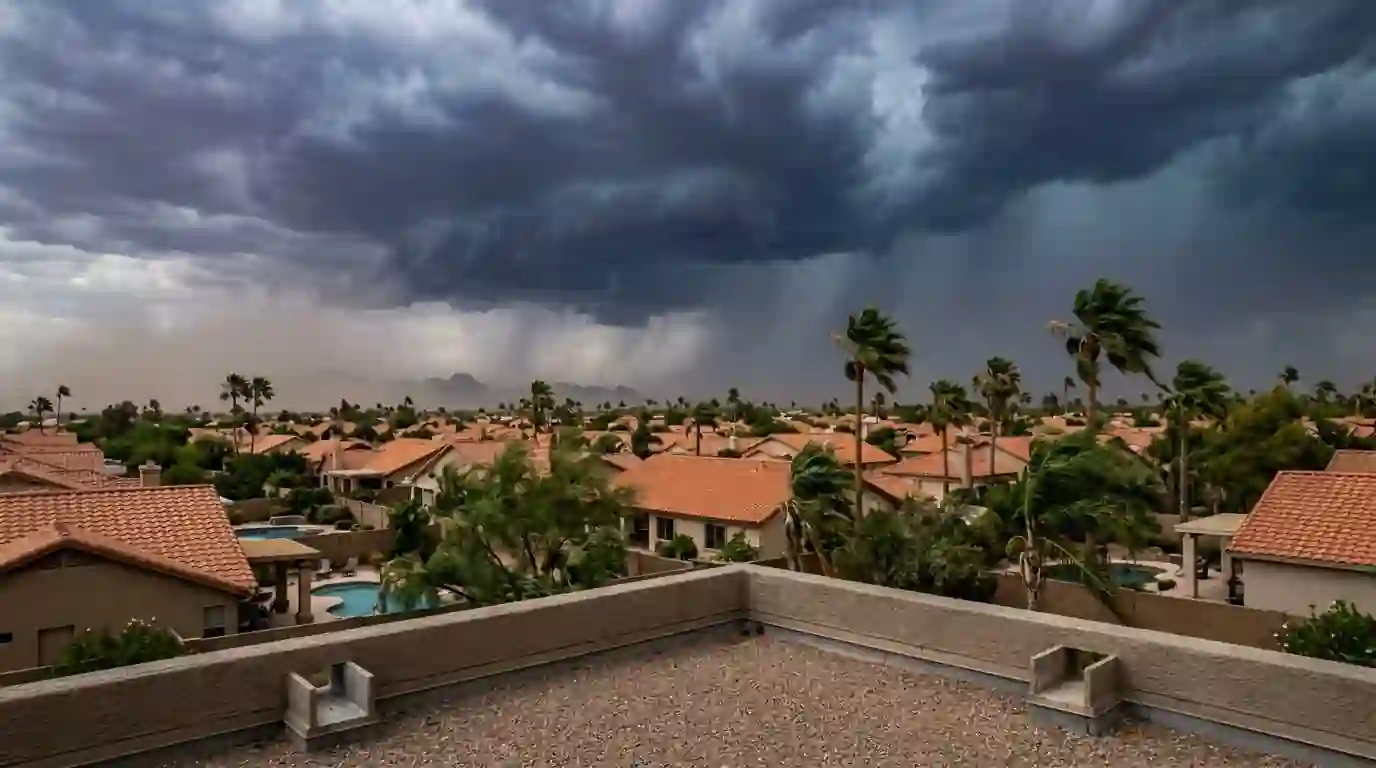
June 9, 2026
Monsoon storms bring wind, dust, hail and sudden downpours. This checklist covers what to look at on your roof before mid June and what to leave to a roofer.
Read the guide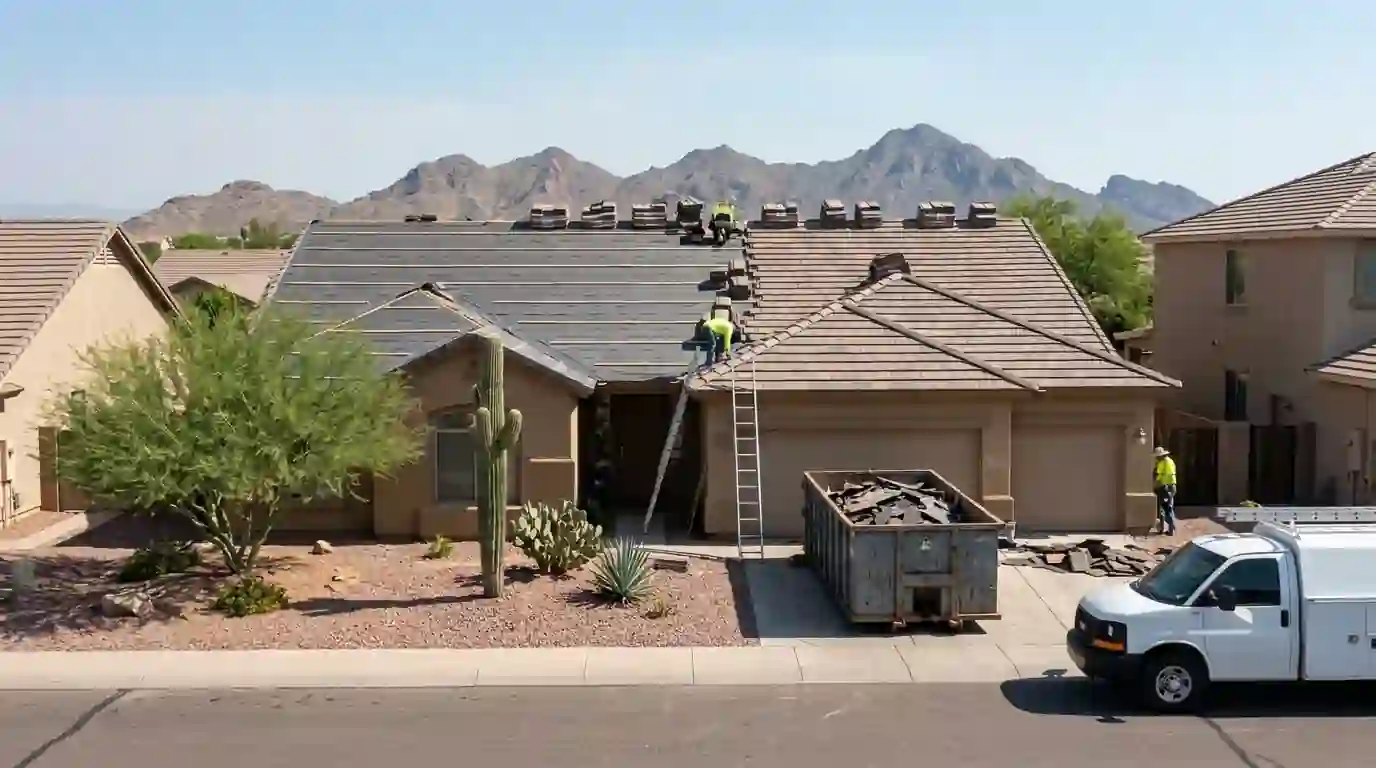
July 14, 2026
Roof replacement prices in the Valley vary a lot by material, roof size and what's under the old roof. Here are realistic 2026 ranges and what drives them.
Read the guide
July 28, 2026
Concrete tile, asphalt shingle and sprayed foam all work in the Valley, but they age in very different ways. Here is how we help Phoenix homeowners choose between them.
Read the guideCall (602) 878-3594. We answer around the clock and can usually tell you over the phone whether it needs a visit.