Roof is 18 to 25 years old
Original 30 lb felt on Valley homes from that era is near the end of its life even when nobody has seen a leak yet. Heat ages it faster than anywhere in the country.
Roof Repair
Tile Roofing
Flat & Foam Roofing
Shingle & Metal Roofing
Replacement & Inspections
Solar, Vents & Extras
Phoenix neighborhoods
Valley cities
Counties
Tile Roofing
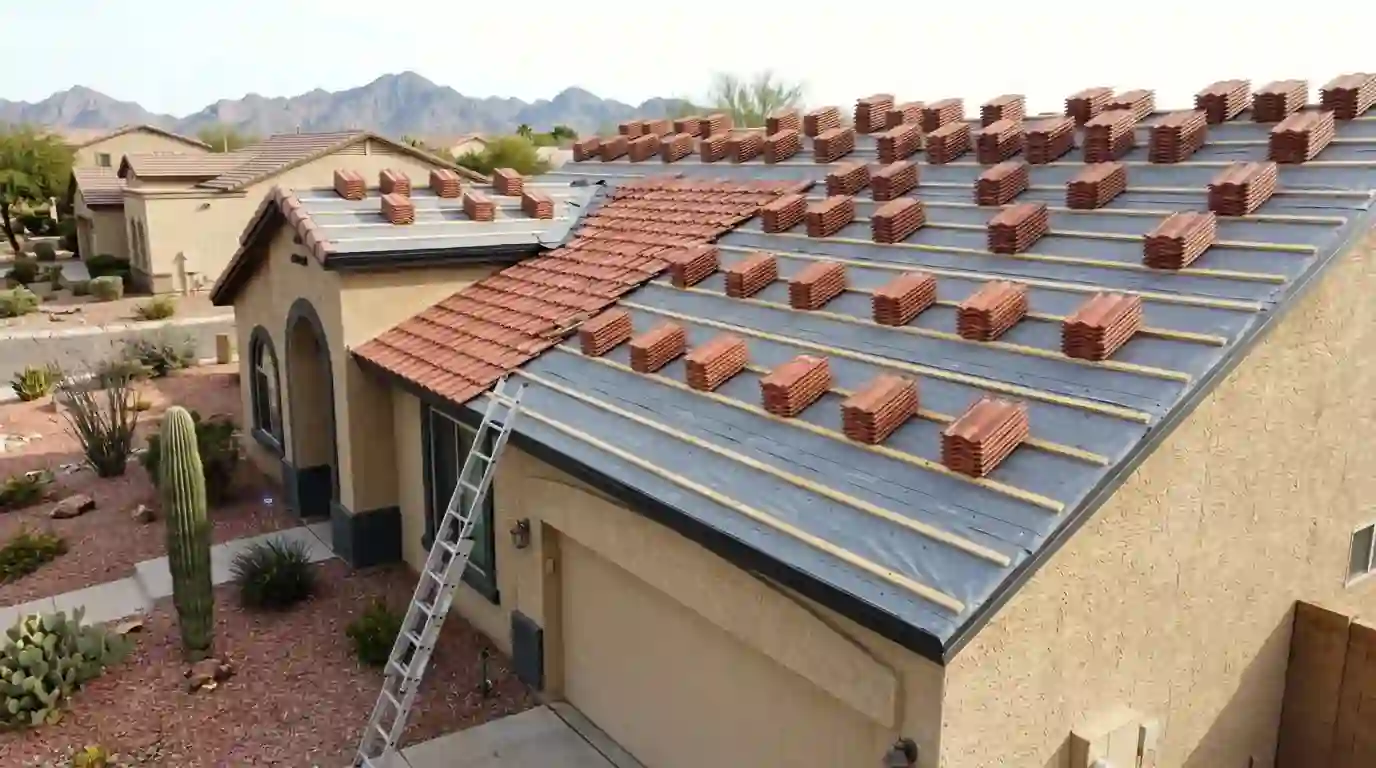
Your tiles are probably fine. The layer under them likely is not. After 20 to 25 Valley summers, felt underlayment cracks, shrinks and stops shedding water. We lift the tile, install new underlayment and battens, and put your sound tile back on the house.
Short answer
Tile underlayment replacement, often called a lift-and-relay, removes the existing tiles, strips the old felt and battens, repairs the deck, installs new underlayment and flashing, then re-lays the original tiles and replaces any broken ones. In Phoenix it is usually needed around 20 to 25 years on concrete tile roofs. It costs far less than a new tile roof because most of the tile is reused.
Materials we install and repair across the Valley
Concrete tile can sit on a roof for 50 years or more. The asphalt-saturated felt under it does not have that kind of stamina. Through July and August, the deck under dark tile regularly runs well past 150 degrees, and that cooks the oils out of the felt. It shrinks, splits at the laps and gets brittle along the eaves where the sun is strongest. Rain then runs down the deck instead of across the felt, and it finds every nail hole.
Nothing about this is visible from the driveway, which is what makes it frustrating. The tile still looks crisp, the ridge lines are straight, and the first sign is often a stain in a closet or a musty smell after a July storm. This is why so many Valley homeowners hear they need a new roof when what they actually need is new underlayment. If you want the deeper background on how long each layer lasts, our article on how long tile underlayment lasts here lays out the timeline with examples from different home ages.
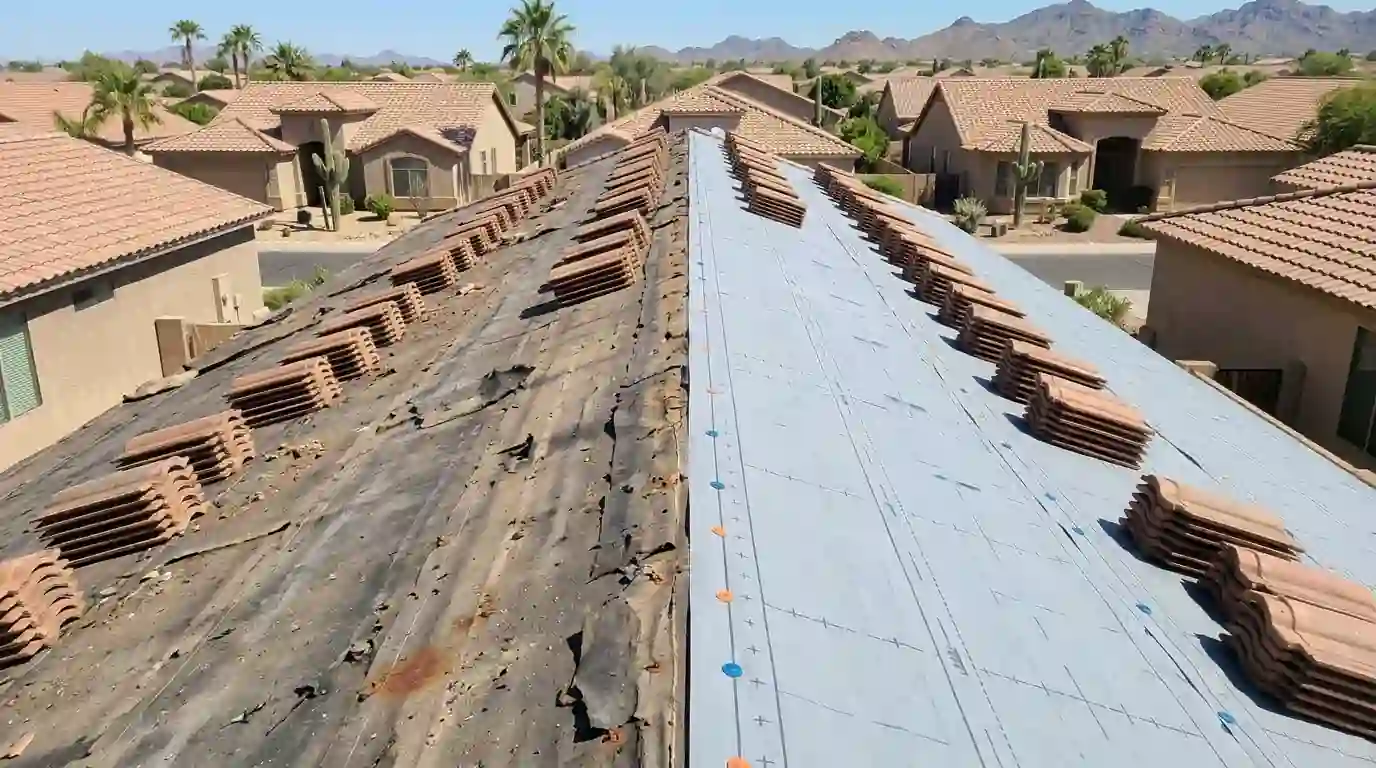
For tile work we source concrete tile from Eagle Roofing and Westlake Royal when a profile is still made, and we lay synthetic or two-ply underlayment from makers such as Polyglass under it.
The old standard was a single layer of 30 lb felt. It was cheap and it worked for its time, but it is the reason so many roofs are failing at 20 years. Today we usually recommend a two-ply system: a heavier base sheet with a cap sheet over it, or a high-temperature synthetic underlayment designed for tile. Both handle Phoenix heat far better, and a two-ply system gives a second line of defense if a tile breaks later.
Choice depends on budget, roof pitch and what goes on top. A low-pitch tile roof needs more water resistance than a steep one. Homes getting solar soon benefit from the tougher option because the panels will sit over that layer for decades. We walk through the trade-offs, show you samples, and write the chosen product into your estimate so there is no confusion about what is being installed.
Battens matter too. Old wood battens can rot or warp, and some designs trap water above them. We often replace them with new treated or raised battens that let water drain under the tile, and we add bird stops at the eaves so pigeons cannot nest in the open ends of the tile profile. New drip edge and eave metal go on at the same time, since the old pieces are usually rusted or bent from years of gutter work.
On a lift-and-relay we remove the tiles by hand, stack them on the roof or in the yard in order, and inspect each one. Most come back fine. Breakage usually runs a few percent from age and handling, and we plan for that before we start. Replacements come from the same manufacturer and profile where possible, and we place any closest-match tiles on less visible slopes.
Because the finished roof looks the same from the street, HOA approval tends to be simple. Many Valley cities still require a permit for this work, and we pull it and schedule the inspections around the job so the roof is never left waiting. If you are weighing this against new tile altogether, see our notes on a full roof replacement for when starting fresh is the better buy.
This is a planned job, not an emergency patch. These are the conditions that tell us the underlayment, not a few tiles, is the real problem.
Original 30 lb felt on Valley homes from that era is near the end of its life even when nobody has seen a leak yet. Heat ages it faster than anywhere in the country.
If a roofer lifts a tile and the felt snaps instead of flexing, the whole sheet across that slope is in the same condition.
One leak is a repair. Stains appearing in different rooms over a couple of seasons mean the waterproof layer is failing everywhere at once.
If you have paid for patches two summers running, the money is better spent replacing the layer that keeps failing.
Buyers and solar installers both ask about underlayment age. Doing it before panels go on avoids a costly removal later.
When most tiles are intact and replacements can be matched, reusing them keeps the look your HOA approved and saves the cost of new tile.
Typical range in the Phoenix area
$17,480 to $32,860
for a typical 1,800 to 2,600 sq ft tile roof
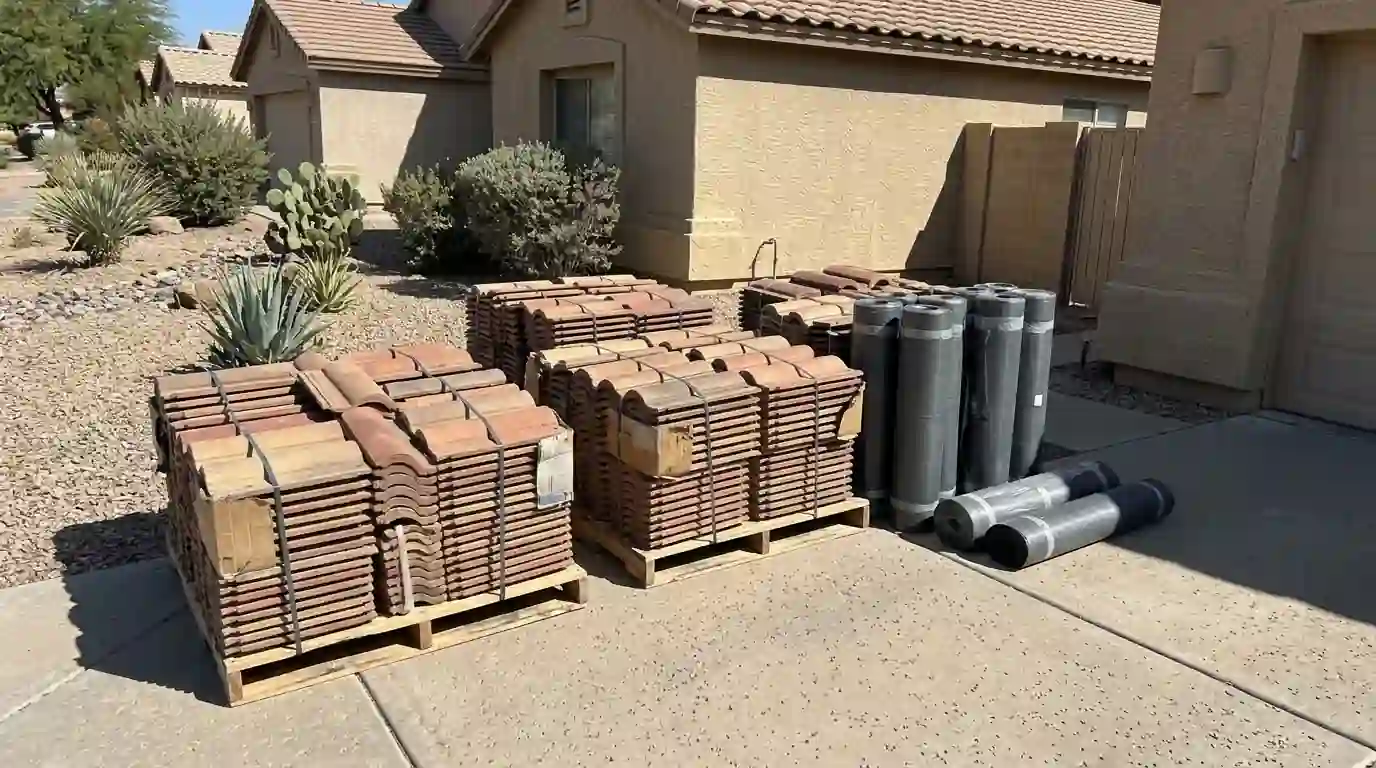
Because most of your tile goes back on, a lift-and-relay usually costs well under a new tile roof. The total depends on roof size, complexity and the underlayment you pick. Here is the range we typically see on single-family homes around the Valley in 2026.
Ranges are typical figures for Valley homes, not a quote. We price your roof after we see it.
Phone (602) 878-3594. We set a time to walk the roof and lift sample tiles on several slopes to check felt condition, batten rot and deck health.
You get a scope listing the underlayment type, batten plan, flashing to be replaced, expected tile breakage and the permit. Options are priced side by side.
We pull any required permit, order underlayment and flashing, and source matching tiles ahead of time so the roof is never open waiting for parts.
We work one section at a time: tiles off, old felt and battens out, deck repaired, new underlayment and flashing on. Sections are dried in before day's end.
Sound tiles go back in their original layout, broken ones are swapped, ridges and hips get reset, and bird stops go in at the eaves.
We inspect the finished roof, clear the site, and hand you photos of each stage plus the underlayment manufacturer details for your records.
Most of our tile underlayment replacement calls come from these parts of the Valley. We also cover every other area on our service area list, from Anthem and Cave Creek down to Casa Grande.
Most single-story homes take three to six working days, depending on size, weather and how much deck repair we find. Two-story or complex roofs can run longer. We work in sections and dry in each one daily, so the house is protected overnight even when the job spans a monsoon week.
Most of them, yes. Tiles that crack during removal or were already broken get replaced with matching tile where it exists. Typical breakage is a small percentage. We count spares into the material order so the job does not stall waiting for tile.
Both are a big step up from old 30 lb felt. High-temperature synthetics are light and tear resistant. Two-ply systems give you two separate waterproof layers, which helps on low-pitch roofs and around heavy foot traffic. We recommend based on your pitch, budget and plans for solar.
Many HOAs require notice even when the finished roof looks identical, and some want the tile color confirmed. Because the tile is reused, approval is usually straightforward. We can provide the scope and tile details your board typically asks for.
The panels have to come off so the tile and felt beneath them can be replaced. We coordinate removal, store the panels safely, flash new mounts into the fresh underlayment, and reinstall. It is far cheaper to do this together than to pull panels again in a few years.
Tile roof leaking or tiles slipping in Phoenix? We trace the leak to the underlayment, reset or swap tiles and seal it the same week. Call (602) 878-3594.
Learn moreCracked or missing roof tiles in Phoenix? We match the profile and color, replace single tiles and check the felt below. Call (602) 878-3594 day or night.
Learn moreNew concrete tile roof for your Phoenix home: two-ply underlayment, raised battens, bird stops and HOA-approved colors. Call (602) 878-3594 any time.
Learn moreRoof work under a solar array in Phoenix? We detach, stage and reset your panels, then reflash every mount so it stays dry. Call (602) 878-3594.
Learn moreCall us any hour. A real person answers, asks a few questions about your roof and sets up a visit.