Tile Underlayment Replacement
Tiles fine but the felt under them is shot? We lift and relay Phoenix tile roofs with new two-ply or synthetic underlayment. Call (602) 878-3594 any time.
Learn moreRoof Repair
Tile Roofing
Flat & Foam Roofing
Shingle & Metal Roofing
Replacement & Inspections
Solar, Vents & Extras
Phoenix neighborhoods
Valley cities
Counties
Desert Roof Guide
Concrete and clay tile can outlast the house, but the felt under it usually gives out around 20 to 25 years in Valley heat. Here's how to read the signs and plan ahead.
By Lamar Baskin, Desert Roof Guide EditorUpdated May 11, 20266 min read
The short version
In Phoenix, standard felt underlayment under a concrete or clay tile roof commonly wears out around 20 to 25 years, even though the tiles above it can last 50 years or more. Heat and UV at gaps in the tile dry the felt until it cracks. Modern synthetic and heavier underlayments last longer. When it fails, the usual fix is lifting the tiles, replacing the underlayment and relaying the same tiles.
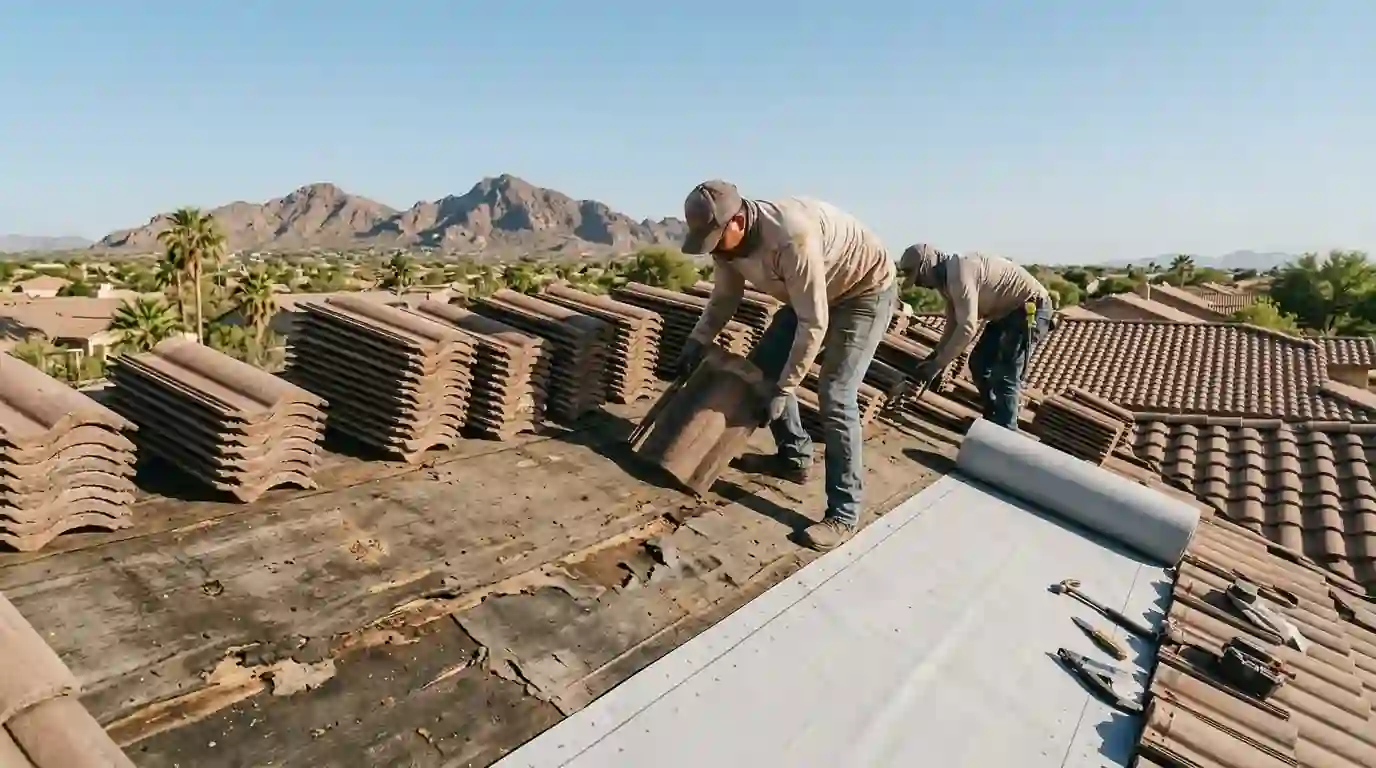
Homeowners are often surprised to hear that a tile roof can leak while every tile looks fine. The tile is mostly a sun shield and a first line against rain. The real waterproofing is the underlayment, the felt or synthetic sheet nailed to the deck below. Concrete and clay tiles shrug off decades of sun, but they don't seal tightly against each other, so wind-driven rain, dust and a steady trickle of UV get into the gaps.
That underlayment lives in a hard spot. Above it, the tile soaks up sun and can run 150 F to 170 F in July. Below it, an attic can top 140 F. Felt is asphalt-saturated paper, and years of that heat cook the oils out of it. It shrinks, turns brittle and starts to crack, first at the eaves, in valleys and around penetrations, where water moves the most.
The roofs we work on around the Valley tend to fall into a few groups, and the age of the house tells you a lot about what's under the tile. Homes from the 1980s and 1990s usually have a single layer of 30 lb felt, sometimes even lighter. Many builders in the 2000s used heavier felt or two layers. Newer roofs, and roofs we've redone, more often carry synthetic underlayment or a heavier mineral-surfaced sheet.
These are broad ranges, not promises. Roof pitch, color, attic ventilation and which way each slope faces all change the number. A south or west facing slope ages faster than a north one on the same house.
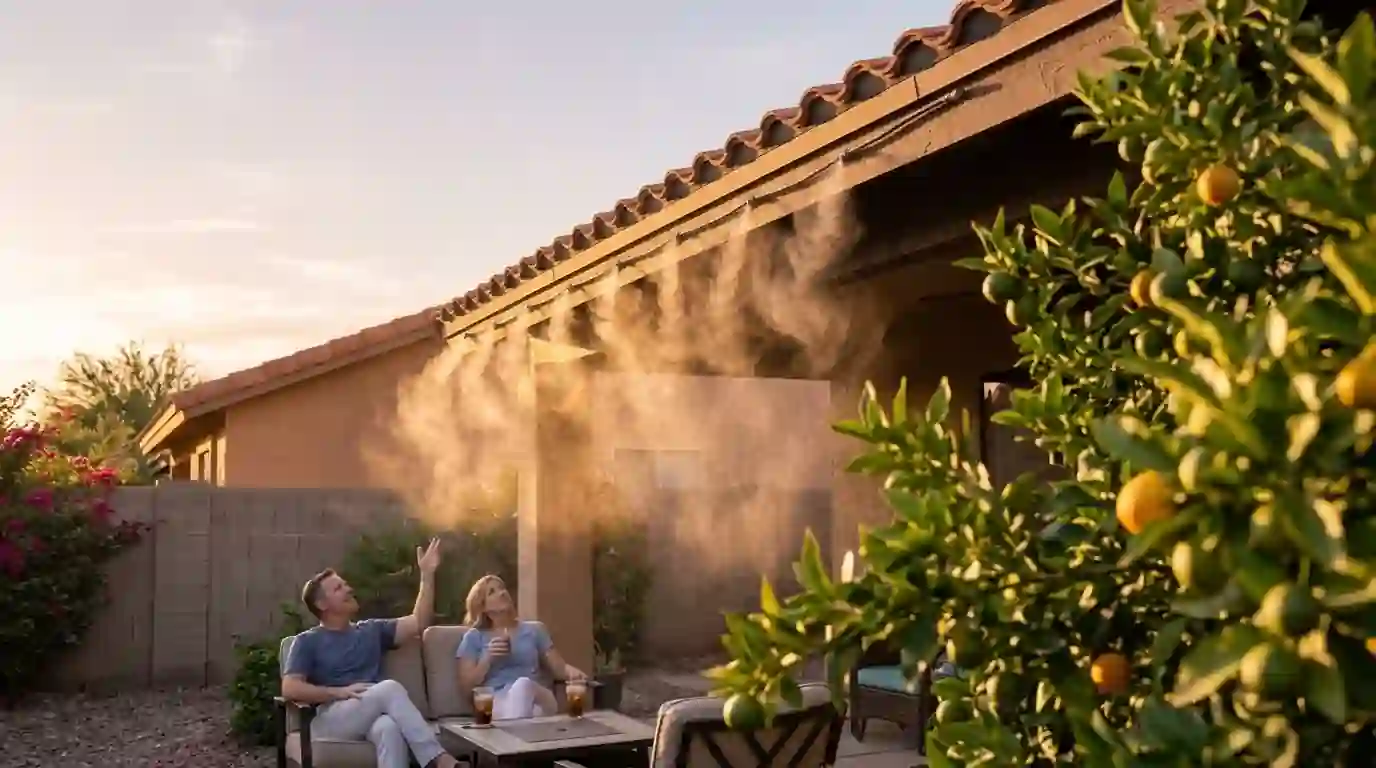
You usually can't see underlayment without lifting tile, but the roof gives clues. Leaks that show up only in heavy monsoon rain, especially near valleys and eaves, are a classic sign. So are stains on the ceiling near exterior walls, or a musty smell in the attic after a storm. Inside the attic on a bright afternoon, look for pinpoints of light coming through the deck, which can mean nails or seams where the felt has torn away.
On the roof itself, we lift a few tiles at the eaves and in valleys to check the felt directly. Healthy felt is flexible and dark. Failing felt is pale, cracks when bent, crumbles at the edges or has holes worn through where tile corners rested. A proper roof inspection includes these test lifts on several slopes, not just one spot near the ladder.
Replacing underlayment on a tile roof is often called a lift and relay or a reset. We take up the tiles slope by slope and stack them on the roof, tear off the old felt and battens, and inspect the deck for soft or damaged sheathing. New underlayment goes down with proper laps, new flashing goes in at valleys, walls and penetrations, and then the original tiles are relaid. Broken tiles get swapped out with matching pieces.
Most homeowners keep their existing tile, which is a big reason this costs much less than a full tear-off and new tile roof. Our tile underlayment replacement page walks through the job in more detail. If a few tiles are cracked but the felt is sound, a smaller tile roof repair may be all you need for now.
The best time to replace underlayment is a few years before it fails, ideally in spring or fall, before monsoon season and away from the worst summer heat. Crews work best and the roof is easier to manage without 115 F afternoons. Once leaks start, you're on the storm's schedule instead of your own, and the water damage to ceilings and insulation adds to the bill.
If you're adding solar, plan the underlayment first. Pulling an array off later to redo the roof adds real cost, so a roof near 20 years old should usually get new underlayment before panels go up. Our article on solar on an older roof covers that decision. HOA rules usually aren't an issue for an underlayment job, since the tile that goes back on is the same tile that came off.
Some. A hot, poorly vented attic cooks underlayment from below while the sun works on it from above. Balanced intake and exhaust, along with radiant barrier in the attic, takes some of that heat away and helps the underlayment reach its full life. It won't stop sun from reaching the felt at gaps between tiles, but it can make the difference between a roof that fails at 17 years and one that makes it to 23.
If your roof is under 15 years old, this is a good time to look at the attic. If it's past 20, ventilation work is best folded into the underlayment job itself, when the deck is open and vents can be flashed in properly. Either way, call (602) 878-3594 and we can tell you which side of that line your roof is on.
One more thing worth knowing: roof color plays a part. Dark brown and charcoal tiles absorb more heat than light tan, terracotta or white tiles, so the felt beneath them runs hotter. If your HOA allows it and you ever replace tile, a lighter color can quietly add years to the underlayment beneath.
Sometimes, yes. If one slope faces south or west and has worn out early while the others are still sound, a partial reset can make sense. We check the felt on every slope first. If the rest is close behind, doing the whole roof at once usually costs less per square foot than coming back in two years.
Most will. Concrete tile is heavy and durable, and careful crews stack and reuse the large majority of it. Some breakage is normal, especially on older or brittle clay tile, so we plan for replacements. Matching an older tile profile and color can take some searching, which is why we save spare tiles whenever we can.
For most Valley homes, yes. Synthetic and high-temperature underlayments hold up better to heat than standard felt and tend to last well past the 20 to 25 years felt usually manages. Since most of the cost of a reset is labor to lift and relay tile, a longer-lasting sheet stretches that labor over more years.
Tiles fine but the felt under them is shot? We lift and relay Phoenix tile roofs with new two-ply or synthetic underlayment. Call (602) 878-3594 any time.
Learn moreTile roof leaking or tiles slipping in Phoenix? We trace the leak to the underlayment, reset or swap tiles and seal it the same week. Call (602) 878-3594.
Learn morePhoenix roof inspections after monsoon storms, before buying or before solar: photos, attic checks and a plain written report. Call (602) 878-3594.
Learn more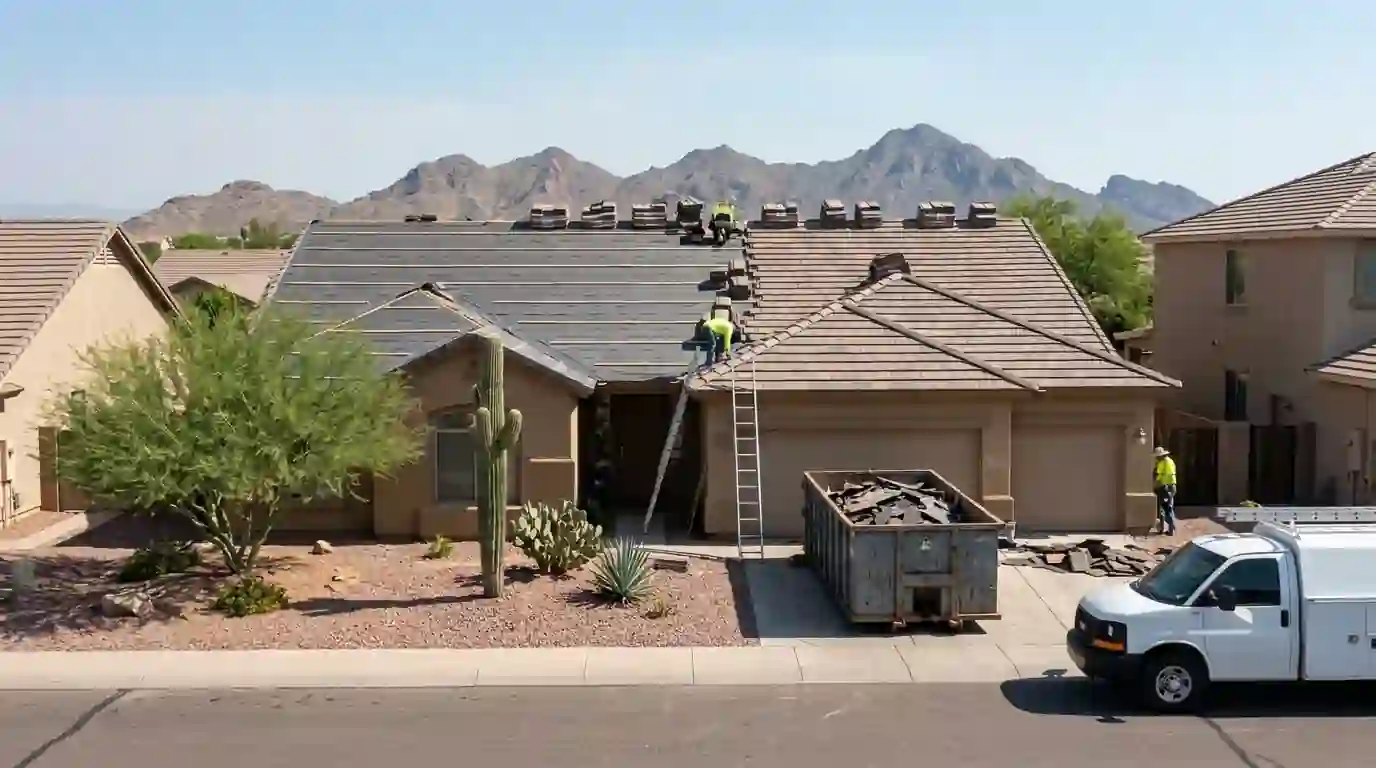
July 14, 2026
Roof replacement prices in the Valley vary a lot by material, roof size and what's under the old roof. Here are realistic 2026 ranges and what drives them.
Read the guide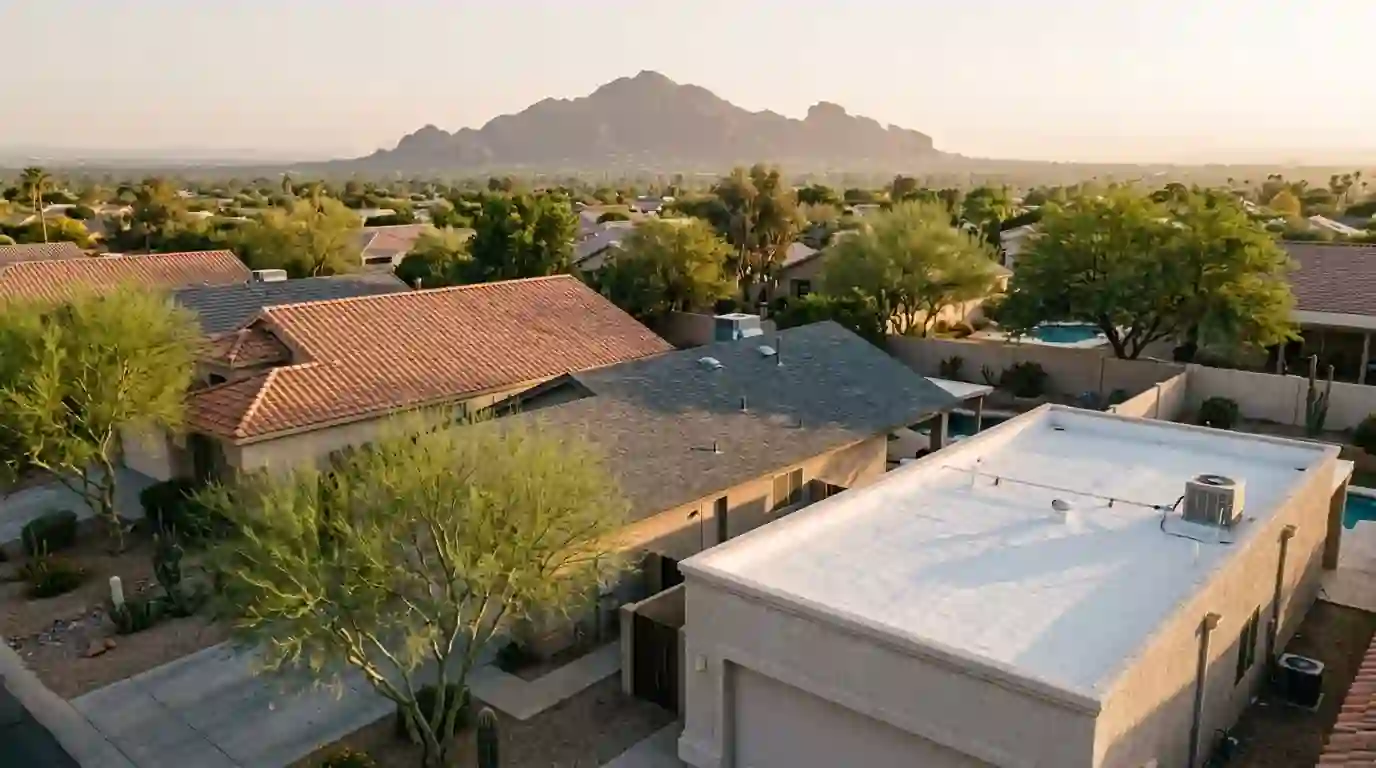
July 28, 2026
Concrete tile, asphalt shingle and sprayed foam all work in the Valley, but they age in very different ways. Here is how we help Phoenix homeowners choose between them.
Read the guide
August 4, 2026
Most Valley neighborhoods with an HOA want to see your roof plans before work starts. Here is what architectural review committees usually ask for and how to get through it without losing weeks.
Read the guideCall (602) 878-3594. We answer around the clock and can usually tell you over the phone whether it needs a visit.