Water stains along exterior walls
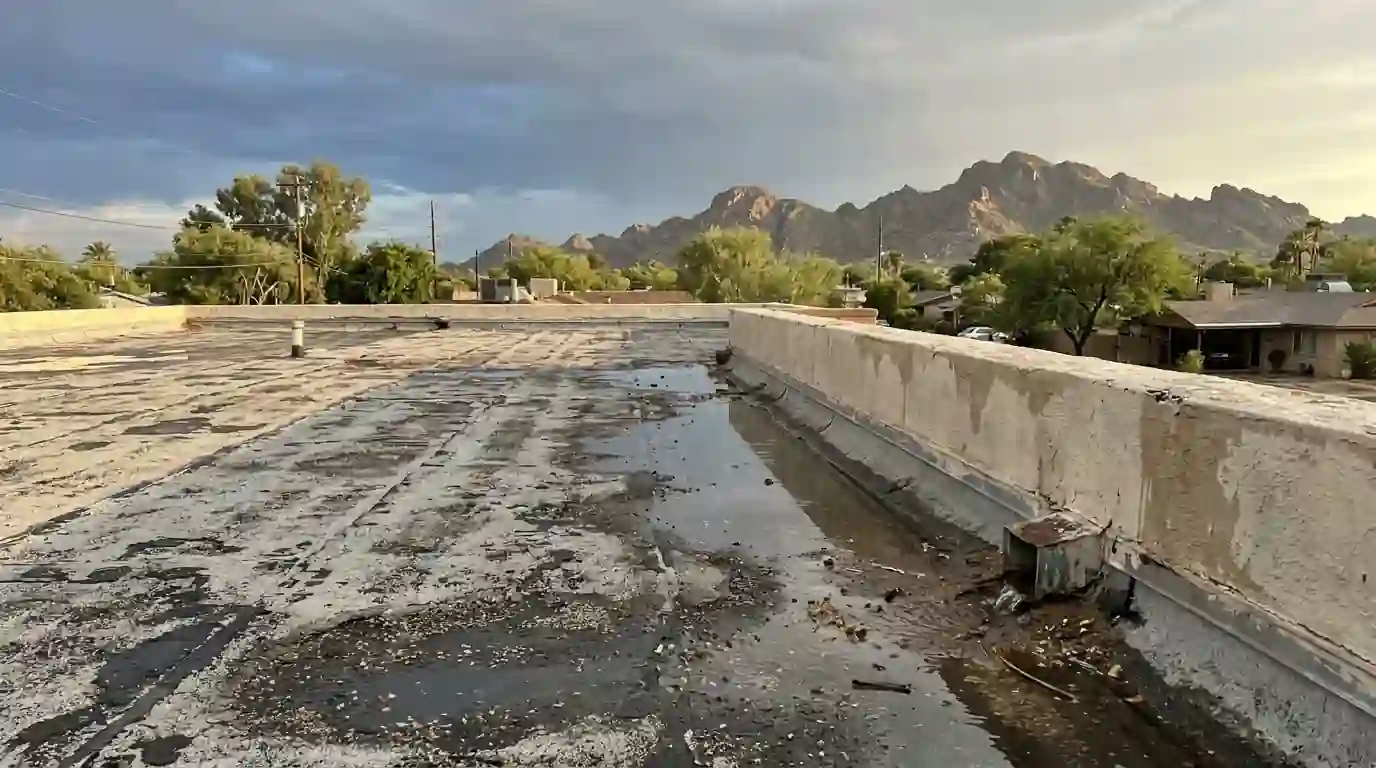
Stains near the top of walls often trace back to parapet caps or scuppers, not the middle of the roof. Water rides down inside the wall cavity.
Roof Repair
Tile Roofing
Flat & Foam Roofing
Shingle & Metal Roofing
Replacement & Inspections
Solar, Vents & Extras
Phoenix neighborhoods
Valley cities
Counties
Flat & Foam Roofing
Flat roofs do not leak where you expect. Water travels along the deck, under parapet caps and through tired seams before it shows on a ceiling. We trace leaks on every type of flat roof in the Valley, fix the actual source, and deal with the drainage that caused it.
Short answer
Flat roof repair in Phoenix starts with identifying the roof type, whether foam, built-up, modified bitumen, TPO or rolled roofing, then finding where water enters. Common sources are parapet caps, scuppers, failed seams, cracked coatings, blistered membrane and ponding low spots. Repairs use materials compatible with the existing roof, and we also correct drainage so the same area is not soaked every storm.
Materials we install and repair across the Valley
Flat roofs fail slowly and then suddenly, usually during the first big storm of monsoon season. Watch for these.
Stains near the top of walls often trace back to parapet caps or scuppers, not the middle of the roof. Water rides down inside the wall cavity.
Water that sits more than 48 hours after rain stresses coatings and seams and eventually finds a way through.
Bubbles in a membrane or coating, or spots that feel spongy underfoot, often mean trapped moisture that is spreading under the surface.
A cracked pattern on built-up or rolled roofing shows the surface has dried out from sun and lost its flexibility.
On mod bit and TPO roofs, edges that peel back or seams you can slide a finger under need resealing before the next storm.
Leaves, nests and dust packed into drains back water up against parapets, where it overflows into the walls.
Phone (602) 878-3594 day or night. If water is actively coming in, we talk you through protecting the room and schedule an emergency visit.
On site we confirm whether the roof is foam, built-up, modified bitumen, TPO or rolled, since that decides which repair materials will bond.
We map the stain to the roof, inspect parapets, scuppers, seams and penetrations, and water-test sections when the source is not obvious.
We cut out damaged material, dry the area, and patch with compatible materials. Drainage problems get corrected while we are there where possible.
We water-test the repaired area, clear scuppers, and send photos with notes on any other weak spots worth watching before the next monsoon.
On a sloped roof, water generally enters near where it shows inside. Flat roofs are different. Water can enter at a parapet cap on the west side, run along the top of the deck, and drip into a hallway twenty feet away. That is why we start every visit by matching the roof type and layout to the interior stain, then walking the roof for the likely culprits rather than spot-patching above the drip.
We look hardest at transitions: where the roof meets parapet walls, where scuppers and canales pass through, around AC curbs and skylights, and at old patches. Foam roofs show trouble as blisters and bird damage. Built-up roofs show cracks and exposed felt. Membranes show seam failures. When we cannot see it, we water-test sections in sequence until the drip appears inside.
Attic and ceiling clues help too. Many Valley flat roofs sit over a shallow plenum or a tight attic, and we will look up there with a light when there is access. Stained or sagging insulation, rusted nail tips and darkened decking tell us where water has been sitting and for how long. A leak that has been running quietly for months can rot the deck, and finding that now keeps a small repair from turning into a section rebuild after the next big storm.
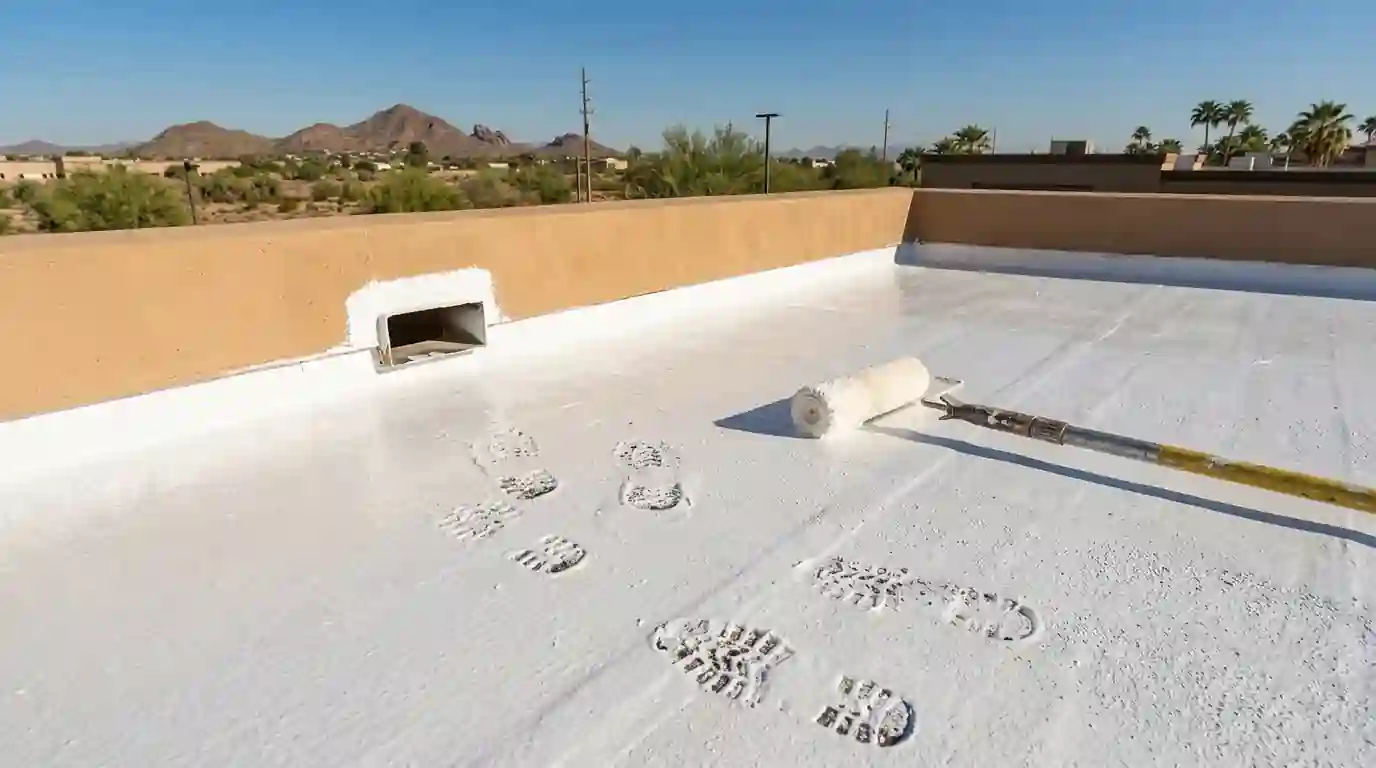
On flat and foam roofs we use coating systems from Gaco, Henry and Tremco, and single-ply membranes such as Carlisle TPO where a membrane is the better fit.
Mixing incompatible materials is the most common flat roof mistake we see. Asphalt mastic smeared over a TPO seam will not bond. Acrylic coating over silicone peels off within a season. Silicone caulk dabbed on a foam roof can make future recoats harder. We match the repair materials to your roof: heat-welded patches on TPO, torch or cold-applied patches on modified bitumen, felt and mastic on built-up roofs, and foam plus matching coating on spray foam roofs.
Parapets often need their own attention. The cap on top of the wall cracks, the stucco above the roof line opens up, and the flashing where the roof turns up the wall pulls away. Our parapet cap repair service covers that wall work in depth, and we often do both on one visit when the leak traces back there. Stucco cracks above the roof line get sealed and painted so water cannot soak in from the side.
Phoenix flat roofs see long dry stretches, then a monsoon storm drops an inch of rain in half an hour. Roofs with poor slope, sagging decks or blocked drains turn into shallow pools. Standing water breaks down coatings, softens seams and adds weight, and when it finally evaporates it leaves a ring of dust that holds the next puddle even longer.
Where ponding is the root cause, we add tapered material or foam to build slope, enlarge or add scuppers, or clear and reshape canales. We also keep an eye on the bigger picture. If the roof has been patched repeatedly and moisture has spread under large areas, we will say so and price a full flat roof replacement alongside the repair, so you can compare honestly.
Typical range in the Phoenix area
$435 to $2,180
per repair, most residential roofs
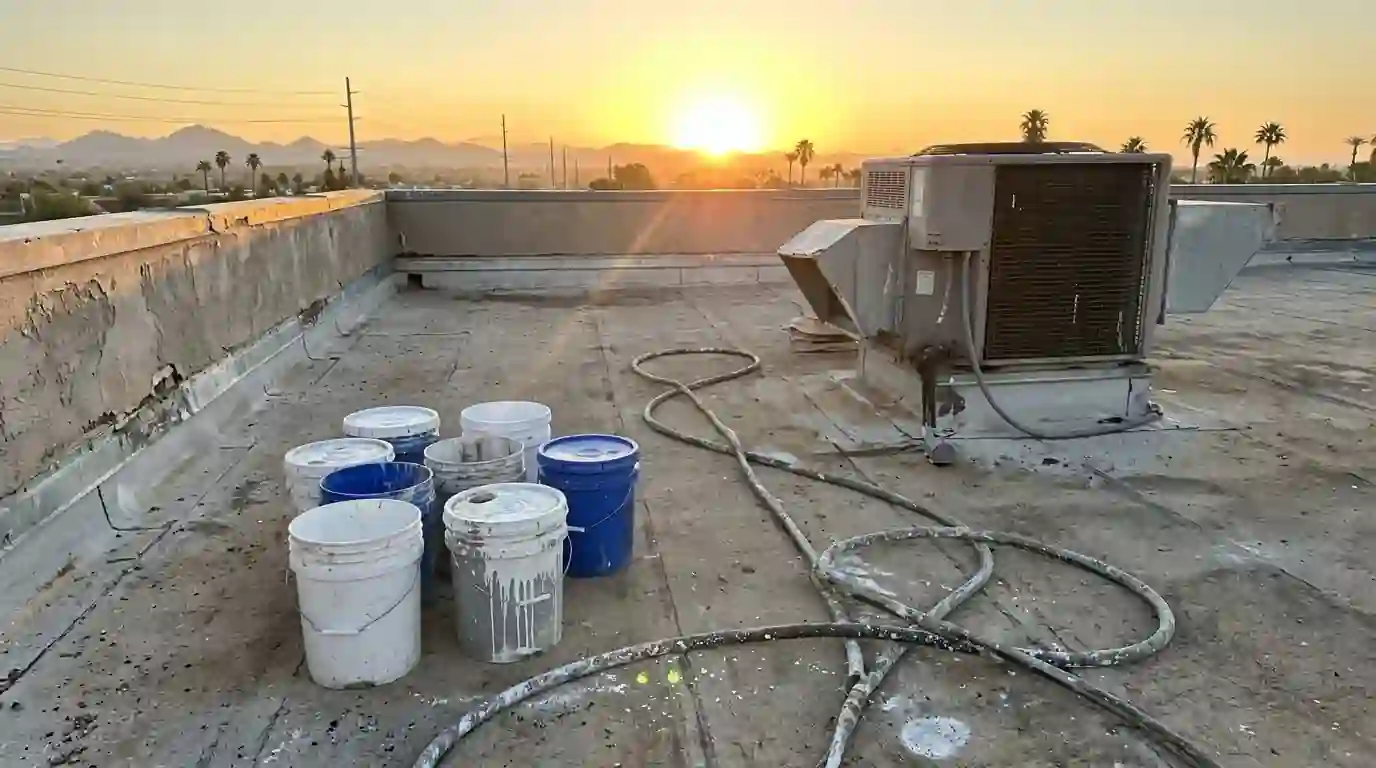
Most flat roof repairs come down to how hard the leak is to find and how much damaged material has to come out. Roof type matters too, since welding TPO, torching mod bit and patching foam all need different materials and tools.
Ranges are typical figures for Valley homes, not a quote. We price your roof after we see it.
Most of our flat roof repair calls come from these parts of the Valley. We also cover every other area on our service area list, from Anthem and Cave Creek down to Casa Grande.
Monsoon storms bring heavy rain with strong wind, which pushes water sideways under parapet caps and into scuppers that rarely see that much flow. Light winter rain may never reach those spots. Wind-driven water exposes weak transitions that ordinary rain misses, which is why we check those spots first.
Coating over a leak usually traps moisture without fixing the source. If water is already getting in, the wet area has to be found, opened, dried and repaired first. Once the roof is sound, a coating can extend its life, but it is not a leak repair by itself.
We compare the interior stain to the roof layout, check likely entry points like parapets and penetrations, and probe for wet spots. If that does not reveal it, we water-test small sections one at a time while someone watches inside, until the drip appears.
A thin film that evaporates within a day or two is common. Puddles lasting longer than 48 hours are a problem, because they break down coatings and seams. We can add slope or improve drainage so water leaves the roof faster.
Often, yes. Small areas can be cut out, rebuilt with felt and asphalt, and re-graveled. If the roof is cracking everywhere or holding moisture across large sections, repairs become short-lived, and we will compare a repair with replacement options for you.
Replacing a worn flat roof in Phoenix? We compare foam, TPO, mod bit and built-up for your home, fix slope and drains, then rebuild. Call (602) 878-3594.
Learn moreParapet wall repair in Phoenix for flat-roof Pueblo and territorial homes: caps, cracks and wall flashing fixed so water stays out. Call (602) 878-3594.
Learn moreScupper and canale repair in Phoenix: we clear, reflash and rebuild the wall drains on flat roofs so monsoon water leaves fast. Call (602) 878-3594.
Learn moreRoof leak repair in Phoenix: we trace the water to its true entry point on tile, foam, shingle or flat roofs and fix the cause. Call us 24/7.
Learn moreCall us any hour. A real person answers, asks a few questions about your roof and sets up a visit.