Tan or orange patches showing
When the bright white wears away and you see yellow, tan or orange foam, UV is reaching it directly. That foam starts to degrade within months.
Roof Repair
Tile Roofing
Flat & Foam Roofing
Shingle & Metal Roofing
Replacement & Inspections
Solar, Vents & Extras
Phoenix neighborhoods
Valley cities
Counties
Flat & Foam Roofing
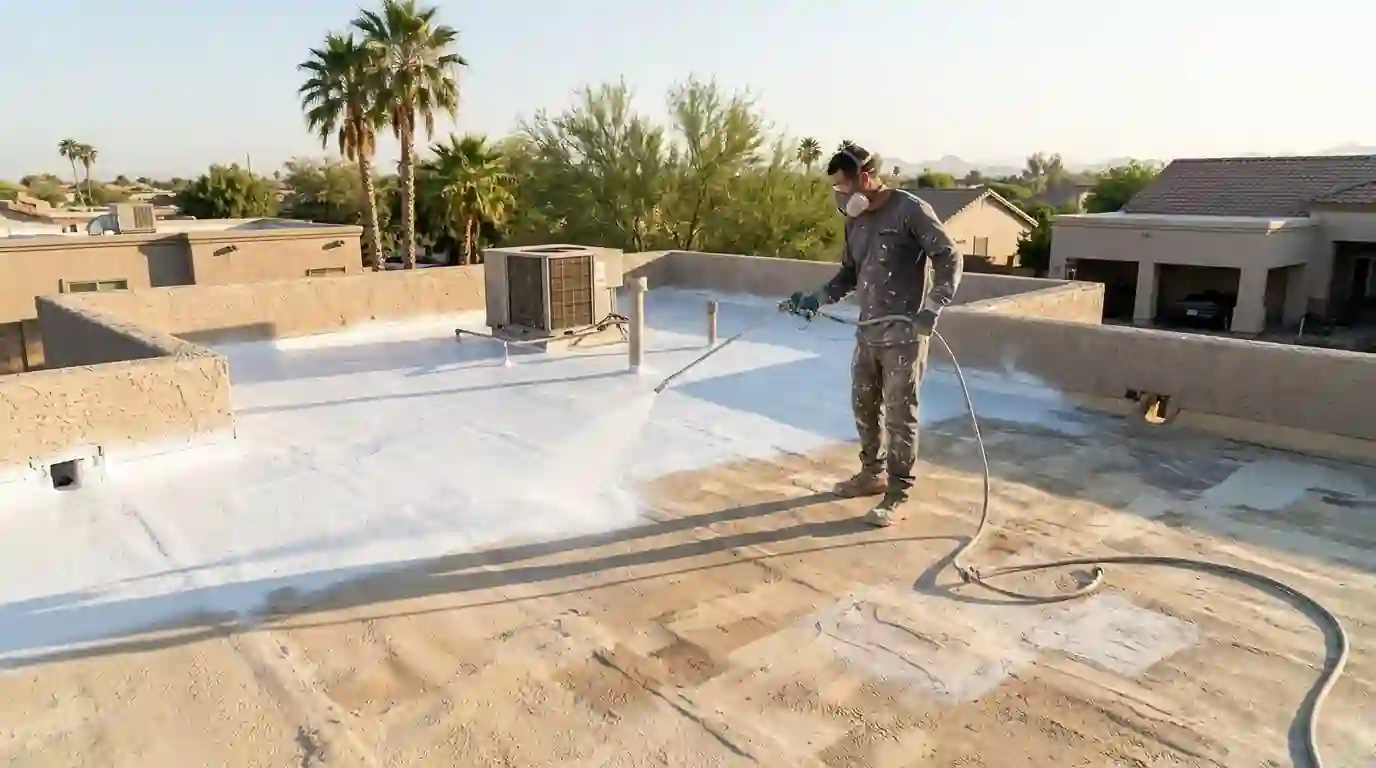
Your foam roof is only as good as its coating. Once that white skin wears thin, Arizona sun starts eating the foam beneath it, and eroded foam does not grow back. We clean, repair and recoat foam roofs across the Valley so the expensive layer underneath keeps doing its job.
Short answer
Most Phoenix foam roofs need recoating every 5 to 10 years, depending on whether they have acrylic or silicone and how thick it was applied. A recoat involves pressure washing, cutting out blisters and bird damage, filling with foam or sealant, priming if needed, then applying fresh coating at the specified thickness, often with granules. Recoating on time costs far less than re-foaming a roof that has eroded.
Materials we install and repair across the Valley
Foam roofs warn you well before they leak, if someone looks. These are the clues we look for during a recoat check.
When the bright white wears away and you see yellow, tan or orange foam, UV is reaching it directly. That foam starts to degrade within months.
Rubbing the surface and getting white powder means the coating is breaking down and thinning, even if no foam is showing yet.
Raised domes in the coating or foam point to trapped moisture or a lost bond. Left alone, they crack open and let water reach the foam.
Small round holes, often clustered near parapets, show where birds have pecked through the coating. Each one is a doorway for water.
Foot traffic around AC units and vents wears coating fastest. Fine cracks there usually mean the rest of the roof is not far behind.
If nobody remembers the last recoat, or the paperwork says it was close to a decade ago, it is time for a closer look.
Polyurethane foam is a great insulator and a poor sunbather. Exposed to UV, its surface turns brown, then powdery, then erodes a little each month. A roof that loses half an inch of foam has lost insulation and slope, and the low spots it leaves behind collect water. Recoating does not fix that loss, it prevents it. Think of it like sunscreen for the roof: cheap to reapply, very expensive to skip.
That is why we treat recoats as maintenance, not repairs. The coating is the sacrificial layer, designed to wear away slowly while the foam underneath stays protected. Renew it while some coating still remains and the job is mostly cleaning, minor patching and a fresh coat. Wait until foam is eroded across the roof and the job turns into a full foam re-spray at several times the cost. Our post on when to recoat a foam roof covers timing by coating type.
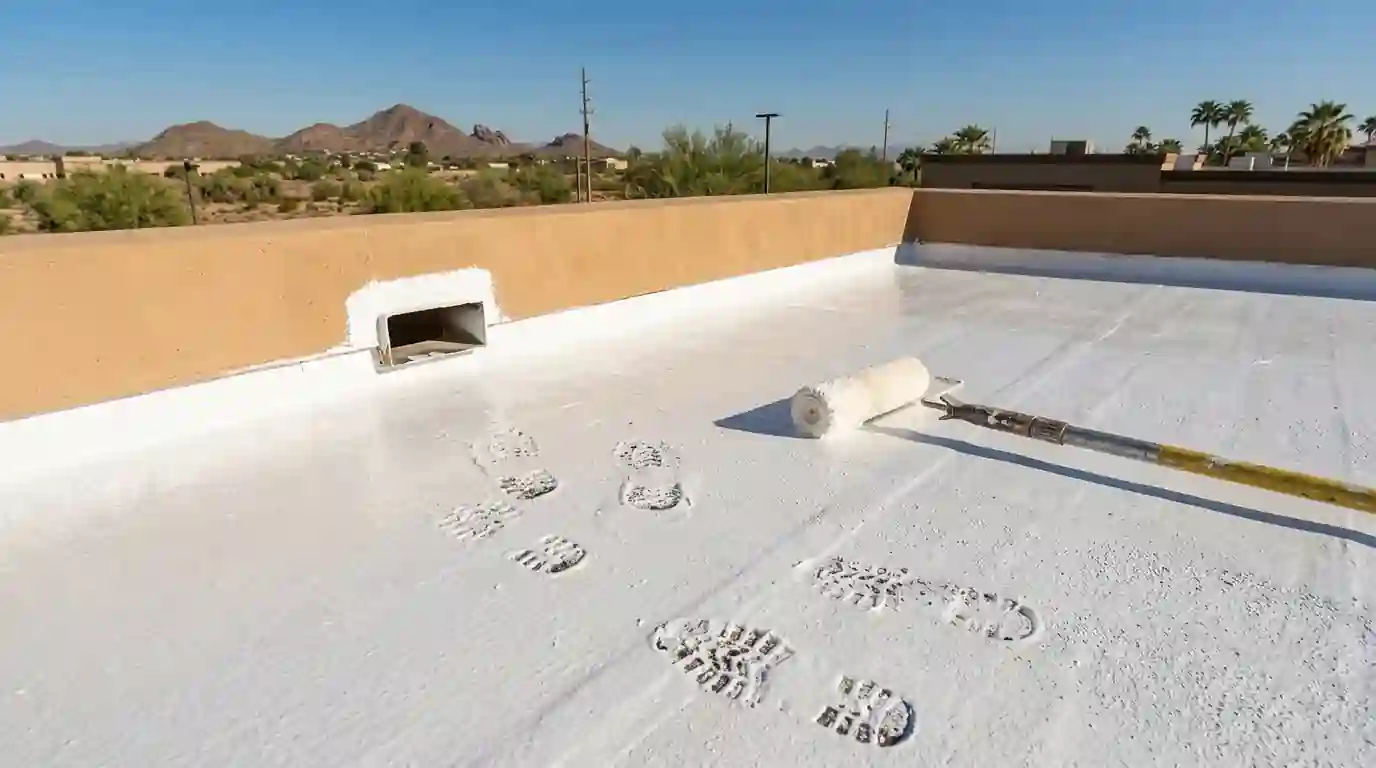
On flat and foam roofs we use coating systems from Gaco, Henry and Tremco, and single-ply membranes such as Carlisle TPO where a membrane is the better fit.
Clean comes first. Valley dust, bird droppings, pollen and old chalky coating all prevent the new coat from bonding, so we pressure wash the entire roof and let it dry fully. Then we walk it closely, marking every blister, peck hole, crack and soft spot. Blisters get cut out to sound foam, dried, and filled with fresh foam or a compatible sealant, then shaped flush.
Next comes compatibility. Acrylic can usually go over acrylic. Silicone generally only bonds to silicone, unless a special primer is used. We test adhesion in a small area when the existing coating is unknown. Then the new coating goes on at the thickness the manufacturer specifies, typically in a base and top coat, with granules broadcast into the final pass where they help. We measure wet thickness as we spray, because a coat applied too thin simply wears out early.
Our summers are hard on coatings. Surfaces can sit at 150 to 170 degrees in July, UV is intense year round, and haboobs sandblast the roof with grit. Monsoon downpours then test every weak spot at once. Coatings on south- and west-facing parapet walls usually wear before the field of the roof does, and areas around rooftop AC units wear from technician foot traffic.
Ponding water is the other big factor. Acrylic coatings soften when water sits on them for days, which is why we fill low spots with foam before recoating, or recommend silicone on roofs that will always hold a little water. If you are comparing coating types for your recoat, our silicone recoat option explains where it earns its higher price.
Small habits stretch the time between recoats. Keep scuppers and canales clear so water leaves quickly. Ask HVAC and solar techs to use walk pads instead of crossing the field of the roof. Rinse heavy dust off after a haboob if you can do it safely from a ladder, and call when you notice birds working one spot. A roof that is watched usually reaches the long end of the recoat interval, while one that is forgotten tends to need help sooner.
Phone (602) 878-3594. We ask the roof age, last recoat date if known, and whether you have seen leaks or bird damage, then book a roof walk.
We probe for wet foam, mark blisters and peck holes, check the coating type, and run an adhesion test if the existing coating is unknown.
The whole roof is pressure washed to remove dust, chalk and debris, then left to dry completely before any patching or coating starts.
Blisters and damaged areas are cut out, dried and filled. Low spots that pond get built up so water moves toward the drains.
Primer goes on where needed, then base and top coats at the specified thickness, with granules in the final coat to resist scuffing and pecking.
We note the coating product, thickness and date for your records, so the next recoat can be planned instead of guessed.
Typical range in the Phoenix area
$1.85 to $3.65
per sq ft of roof surface
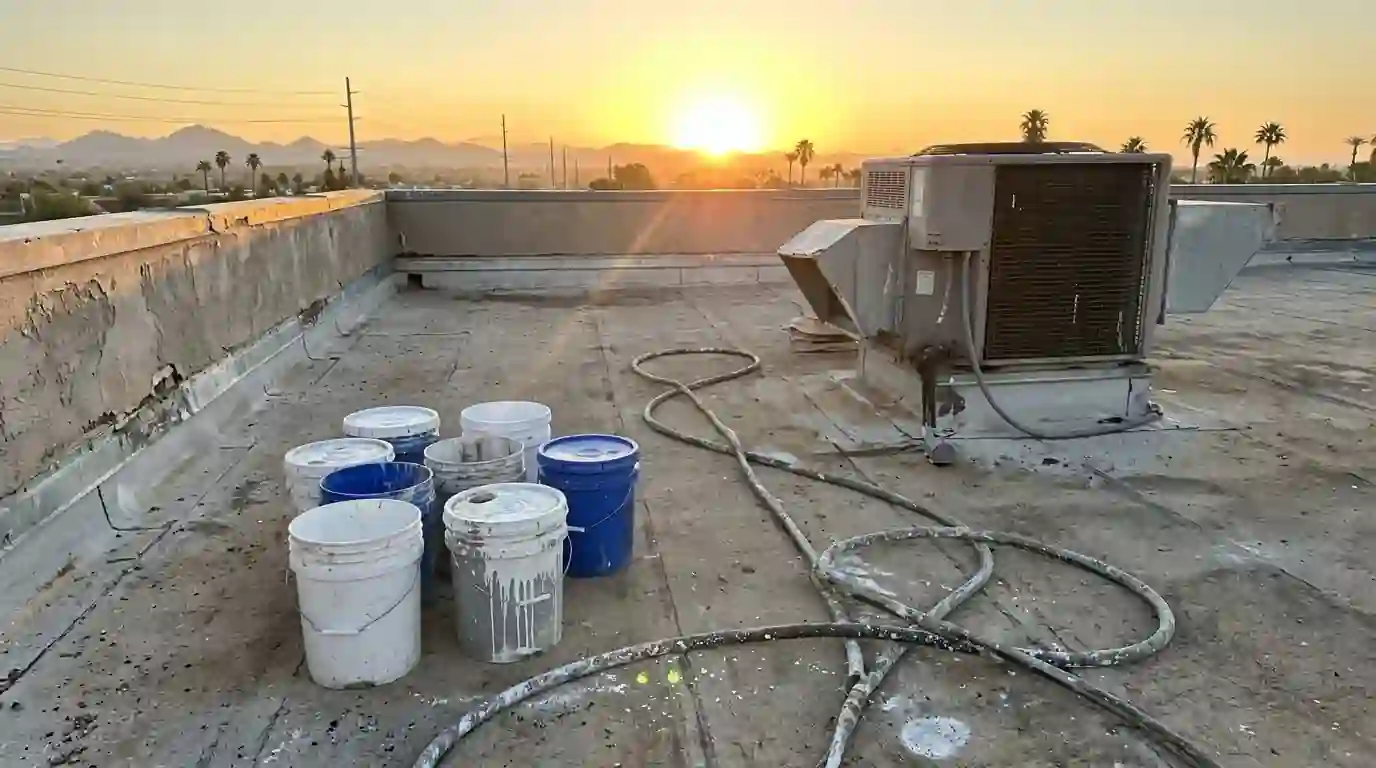
Recoating is priced mainly by roof area and coating type, then adjusted for how much repair the foam needs first. A roof recoated on schedule sits near the bottom of the range. One that has been neglected for years needs more patching and thicker coats.
Ranges are typical figures for Valley homes, not a quote. We price your roof after we see it.
Most of our foam roof recoating calls come from these parts of the Valley. We also cover every other area on our service area list, from Anthem and Cave Creek down to Casa Grande.
Most foam roofs here need a recoat every 5 to 10 years. Thin acrylic coats sit near the shorter end, while thicker silicone coats and roofs with little foot traffic last longer. A quick check every year or two tells you where yours actually stands.
Yes, silicone can generally be applied over a clean, sound acrylic coating, sometimes with a primer. Going the other way is harder, because most coatings will not stick to silicone. We test adhesion before committing to a product on your roof.
Not necessarily. Small areas of exposed or lightly eroded foam can be cleaned, sanded and coated. If large areas have eroded deeply or are wet inside, those sections need new foam first. We probe the surface and tell you what is salvageable.
Yes, but timing matters. We often start early in the morning so the surface is not too hot for proper curing, and we avoid coating if a monsoon storm is likely before the coat sets. Spring and fall are easier, but summer recoats are common.
Keep off the roof for a few days while the coating fully cures. After that, normal careful traffic is fine. Ask AC technicians to use walk pads or a marked path, because repeated boots in one spot wear the new coating fastest.
Spray foam roofing for flat and low-slope Phoenix homes: one continuous insulating layer sloped to drain, with a UV top coat. Call (602) 878-3594 24/7.
Learn moreSilicone roof coating for Phoenix flat roofs that pond or bake: holds up to standing water and UV over foam, TPO and metal. Call (602) 878-3594 any hour.
Learn moreAcrylic elastomeric roof coating for Phoenix flat, foam and metal roofs: bright white, flexible in heat, fairly priced. Call (602) 878-3594 any time.
Learn moreRoof maintenance plans for Phoenix homes: a spring check before the heat and a post-monsoon visit to catch storm damage early. Call (602) 878-3594.
Learn moreCall us any hour. A real person answers, asks a few questions about your roof and sets up a visit.