Roof is sound but sun-worn
Dry, chalky or lightly cracked surfaces on an otherwise solid roof are ideal. The coating restores a protective skin before damage goes deeper.
Roof Repair
Tile Roofing
Flat & Foam Roofing
Shingle & Metal Roofing
Replacement & Inspections
Solar, Vents & Extras
Phoenix neighborhoods
Valley cities
Counties
Flat & Foam Roofing
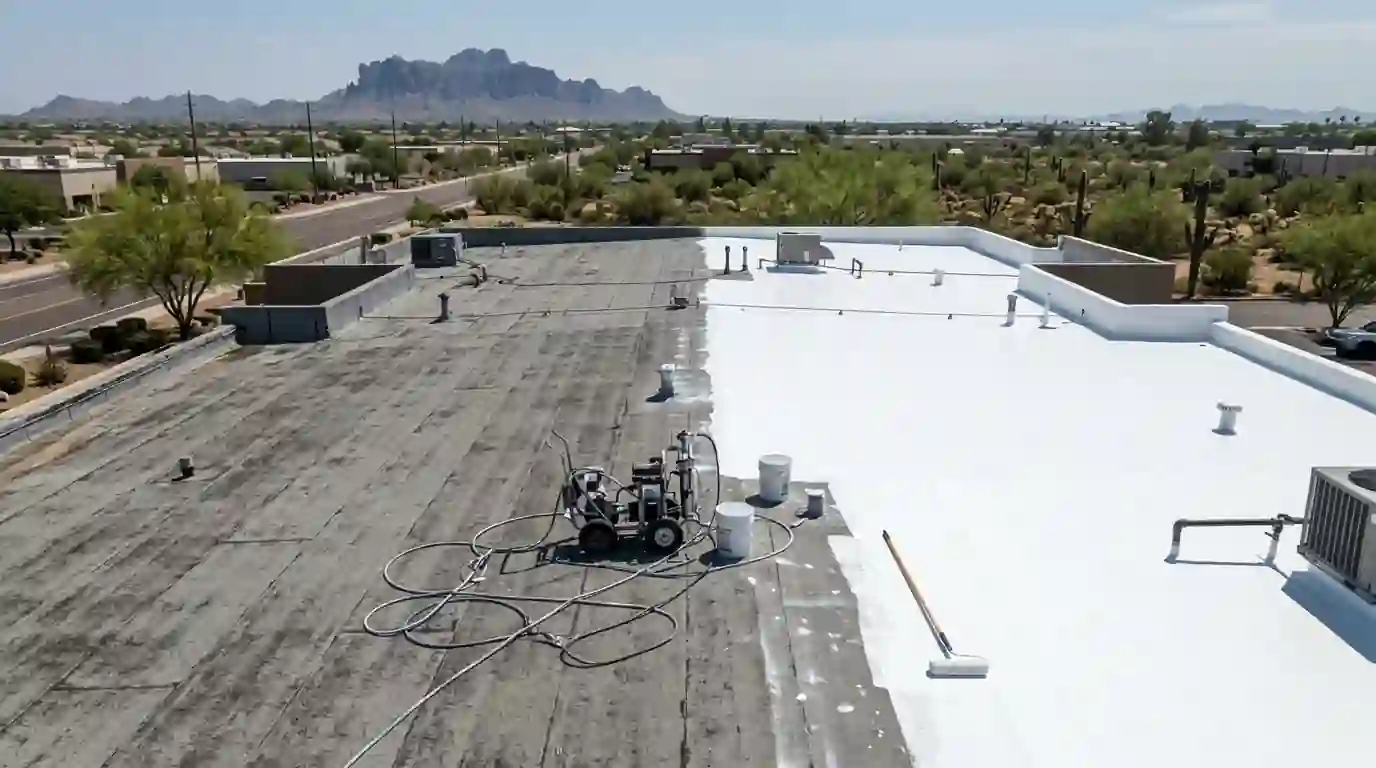
A sun-baked flat roof can often be saved with a coat, not a tear-off. Acrylic elastomeric coatings stretch with daily heat swings, reflect most of the sunlight, and seal small cracks. We prep roofs properly and apply coating thick enough to actually last in the Valley.
Short answer
Elastomeric roof coating is a thick, flexible acrylic coating, usually white, applied over a sound flat, foam, built-up, mod bit or metal roof. In Phoenix it reflects sunlight, lowers roof surface temperatures and seals hairline cracks. It works best on roofs that drain well, since acrylic softens under standing water. Proper cleaning, repairs and enough dry film thickness decide whether it lasts five years or two.
Materials we install and repair across the Valley
Coating is a preventive step, not a cure for a failed roof. These are the roofs where it delivers real value.
Dry, chalky or lightly cracked surfaces on an otherwise solid roof are ideal. The coating restores a protective skin before damage goes deeper.
Dark built-up or mod bit roofs absorb heat all afternoon. A white elastomeric coat can drop the surface temperature dramatically on sunny days.
Acrylic elastomeric is the most common top coat for foam in the Valley and recoats well over older acrylic layers.
Light rust on metal outbuildings, patio covers and shops can be treated, primed and coated to slow corrosion and cool the space below.
Acrylic performs best where water leaves within a day. If yours ponds, we fix slope first or point you to silicone.
Phoenix roofs expand in the afternoon sun and contract at night, sometimes swinging more than 70 degrees in a day. Rigid coatings crack under that movement. Elastomeric coatings stay flexible, stretching and recovering instead of splitting. Acrylic versions are water-based, easy to apply, and come in bright white that reflects much of the sun's energy back into the sky rather than into your ceiling.
The cooling effect is real on the roof surface. A dark roof can reach well over 150 degrees in July, while a fresh white coat runs far cooler. How much of that shows up on your power bill depends on insulation, ducts in the attic and AC efficiency, which is why we talk about coatings as roof protection first and energy savings second. The protection part is not in doubt: a roof surface that runs cooler ages more slowly. Our post on whether cool roof coatings cut bills goes into that question honestly.
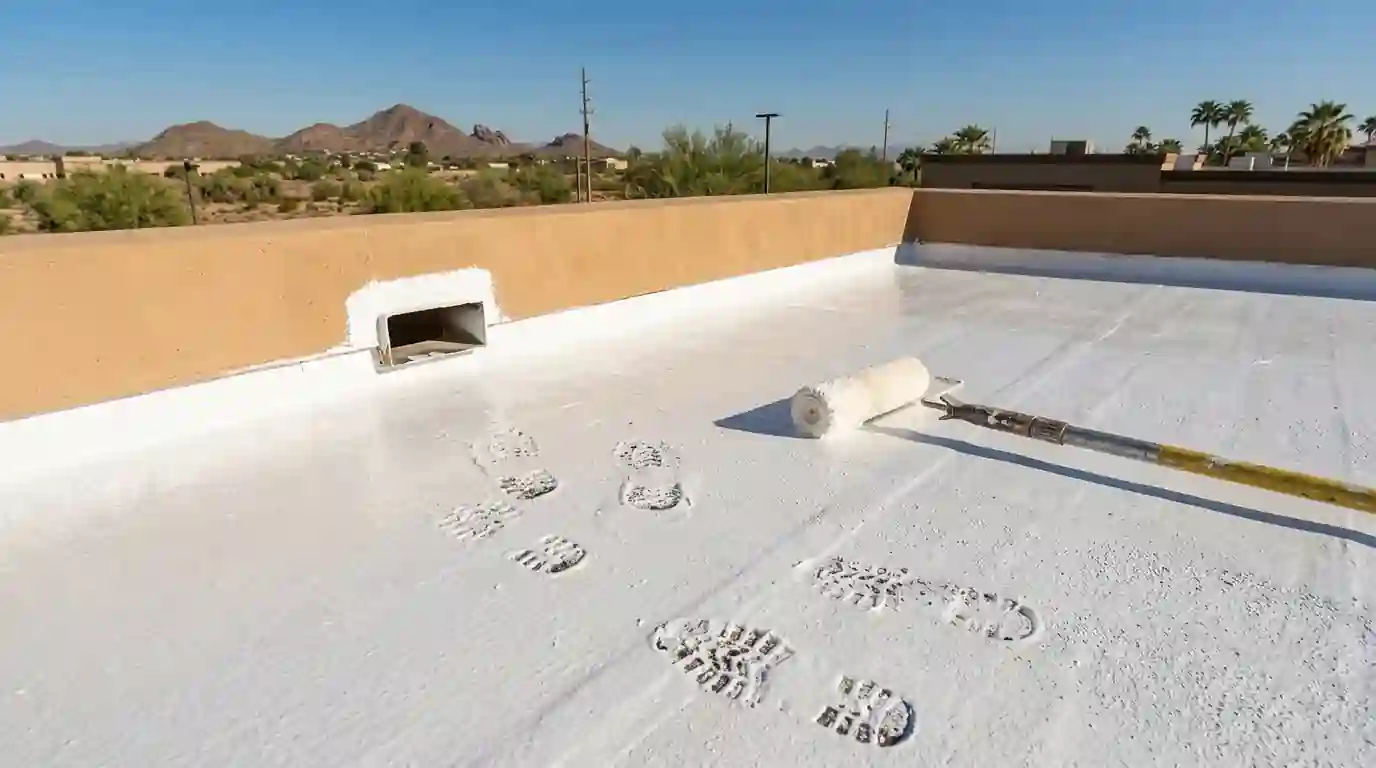
On flat and foam roofs we use coating systems from Gaco, Henry and Tremco, and single-ply membranes such as Carlisle TPO where a membrane is the better fit.
Most failed coatings we see were applied over dust. The Valley leaves a fine layer of grit on every roof, and haboobs add more. If the coating bonds to dust instead of roof, it peels in sheets within a couple of years. We pressure wash, remove loose material, and let the roof dry completely before anything goes on. In summer that can take a few hours. After a monsoon rain, it can take a full day or more.
Repairs come next. Cracks, blisters, open seams and wet sections are fixed with compatible materials so the coating is going over a sound roof, not hiding problems. Seams and flashing get a reinforced detail with fabric embedded in coating. Built-up roofs with loose gravel may need the gravel removed. On metal, rust is treated and primed so the coating does not bubble off. Only then do we apply the base and top coats, measuring thickness as we go.
Thickness matters more than brand. Two roofs coated with the same product can last very different amounts of time depending only on how much ended up on the surface. A coat applied too thin to save money looks the same on day one and wears through years earlier. We follow the manufacturer's specified coverage rate and check it with a wet mil gauge as we work. Edges, seams and the area around equipment get an extra pass, because those spots wear first and see the most stress through a Valley summer.
Acrylic elastomeric costs less than silicone, is easy to recoat with more acrylic later, and stays bright. Its weak point is standing water. On roofs that pond, acrylic softens and wears faster in those spots. Silicone handles ponding and UV better and often lasts longer between coats, but it costs more and limits future recoat options to silicone. It also tends to collect dust, so it loses some brightness faster in Valley conditions.
On a well-drained foam roof or a sloped metal roof, acrylic is usually the sensible choice, and it is what most Valley foam roofs already carry. On a flat roof that always holds a little water, we either fix the drainage or recommend a silicone roof coating instead. If your roof is foam, the recoat process is covered in more detail on our foam roof recoat page.
Phone (602) 878-3594 and tell us the roof type, its age and any leaks. We book a roof walk to check whether it is a good coating candidate.
We look for wet areas, open seams and blisters. Roofs with widespread trapped moisture are not coating candidates until those areas are fixed.
The entire surface is pressure washed and allowed to dry fully, since the coating must bond to roof material, not dust.
Cracks, seams, flashing and penetrations are repaired, with polyester fabric embedded in coating at joints, transitions and around every pipe and curb.
Coating goes on in two passes at the specified thickness, checked with a gauge, with granules added where foot traffic is expected.
We inspect for thin spots and pinholes, touch up as needed, and record the product and date so your next recoat can be planned.
Typical range in the Phoenix area
$1.65 to $3.35
per sq ft of roof surface
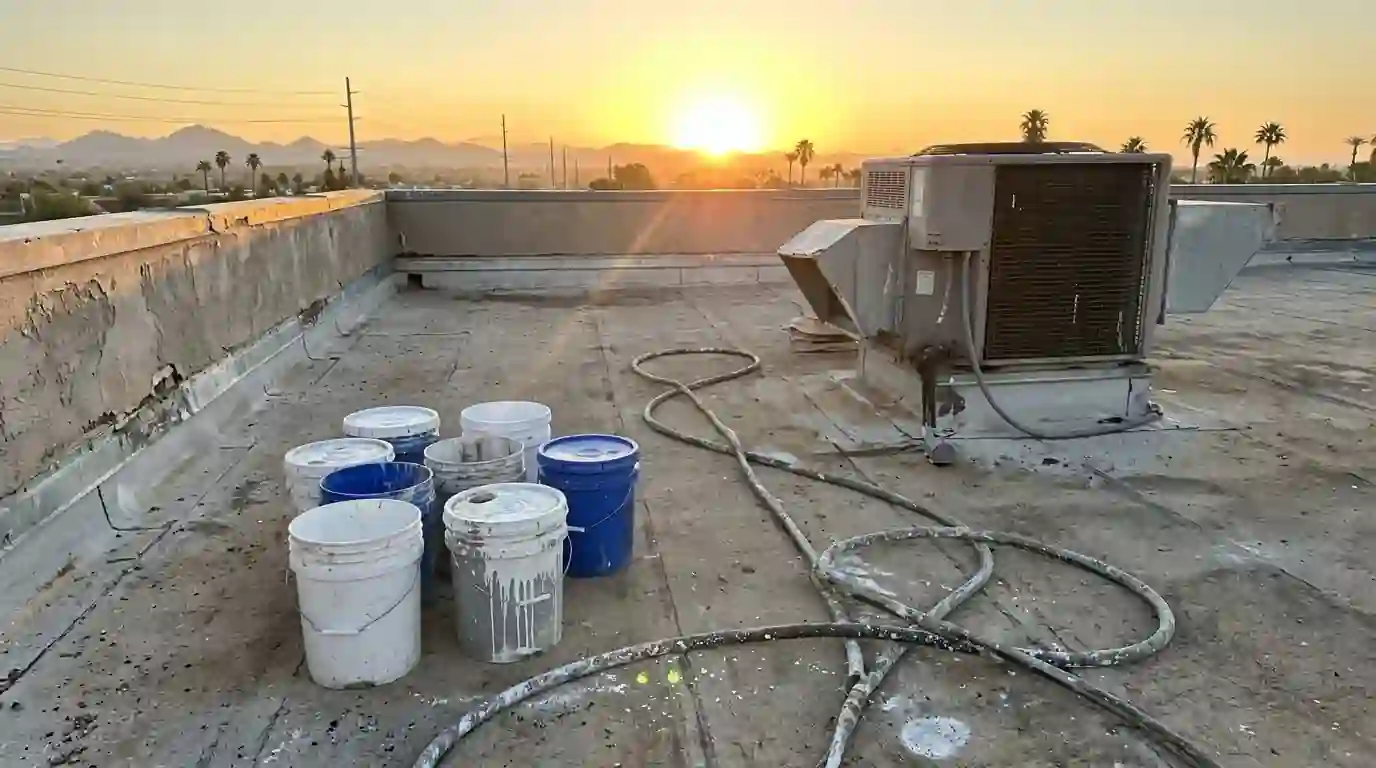
Coating costs depend mostly on surface preparation and how many repairs the roof needs before it can be coated. A clean, sound roof is quick. A roof with lots of cracking or loose gravel takes much longer. These are typical Valley ranges in 2026.
Ranges are typical figures for Valley homes, not a quote. We price your roof after we see it.
Most of our elastomeric roof coating calls come from these parts of the Valley. We also cover every other area on our service area list, from Anthem and Cave Creek down to Casa Grande.
A properly applied acrylic elastomeric coating typically lasts around 5 to 10 years here, depending on thickness, drainage and foot traffic. Thin coats and ponding areas wear out sooner. Recoating before the coating wears through keeps the roof beneath protected.
Not by itself. A coating seals hairline cracks on a sound roof, but an active leak usually comes from a failed seam, flashing or wet area that has to be opened and repaired. We fix the leak source first, then coat over the repaired roof.
We do not recommend coating tile or asphalt shingle roofs. Tile needs to shed water through its overlaps, and coating shingles can trap moisture and void manufacturer coverage. Elastomeric coatings are designed for low-slope surfaces and metal.
Small puddles that dry within a day are usually fine. Areas that hold water for days soften acrylic and wear through faster. We either improve drainage first or recommend silicone in those spots or across the whole roof.
Spring and fall are ideal, with warm dry days and cooler nights. Summer coating is common too, but we start early so the surface is not too hot, and we avoid days when monsoon storms are likely before the coat cures.
Silicone roof coating for Phoenix flat roofs that pond or bake: holds up to standing water and UV over foam, TPO and metal. Call (602) 878-3594 any hour.
Learn moreFoam roof turning brown, blistered or pecked in Phoenix? We clean, patch and recoat before UV eats the foam. Call (602) 878-3594 any hour to set a visit.
Learn moreFlat roof leaking in Phoenix? We find the source on foam, built-up, mod bit or TPO roofs and fix ponding, seams and drains. Call (602) 878-3594 24/7.
Learn moreLeaking screws, loose panels or lifted trim on a Phoenix metal roof? We replace fasteners, reseal laps and refasten panels. Call (602) 878-3594.
Learn moreCall us any hour. A real person answers, asks a few questions about your roof and sets up a visit.