Leaks in new places each year
Fixing one leak only to see another appear across the house means the surface and seams are failing everywhere, not at a single weak point.
Roof Repair
Tile Roofing
Flat & Foam Roofing
Shingle & Metal Roofing
Replacement & Inspections
Solar, Vents & Extras
Phoenix neighborhoods
Valley cities
Counties
Flat & Foam Roofing
When a flat roof has been patched for the fourth summer in a row, it is time to stop chasing leaks. We tear off or recover the old roof, correct the slope that caused the trouble, and install the low-slope system that fits your home and budget best.
Short answer
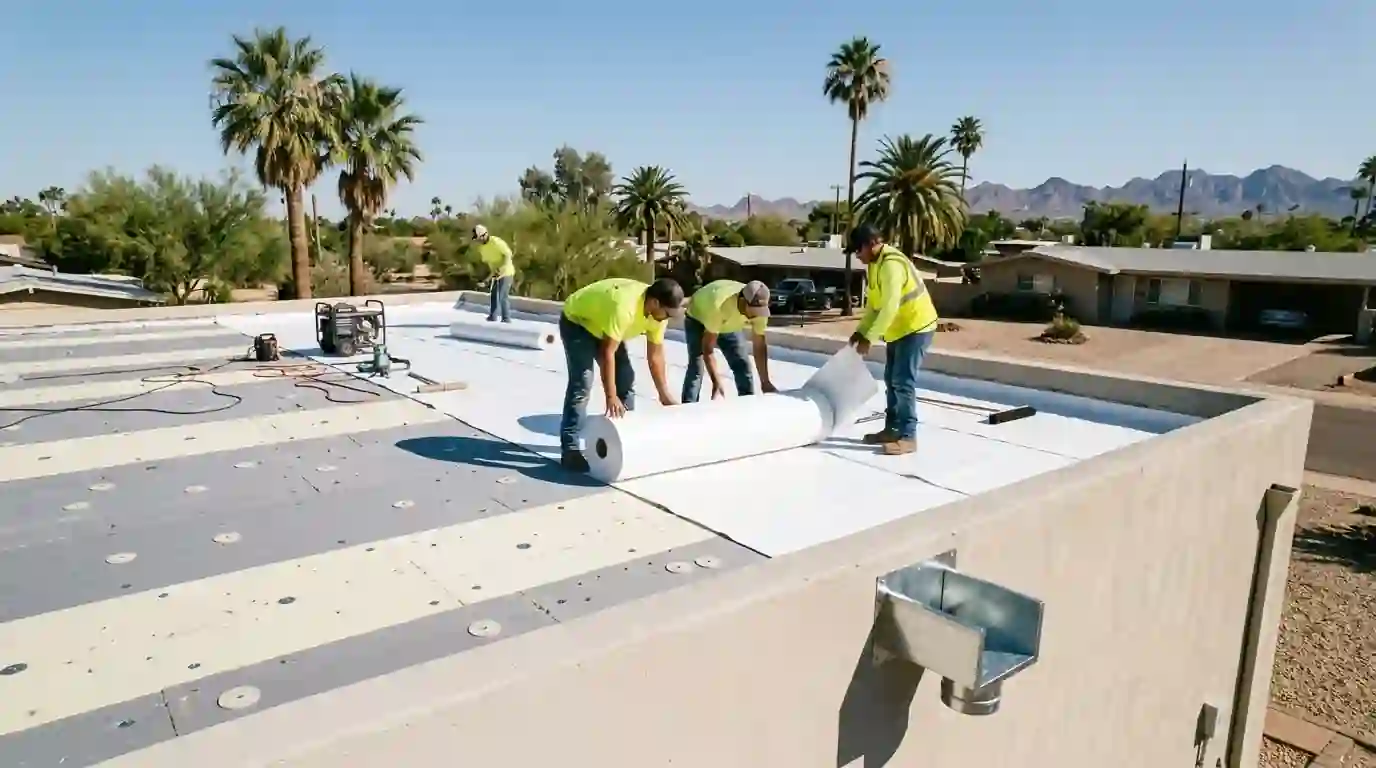
Replacing a flat roof in Phoenix means choosing a system, usually spray foam, TPO, modified bitumen or built-up, then removing or preparing the old roof, repairing the deck, building slope to drains, flashing parapets and penetrations, and installing the new surface. Many single-family flat roofs are replaced in two to five days. Cost depends on tear-off, deck repair, insulation and the system chosen.
Materials we install and repair across the Valley
There is no single best flat roof for Phoenix, only the best fit for a given building. Spray foam suits homes with parapets, lots of penetrations and ponding, because it can be sprayed thicker in low spots and it insulates the roof as it goes. TPO is a white single-ply membrane, welded at the seams, popular on commercial buildings and some newer homes. Modified bitumen is a tough, layered asphalt membrane that handles foot traffic well. Built-up roofing is the old multi-ply tar and gravel system still found on many mid-century homes.
We weigh the house design, how much traffic the roof sees, your budget and how long you plan to stay. A family that will stay twenty years and wants lower cooling bills often leans toward foam. A home where the roof doubles as a sitting area or holds a lot of equipment may want the toughness of a cap sheet. A rental with tight budgets may do better with modified bitumen and a reflective cap. On commercial buildings, TPO membrane roofing often wins on cost per square foot over large, open roof areas.
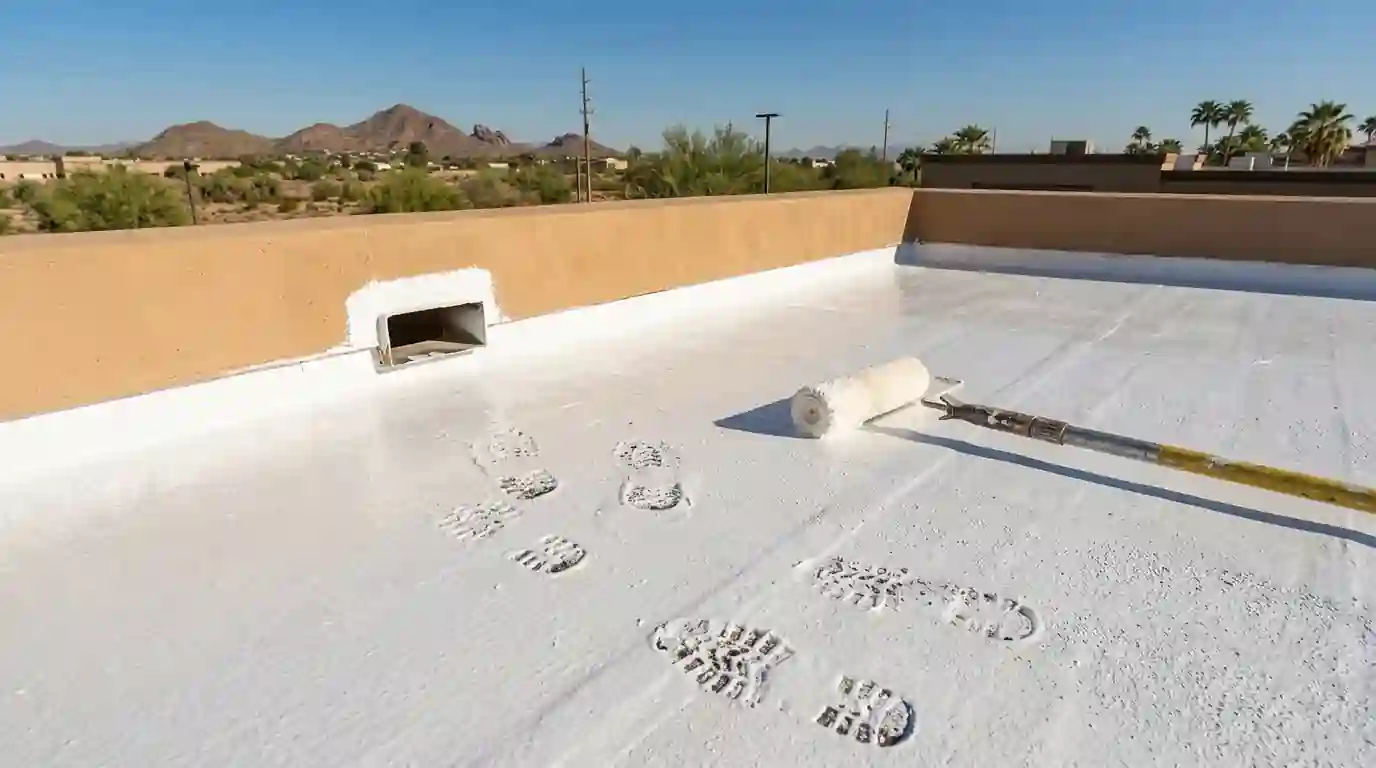
On flat and foam roofs we use coating systems from Gaco, Henry and Tremco, and single-ply membranes such as Carlisle TPO where a membrane is the better fit.
Some flat roofs can be recovered, meaning the new system goes over the old one after cleaning and repairs. That saves disposal cost and keeps the house closed during the work. It only works if the existing roof is dry, well attached and only one layer deep. We take core samples and probe for moisture before recommending a recover, because sealing wet material under a new roof just moves the problem out of sight.
When the roof comes off, we see the deck, and that is often where the real story is. Rotted plywood near scuppers, rusted metal decking on older commercial buildings, and sagging spots between joists all get repaired before anything new goes on. It is also the best moment to add tapered insulation to build slope, so the new roof drains instead of ponding the way the old one did.
Most flat roof failures start at the edges. Parapet walls, scuppers, canales, AC curbs, vent pipes and skylights are where water collects and where materials change. On a replacement we rebuild those details rather than tying new roofing into old, tired flashing. Parapet caps get resealed or replaced, scupper boxes get new metal, and every penetration gets fresh boots or flashing compatible with the new system.
Drainage gets the same attention. A roof that held water before will hold water again unless the slope or drain size changes. Where needed we add crickets behind AC units, widen scuppers and taper insulation toward drains. If you want a sense of how long each option lasts here, our guide to flat and pitched roof replacement costs includes life spans as well as price ranges. And if the old roof is foam, we look first at whether a foam recoat and repair can still save it.
Flat roofs rarely fail all at once. These signs tell us the roof as a whole has reached the end, not just one spot.
Fixing one leak only to see another appear across the house means the surface and seams are failing everywhere, not at a single weak point.
When probing finds wet insulation or felt across large areas, trapped water will keep rotting the deck no matter how many patches go on top.
Built-up and rolled roofs that have never been recoated or resurfaced are usually near the end by their second decade in Valley sun.
Many older homes carry two or three roofs stacked up. Adding another is often not allowed and hides deck damage underneath.
A visible dip, soft feel underfoot or water collecting in the same low spot often points to decking that needs replacing along with the roof.
Putting new equipment on a worn flat roof means removing it again later. Replacing first saves a second round of labor.
Typical range in the Phoenix area
$8,460 to $19,730
for a typical 1,200 to 2,000 sq ft flat roof
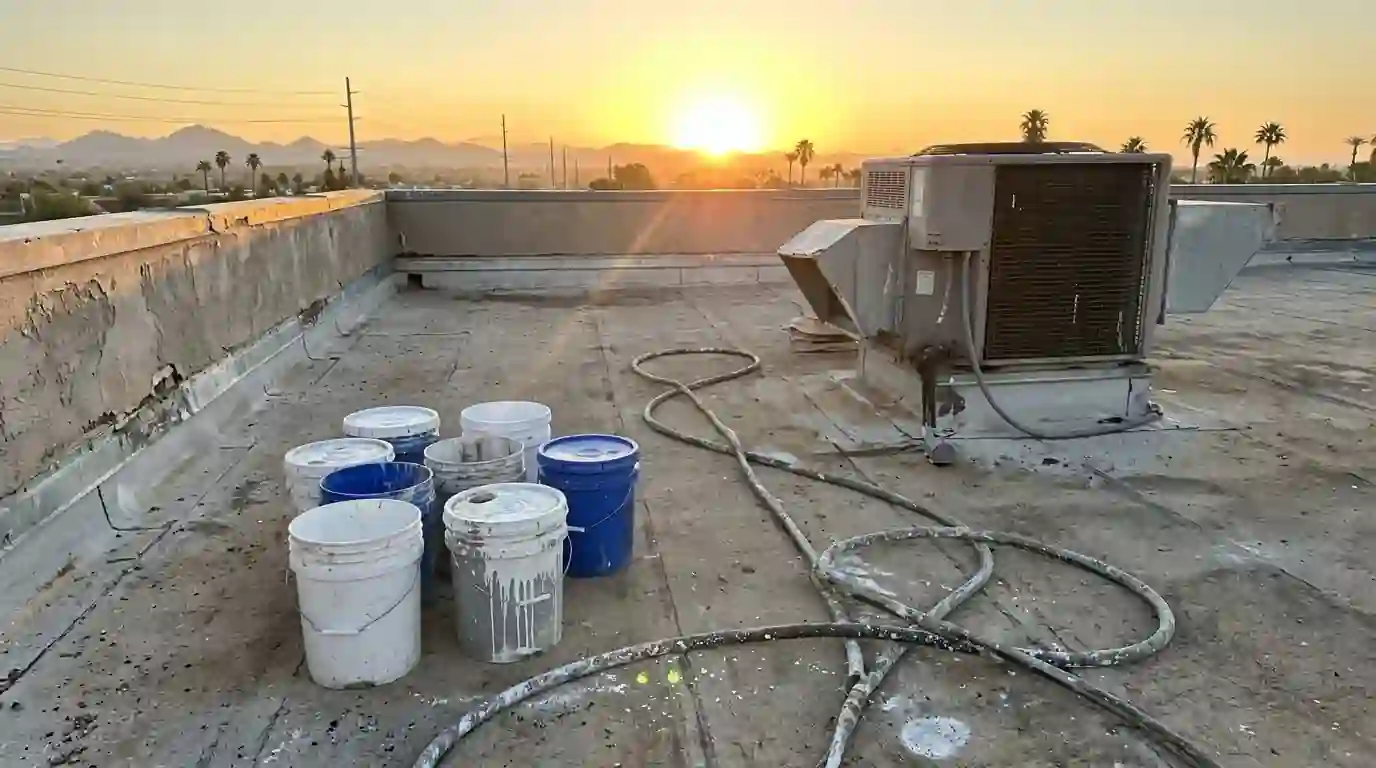
Replacement cost is driven by tear-off, deck condition and the system you choose. Smaller homes carry a higher price per square foot because setup costs are spread over fewer squares. These 2026 ranges cover most Valley single-family homes with average access and one existing layer to remove.
Ranges are typical figures for Valley homes, not a quote. We price your roof after we see it.
Phone (602) 878-3594 and tell us the roof age, the leak history and what is up there now. We schedule a roof walk with moisture checks.
We take samples to see how many layers and how much moisture you have, then price two or three systems side by side with life span notes.
We pull the permit where required, line up materials, and pick dates that avoid forecast monsoon storms as much as the season allows.
Old roofing comes off in sections, the deck is repaired, and tapered insulation or foam builds slope toward drains and scuppers.
The chosen roof goes on with new parapet flashing, scupper metal and penetration details, and the surface is coated or capped as specified.
We flood-check drains, inspect seams and edges, clean up, and give you photos plus the product and date for future maintenance.
Most of our flat roof replacement calls come from these parts of the Valley. We also cover every other area on our service area list, from Anthem and Cave Creek down to Casa Grande.
It depends on the house. Foam suits parapet homes with ponding and lots of penetrations. Modified bitumen handles traffic well at a moderate price. TPO is efficient on larger simple roofs. We usually show two or three options with costs and expected life so you can decide.
Sometimes. A recover works only when the existing roof is dry, firmly attached and a single layer. We take core samples to check. If we find moisture or multiple layers, a full tear-off is the safer choice, even though it costs more.
Most single-family flat roofs take two to five working days, depending on size, tear-off and deck repair. Foam and coatings need dry weather to cure, so monsoon days can stretch the schedule. We dry in every section before leaving each day.
Only if slope or drainage is corrected as part of the job. Laying new material on the same flat deck will pond just like the old roof. We build slope with tapered insulation or foam and enlarge scuppers where needed.
Many Valley cities require a permit for a full re-roof, including flat roofs. Requirements vary by city and scope. We check what your city asks for, pull the permit when needed, and schedule the inspection as part of the job.
Flat roof leaking in Phoenix? We find the source on foam, built-up, mod bit or TPO roofs and fix ponding, seams and drains. Call (602) 878-3594 24/7.
Learn moreSpray foam roofing for flat and low-slope Phoenix homes: one continuous insulating layer sloped to drain, with a UV top coat. Call (602) 878-3594 24/7.
Learn moreModified bitumen roofing for Phoenix flat roofs: tough layered membrane, reflective cap and no-flame options. Call (602) 878-3594 any day.
Learn moreTPO roofing for Phoenix commercial and flat homes: white single-ply membrane, hot-air welded seams, cooler in summer. Call (602) 878-3594 any time.
Learn moreCall us any hour. A real person answers, asks a few questions about your roof and sets up a visit.