Crazed or yellowed dome
Fine spiderweb cracks and a cloudy yellow tint mean the acrylic has been degraded by years of UV. It turns brittle and can shatter from hail or a falling branch.
Roof Repair
Tile Roofing
Flat & Foam Roofing
Shingle & Metal Roofing
Replacement & Inspections
Solar, Vents & Extras
Phoenix neighborhoods
Valley cities
Counties
Solar, Vents & Extras
A cloudy, cracked dome or a drip around the curb usually means the Arizona sun has been working on your skylight for years. We repair flashing and curbs, replace failed domes and glass units, and set sun tunnels so they stay sealed through monsoon season.
Short answer
Most skylight leaks in Phoenix come from failed flashing at the curb or a cracked, sun-damaged acrylic dome, not the opening itself. If the curb and flashing are sound, a new dome or seal may be enough. If the skylight is old, crazed or pouring heat into the room, replacing it with a low-E glass unit and a new flashing kit is usually the better long-term fix, especially on tile roofs.
Materials we install and repair across the Valley
A skylight faces the sky almost flat, so it takes the full force of Valley sun for most of the day, most of the year. Acrylic domes, the most common type on homes built from the 1970s through the 2000s, slowly break down under that UV. The surface crazes, clouds over and loses impact strength. Roof surfaces reaching 150 F to 170 F in July also expand and shrink the frame every day, which gradually works the seals loose.
Heat gain is the other side of it. A clear single-pane dome can pour a surprising amount of heat into a room, and plenty of homeowners end up covering theirs with a towel or tinted film. Current skylight glass, with a low-E coating and an insulated unit, cuts that heat sharply while still bringing in daylight. Tubular daylighting devices, often called sun tunnels, are another option where a small, cool light source is all a hallway, closet or bathroom needs.
Skylight work uses units from makers such as Velux, and the flashing and sealants we use around panels, vents and patio covers come from Henry and Tremco roof lines.
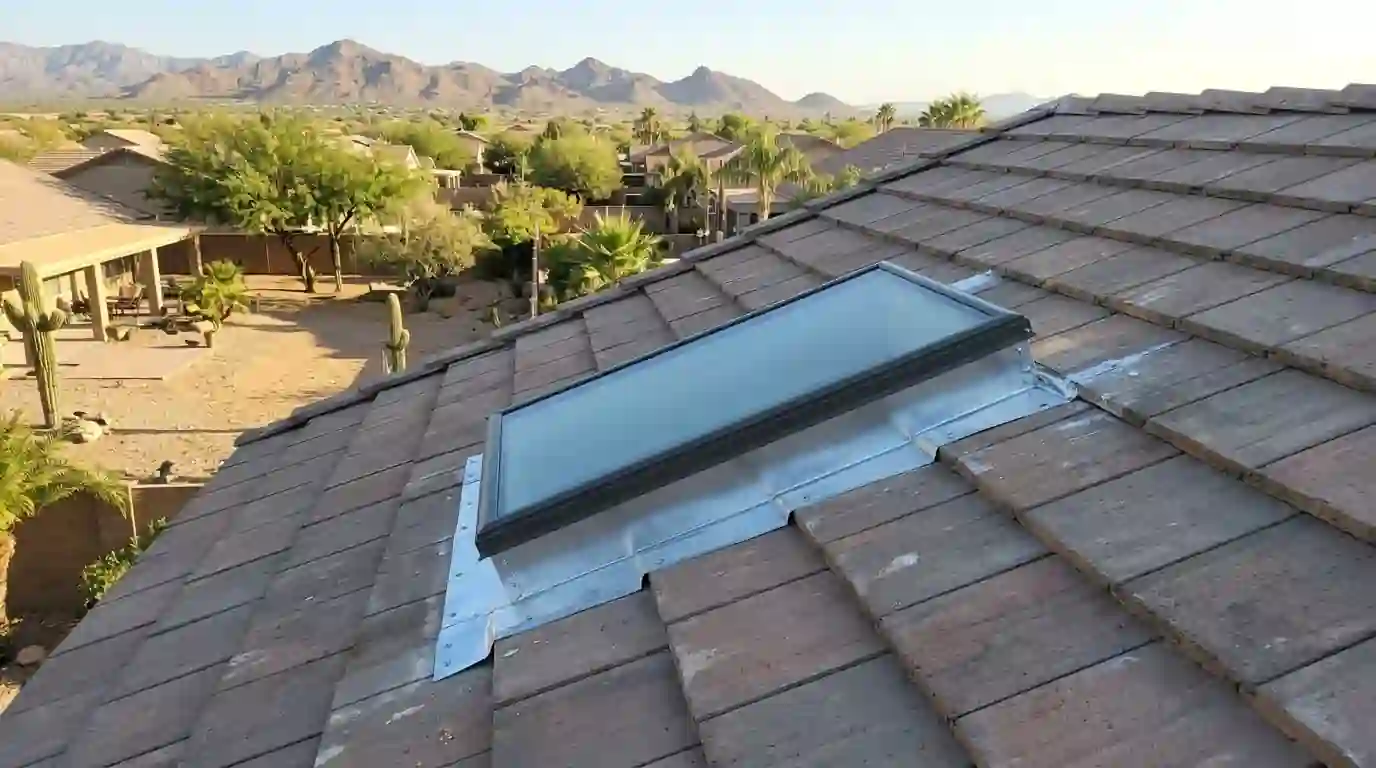
When a skylight leaks, the dome usually takes the blame, but most of the time water is getting in at the flashing. On tile roofs, the skylight curb sits in a field of tiles, and the flashing has to carry water around the curb and back onto the underlayment. If the underlayment around the curb has dried out, or tiles were cut short when the skylight went in, water finds the gap. We lift the surrounding tiles, check the underlayment and replace the flashing kit before resetting the tile.
On foam and other low-slope roofs, skylights sit on raised curbs that need to be wrapped and coated as part of the roof system, and cracks in the coating at the curb corners are a common failure. On shingle roofs, step flashing and a head flashing do the job. In every case, we'd rather fix the flashing properly than smear more sealant around the frame, because sealant alone rarely survives more than a couple of Phoenix summers. If water has traveled well beyond the skylight, our leak tracing and repair work finds where it's going.
If the frame and curb are sound and only the dome is crazed, a replacement dome can sometimes be fitted to the existing frame, which is the least invasive fix. If the skylight is 20 years old or more, the seals are failing and the flashing is tired, a full replacement with a new curb-mounted unit and flashing kit usually costs less over time than patching it again and again. A fogged insulated glass unit is always a replacement.
Some homeowners decide they want less skylight. A large dome over a family room can be swapped for a smaller unit, or closed in completely and roofed over to match the surrounding tile or shingles. Others trade an old dome for a sun tunnel, which brings daylight through a reflective tube with far less heat. If a new roof or a tile underlayment job is coming up, that's the best time to deal with skylights, since the roof around them is already open.
UV and heat break skylights down slowly, so trouble tends to show up as small changes first. These are the ones we see most around the Valley.
Fine spiderweb cracks and a cloudy yellow tint mean the acrylic has been degraded by years of UV. It turns brittle and can shatter from hail or a falling branch.
Water marks on the drywall around the skylight well usually point to flashing failure at the curb rather than condensation, especially when they show up after monsoon storms.
Active drips in a downpour mean water is getting past the flashing or the seal between dome and frame. Catch it before the drywall and insulation soak through.
Older clear domes let in a lot of radiant heat. A room that turns hot every afternoon may need a low-E glazed unit or a smaller tube-style daylighting device.
Haze or moisture between the panes of an insulated glass skylight means the seal has failed. The unit loses its insulating value and can only be replaced.
A sun tunnel that has gone dim may have a yellowed dome, dust inside the tube after a haboob, or a seal gap that lets grit work its way in.
Cracked roof mastic, shrunken caulk or loose tiles around the skylight curb are warning signs even before a single drop shows up inside the house.
Typical range in the Phoenix area
$465 to $2,940
per skylight, from repair to full replacement
A reflash or seal repair on an existing skylight sits at the low end. Full replacement with a new low-E glass unit, curb and flashing kit on a tile roof sits at the high end. Sun tunnel installs usually land somewhere in between. Interior drywall repair, if needed, is priced on its own.
Ranges are typical figures for Valley homes, not a quote. We price your roof after we see it.
Call (602) 878-3594 any time. Tell us whether you see drips, stains, cloudiness or heat, and if it's raining now, we'll talk through how to protect the room tonight.
We look at the shaft and ceiling from inside, then check the dome, frame, curb, flashing and surrounding roof to pin down where water or heat is coming from.
You get a plain explanation of repair versus replacement, the skylight or sun tunnel types that fit your opening, and a price for each realistic option.
We take out the old dome or unit, check the curb and framing for rot, repair the deck around the opening and lay new underlayment.
The new unit or replacement dome is set, a matching flashing kit goes in, and tiles, shingles or coating are restored around it so water sheds properly.
We run water over the finished skylight, check the shaft from inside for any drips, and clean up both the roof and the room before leaving.
Most of our skylight repair & replacement calls come from these parts of the Valley. We also cover every other area on our service area list, from Anthem and Cave Creek down to Casa Grande.
Monsoon storms bring wind-driven rain that hits the skylight from the side, pushing water past flashing that handles a gentle rain just fine. Heavy bursts also overwhelm small gaps at the curb or at tile cuts. A leak that appears only in storms almost always points to the flashing and tile details around the curb, not the dome.
Not effectively. Crazing is cracking inside the plastic caused by UV damage, not dirt on the surface, so polishing doesn't remove it. A crazed dome is also more brittle and can break from hail or an impact. If the frame and curb are still in good shape, replacing just the dome is often possible.
Not if you choose the right unit. Low-E coated, insulated glass skylights block much of the heat that old clear domes let through. Placement and size matter as well: a smaller unit on a north-facing slope adds daylight with far less heat than a large one facing west.
Most single skylight replacements take part of a day, including flashing and roof restoration. Tile roofs, larger units or a skylight that needs a new curb or framing can stretch into a full day. If drywall in the shaft needs repair, that usually happens after the roof side is sealed.
It's worth thinking about. During a re-roof the opening is already exposed, so closing off a skylight costs much less than doing it later. If you like the light, it's the best moment to replace the unit and flashing so the skylight lasts as long as the new roof around it.
Roof leak repair in Phoenix: we trace the water to its true entry point on tile, foam, shingle or flat roofs and fix the cause. Call us 24/7.
Learn moreRoof flashing repair in Phoenix: we fix the metal at walls, valleys, vents and chimneys where most roof leaks start. Call (602) 878-3594 any hour.
Learn moreTile roof leaking or tiles slipping in Phoenix? We trace the leak to the underlayment, reset or swap tiles and seal it the same week. Call (602) 878-3594.
Learn morePhoenix attics can top 140 F to 150 F in summer. We balance intake and exhaust vents and add radiant barrier to cut heat load. Call (602) 878-3594.
Learn moreCall us any hour. A real person answers, asks a few questions about your roof and sets up a visit.