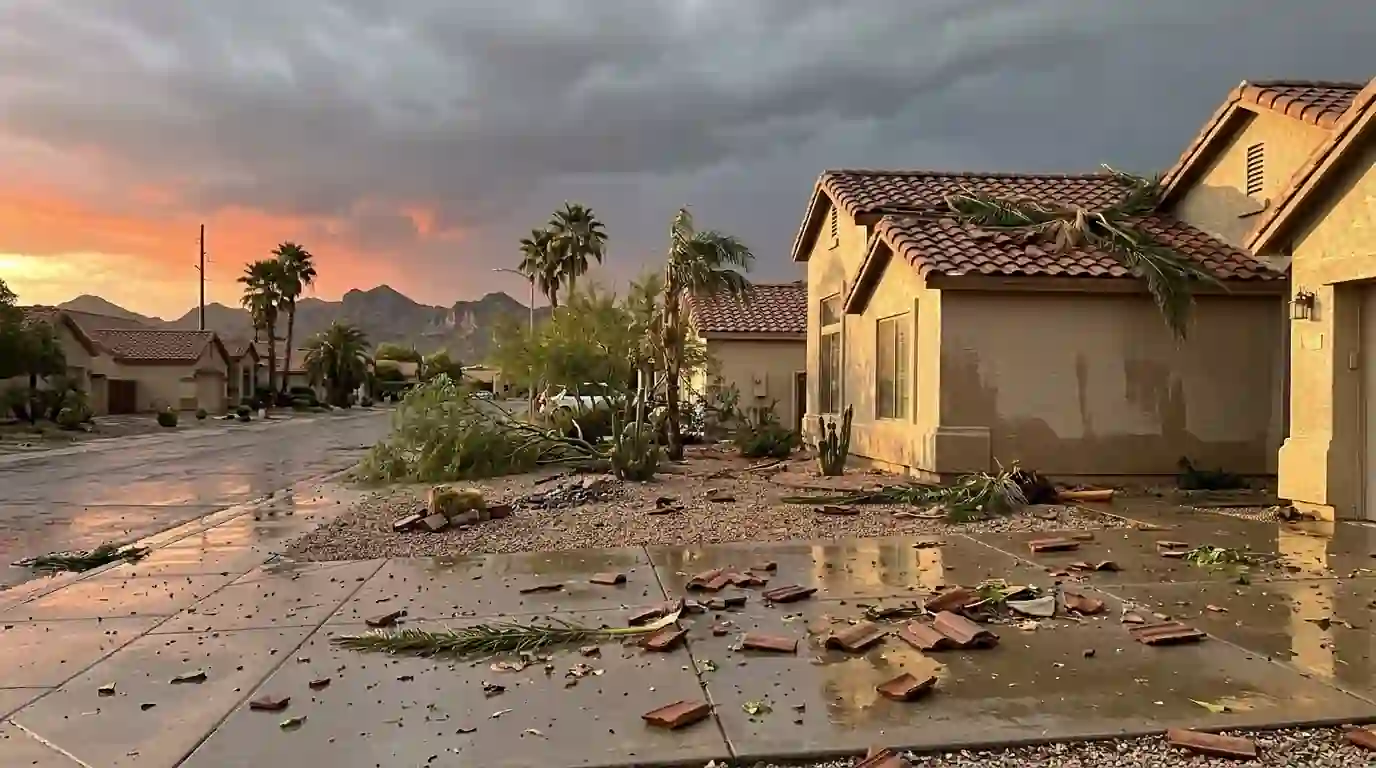
Tiles scattered on the ground
Broken tile pieces in the yard or driveway mean tiles were lifted or knocked off. The gap they left exposes felt to the next downpour.
Roof Repair
Tile Roofing
Flat & Foam Roofing
Shingle & Metal Roofing
Replacement & Inspections
Solar, Vents & Extras
Phoenix neighborhoods
Valley cities
Counties
Roof Repair
One monsoon cell can drop a microburst on a single street and leave the next one untouched. When yours is the street, we come out, cover the damage, photograph everything for your claim and repair the roof so it is ready for the rest of the season.
Short answer
Phoenix monsoon season runs June 15 to September 30. The usual roof damage is lifted or broken tiles, torn shingles, stripped foam coating, clogged drains and holes from wind-thrown debris. After a storm, cover any opening first, then have the roof documented. Monsoon repairs typically cost $495 to $4,870 depending on damage area and roof type, and many policies treat sudden wind damage as a covered loss.
Materials we install and repair across the Valley
Some storm damage is obvious from the driveway. Some only shows on the roof or in the attic, and it gets worse with every cell that follows.
Broken tile pieces in the yard or driveway mean tiles were lifted or knocked off. The gap they left exposes felt to the next downpour.
Ridge and hip caps take the strongest wind. If the line looks wavy or mortar is missing, those caps may be loose and ready to fall.
A haboob can pack fine dust into valleys and drains. The next rain turns it to mud that slows water and pushes it under tiles.
Flying debris and hard rain can gouge or peel coating on foam roofs, leaving bare foam that UV will start eating within weeks.
Thrown debris and the occasional hail dents vent caps and flashing, which can open seams that leak in later storms.
Microburst gusts can twist patio covers and lift their roofing, and the tie-in to the main roof often tears along with them.
Call (602) 878-3594 as soon as you see damage or water. During busy monsoon nights we triage by active leaks and open roofs first.
We tarp or seal any opening, collect loose tiles that could fall, and clear debris from drains so the next cell does not cause more damage.
In daylight we photograph each affected slope, the debris and fresh breaks, and note the storm date and direction for your records.
You get a written repair price based on what we found, and we can meet your adjuster on the roof if you file a claim.
We replace tiles, shingles, coating or flashing with matched materials and fix any felt or decking that got wet before closing it up.
Before we leave, we check drains, valleys and ridges across the whole roof so it is ready for the rest of the monsoon.
Monsoon storms bring several kinds of force at once. A microburst pushes a column of air straight down, then spreads it out at high speed across a few blocks. Dust storms, which locals call haboobs, sandblast coatings and pack drains. Rain comes in short, heavy bursts, often sideways. Debris like palm fronds, patio furniture, trampoline frames and loose solar hardware gets thrown into roofs. The result is damage that is sudden and uneven, sometimes concentrated on one slope.
That suddenness matters for insurance. Wear and tear from age is usually excluded from homeowner policies, while sudden wind damage often is covered. Clear photos taken soon after the storm, showing fresh breaks and debris, help show the difference. Our post on filing a roof damage claim in Arizona walks through what an adjuster usually wants to see. Waiting weeks to report it makes that harder.
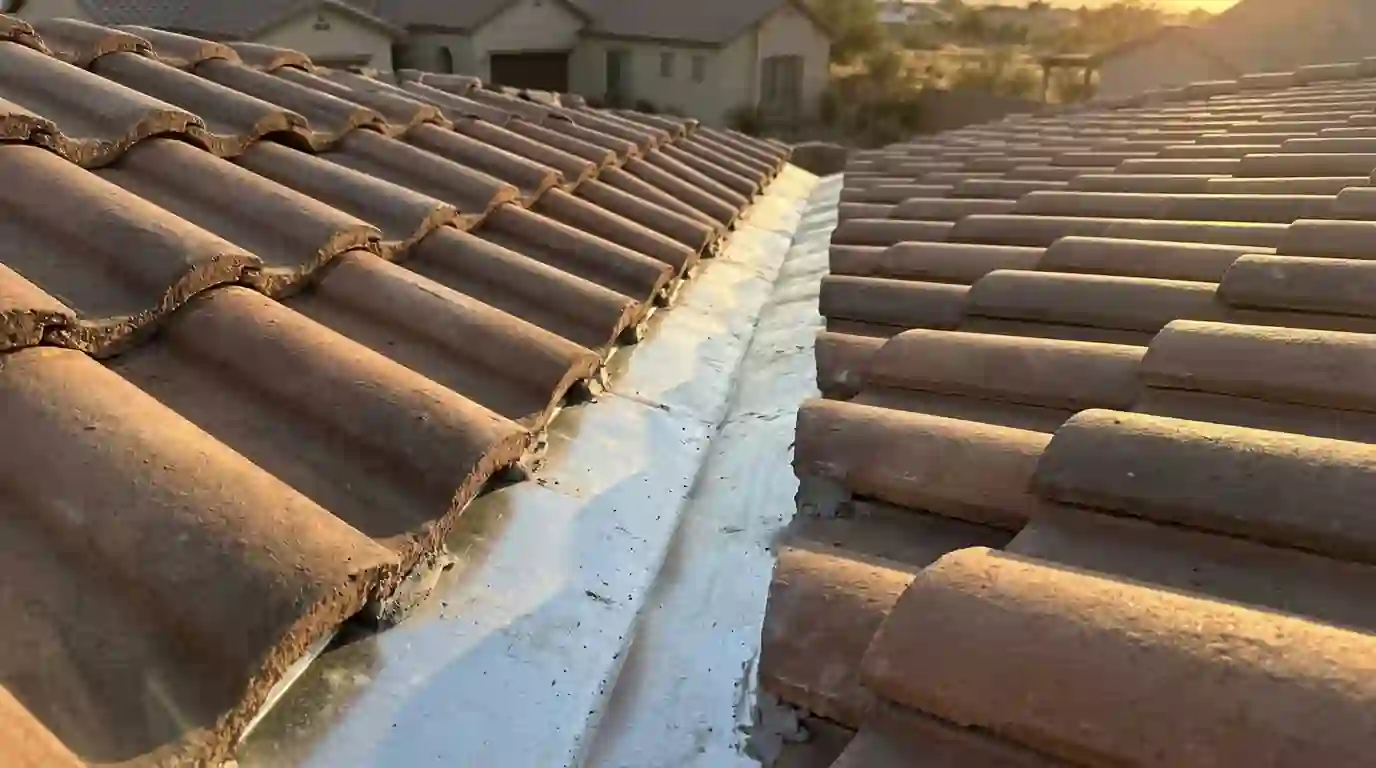
On repairs we match what is already on the roof, from Eagle and Westlake Royal concrete tile to GAF and Owens Corning shingles, and we seal flashing with roof-grade products from Henry and Tremco.
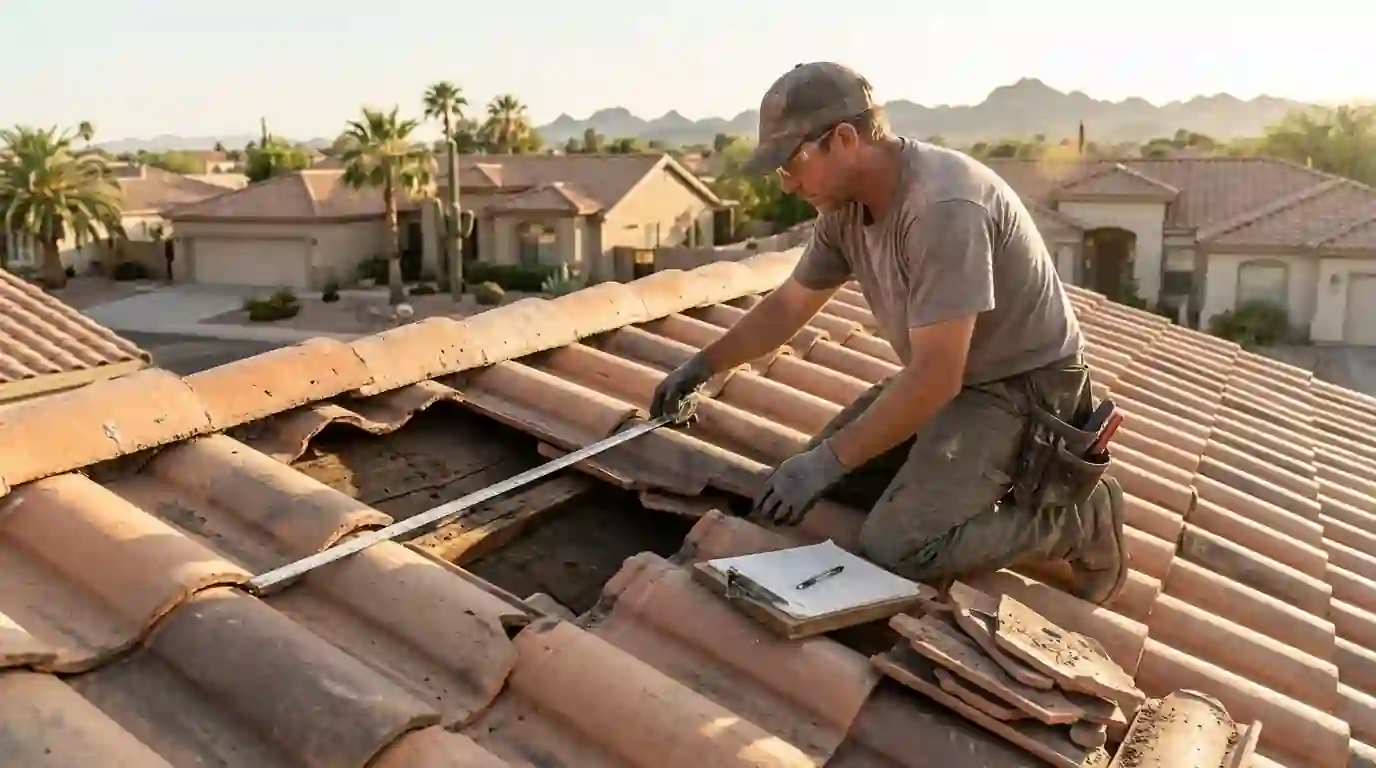
On a storm visit, we photograph every affected slope from wide to close up, including the ground debris, the fresh breaks and anything that was already worn so it is not confused with new damage. We note the date of the storm and which direction the damage faces. If you open a claim, you can share that set with your adjuster, and we can meet the adjuster on the roof to point out what we found.
We do not decide what your policy covers, and we will not inflate damage to push a claim. What we can do is make the record clear and honest so the adjuster has what they need. If the adjuster wants items repaired a certain way, we price that scope so the numbers line up with the claim. Our wind damage repair service goes deeper into the specific gust patterns that strip tiles and shingles.
Most monsoon damage starts with a weakness that was already there: a loose ridge tile, a cracked tile left in place, a drain half full of last year's dust, a coating worn thin. A spring check before June 15 catches those. We clean valleys and scuppers, reset loose tiles, reseal pipe boots and look for weak flashing. It is much easier to fix one loose cap in May than to replace a whole ridge run in August.
Trim trees that overhang the roof, tie down or store patio furniture, and check that solar wiring and conduit are clipped tight. If you want a full list, our monsoon prep checklist for Phoenix homeowners covers the yard and attic too. Inside, know where your breaker panel is and keep a few buckets and old towels handy, because the first storm of the season usually arrives at night and finds whatever was missed. A quick look in the attic with a flashlight in early June can also show old water stains worth having us check.
A monsoon cell can drop a large share of a month's rain in under an hour. On a pitched tile roof, that water sheds fast. On a flat roof ringed by parapet walls, it has to find the scuppers, and if those openings are half blocked by dust, leaves or an old nest, the roof turns into a shallow pool. Standing water finds every pinhole in the coating and every open seam at the wall line, which is why so many first-storm calls come from flat-roofed homes in older Phoenix neighborhoods.
After a storm on a flat roof, we look for water marks on parapet walls that show how deep it pooled, then check the coating along those lines and around every penetration. Dust left behind after the water drains acts like sandpaper under foot traffic, so we rinse it off before recoating any damaged patch. Clearing scuppers and checking slope to drain is the cheapest storm protection a flat roof can get.
Typical range in the Phoenix area
$495 to $4,870
per storm repair, most homes
Storm repairs range widely because a microburst can loosen a few ridge tiles or strip half a slope. The figure below covers typical residential monsoon repairs in 2026, not including full roof replacement. Insurance, when it applies, may cover part or all of it after your deductible.
Ranges are typical figures for Valley homes, not a quote. We price your roof after we see it.
Most of our monsoon storm damage repair calls come from these parts of the Valley. We also cover every other area on our service area list, from Anthem and Cave Creek down to Casa Grande.
Monsoon season officially runs June 15 to September 30. Plan a roof check in April or May so loose tiles, worn coating and clogged drains are fixed before the first storms. Waiting until July means competing with everyone who had damage.
Many policies cover sudden wind and storm damage, minus your deductible, but exclude normal wear and aging. Coverage depends on your policy. Photos taken soon after the storm help show what is new. Your insurer makes the coverage call; we document and repair.
Yes. Dust storms sandblast coatings, pack valleys and drains with fine dirt and can drive grit under loose tiles. The damage often shows during the next rain, when that dirt turns to mud and backs water up under the roof covering.
A microburst is a strong column of sinking air from a thunderstorm that spreads out when it hits the ground. It can be just a few blocks wide, which is why one street sees broken tiles and fallen trees while the next looks untouched.
Both. Clear drains, scuppers and valleys before June, then check them after any big dust storm. A drain packed with dust and leaves is one of the most common reasons flat roofs flood and leak during the first heavy monsoon rain.
Emergency roof repair in Phoenix: a live person answers 24/7, and we tarp or seal the leak the same night when it is safe. Call (602) 878-3594.
Learn moreWind damage roof repair in Phoenix: lifted tiles, torn shingles and peeled flat roof edges fixed and fastened to resist the next gust. Call (602) 878-3594.
Learn moreHail damage roof repair in Phoenix: honest checks after a hailstorm, clear photos of real impacts, and repairs to tile, foam or shingle. Call us 24/7.
Learn moreScupper and canale repair in Phoenix: we clear, reflash and rebuild the wall drains on flat roofs so monsoon water leaves fast. Call (602) 878-3594.
Learn moreCall us any hour. A real person answers, asks a few questions about your roof and sets up a visit.