Right after a monsoon storm
Strong gusts, hail or a haboob can lift shingles, slide tiles or tear flashing without causing an immediate leak, and early repairs cost far less.
Roof Repair
Tile Roofing
Flat & Foam Roofing
Shingle & Metal Roofing
Replacement & Inspections
Solar, Vents & Extras
Phoenix neighborhoods
Valley cities
Counties
Replacement & Inspections
A roof can look fine from the curb and still be failing underneath. Our inspections cover the surface, the flashing, the drainage and the attic, so you know what shape the roof is really in after a monsoon, before you buy a home or before solar goes on top.
Short answer
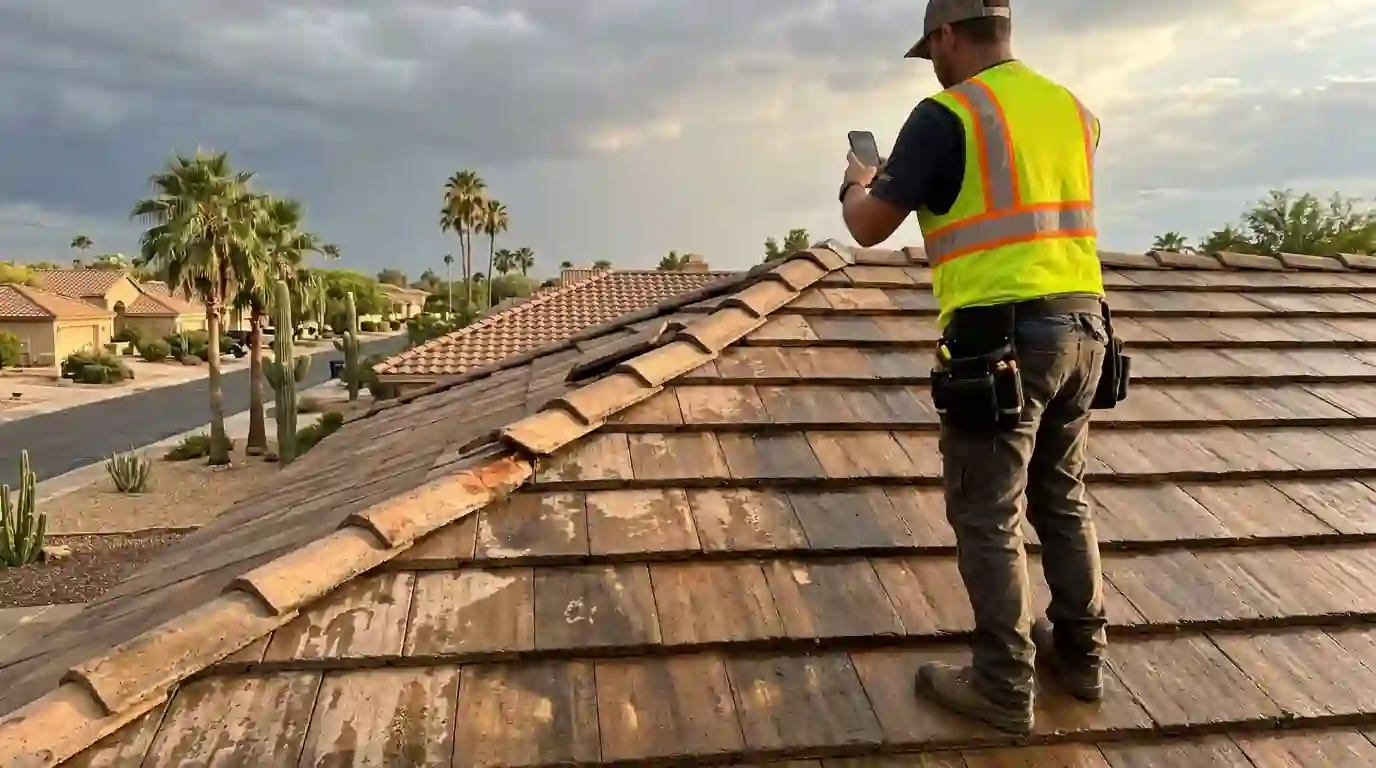
A roof inspection in Phoenix is a walk of the whole roof plus an attic check, looking at the roof covering, underlayment where visible, flashing, penetrations, drainage, decking and ventilation. You get photos and a written summary of what is sound, what needs repair and roughly how much life remains. It makes sense after a monsoon storm, before buying a home, before solar and every few years on older roofs.
Materials we install and repair across the Valley
Inspections are a planning tool. These are the moments when one pays for itself.
Strong gusts, hail or a haboob can lift shingles, slide tiles or tear flashing without causing an immediate leak, and early repairs cost far less.
A general home inspector looks at many systems, while a roofer looks only at the roof and can usually walk it more closely and estimate repair costs.
Panels sit on the roof for decades, so confirming the underlayment and deck have enough life left avoids paying to remove the array later.
Underlayment under concrete tile wears out in Valley heat, and an inspection shows how close it is before leaks start appearing indoors.
Faint ceiling marks, a musty attic or peeling paint near an eave often point to a slow leak that only shows up in heavy rain.
Knowing whether you need a repair now or a replacement in three years lets you plan the expense instead of reacting to an emergency.
We start on the ground, looking at roof lines for sags, at fascia and soffits for stains, and at gutters and downspouts for granules or broken tile pieces. Then we walk the roof where it is safe. On tile we step carefully on the lower part of each tile, checking for cracks, slipped pieces and gaps at hips and ridges. On shingles we look at granule loss, seal strips, nail pops and pipe boots. On foam and flat roofs we look for blisters, ponding, coating wear and damaged edges.
Flashing gets close attention because most leaks start there: chimney and wall flashings, skylight curbs, valley metal and the bases of AC and cooler stands. We also check parapets and scuppers, where many Phoenix flat roofs fail. Inside the attic we look for daylight, water trails on the underside of the deck, damp insulation, pest activity and how well the attic is venting. Every finding gets a photo, so you can see exactly what we saw.
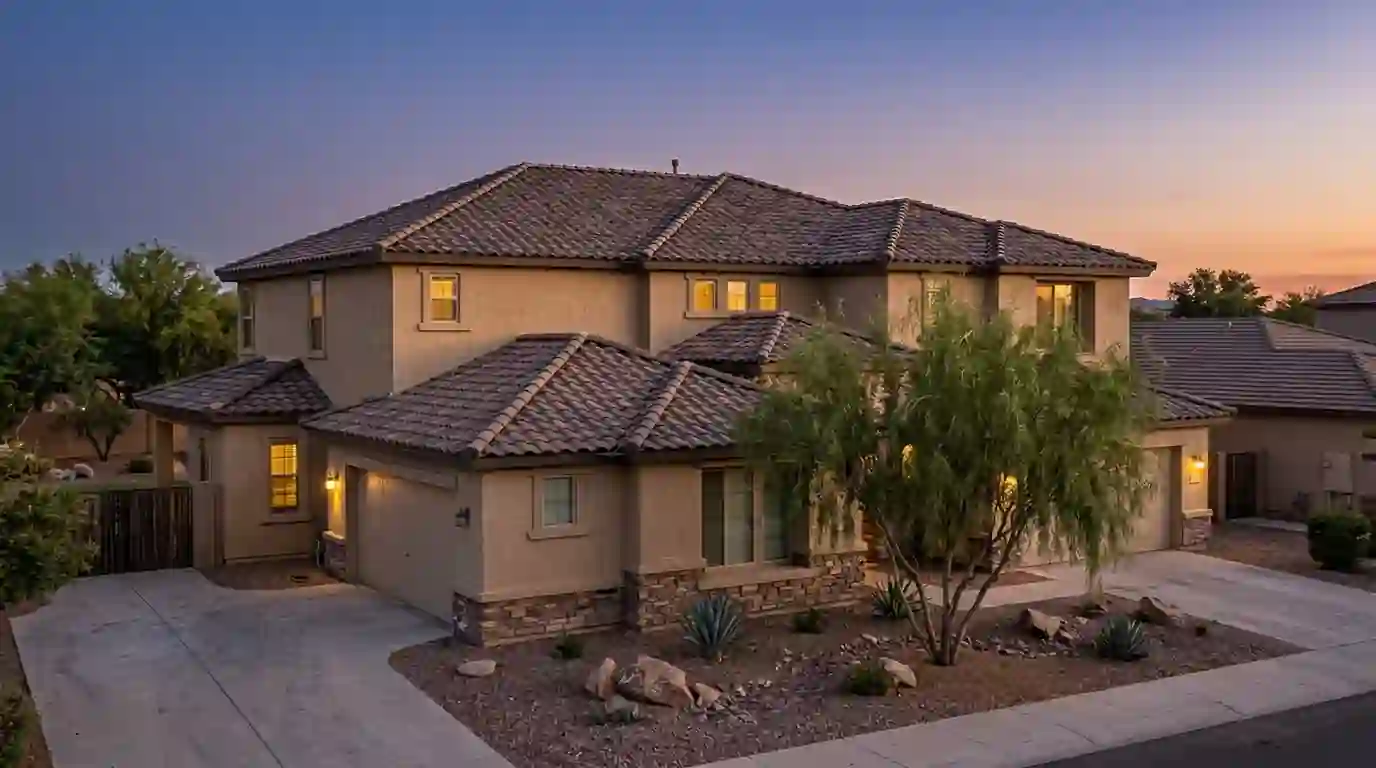
On full replacements we price the roof in more than one material when it helps, for example Eagle or Westlake Royal tile against GAF or CertainTeed shingles, so you can compare.
Monsoon storms between mid June and the end of September often do damage that waits. Wind can lift a row of shingles and break their seal without tearing them off, so they lie flat again and leak only when the next storm arrives. Tiles shift a few inches, exposing underlayment to direct sun. Flying debris dents vents and cracks skylights. A haboob packs grit into valleys and scuppers, so the next downpour backs up instead of draining.
Catching that early is the whole point. A slipped tile reset now is a small job, while underlayment cooked by a summer of exposure is a much bigger one. If you plan to file a claim, damage documented soon after a known storm date is far easier for an adjuster to tie to that event. Our monsoon roof prep checklist covers what to look for from the ground, and when damage is clear we move straight to storm damage repair.
For buyers, the key question is how much life the roof has and what it will cost to keep it dry. A general home inspection may note that a tile roof looks older or that some tiles are cracked, but it often cannot tell you whether the underlayment is nearing the end. We lift a few tiles where appropriate, look at the underlayment directly and put a rough repair or replacement cost in writing that you can use during negotiations.
If the seller or lender asks for a formal document, a roof certification goes a step further. Before solar, we check that the roof will outlast the panels' early years and that the deck can take the mounts. In older neighborhoods like Sunnyslope, where many homes have mixed roof types and decades of patches, an inspection before solar usually turns up items worth fixing first.
Call (602) 878-3594 at any hour. Tell us why you want the inspection, such as a storm, a purchase or solar, so we focus on what matters most.
We look over roof lines, fascia, soffits, gutters and drainage from the ground, noting sags, stains and debris that hint at trouble above.
We walk the roof safely, checking the covering, flashing, penetrations, valleys and drains, photographing anything worn, damaged or close to failing.
Inside the attic we look for leaks, deck damage, damp insulation and ventilation problems that affect how long the roof will last.
You get photos and a plain summary of what is sound, what needs repair and an estimated remaining life, with no pressure to act now.
Typical range in the Phoenix area
$185 to $465
per inspection
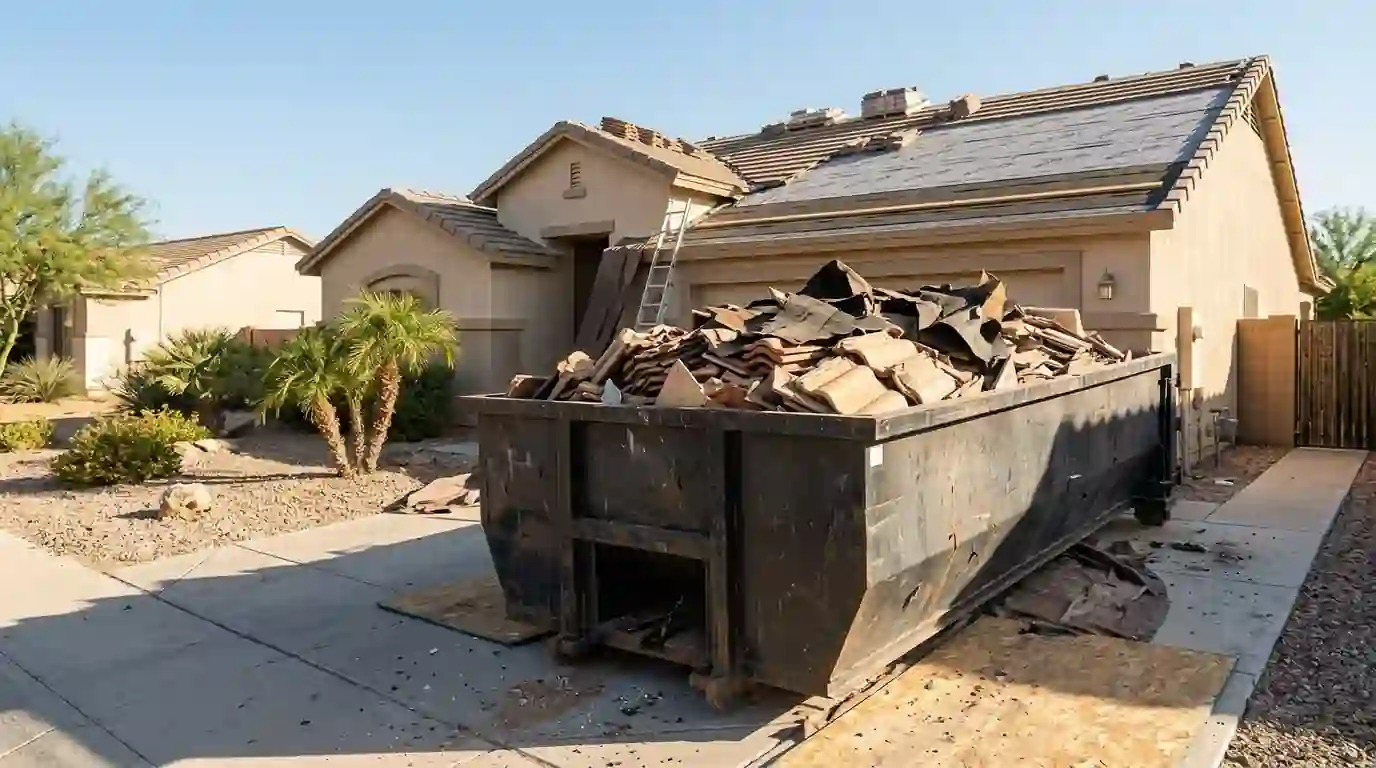
Inspection fees depend on the size and type of roof, how easy it is to walk, and whether you need a detailed written report for a purchase or claim. A simple single-story shingle roof sits at the low end. Large tile roofs, steep or two-story homes and reports with repair estimates sit higher.
Ranges are typical figures for Valley homes, not a quote. We price your roof after we see it.
Most of our roof inspection calls come from these parts of the Valley. We also cover every other area on our service area list, from Anthem and Cave Creek down to Casa Grande.
For most homes, every two to three years is reasonable, and yearly once a tile roof passes about 18 years or a foam roof nears its recoat window. Add an inspection after any monsoon storm with strong wind or hail. Regular checks catch small problems while they are still cheap to fix.
Yes. Home inspectors cover the whole house and often view the roof from a ladder or drone. A roofer walks it where safe, looks closely at flashing, can lift tiles to see underlayment, and puts real repair costs on what is found. Many Valley buyers get both before closing.
We walk tile roofs carefully, stepping on the strongest part of each tile, and use foam pads where needed. Older or brittle tiles can still crack under any foot traffic, and if one breaks we replace it. On fragile roofs we may inspect some areas from ladders or by drone instead.
It can. We document the damage with dated photos, describe what we found and note what repairs are needed. Many carriers send their own adjuster, and our report gives you a clear record to compare. Whether a claim is approved depends on your policy and the adjuster's findings.
We inspect for homeowners before solar goes on, often at the request of the solar company. We look at remaining roof life, deck condition and the areas where mounts will go, and recommend any repairs first. That way the array goes onto a roof that will last as long as the panels.
Roof certifications for Phoenix home sales and refinances: inspection, any needed repairs and a written roof condition letter. Call (602) 878-3594.
Learn moreRoof maintenance plans for Phoenix homes: a spring check before the heat and a post-monsoon visit to catch storm damage early. Call (602) 878-3594.
Learn moreMonsoon storm damage repair in Phoenix: we tarp, document and fix roofs hit by microbursts, haboobs and flying debris. Call (602) 878-3594.
Learn morePhoenix roof repair for tile, foam, shingle and flat roofs. We find the real failure, fix it to match, and photograph it. Call (602) 878-3594.
Learn moreCall us any hour. A real person answers, asks a few questions about your roof and sets up a visit.