Cooing above the bedroom ceiling
Pigeons are busiest around dawn. Steady cooing, scratching or flapping above a room under the array is the first clue most homeowners mention.
Roof Repair
Tile Roofing
Flat & Foam Roofing
Shingle & Metal Roofing
Replacement & Inspections
Solar, Vents & Extras
Phoenix neighborhoods
Valley cities
Counties
Solar, Vents & Extras
Pigeons love the shaded gap under a solar array, and once a pair moves in, the nesting, noise and droppings build fast. We clear the debris out, clean the roof beneath, and close the gap with mesh guards that clip to the panel frames.
Short answer
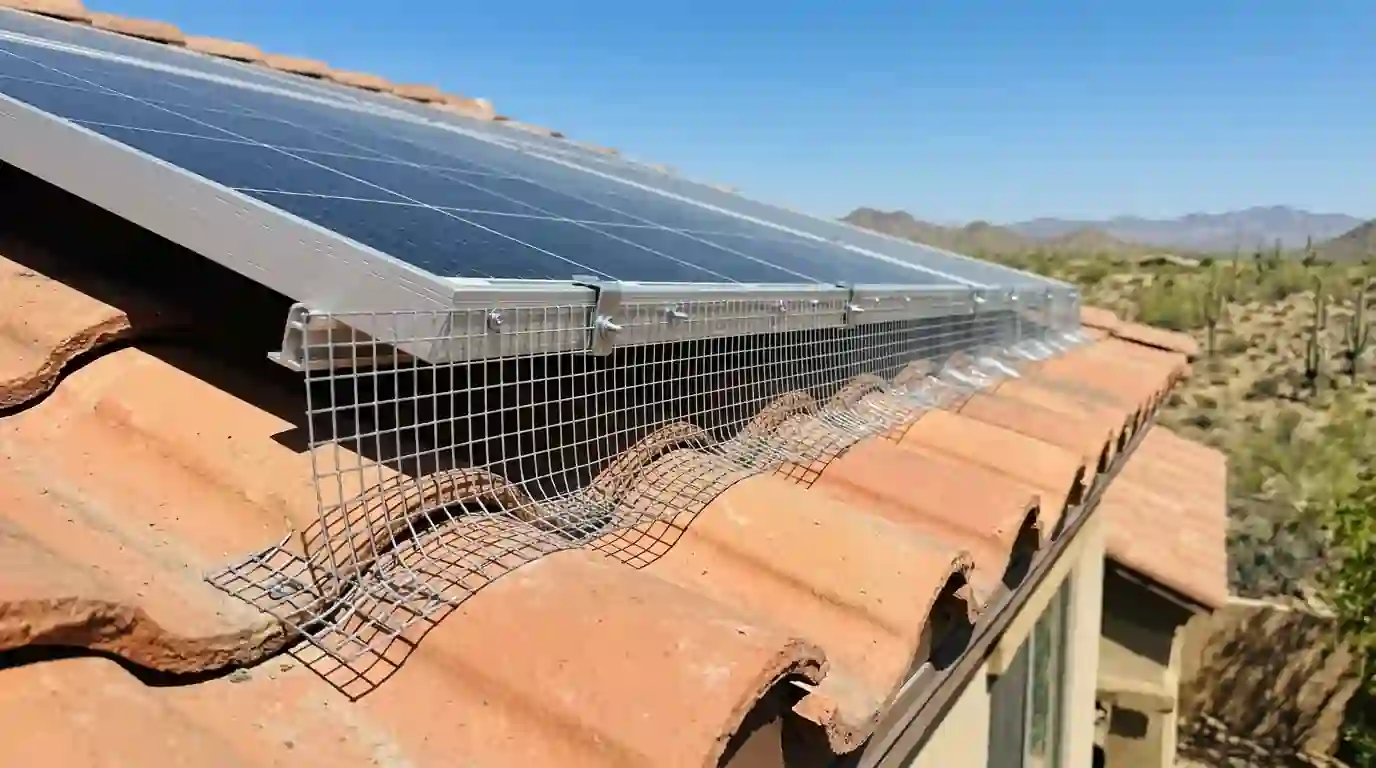
The most reliable way to stop pigeons nesting under solar panels in Phoenix is to remove the nests and droppings, then fit galvanized or coated wire mesh around the outside edge of the array, held by clips that grip the panel frame. Nothing is drilled into the panels, racking or roof. Fitted properly, the mesh keeps birds out while still letting air move under the modules.
Materials we install and repair across the Valley
Birds usually announce themselves long before anyone climbs a ladder. If you notice two or more of these, there's probably an active nest under the array.
Pigeons are busiest around dawn. Steady cooing, scratching or flapping above a room under the array is the first clue most homeowners mention.
White streaks below the roof edge, on the patio, cars or pool deck mean birds are roosting right above, usually along the lower edge of the panels.
Nest material blows out from under the array and collects in gutters, valleys and on the ground, especially after windy afternoons in spring and summer.
If you watch pigeons land on the roof and disappear beneath a row of panels, they've found a sheltered gap and are almost certainly nesting there.
Droppings on the glass and packed debris under modules can shade cells and trap heat. A gradual slide in your monitoring numbers is worth checking.
Birds and the pests drawn to nest debris can damage wire jackets. Loose or exposed wiring under panels needs a qualified electrician before anything else.
To a pigeon, a rooftop array is an ideal ledge: a flat, shaded pocket a few inches high, sheltered from hawks and from midday sun that pushes Phoenix roof surfaces past 150 F. Tile roofs make it even better, since the curves in the tile leave extra room under the rails. Rock pigeons breed through much of the year in the Valley's mild winters, so a single pair can raise several broods on the same roof, and the nest grows each round.
The trouble goes beyond noise. Nesting material traps water against the roof during monsoon storms, droppings are acidic and stain tile and coatings, and the buildup blocks the airflow that keeps panels from running hot. Debris also slides into valleys and roof drains. If you've already had a leak near the array, the nest may be part of the story. Our article on pigeons under solar panels explains why the problem tends to grow every season.
Skylight work uses units from makers such as Velux, and the flashing and sealants we use around panels, vents and patio covers come from Henry and Tremco roof lines.
We use rolled wire mesh, galvanized or PVC-coated, cut to follow the array's outside edge. Stainless clips hook onto the lip of the panel frame, and the mesh bends down to meet the roof surface. Nothing is screwed or drilled into the modules, the racking or the roof. That matters, because drilling a panel frame can cause problems with its manufacturer coverage, and every new hole in a roof is one more place for water to get in.
On tile roofs, the bottom of the mesh is shaped to follow the tile profile so there are no gaps at the high points. On shingle and foam roofs it sits flatter. We trim around conduit and junction boxes so the solar company can still reach them, and we shape the mesh around roof drains so water drains normally without leaving a gap a bird could squeeze through. When the array has to come off later for roof work under the panels, the clips release and good mesh can go back on.
Guarding over an active nest just traps the problem inside. Before any mesh goes up, we remove nests, feathers and droppings from under every panel row we can reach, bag the waste and haul it away. Dry droppings release dust when disturbed, so our crews wear respirators and lightly wet the material before scraping. Then we rinse the roof surface under the array and look closely at the tile, shingles or coating that's been hidden from view.
That cleanup often turns up roof damage. Droppings eat into the coating on foam roofs, nest piles hold water against underlayment, and installers sometimes cracked tiles while setting mounts years ago. When we find something, we show you photos and price the fix separately. Small items, such as a few cracked tiles hiding under the array, are usually handled on the same visit, before the mesh closes the space off for good.
Call (602) 878-3594, day or night. Tell us roughly how many panels you have, the roof type and how long the birds have been around, and we'll set a visit.
We check the perimeter and under the panels for nests, droppings, wiring damage and roof wear, and photograph what we find so you can see it too.
Nests, nesting material and droppings come out from under every reachable row, dampened first to hold the dust down, then bagged and hauled away.
The roof surface beneath the array is rinsed and inspected, and any cracked tiles or coating damage are noted with photos and a separate price.
Mesh is cut to follow the array edge, clipped to the panel frames and shaped to the roof surface, with no drilling into panels, racking or roof.
We check every corner and transition for gaps, clean droppings off reachable glass, and show you before and after photos of the finished perimeter.
Typical range in the Phoenix area
$635 to $1,840
for a typical home array, cleanout and mesh
Most of the price comes from the length of the array's perimeter and how much cleanup is waiting underneath. A tidy, recently installed system on a single-story shingle roof is a short job. An older tile roof array with years of nesting takes much longer, since the cleanout is slow, careful work.
Ranges are typical figures for Valley homes, not a quote. We price your roof after we see it.
Most of our solar panel bird proofing calls come from these parts of the Valley. We also cover every other area on our service area list, from Anthem and Cave Creek down to Casa Grande.
Not in any way you'd notice. The mesh is open enough for air to pass through, so panels keep the airflow underneath that the racking was designed for. The bigger heat problem is usually the nest itself, which blocks that airflow and holds heat under the modules until it's cleared out.
They'll try, especially in the first few weeks after losing a nest site. A well-fitted perimeter with no gaps at corners, tile humps or conduit runs keeps them out. If you see birds working at one spot, call us and we'll check that section and close whatever gap they've found.
Usually not, since clip-on mesh doesn't touch wiring, drill into panels or change the racking. If your lease or service agreement has specific terms about attachments, read those first. We keep junction boxes and conduit reachable so the solar company can still service the system later.
Not for long. Plastic owls stop working once birds notice they never move, and spikes don't fit the narrow gap under a panel. Pigeons that have already nested under an array keep coming back to the same spot, so physically closing the gap with mesh is the approach that lasts.
We don't recommend it. Dried droppings can carry organisms that cause illness, and scraping them releases dust. Working under an array also means kneeling on hot, uneven roofing near electrical equipment. Our crews wet the material, wear respirators and bag everything for disposal instead of sweeping it into the gutters.
Roof work under a solar array in Phoenix? We detach, stage and reset your panels, then reflash every mount so it stays dry. Call (602) 878-3594.
Learn moreCracked or missing roof tiles in Phoenix? We match the profile and color, replace single tiles and check the felt below. Call (602) 878-3594 day or night.
Learn moreRoof maintenance plans for Phoenix homes: a spring check before the heat and a post-monsoon visit to catch storm damage early. Call (602) 878-3594.
Learn morePhoenix roof inspections after monsoon storms, before buying or before solar: photos, attic checks and a plain written report. Call (602) 878-3594.
Learn moreCall us any hour. A real person answers, asks a few questions about your roof and sets up a visit.