Solar Panel Bird Proofing
Pigeons nesting under your solar panels in Phoenix? We clean out nests and droppings, then clip mesh to the panel frames with no drilling. Call us 24/7.
Learn moreRoof Repair
Tile Roofing
Flat & Foam Roofing
Shingle & Metal Roofing
Replacement & Inspections
Solar, Vents & Extras
Phoenix neighborhoods
Valley cities
Counties
Desert Roof Guide
Cooing at dawn, droppings on the patio and twigs poking out from the array. Pigeons love Valley solar panels. Here is why, what it does to your roof and how to close the gap.
By Lamar Baskin, Desert Roof Guide EditorUpdated September 22, 20266 min read
The short version
Pigeons nest under solar panels in Phoenix because the gap between panels and roof gives them shade, shelter from hawks and a flat, warm surface. Over time their nests and droppings clog drains, stain tile, hold moisture against the roof and can damage wiring. The lasting fix is to clean out the nests and debris, then install a wire mesh barrier around the array edges that clips to the panels without drilling.
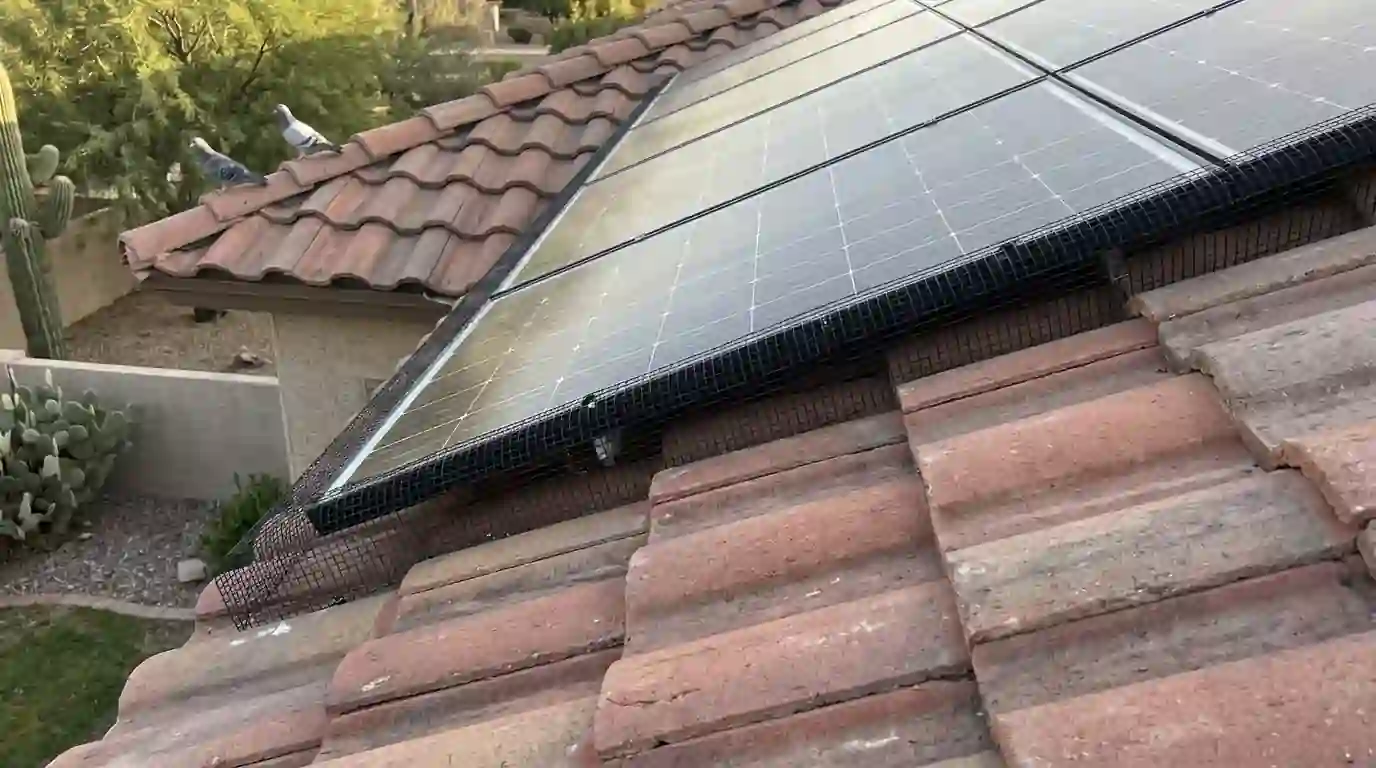
Feral pigeons in the Valley evolved to nest on cliff ledges. A solar array gives them something better: a roof over their heads, a few inches of shaded space, protection from hawks and owls, and a surface that stays warm through cooler nights. Add a reliable water source nearby, like pools, misters, irrigation and pet bowls, and your roof checks every box.
Once one pair settles in, others follow. Pigeons are drawn to spots where pigeons already live, and they reuse the same nests year after year. In Phoenix they can breed through much of the year, so a small problem in spring can become a crowded colony by the end of summer.
Homeowners are often surprised by how much material is under an array that has hosted pigeons for a season or two. The droppings are the obvious part. The less obvious part is what that buildup does to the roof and the system around it.
Bird droppings are acidic and they hold moisture. On a tile roof, nests and debris fill the channels that are supposed to carry water down and off the roof. During a monsoon storm, that water backs up, finds the edges of the tiles and reaches the underlayment, which in Valley heat may already be getting brittle after 20 years or so. On foam or coated flat roofs, the droppings break down the coating and hold water against it.
Panels themselves are not usually hurt by the birds, but the wiring under them can be. Exposed cables get pecked, pulled at and covered in debris, and droppings on the glass cut production. The smell and noise are the parts neighbors notice. The roof damage is the part that costs money if it goes on for a few years.
Not every bird under an array is a pigeon. House sparrows and grackles also tuck into small gaps, and their nests are smaller but still block drains. Roof rats are a different issue entirely, and they like the same shaded space. The signs differ: pigeons leave heavy white droppings and cooing at dawn, while rats leave small dark droppings, gnawed wire coverings and scratching sounds in the attic at night.
It is worth knowing which one you have before choosing a fix. Mesh stops birds well, and it also discourages rats from using the array as a highway, but rats that are already in the attic need their own entry points found and sealed. When we inspect an array, we look at both and tell you what we see.
Fake owls, spinning reflectors and spikes along the panel edges all show up in garages across the Valley. Pigeons usually figure out a plastic owl within days. Spikes can deter birds from landing on the top of a panel, but they do nothing for the gap underneath, which is where the nest lives. Gels and sprays wear off quickly in 110 F heat and can stain tile.
The other common mistake is chasing birds out without cleaning up or closing the opening. If the nests stay, the same birds come back. If the gap stays open, new birds move in. And blocking the opening with birds or eggs still inside creates a different problem, so timing and an inspection matter.
The approach that holds up is simple: clean the space, then close it. We start by checking for active nests and birds, removing nests, droppings and debris from under the panels, and rinsing the roof surface and drains. Then we install a galvanized or coated wire mesh around the perimeter of the array, held in place with clips that attach to the panel frame. Nothing drills into the panels or the roof.
The mesh is trimmed to follow your roof profile, which matters a lot on tile, where the gap varies along every course. Done right, it is hard to see from the street and still lets air move under the panels so they stay cool. Our solar bird proofing service covers the cleanout, sanitizing and screening in one visit on most homes.
Most Phoenix-area bird proofing jobs for a residential array land roughly between $685 and $1,940, depending on panel count, the length of exposed edge, how many nests need removal, roof type and how steep or high the roof is. Heavy infestations with damaged tile or clogged drains cost more because those repairs come first.
Spring and fall are good times to do the work, when birds are less settled and the roof is more comfortable to stand on. If the roof under the array also needs attention, plan the screening around that. When panels come off for a solar detach and reset, it is the easiest moment to clean and repair underneath, then install the mesh on the way back up.
After the array is sealed, pigeons usually try other spots on the house: under tile at the eaves, inside open rake ends, on ledges above the patio. Close those gaps as you see them, and remove easy water and food sources where you can, such as spilled bird seed and pet food left outdoors.
Take a quick look at the mesh once or twice a year, and especially after a haboob or monsoon wind, since a bent section is all a determined bird needs. If you are still planning solar, read what to fix before panels go on and ask for the screening at installation. If pigeons have already moved in, call (602) 878-3594 any hour and we will look at the array and the roof under it.
We don't recommend it. Dried droppings can carry fungi and bacteria that are unhealthy to breathe, and reaching under panels means kneeling on a hot, sloped roof near live wiring. Crews doing this work wear protective gear, wet the material down before removing it and bag it for disposal.
Clip-on mesh attaches to the panel frame without drilling, which is why it is the common choice. Even so, read your solar agreement or ask the installer whether they have conditions on attachments. Keep the invoice and photos of the work in case questions come up later.
Not on their own. Pigeons are attached to their nesting spot and will rebuild within days if the gap is still open. Removing nests only works when the opening is closed off right afterward. Screening the array perimeter is what actually stops the cycle.
Pigeons nesting under your solar panels in Phoenix? We clean out nests and droppings, then clip mesh to the panel frames with no drilling. Call us 24/7.
Learn moreRoof work under a solar array in Phoenix? We detach, stage and reset your panels, then reflash every mount so it stays dry. Call (602) 878-3594.
Learn moreTile roof leaking or tiles slipping in Phoenix? We trace the leak to the underlayment, reset or swap tiles and seal it the same week. Call (602) 878-3594.
Learn moreRoof maintenance plans for Phoenix homes: a spring check before the heat and a post-monsoon visit to catch storm damage early. Call (602) 878-3594.
Learn more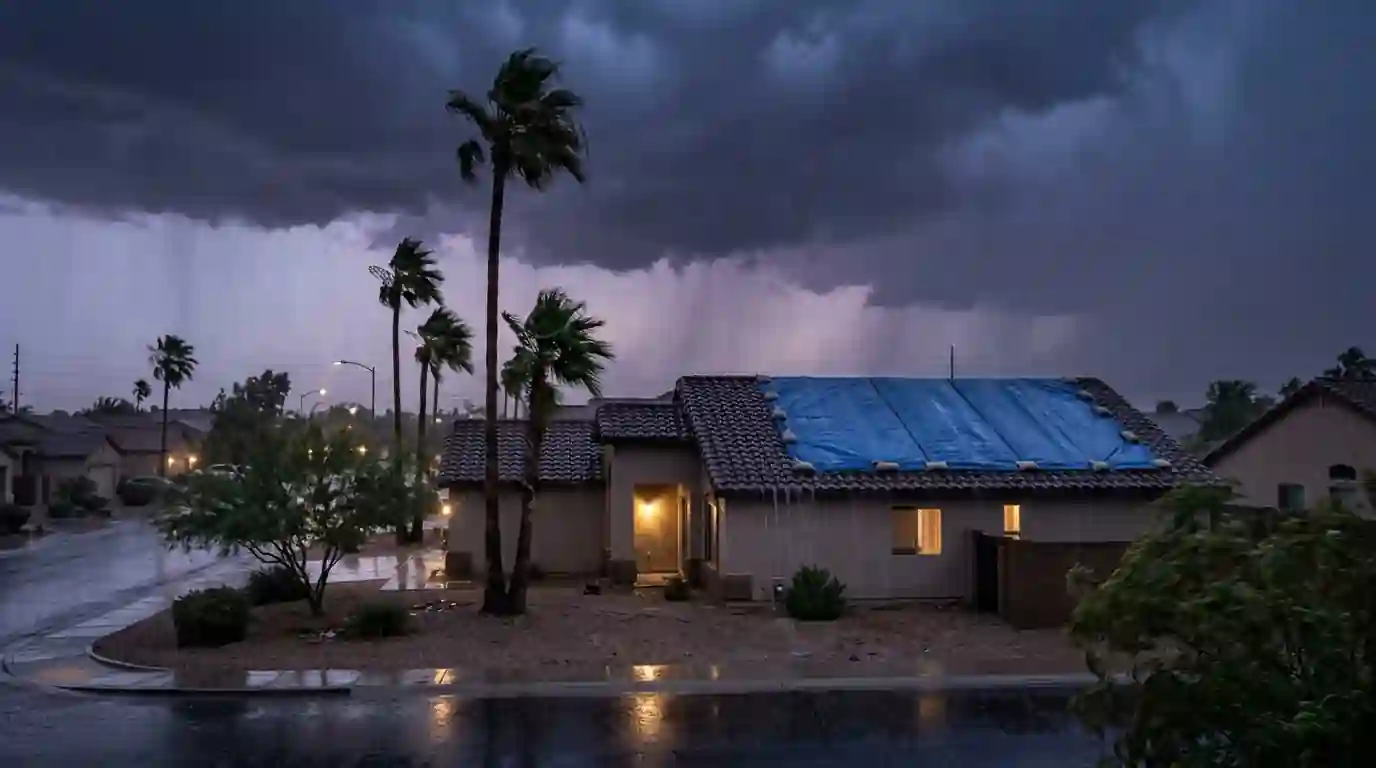
September 8, 2026
Water dripping through the ceiling at 10 at night is stressful. Here is a calm, hour-by-hour plan for Phoenix homeowners, from the first bucket to the permanent repair.
Read the guide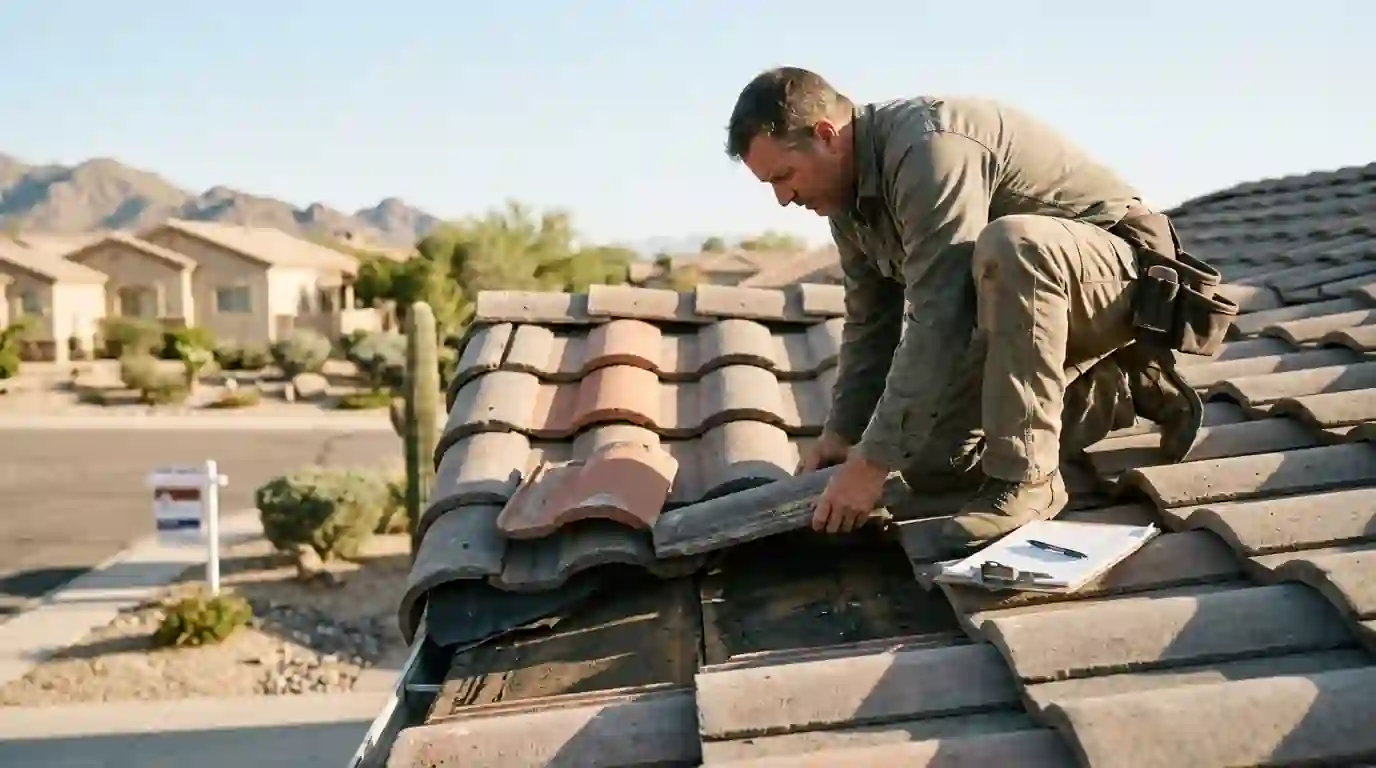
October 6, 2026
A roof certification can tell a Phoenix home buyer how many good years the roof has left. Here is what one includes, where its limits are and how to use it in a deal.
Read the guide
October 13, 2026
Monsoon wind, hail and falling branches can damage a Valley roof in minutes. Here is how a typical homeowner's roof claim moves from the first photo to the finished repair.
Read the guideCall (602) 878-3594. We answer around the clock and can usually tell you over the phone whether it needs a visit.