Roof Certification
Roof certifications for Phoenix home sales and refinances: inspection, any needed repairs and a written roof condition letter. Call (602) 878-3594.
Learn moreRoof Repair
Tile Roofing
Flat & Foam Roofing
Shingle & Metal Roofing
Replacement & Inspections
Solar, Vents & Extras
Phoenix neighborhoods
Valley cities
Counties
Desert Roof Guide
A roof certification can tell a Phoenix home buyer how many good years the roof has left. Here is what one includes, where its limits are and how to use it in a deal.
By Lamar Baskin, Desert Roof Guide EditorUpdated October 6, 20266 min read
The short version
A roof certification is a written statement from a roofing company that a roof was inspected and, after any listed repairs, is expected to stay watertight for a stated term, often one to five years. In Phoenix, a good one covers the surface, flashings, drainage and, on tile roofs, the condition of the underlayment where it can be seen. It is not a full replacement promise or an insurance policy.
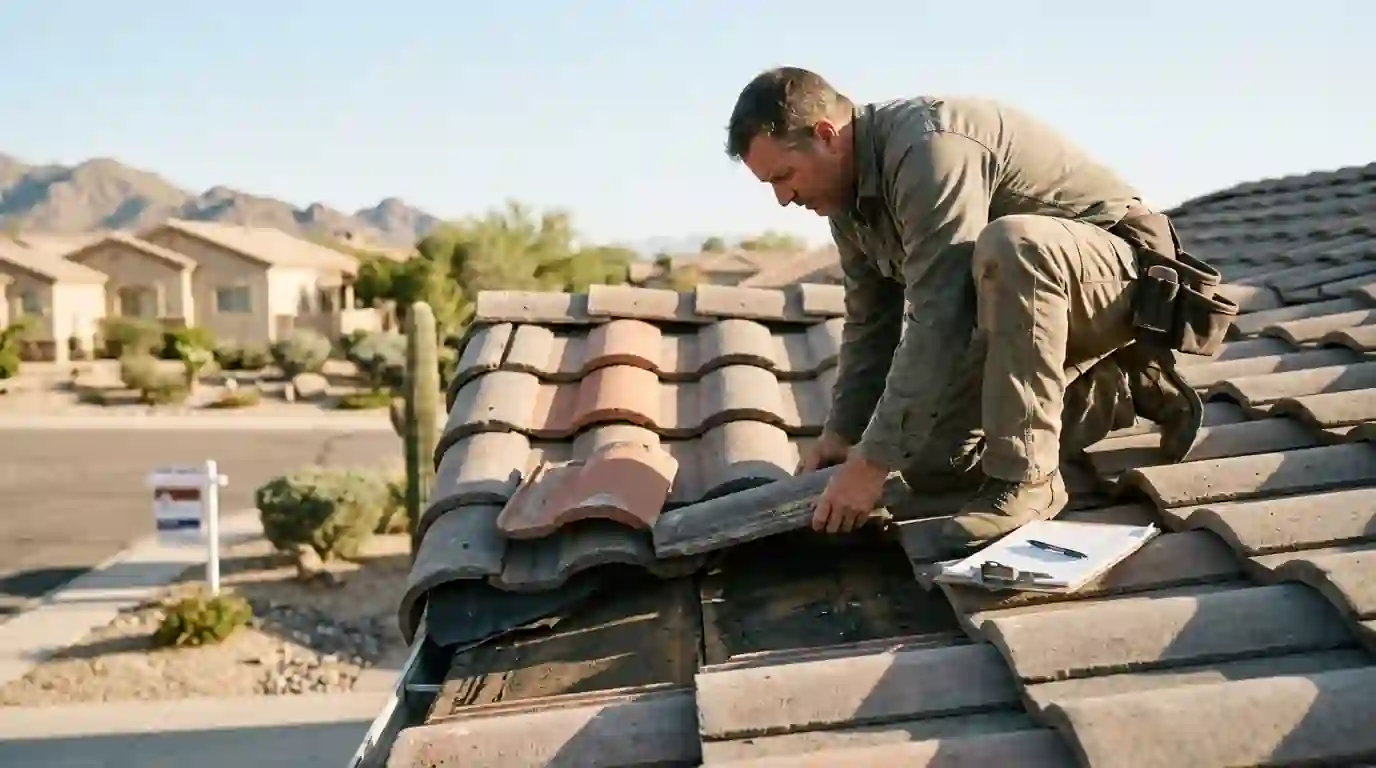
Most buyers in the Valley get a general home inspection, and that report will include a roof section. Home inspectors are generalists. Many look at a tile roof from a ladder at the eave or with a camera, partly because walking on tile without breaking it takes practice. Their report often flags the roof as needing a roofer's evaluation, which is fair and honest.
A roof certification comes from a roofing company that gets on the roof, walks it properly and looks at the details a roofer cares about. If the roof needs repairs to meet the standard, the certification lists them. Once those repairs are done, the roofer issues a letter stating the roof's expected condition for a set term. Buyers, lenders and sellers use that letter in different ways.
The checklist depends on the roof type, but on a typical Valley home our crew covers the surface, every place the roof is penetrated and every path water takes off the roof. On tile roofs we lift a sample of tiles in different areas to see the underlayment, since that is the layer that actually wears out first here. On flat roofs we pay extra attention to low spots, coating wear and the parapet walls.
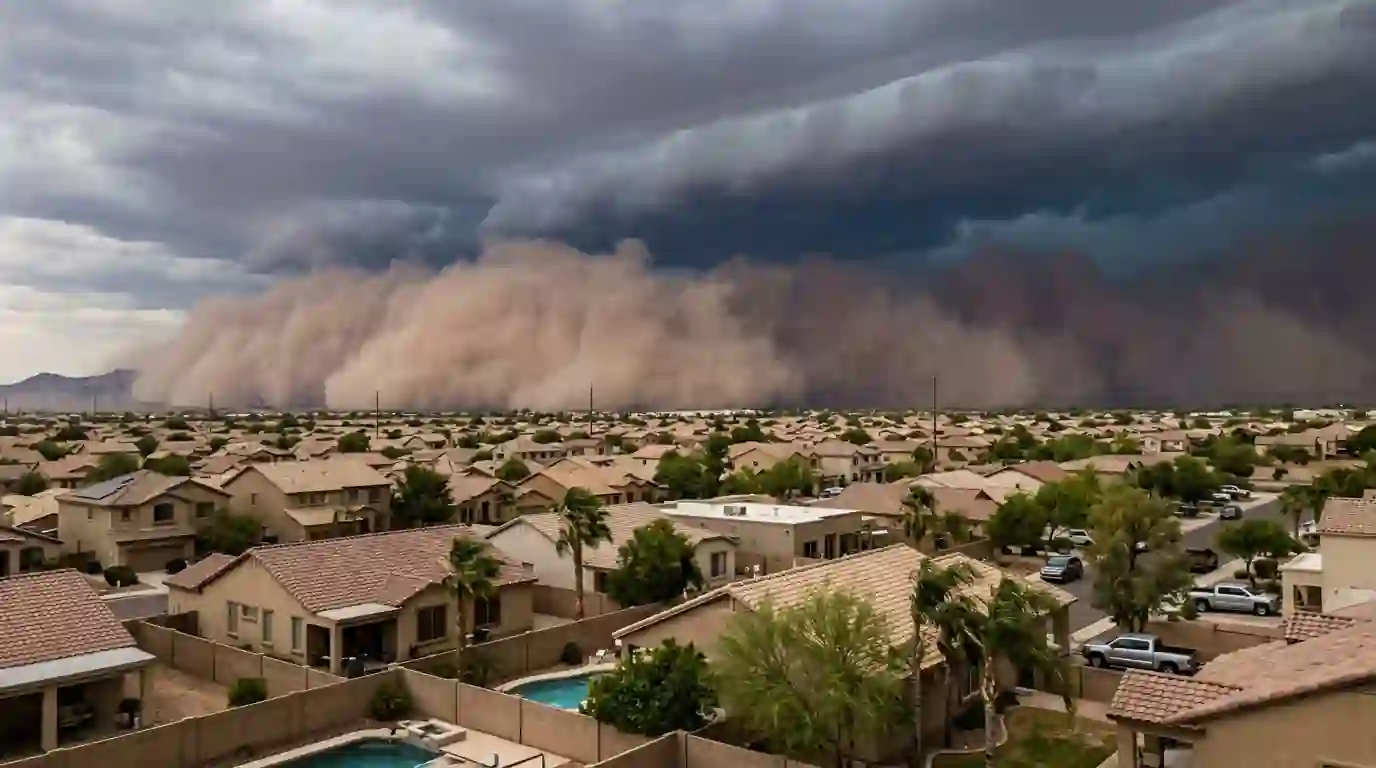
Understanding the limits protects you more than anything else in this post. A certification describes a roof's expected performance for a defined period. It does not promise the roof will last 20 more years, and it does not cover damage from new events like a hail storm, a falling tree or someone walking carelessly across the tile to fix the air conditioner.
Most certifications also exclude interior damage, mold, structural framing and anything hidden that couldn't reasonably be seen. They usually only cover the roof as it was inspected, so a later solar installation or a new skylight can change things. Read the letter carefully and ask the roofer what voids it. A certification is useful information, not a substitute for reading the rest of your disclosures. If the seller's disclosure mentions past roof leaks, ask where they were and what was done, then make sure the roofer looks closely at those exact spots.
Concrete and clay tiles often outlast the felt underlayment beneath them, which commonly wears out around 20 to 25 years in Valley heat. That creates a trap for buyers. A 22-year-old tile roof can look excellent from the street and still be close to the point where the underlayment cracks and leaks. A seller can honestly say the roof doesn't leak, and both parties can be surprised the next monsoon season.
So ask directly: what did the underlayment look like where tiles were lifted, and how many years would you estimate it has? If the answer points to replacement soon, that is useful in a negotiation. Our article on underlayment lifespan explains the signs, and underlayment replacement typically reuses the existing tile, which keeps the cost well below a full new roof.
Not every certification is written the same way, and a short phone conversation with the roofer can tell you a lot. Ask how much of the roof they actually walked, how many tiles they lifted and on which slopes, and whether they went into the attic. A letter based on a quick look from the eave is worth less than one based on a full walk.
Ask what the term is and what it covers in practical terms. If a leak shows up in month eight, who do you call, how quickly do they come, and what is excluded? Ask whether the repairs they listed were completed and photographed, and get copies of those photos. Finally, ask what they would do with this roof if it were their own house over the next five years. The honest answer to that question is often the most useful thing you will hear during the whole inspection period.
Buyers often ask for a certification during the inspection period, either paid by the seller or by themselves. If the roof passes after minor repairs, the deal moves ahead with more confidence. If the roofer finds bigger issues, the buyer has specific, priced information to bring back to the table instead of a vague note in a home inspection report.
Sellers sometimes order one before listing, especially on older tile homes, so they can fix small problems first and hand buyers a clean letter. Some lenders and some insurance carriers also ask about roof age and condition, and a recent certification can answer those questions. Your agent can tell you how common they are in your price range and part of the Valley.
A roof certification visit in the Phoenix area often runs about $185 to $465 for the inspection and letter on a typical single-family home, with larger, steeper or mixed-roof homes toward the top. Repairs needed to issue the letter are priced separately and depend on what the visit finds. Roof size, pitch, height, roof type and the number of penetrations all move the price.
Escrow timelines are tight, so call early in your inspection period. We can usually get on the roof within a few days, and the written findings follow shortly after. Our roof certification service includes photos of what we saw so buyers who live out of state can see the roof for themselves. Call (602) 878-3594 any hour to set one up.
Yes. If the roof needs more than small repairs, or the remaining life is too short to cover a meaningful term, the roofer will say so rather than issue a letter. You will get the findings and repair or replacement options with price ranges, which is useful information in a negotiation.
It is negotiable. Buyers often pay for it during the inspection period, and sellers sometimes order one before listing. Repairs needed to issue the letter are commonly part of the repair negotiation. Your real estate agent can tell you what is typical in your situation.
Often it is written for the property, so it stays with the home through closing, but terms vary between roofing companies. Ask whether it names the buyer, the property or both, and whether anything needs to happen at closing to keep it in effect.
Roof certifications for Phoenix home sales and refinances: inspection, any needed repairs and a written roof condition letter. Call (602) 878-3594.
Learn morePhoenix roof inspections after monsoon storms, before buying or before solar: photos, attic checks and a plain written report. Call (602) 878-3594.
Learn moreTiles fine but the felt under them is shot? We lift and relay Phoenix tile roofs with new two-ply or synthetic underlayment. Call (602) 878-3594 any time.
Learn moreTile roof leaking or tiles slipping in Phoenix? We trace the leak to the underlayment, reset or swap tiles and seal it the same week. Call (602) 878-3594.
Learn more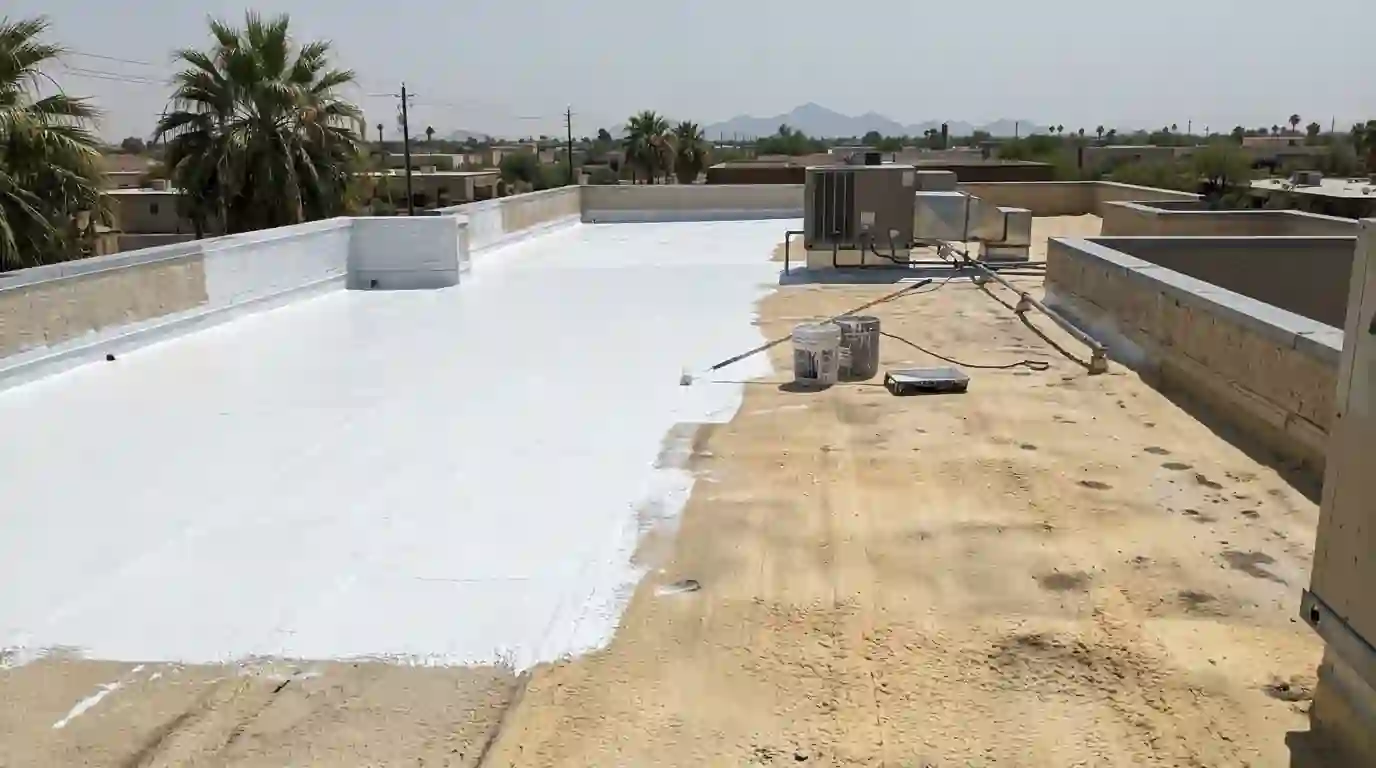
August 25, 2026
A bright white coating can make a flat roof far cooler to the touch in July. Whether it shows up on your power bill depends on your roof, your insulation and your ductwork.
Read the guide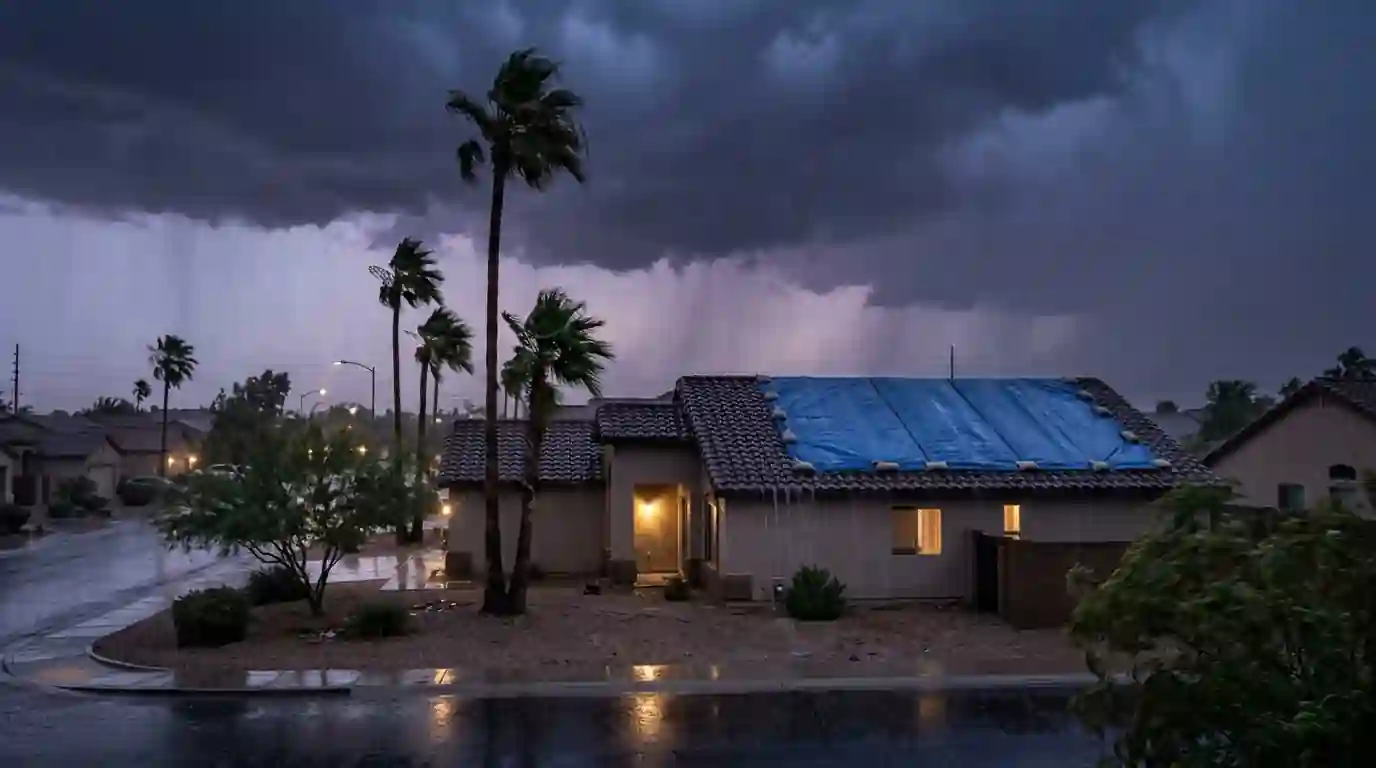
September 8, 2026
Water dripping through the ceiling at 10 at night is stressful. Here is a calm, hour-by-hour plan for Phoenix homeowners, from the first bucket to the permanent repair.
Read the guide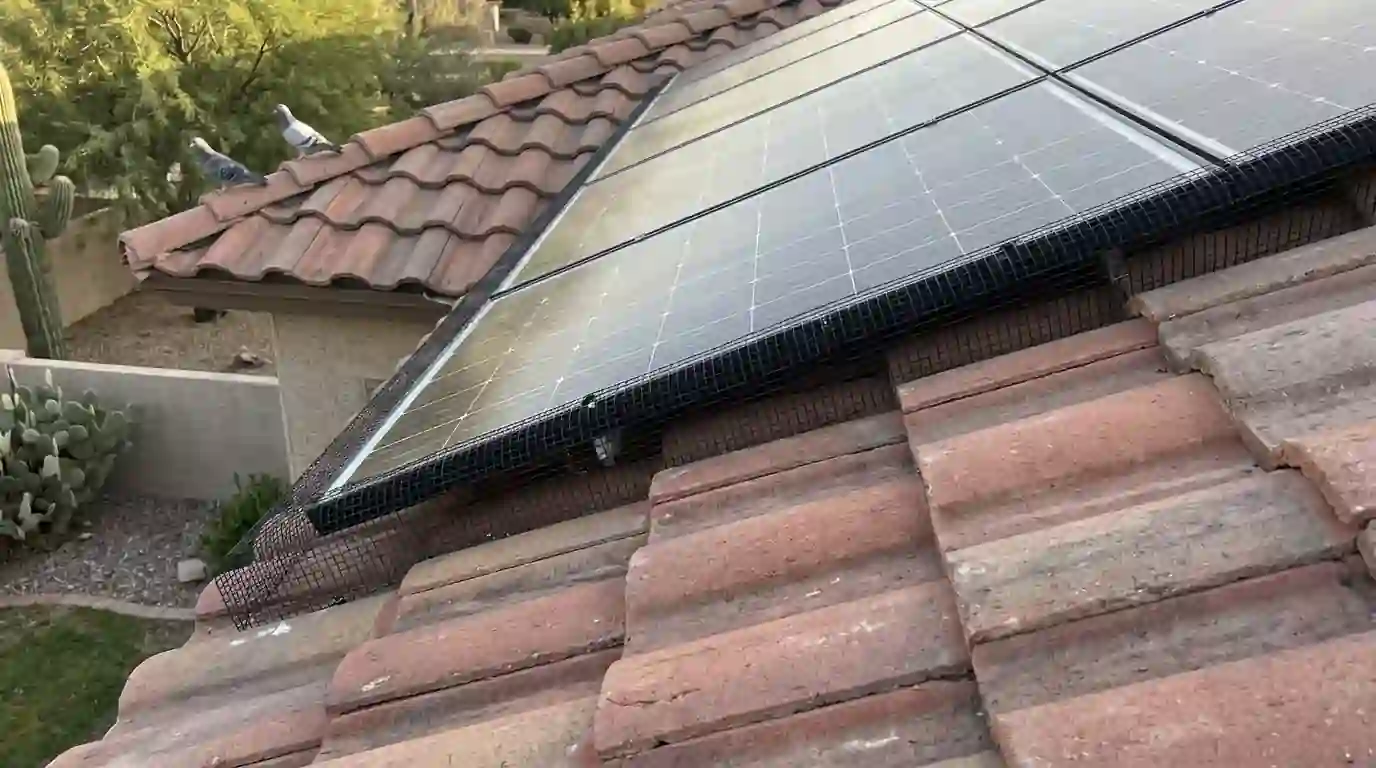
September 22, 2026
Cooing at dawn, droppings on the patio and twigs poking out from the array. Pigeons love Valley solar panels. Here is why, what it does to your roof and how to close the gap.
Read the guideCall (602) 878-3594. We answer around the clock and can usually tell you over the phone whether it needs a visit.