Shingle pieces in the yard
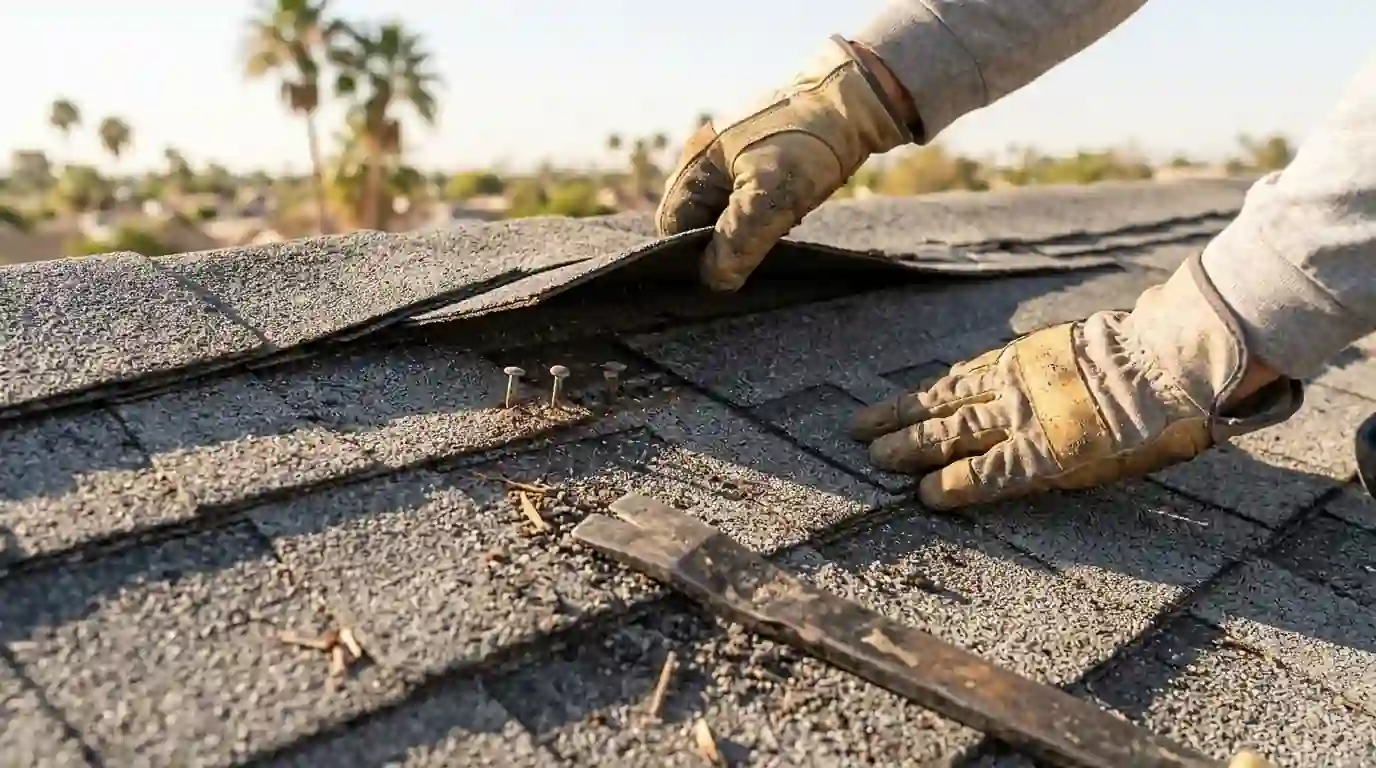
Pieces in the gravel or the pool after a monsoon gust mean exposed nails and bare underlayment on the roof, open to the very next rain.
Roof Repair
Tile Roofing
Flat & Foam Roofing
Shingle & Metal Roofing
Replacement & Inspections
Solar, Vents & Extras
Phoenix neighborhoods
Valley cities
Counties
Shingle & Metal Roofing
Monsoon wind can tear shingles loose in minutes, and the summer sun has usually weakened their seal strips long before the storm arrives. We find where the water is getting in, replace and reseal damaged shingles, and protect the deck before the next cell rolls through.
Short answer
Most shingle roof repairs in Phoenix involve wind-lifted or missing tabs, cracked pipe boots, split ridge caps or nail pops on sun-baked slopes. A good repair replaces the damaged shingles, reseals the courses around them, fixes any wet decking and checks the flashing nearby. Once a roof is past about 18 years and shedding granules everywhere, repeated repairs usually stop making financial sense.
Materials we install and repair across the Valley
Shingle damage is easy to miss from the driveway. Walk the yard after any storm and look for these.
Pieces in the gravel or the pool after a monsoon gust mean exposed nails and bare underlayment on the roof, open to the very next rain.
A tab that flapped in the wind gets a crease across it. That line will crack and let water track under the course above it.
Brown rings on drywall, often near a vent pipe or an exterior wall, usually trace back to a failed boot or a flashing gap a few feet uphill.
Neoprene boots around plumbing vents dry out and split in our UV within several years, and they are among the most common leak sources on shingle roofs.
Heat cycling pushes poorly set nails up through the shingle above, leaving a small hole that leaks and a bump you can spot in low evening light.
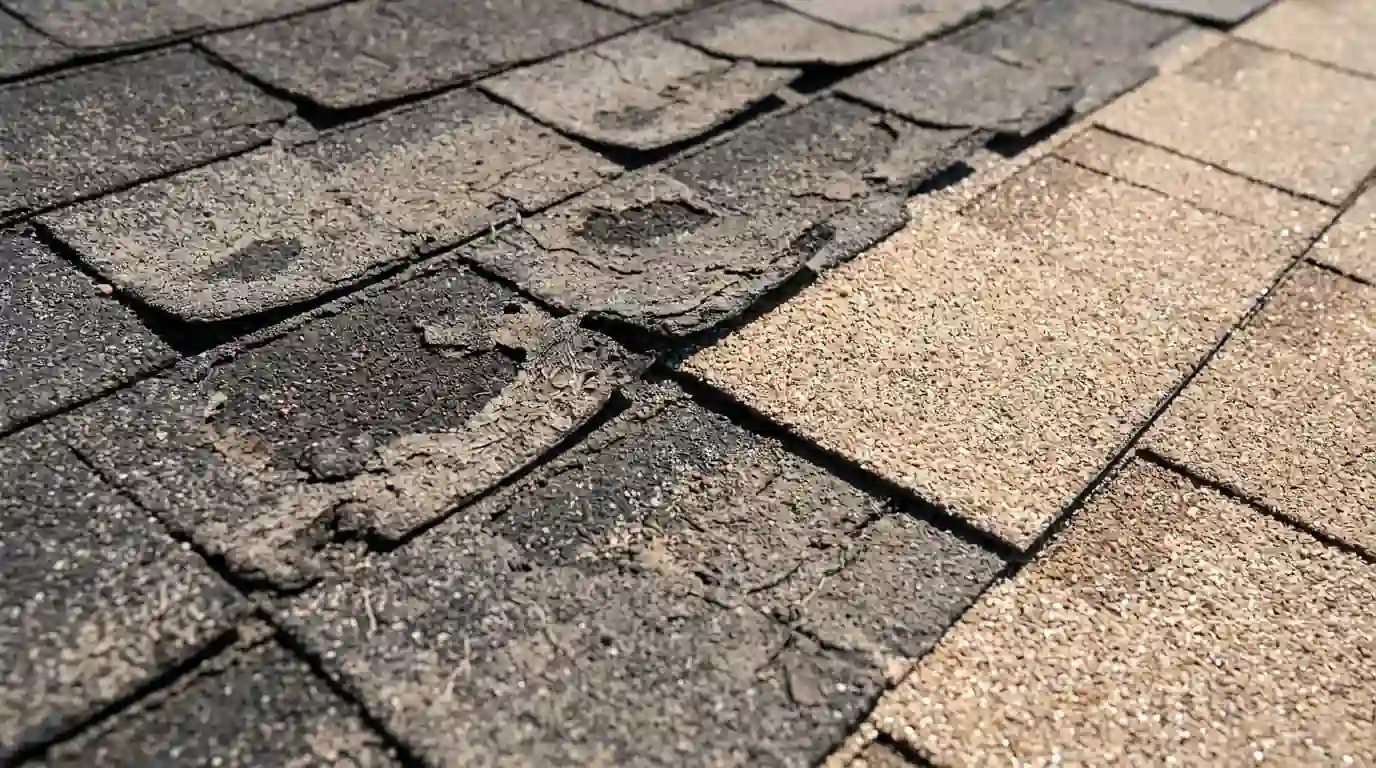
Some granule loss is normal, but heavy drifts at the downspouts point to shingles losing their UV protection and a roof getting close to its end.
Call (602) 878-3594 at any hour. If water is coming in, we talk you through protecting the room and send a crew to tarp when it is needed.
We trace stains back uphill, check boots, flashing and nail lines, and photograph every damaged area so you know exactly what we found.
You get a clear repair scope and price before work starts, plus an honest note if the roof is near the end of its useful life.
We swap damaged shingles, replace cracked pipe boots, reset popped nails and hand-seal lifted courses, matching color as closely as the aged roof allows.
Where water got through, we probe the sheathing and replace any soft section so the new shingles have something solid to grip.
We clear debris, run a magnet over the yard for stray nails, and send before-and-after photos you can keep for a claim or a future sale.
A shingle repair is more than a dab of sealant on a loose tab. To replace a damaged shingle correctly, we break the seal strips on the courses above, pull the nails that hold the bad piece and the shingle over it, slide in a new one and nail it on the manufacturer's line. Then we hand-seal the lifted courses so they lie flat while the factory adhesive rebonds on the next hot day. Done this way, the patch sheds water just like the original roof.
On older roofs, the surrounding shingles are often brittle enough to crack when we lift them. We work early in the morning, when the asphalt is a little more pliable, and we carry a range of colors so the patch blends as closely as possible. A perfect match on a roof that has faded through twelve summers is rare, so we hold a sample up on site and talk through how it will look from the street before we start.
Our shingle and metal crews install GAF, Owens Corning, CertainTeed and Malarkey shingles, and stone-coated steel panels from DECRA when a homeowner wants metal with a tile look.
From June 15 to September 30, storms can push gusts strong enough to lift any shingle whose seal strip has let go. In our heat those strips tend to fail on the exposed edges first: eaves, rakes and the ridge. A haboob carries grit that scours loose tabs, then the rain behind it drives water sideways under anything already lifted. After a rough night our phones get busy with monsoon storm damage calls, and shingle roofs are a big share of them.
If water is coming in, put a bucket down, move electronics, and if it is safe, poke a small hole in a bulging ceiling so the water drains in one spot. Do not climb onto a wet roof at night. Our guide on what to do the night a leak starts covers the first hour step by step. We answer 24/7 and can tarp a roof the same night when a storm has opened it up.
We would rather fix a roof than sell one, but there is a point where patching is money poured into a roof that will not last. If the shingles are brittle across every slope, granules are gone in patches and the deck is soft in several spots, the next monsoon will simply find new weak points. In those cases we price both the repair and replacing the whole roof so you can compare honestly, and the choice stays yours.
A useful rule of thumb: when repair bills over a two-year span start approaching a fifth of what a new roof would run, it is time for a serious conversation. A claim can change the math as well. If a storm damaged a large share of the roof, your carrier may treat it as a covered loss, and we document the damage with photos and measurements you can hand to your adjuster.
Typical range in the Phoenix area
$365 to $1,480
per repair visit
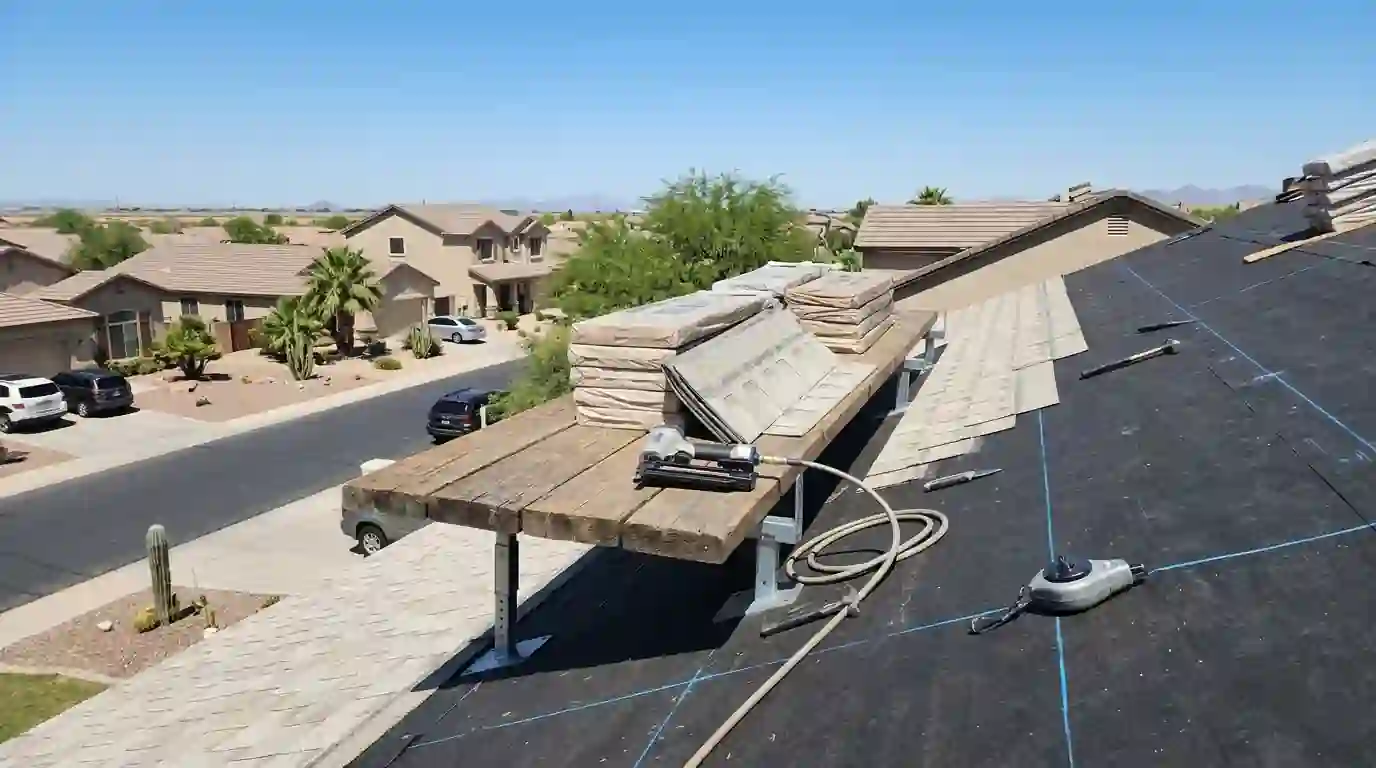
Small shingle repairs, like a handful of blown-off tabs or a single cracked pipe boot, sit at the low end of this range. Wind damage across a whole slope, deck replacement or work on a steep two-story roof pushes it higher. We price after seeing the roof, because hidden damage under shingles changes the scope.
Ranges are typical figures for Valley homes, not a quote. We price your roof after we see it.
Most of our shingle roof repair calls come from these parts of the Valley. We also cover every other area on our service area list, from Anthem and Cave Creek down to Casa Grande.
We get close, but an exact match on a sun-faded roof is uncommon. Shingle lines change colors over the years, and UV lightens the old shingles unevenly. We carry samples, compare them on the roof in daylight, and place patches where they are least visible from the street. Over a few summers the new pieces weather toward the rest.
Yes. A single gap exposes the underlayment and the nail heads of the course below to sun and rain. Underlayment is not built for direct UV, and the next storm can lift the neighboring shingles from that open edge. A quick repair now is far cheaper than chasing a leak and wet drywall in a month.
Many policies cover sudden wind damage but not wear from age or heat. Coverage depends on your policy, deductible and the roof's condition before the storm. We document damage with dated photos and measurements, and you or your agent handle the claim itself. Calling your carrier soon after the storm usually helps.
Most standard boots use a rubber collar that dries, shrinks and cracks under constant desert UV, often well before the shingles around them wear out. Once the collar splits, rain runs straight down the pipe into the attic. We replace them with longer-lasting boots and check every vent on the roof, not only the one that leaked.
They can, with care. Hot shingles scuff and tear under foot traffic, so in summer we schedule repairs for early morning and limit walking on soft slopes. Heat actually helps the new shingles seal down faster. Emergency tarps and leak repairs go ahead at any hour when water is coming in.
Roof leak repair in Phoenix: we trace the water to its true entry point on tile, foam, shingle or flat roofs and fix the cause. Call us 24/7.
Learn moreWind damage roof repair in Phoenix: lifted tiles, torn shingles and peeled flat roof edges fixed and fastened to resist the next gust. Call (602) 878-3594.
Learn moreAsphalt shingle roofs for Phoenix homes, chosen and vented for 160 F roof decks: cool-rated colors, sealed ridges, solid nailing. Call (602) 878-3594.
Learn moreEmergency roof repair in Phoenix: a live person answers 24/7, and we tarp or seal the leak the same night when it is safe. Call (602) 878-3594.
Learn moreCall us any hour. A real person answers, asks a few questions about your roof and sets up a visit.