Water stains on ceilings
Brown rings or bubbled paint on a ceiling mean water has already passed the roof covering, the underlayment and the drywall. The source is usually several feet uphill from the stain.
Roof Repair
Tile Roofing
Flat & Foam Roofing
Shingle & Metal Roofing
Replacement & Inspections
Solar, Vents & Extras
Phoenix neighborhoods
Valley cities
Counties
Roof Repair
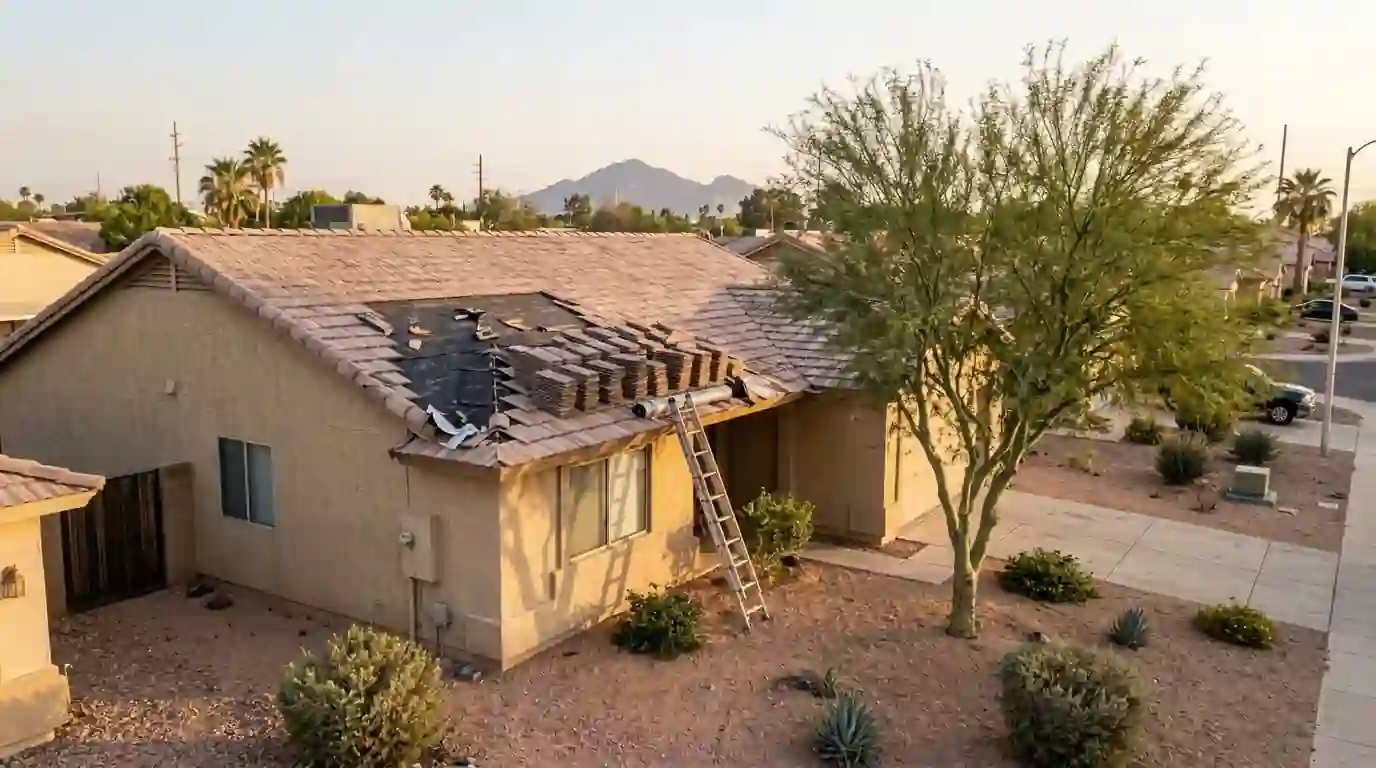
A small roof problem in Phoenix rarely stays small. Heat bakes underlayment, UV chalks coatings, and one monsoon gust can lift what was already loose. We repair tile, foam, shingle, metal and flat roofs across the Valley, matching materials so the fix blends in and holds.
Short answer
Most Phoenix roof repairs cost $385 to $2,940, depending on roof type, pitch, how far the damage has spread and whether underlayment or decking is involved. A sound roof with a local failure, like a cracked tile run, a split foam blister or a lifted shingle tab, is almost always worth repairing. When underlayment is worn across most slopes, we tell you that plainly and price both options.
Materials we install and repair across the Valley
Some problems announce themselves with a ceiling stain. Others sit quietly on the roof until the next storm, so it pays to know what to look for from the yard and the attic.
Brown rings or bubbled paint on a ceiling mean water has already passed the roof covering, the underlayment and the drywall. The source is usually several feet uphill from the stain.
Tiles that have shifted, cracked or slid out of their course leave the underlayment open to direct sun and rain. Look along valleys, ridges and around solar mounts first.
On a foam roof, tan or yellow foam showing through the coating means UV is eating the insulation layer. Left alone, it erodes and starts to hold water in shallow pockets.
Shingles that cup, curl or lose granules in heavy patches are aging fast in the sun. Missing tabs after wind expose nail lines and felt that cannot take water.
If you can see pinpoints of light through the decking from inside the attic, water and dust have a path in too. Check near vents and around pipe jacks.
Water that sits more than a day or two after rain on a flat or low-slope roof points to sagging deck, clogged scuppers or worn coating that needs attention.
Call (602) 878-3594 any hour. We ask about the roof type, where the problem shows and how long it has been there, then set a visit window that fits the urgency.
A roofer walks the affected slopes and the surrounding area, checks the attic side when reachable, and photographs the damage along with anything else that looks close to failing.
You get the cause, the fix and a written price range before any work starts. If replacement is worth comparing, we show both numbers side by side.
We bring tiles, shingles, coatings and flashing that match your roof profile and color as closely as possible, sourcing salvage tiles when a profile is discontinued.
We fix the underlayment, flashing or deck first, then the visible covering, so the repair holds through heat cycles and the next monsoon season.
We clear broken material and debris from the roof and yard, then send photos of the finished repair so you have a record for your files.
A good repair starts by asking why the roof failed, not just where. A leak at a bathroom ceiling might trace back to a cracked tile, a dried-out pipe boot or a flashing seam that opened when the stucco moved. We walk the whole slope, check the attic side when we can reach it, and look for the pattern behind the symptom. Fixing the wet spot without finding the cause is how homeowners end up paying twice.
Once we know the cause, we repair in layers. On tile, that means lifting the tiles, replacing torn or brittle underlayment in the affected area, re-flashing where needed and relaying the tiles with proper fasteners. On foam, we cut out damaged foam, refill it and recoat. On shingle, we replace the damaged courses and reseal the nail line. Every repair is photographed before, during and after so you can see what was under the surface.
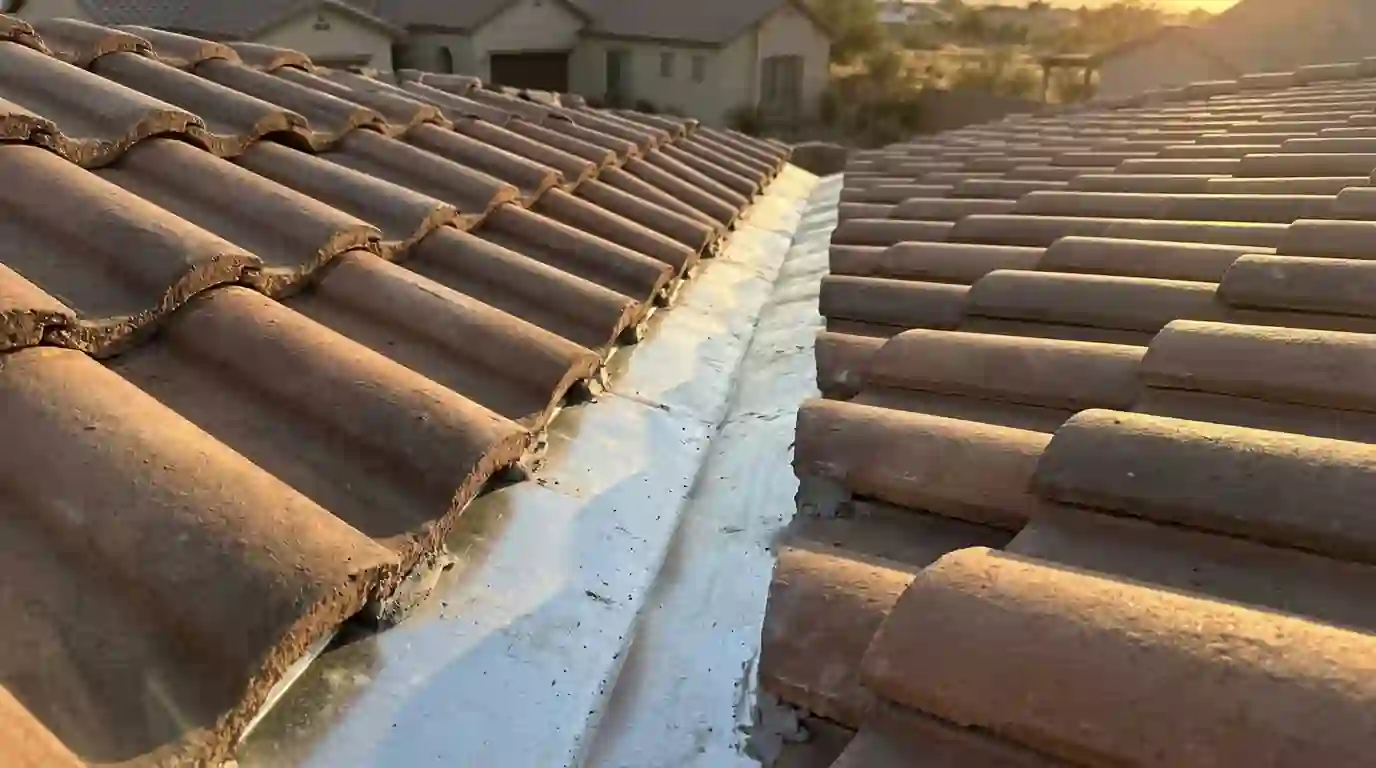
On repairs we match what is already on the roof, from Eagle and Westlake Royal concrete tile to GAF and Owens Corning shingles, and we seal flashing with roof-grade products from Henry and Tremco.
Concrete tile is the most common roof we see on Valley homes built in the last few decades, followed by foam on flat and low-slope sections, then asphalt shingle on older ranch homes and some newer tract builds. Clay tile shows up on Spanish and Mediterranean style homes, and metal is growing on additions, patios and some custom homes. Many houses mix two systems: a tile main roof with a foam or rolled section over a family room or patio.
That mix matters, because the joint where two systems meet is a frequent leak point. A foam section that ties into a tile slope needs careful flashing and a coating lap that the sun will not crack. If your problem is clearly on one system, our dedicated pages go deeper: repairs on concrete and clay tile, flat and low-slope roof fixes and asphalt shingle repairs each cover the details of that roof.
Roof surfaces in July sun can run 150 F to 170 F, and that heat cycles every single day. Sealants expand and shrink, tiles move on their battens, and cheap mastic patches turn brittle within a season or two. We avoid quick tar patches on anything that will see direct sun, and we use materials rated for high surface temperatures. Where flashing needs sealant, it goes under a mechanical cover, not out in the open.
Timing matters too. In the hottest months we schedule tile and shingle work early in the morning, both for the crew and because shingles scuff and tiles get hard to handle in afternoon heat. Foam spraying needs dry conditions and the right surface temperature. If a repair can wait a few days for a better window, we say so. If it cannot, we protect the roof first and finish when conditions allow.
Repair makes sense when the roof is mostly sound and the damage is local. It stops making sense when the same failure shows up all over the roof. On tile roofs, the tiles often outlast the felt beneath them, which commonly wears out around 20 to 25 years in Valley heat. If we lift tiles in three places and find brittle, cracking felt every time, patching one valley will not stop the next leak.
In those cases we give you two numbers: what the repair costs today and what an underlayment replacement or full re-roof costs. You decide. Our roof inspection visits are built for exactly this choice, and they give you photos of every slope so you can compare options without guessing. We would rather tell you a repair is a short-term fix than sell one that fails next July.
Typical range in the Phoenix area
$385 to $2,940
per repair, most homes
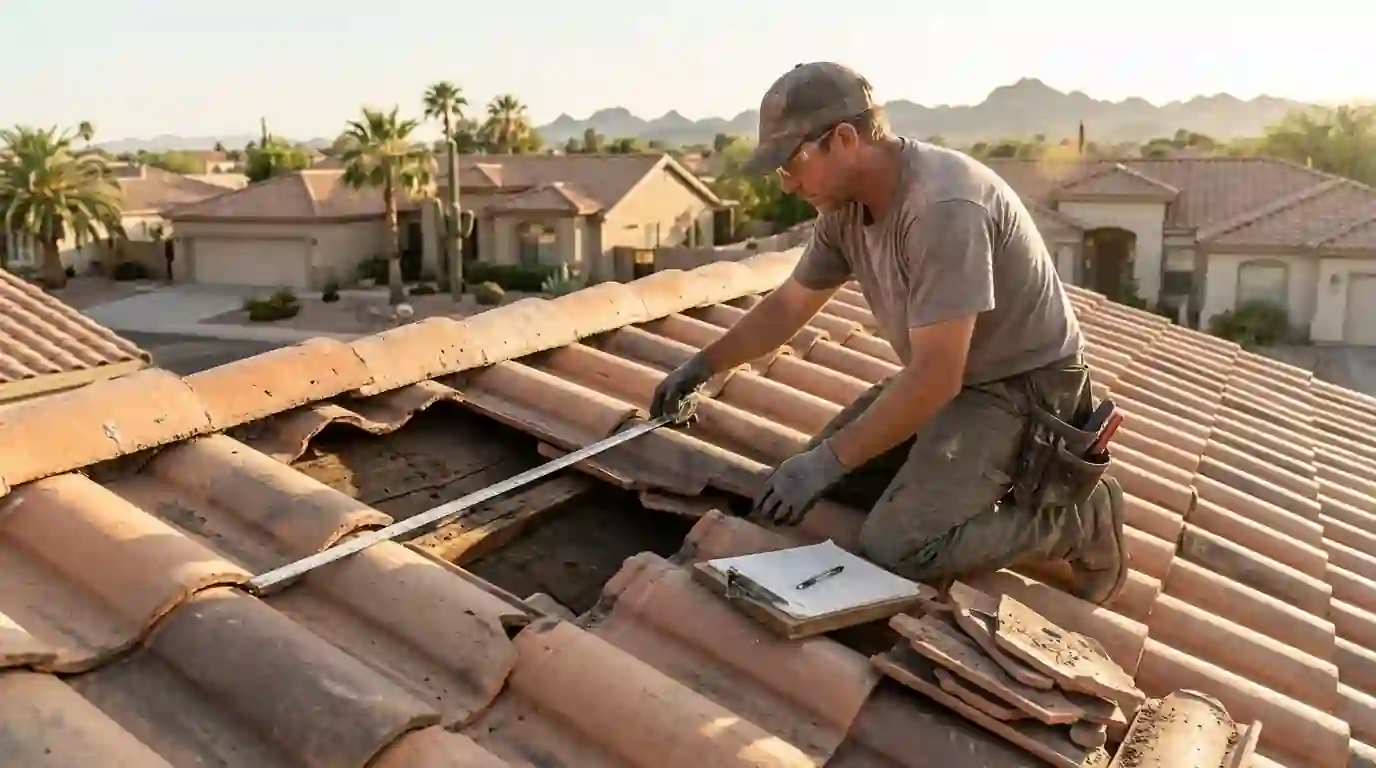
Repair pricing depends far more on what is under the visible damage than on the damage itself. A single cracked tile is quick. A cracked tile over brittle felt is a different job. These ranges reflect typical Valley repairs in 2026, and we always price your roof after seeing it.
Ranges are typical figures for Valley homes, not a quote. We price your roof after we see it.
Most of our roof repair calls come from these parts of the Valley. We also cover every other area on our service area list, from Anthem and Cave Creek down to Casa Grande.
Yes. We lift tiles in the affected area, replace the underlayment and flashing there, and relay the same tiles or matched ones. Sectional repair works well when the felt elsewhere is still flexible. If we find widespread brittle felt, we tell you and show photos before you commit.
Active leaks and storm damage get same-day or next-morning visits in most of the Valley. Non-urgent repairs are usually scheduled within a few days. Calls to (602) 878-3594 are answered around the clock, so you can describe the problem and get a time window right away.
We match profile and color as closely as the market allows. New concrete tiles can look brighter than weathered ones for a season. When an exact match is not made anymore, we pull salvage tiles or move matching tiles from a hidden slope to the visible area.
Often, yes, but it depends on the felt. Tiles at that age are usually fine, while the underlayment beneath may be near the end of its life in Valley heat. We lift tiles in a few spots to check before recommending a repair or an underlayment replacement.
Yes. Small repairs near panels can sometimes be done by lifting tiles around the mounts. Larger repairs under the array need the panels removed and reinstalled, which we can coordinate as one job so you are not juggling two schedules.
Roof leak repair in Phoenix: we trace the water to its true entry point on tile, foam, shingle or flat roofs and fix the cause. Call us 24/7.
Learn moreTile roof leaking or tiles slipping in Phoenix? We trace the leak to the underlayment, reset or swap tiles and seal it the same week. Call (602) 878-3594.
Learn morePhoenix roof inspections after monsoon storms, before buying or before solar: photos, attic checks and a plain written report. Call (602) 878-3594.
Learn moreEmergency roof repair in Phoenix: a live person answers 24/7, and we tarp or seal the leak the same night when it is safe. Call (602) 878-3594.
Learn moreCall us any hour. A real person answers, asks a few questions about your roof and sets up a visit.