Flat roof with ponding water
Foam can be sprayed thicker in low spots to build slope toward drains and scuppers, which ends the puddles that shorten every other flat roof.
Roof Repair
Tile Roofing
Flat & Foam Roofing
Shingle & Metal Roofing
Replacement & Inspections
Solar, Vents & Extras
Phoenix neighborhoods
Valley cities
Counties
Flat & Foam Roofing
Flat roofs in Phoenix fight two enemies: standing water and brutal sun. Spray polyurethane foam answers both. It goes on as a liquid, rises into a continuous insulating layer you can shape for drainage, and gets a reflective coating that keeps it alive. We spray, coat and maintain foam roofs across the Valley.
Short answer
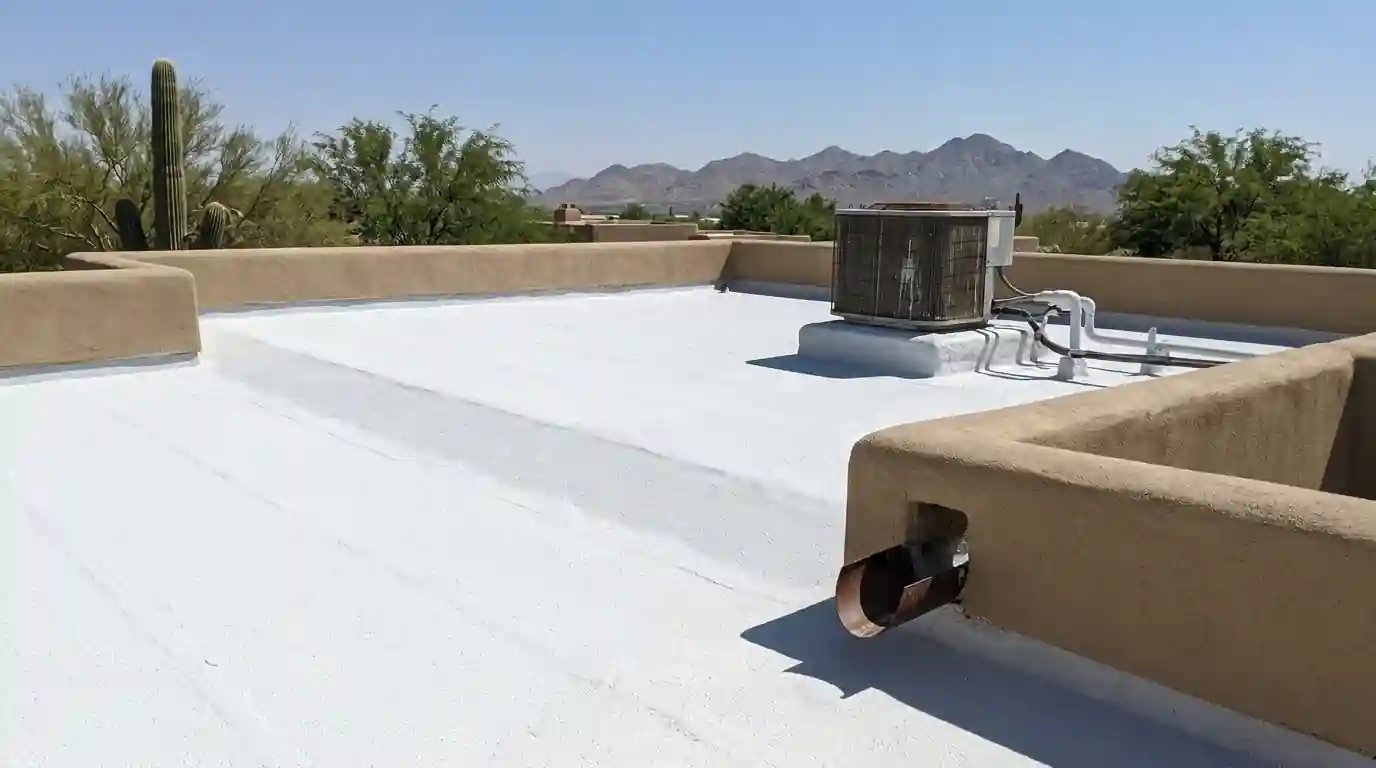
A foam roof is spray polyurethane foam applied over a prepared flat or low-slope deck, built up an inch or more thick and tapered so water drains, then sealed with an acrylic or silicone coating, often with embedded granules. In Phoenix a well-kept foam roof can last decades, as long as the coating is renewed roughly every 5 to 10 years before UV reaches the foam.
Materials we install and repair across the Valley
Everything starts with a clean, dry, sound surface. We remove loose gravel, cut out wet or blistered areas of old roofing, repair soft decking, and sweep or blow off every bit of Valley dust, because foam will not bond to dirt. Then the foam is sprayed as two liquid components that mix at the gun and expand within seconds into a rigid, closed-cell layer.
Our sprayers build thickness in passes, adding more foam in low spots so water flows toward scuppers and drains. Around parapets, the foam runs up the wall and over the cap in one piece. Once it cures, the surface is inspected for texture and thickness, then coated the same day or the next, since bare foam begins breaking down in sunlight almost immediately.
Weather and wind shape the schedule. Foam cannot be sprayed on a damp surface or in strong wind, so during monsoon season we start early, watch the radar, and stop if gusts pick up. Overspray carries farther than most people expect, which is why we mask cars, windows, pools and neighbors' walls before the rig starts, and why a crew member watches the wind direction the entire time the gun is running. On a typical house, spraying and coating together take two to four days.
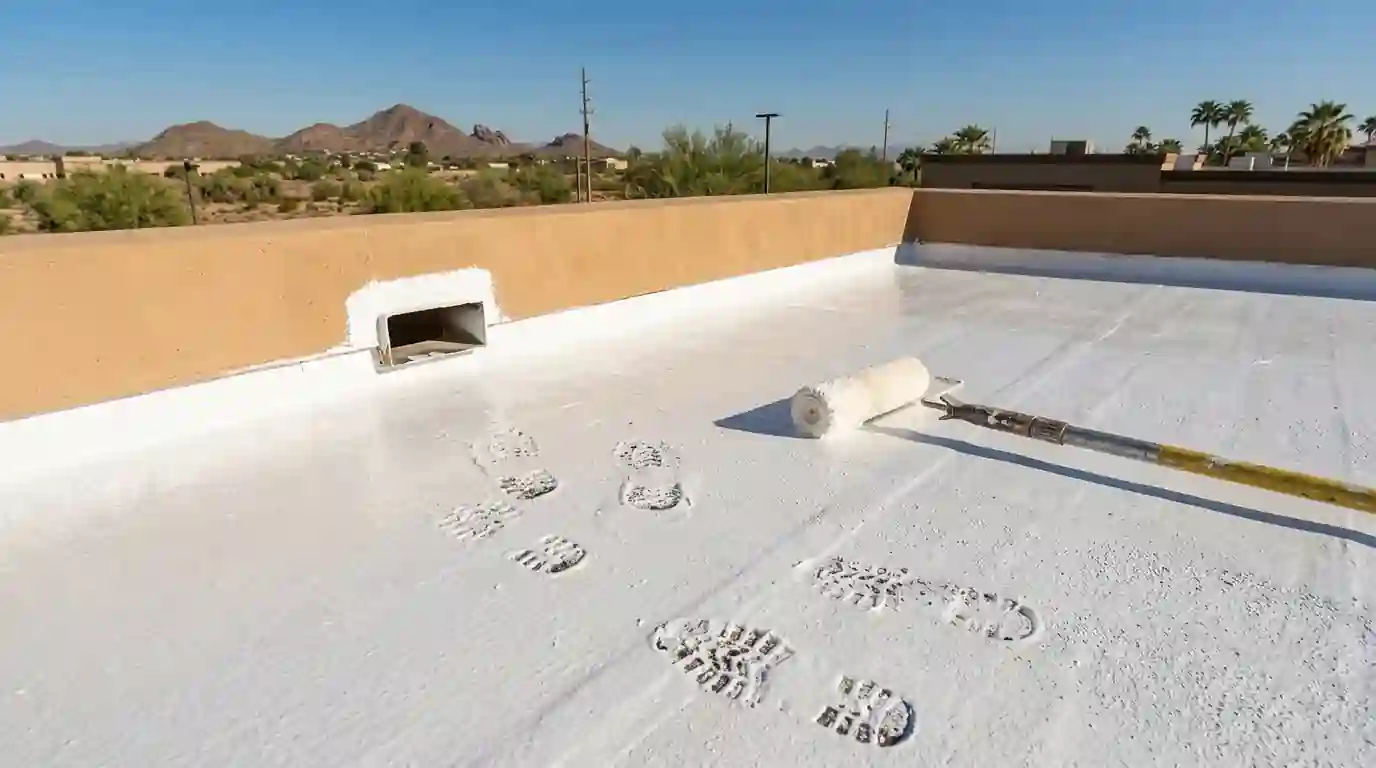
On flat and foam roofs we use coating systems from Gaco, Henry and Tremco, and single-ply membranes such as Carlisle TPO where a membrane is the better fit.
The coating is what protects the foam from UV, and it is the part you will maintain. Acrylic coatings are water-based, bright white and cost less up front. They handle Phoenix sun well but do not love standing water, so they suit roofs we can slope to drain cleanly. Silicone coatings resist ponding and UV longer and hold up better to weathering, though they cost more and are harder to recoat with anything other than silicone later.
Many Valley foam roofs get roofing granules broadcast into the final coat. Granules add texture, help shed the soft scuffs from foot traffic, and give some protection against birds pecking at the surface. Our silicone coating and acrylic elastomeric coating pages go into each coating type in more depth, including how each one ages on Valley roofs and what it costs to renew.
A foam roof that gets recoated on schedule can keep going for a very long time. One that gets ignored will fail. When the coating thins, UV turns the exposed foam brown and powdery, and that eroded foam does not come back. Blisters show up where moisture got trapped or the bond let go, and birds love to peck at soft or bare spots. Dust and debris in low spots hold water against the coating.
We suggest a look at a foam roof every year or two, ideally before monsoon season, plus a recoat every 5 to 10 years depending on the coating and how the roof is used. Small blisters and peck holes can be cut out and filled with foam or sealant before they spread. Our foam recoating service covers that maintenance side, and catching it early costs a fraction of re-foaming.
Foam suits a particular kind of house and a particular kind of problem. These are the situations where we usually recommend it.
Foam can be sprayed thicker in low spots to build slope toward drains and scuppers, which ends the puddles that shorten every other flat roof.
Parapet-walled homes common in Scottsdale, Tempe and north Phoenix were often built with foam. Its continuous layer wraps parapets without seams.
Foam adds insulation on top of the deck. Rooms under old tar and gravel roofs often feel noticeably cooler after a foam install.
In many cases foam can go over a sound existing roof after cleaning and repair, avoiding a full tear-off and its disposal costs.
Foam seals tightly around AC stands, pipes and conduit without the cut seams that membrane roofs need at every penetration.
Low-slope attached covers that drip or pond often perform better with foam than with rolled roofing, and the white coating cools the space below.
Typical range in the Phoenix area
$5.85 to $9.40
per sq ft, foam plus coating
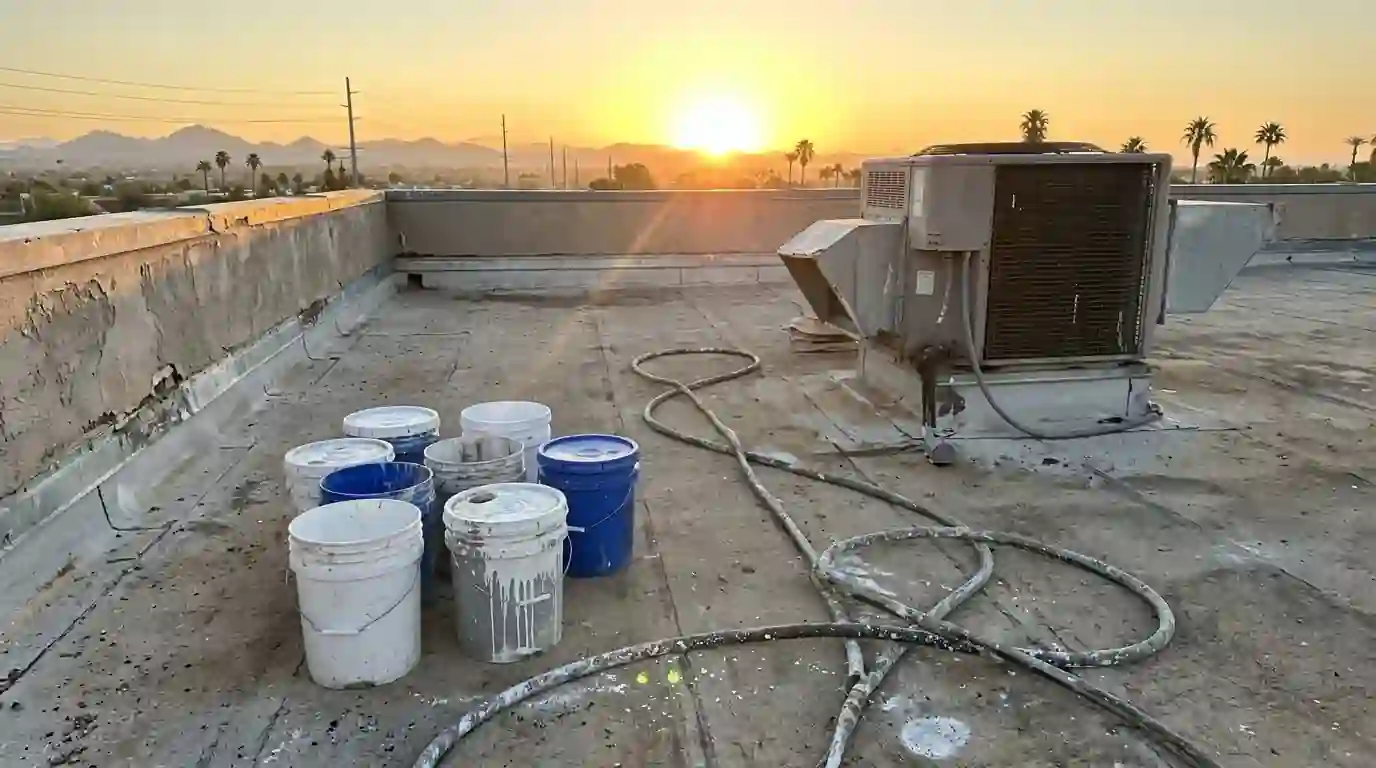
Foam pricing depends heavily on whether the old roof can stay, how thick the foam needs to be to fix drainage, and which coating goes on top. These 2026 ranges are typical for Valley homes and small buildings with average access.
Ranges are typical figures for Valley homes, not a quote. We price your roof after we see it.
Phone (602) 878-3594. Tell us the roof size, what is on it now, and any ponding or leak history. We set a time to walk the roof and take core samples if needed.
We check the existing roof for trapped moisture and soft areas. Wet material has to come out, since foam sprayed over it can blister later.
The roof is cleaned, loose material removed, edges and drains prepared, and nearby walls, windows, cars and landscaping masked against overspray.
Foam goes on in passes, thicker where slope is needed, and runs up parapets and around every penetration in one continuous layer.
The base and top coats go on at the specified thickness, often with granules in the final coat, and we check mil thickness as we go.
We flood-check drains and scuppers, inspect for pinholes and record the coating type and date so you know when to plan the first recoat.
Most of our foam (spf) roofing calls come from these parts of the Valley. We also cover every other area on our service area list, from Anthem and Cave Creek down to Casa Grande.
The foam itself can last for decades when the coating is kept up. Most coatings need renewal every 5 to 10 years here, depending on type and thickness. Roofs that miss recoats lose foam to UV erosion and eventually need re-foaming or replacement.
Often, yes, if the existing roof is dry and well attached. We remove loose gravel, cut out any wet areas and test the bond. If too much of the old roof holds moisture, a tear-off is the better path so trapped water does not cause blisters under the new foam.
The spray rig and generator make steady noise during working hours. There is an odor while foam and coatings cure, mostly outdoors, and we seal attic vents and HVAC intakes during spraying. Most homeowners stay home through the job.
Grackles and other birds peck at soft or exposed foam, often where the coating is worn. The holes let water in and spread. Patching them, adding granules to the coating, and keeping the roof recoated on time all reduce the damage.
Foam adds insulation above the deck and the white coating reflects sunlight, so rooms under it usually run cooler. How much your bill changes depends on the home's existing insulation, ducts and AC. On older flat roofs with little insulation, owners often notice the difference first.
Foam roof turning brown, blistered or pecked in Phoenix? We clean, patch and recoat before UV eats the foam. Call (602) 878-3594 any hour to set a visit.
Learn moreReplacing a worn flat roof in Phoenix? We compare foam, TPO, mod bit and built-up for your home, fix slope and drains, then rebuild. Call (602) 878-3594.
Learn moreSilicone roof coating for Phoenix flat roofs that pond or bake: holds up to standing water and UV over foam, TPO and metal. Call (602) 878-3594 any hour.
Learn moreParapet wall repair in Phoenix for flat-roof Pueblo and territorial homes: caps, cracks and wall flashing fixed so water stays out. Call (602) 878-3594.
Learn moreCall us any hour. A real person answers, asks a few questions about your roof and sets up a visit.