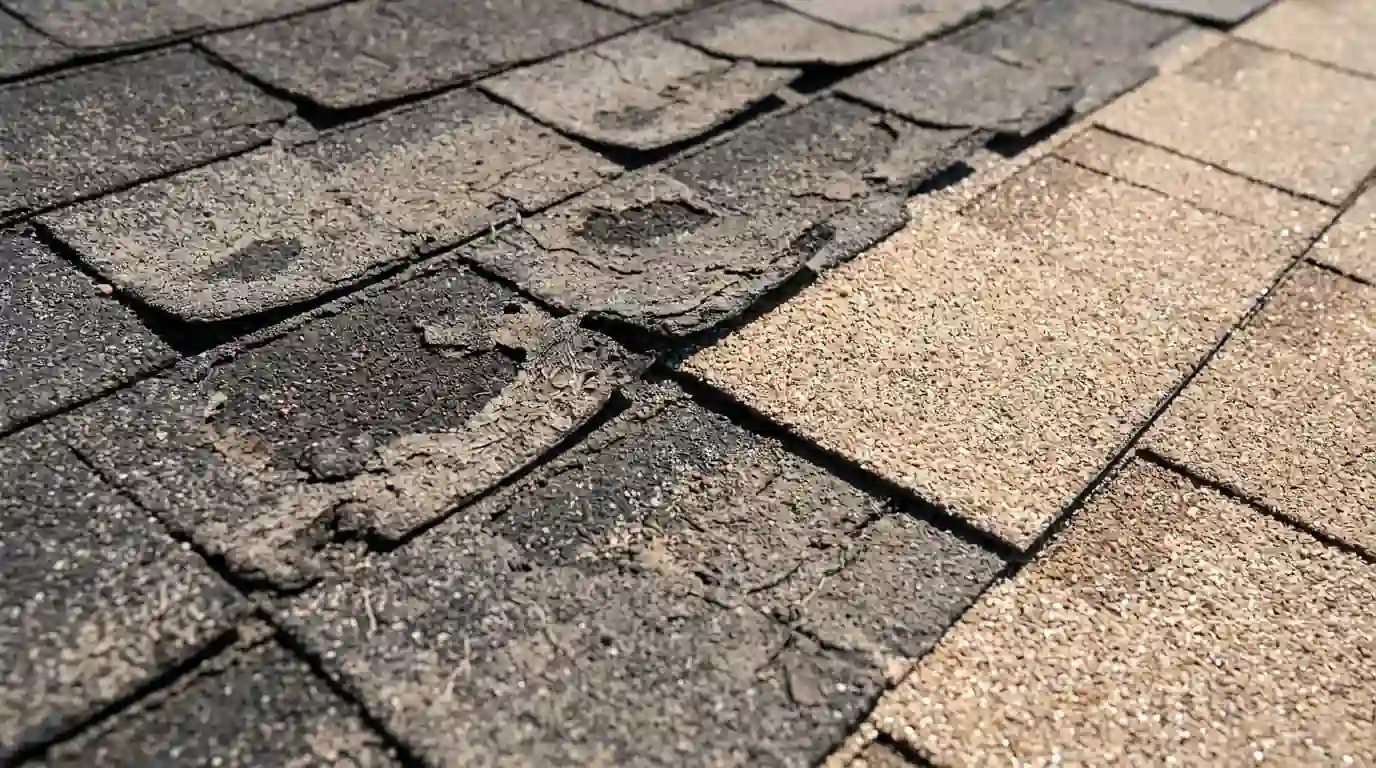
Bald spots and heavy granule loss
When the black asphalt mat shows through on the south and west slopes, UV is reaching the asphalt directly and the shingles are aging fast from that point on.
Roof Repair
Tile Roofing
Flat & Foam Roofing
Shingle & Metal Roofing
Replacement & Inspections
Solar, Vents & Extras
Phoenix neighborhoods
Valley cities
Counties
Shingle & Metal Roofing
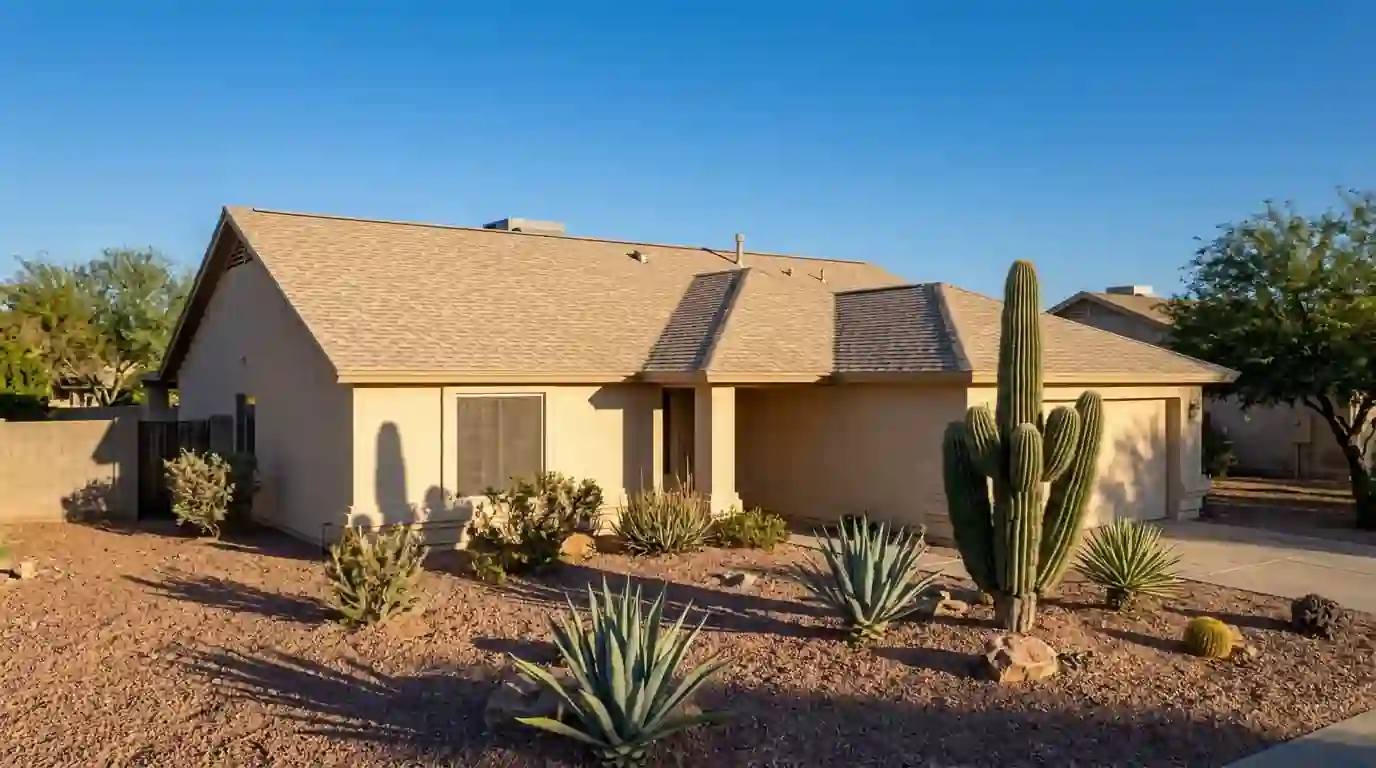
Phoenix sun is hard on asphalt shingles. By July the roof surface can run 150 F to 170 F, the asphalt softens, and granules start washing into the gutters. We install shingle roofs that are chosen, vented and fastened for that heat, from the deck up.
Short answer
Asphalt shingles work well in Phoenix when the product, the color and the attic ventilation are matched to desert heat. A heavier architectural shingle in a lighter, cool-rated color, installed over a sound deck with balanced intake and exhaust venting, ages far more slowly than a dark three-tab roof over a hot attic. Plan on roughly 15 to 22 years in the Valley, shorter than most bundle labels suggest.
Materials we install and repair across the Valley
Not every shingle on the supply house rack is a good fit for the desert. Thin three-tab shingles are cheap, but they carry less asphalt to lose and tend to curl early once our summers start baking the oils out. We generally steer homeowners toward heavier architectural or laminated shingles, which have a thicker mat, more granule coverage and stronger wind ratings for monsoon gusts. On homes in parts of the Valley that see hail now and then, an impact-rated shingle can also make sense, and some carriers look at that rating when they write a policy.
Color matters more here than in most of the country. A dark charcoal roof absorbs far more heat than a light tan, gray or weathered-wood blend, and that heat goes straight into the shingle and the attic below it. Many manufacturers now sell cool-rated shingles with reflective granules that look like ordinary colors from the street but bounce back more of the sun. If you are torn between looks and performance, we bring sample boards up onto the roof so you can judge them in real Arizona light, not under store fluorescents.
Our shingle and metal crews install GAF, Owens Corning, CertainTeed and Malarkey shingles, and stone-coated steel panels from DECRA when a homeowner wants metal with a tile look.
Most shingle failures we are called to look at trace back to installation, not the shingle itself. We tear off to the deck, replace soft or delaminated sheathing, and run a synthetic underlayment that tolerates heat better than old felt. Drip edge goes on every eave and rake, self-adhering membrane goes into valleys and around penetrations, and every shingle gets the nail count and placement the manufacturer calls for. High nails are the classic shortcut, and they are exactly what lets a monsoon gust peel a roof open in August.
Ventilation is the other half of the job. A shingle roof over an attic that hits 140 F or more cooks from both sides, so we look at intake at the soffits and exhaust at the ridge and size them to work together. Where the attic is starved for air, we can add attic ventilation upgrades in the same project. If only a few slopes are worn and the rest are sound, we will say so, and repairing a shingle roof may be the smarter call for now.
The most common mistake is buying on the lifespan printed on the bundle. A 30-year label describes a shingle under average national conditions, not a south-facing slope in Glendale or Surprise that takes full afternoon sun from May to October. Plan for less, and pick a product with a real track record in hot climates. The second mistake is laying new shingles over old ones to save on tear-off. The extra layer traps heat, hides deck damage and often shortens the life of the new roof.
HOA rules trip people up too. Many Valley communities restrict shingle colors or require a specific profile, and getting approval after the material is ordered can mean a costly return. We pull the submittal details together before anything ships. Finally, compare roof types honestly. On some homes tile or foam is the better fit, and our write-up of tile, shingle and foam compared walks through where each one wins in desert heat.
Shingles are a planned purchase for most Valley homeowners. These are the situations where we usually recommend a full new shingle roof rather than another patch.
When the black asphalt mat shows through on the south and west slopes, UV is reaching the asphalt directly and the shingles are aging fast from that point on.
Tabs that lift at the corners or snap when bent have lost their oils to years of summer heat, and they will not lie flat or reseal again.
If you have paid for patches after two or three monsoons running, the money is usually better spent on a roof that starts its life fresh.
Older Valley homes sometimes carry two layers of shingles. The extra weight and trapped heat shorten the life of both, and a clean tear-off fixes that.
Buyers, inspectors and lenders look hard at roofs with visible wear, and a new shingle roof removes a common sticking point in a Valley home sale.
A ceiling that radiates heat well into the evening often points to poor attic venting, and a new roof is the right moment to correct it properly.
Typical range in the Phoenix area
$11,840 to $24,960
per typical single-story home
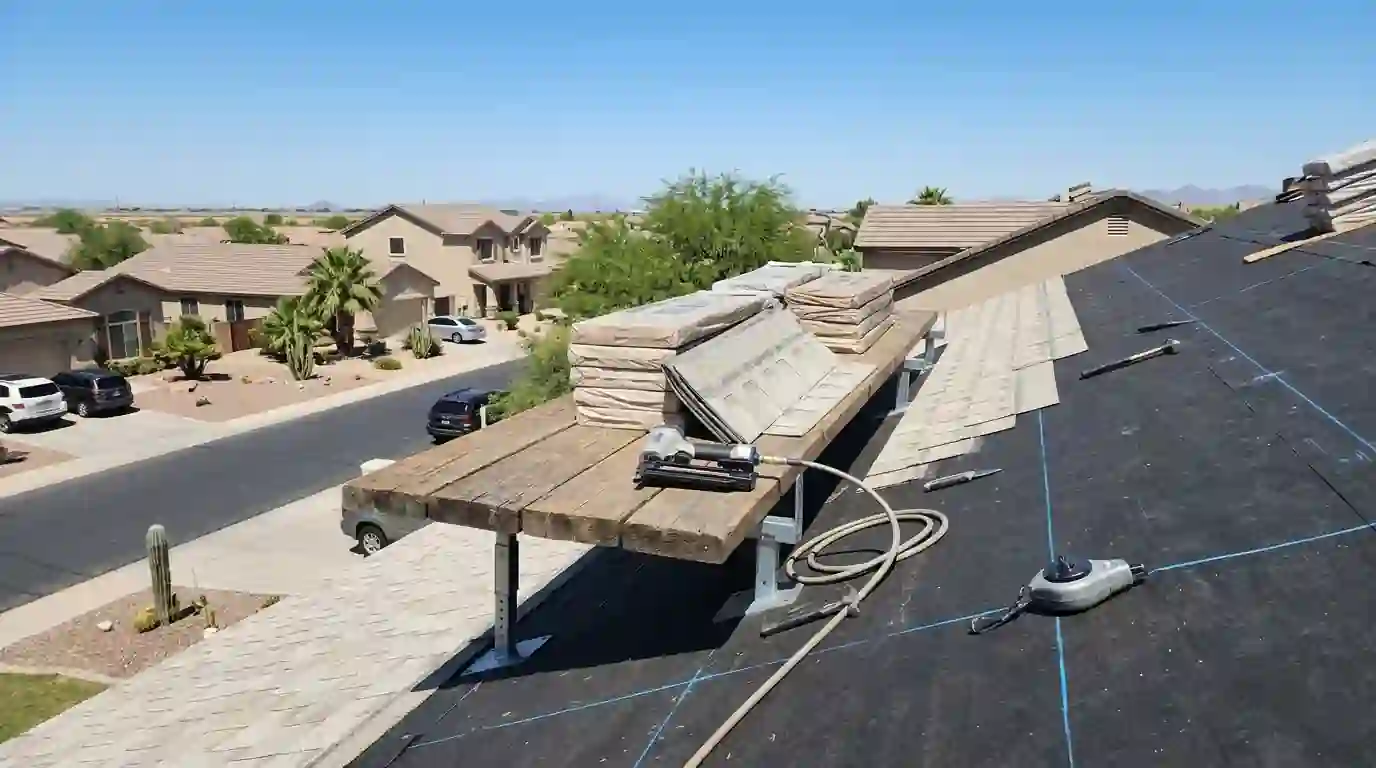
Most single-story Valley homes between about 1,700 and 2,400 square feet land in the range below for a full tear-off and a new architectural shingle roof. The final number moves with roof size, pitch, the shingle line you pick and how much hidden deck damage turns up once the old roof comes off.
Ranges are typical figures for Valley homes, not a quote. We price your roof after we see it.
Call (602) 878-3594 and tell us about the house, the roof age and what you are seeing. We set a time to come out and measure, usually within a few days.
We walk the slopes, check the deck from the attic side, look at intake and exhaust venting, and photograph worn areas so you see what we see.
We go over shingle lines, cool-rated colors and any HOA rules, then write a scope that lists every component, from drip edge to ridge vent.
Where your city requires a re-roof permit we file it, then schedule early-morning starts in summer so crews are not walking on soft, hot shingles.
We strip to the deck, repair sheathing, lay underlayment and flashing, install shingles and ridge vent, and sweep the yard with magnets each day.
We walk the finished roof with you, pass any city inspection, and register the manufacturer warranty whenever the shingle line offers registration.
Most of our asphalt shingle roofing calls come from these parts of the Valley. We also cover every other area on our service area list, from Anthem and Cave Creek down to Casa Grande.
In our experience, a quality architectural shingle in the Valley usually lasts 15 to 22 years, depending on color, which way the slopes face and how well the attic breathes. Labels of 30 years or more reflect milder climates. Dark colors over hot, poorly vented attics land at the short end, while lighter shingles on well-vented roofs reach the upper end.
They help. Reflective granules keep the shingle surface cooler, which slows asphalt aging and reduces the heat moving into the attic. The effect is real but modest on its own, so we pair cool-rated shingles with proper ventilation and, where it fits, a radiant barrier. Together they make a noticeable difference in upstairs comfort.
Shingles need enough pitch to shed water, and on sections below the slope the manufacturer allows, they leak in heavy monsoon rain. Many Valley homes mix pitched roofs with flat areas over patios or additions. On those flat areas we install a membrane, foam or coating system that ties into the shingles cleanly at the transition.
Hail is not an every-year event in Phoenix, but strong monsoon cells do drop it on parts of the Valley. Impact-rated shingles cost more up front, and some carriers consider them when pricing a homeowner's policy, so it is worth asking your agent first. We are happy to price both options side by side.
Most single-story homes take one to three working days from tear-off to cleanup, plus time for any city permit and inspection. In summer we start early so crews are off the roof before the hottest hours, and we keep the house dried in at the end of every day in case a monsoon cell builds.
Missing, creased or wind-lifted shingles on your Phoenix home? We replace, reseal and blend shingle repairs after monsoon wind. Call us 24/7.
Learn moreFull roof replacement in Phoenix for tile, shingle, foam and metal: tear-off decisions, permits, deck repair and clean job sites. Call (602) 878-3594.
Learn morePhoenix attics can top 140 F to 150 F in summer. We balance intake and exhaust vents and add radiant barrier to cut heat load. Call (602) 878-3594.
Learn morePhoenix roof inspections after monsoon storms, before buying or before solar: photos, attic checks and a plain written report. Call (602) 878-3594.
Learn moreCall us any hour. A real person answers, asks a few questions about your roof and sets up a visit.