Replacing tar and gravel
Mod bit gives the multi-layer toughness of a built-up roof with less mess, no loose gravel and more consistent factory-made sheets.
Roof Repair
Tile Roofing
Flat & Foam Roofing
Shingle & Metal Roofing
Replacement & Inspections
Solar, Vents & Extras
Phoenix neighborhoods
Valley cities
Counties
Flat & Foam Roofing
Modified bitumen is the workhorse upgrade from old tar and gravel. It is a factory-made asphalt membrane, reinforced and modified to stay flexible in heat and stand up to foot traffic. We install and repair mod bit roofs on Valley homes, patio covers and commercial buildings.
Short answer
Modified bitumen is an asphalt membrane blended with rubber or plastic modifiers and reinforced with polyester or fiberglass. It goes down in two or more layers, a base sheet and a granulated cap sheet, joined by heat, cold adhesive or self-adhesion. In Phoenix it holds up to heat and foot traffic well, and a light or coated cap keeps surface temperatures lower and helps the roof last longer.
Materials we install and repair across the Valley
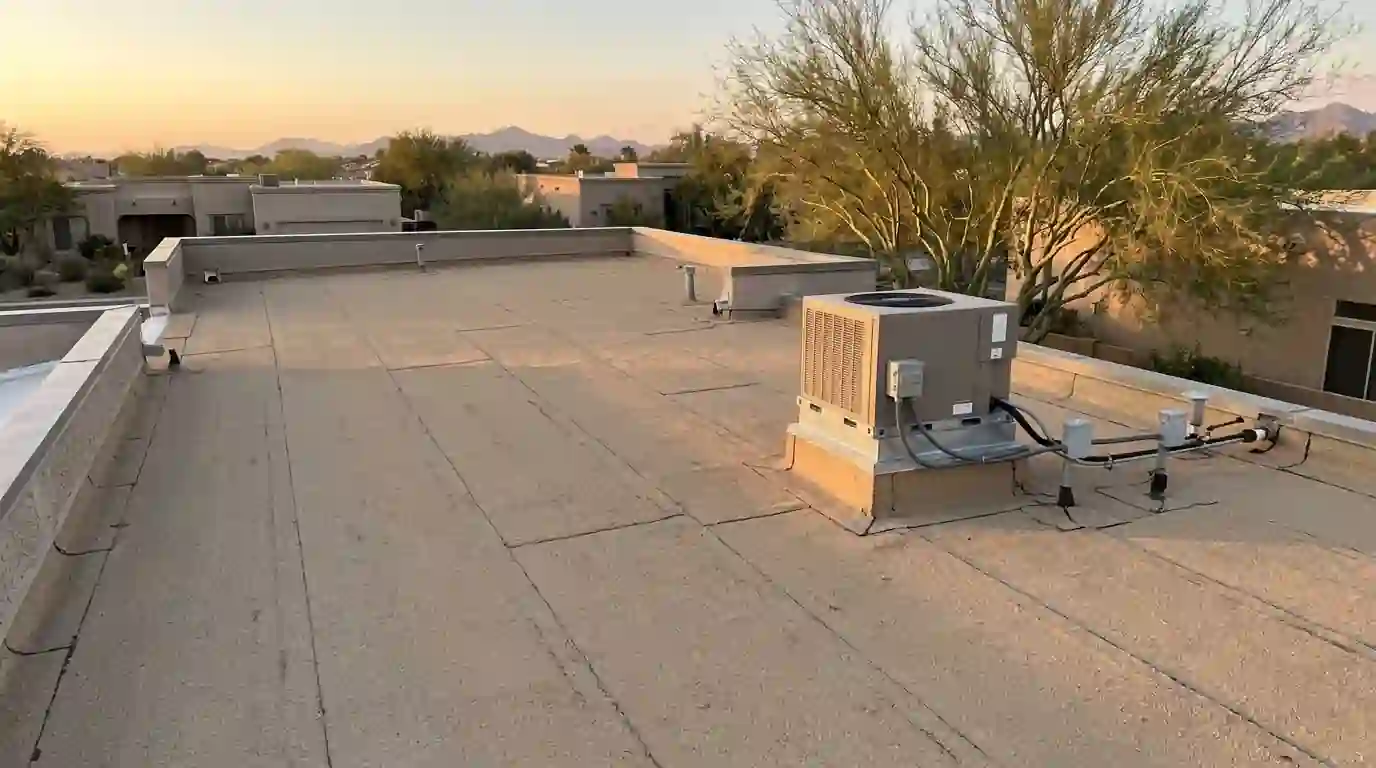
A typical residential mod bit roof starts with a base sheet nailed or adhered to the deck, then a cap sheet on top with mineral granules embedded in the surface. The sheets come in rolls, and they overlap at side and end laps by set distances. Those laps are fused with heat, set in cold adhesive, or self-sealed, depending on the product. The finished roof is two layers of tough, flexible membrane with factory-controlled thickness.
The modifiers are what make it work in Phoenix. SBS-modified sheets stay rubbery and flexible, which helps on roofs with movement. APP-modified sheets behave more like plastic and handle high heat well. Both types hold up far better than plain asphalt felt in Valley sun. Our crews choose the type and attachment method based on the deck, the building, nearby structures and how much traffic the roof gets.
Layout matters as much as material. We plan the sheets so laps run with the flow of water toward the scuppers, never against it, and so end laps are staggered rather than lined up in one weak row. Around parapets, the membrane turns up the wall and under a counterflashing or new cap, and AC curbs get a full wrap rather than a strip of sealant. These are the places where a quick install saves an hour and costs the owner a leak two summers later.
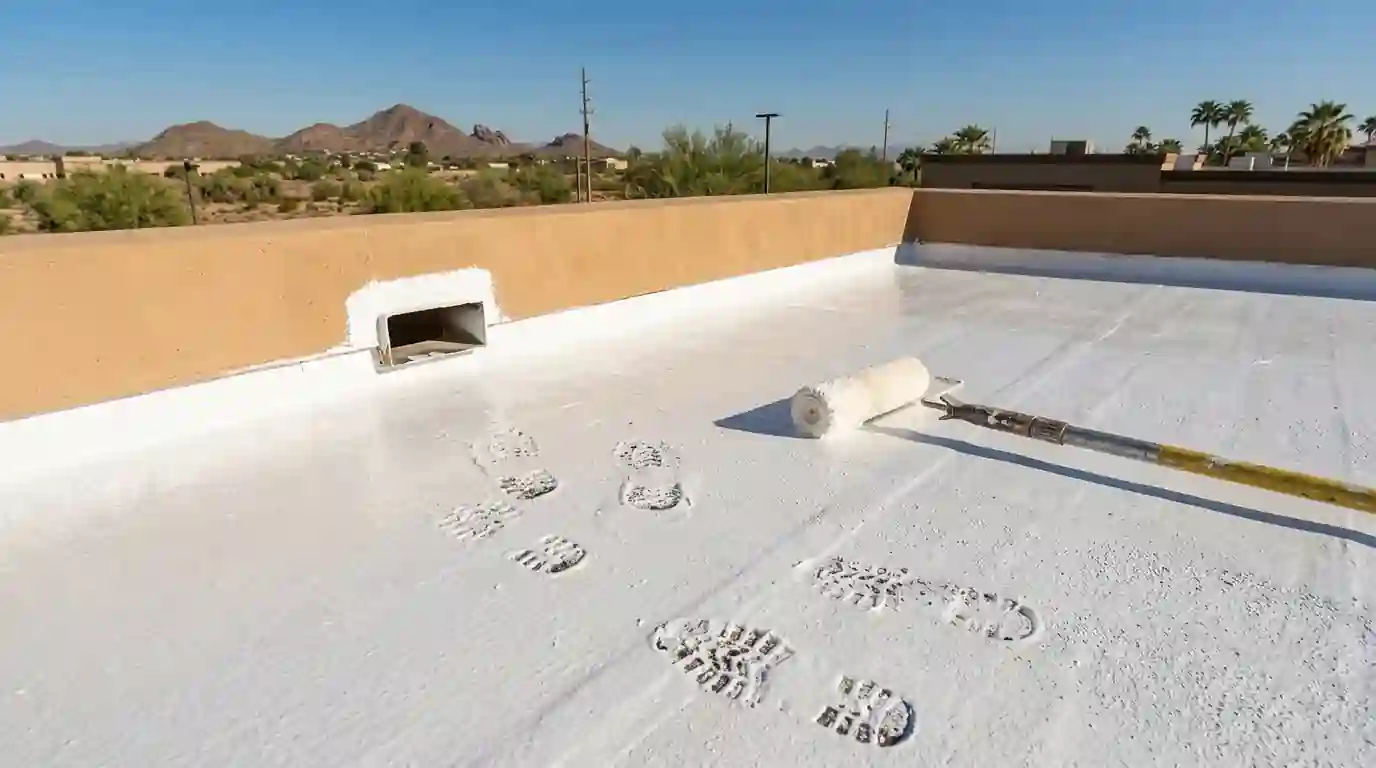
On flat and foam roofs we use coating systems from Gaco, Henry and Tremco, and single-ply membranes such as Carlisle TPO where a membrane is the better fit.
Torch-applied mod bit uses a propane torch to melt the back of the sheet onto the layer below, and it is still common on commercial jobs across the Valley. It is fast and creates strong bonds, but open flame on an older wood-framed roof carries real fire risk, especially near parapets, wood fascia and dry palm fronds. We use torch application only where it is safe and appropriate, with fire watch after the work.
Cold-applied systems use adhesives rolled or sprayed under each sheet, and self-adhered sheets have a sticky back protected by release film. These avoid open flame entirely, which makes them a popular choice on homes, near neighbors and on roofs with lots of wood detail. In Valley heat, self-adhered sheets bond aggressively, so crews work early in the day to control placement. We explain the trade-offs and pick the safest method that still gives a lasting bond.
A dark mod bit cap can get extremely hot in July. Light-colored granulated caps and white reflective coatings lower that temperature, which slows asphalt aging and helps the rooms below. Many owners coat a mod bit roof a few years after installation, or choose a factory-coated white cap from the start. If you are thinking about a coating later, our reflective roof coating page covers how that works over mod bit.
Most mod bit leaks we repair start at laps, flashing and penetrations rather than in the middle of a sheet. Heat cycling can open poorly sealed seams, and foot traffic around AC units wears granules away. Keeping scuppers clear, walking on designated paths and having the roof checked before monsoon season catch most problems early. A seam that opens in June is a simple fix, but after a season of storms it often means wet insulation. Granule loss shows up as shiny black patches and is worth recoating before the asphalt beneath starts cracking. For older tar and gravel roofs considering an upgrade, see our built-up roof repair and replacement page for how the two systems compare.
Mod bit is not the answer for every flat roof, but it shines in certain situations around the Valley.
Mod bit gives the multi-layer toughness of a built-up roof with less mess, no loose gravel and more consistent factory-made sheets.
Roofs with several AC units, solar or regular service visits benefit from a thick granulated cap that resists punctures and scuffs better than coatings.
Low-slope attached covers often do well with a single-ply or two-ply mod bit system that ties neatly into the main house roof.
Mod bit offers a solid service life at a moderate price, which suits owners who want fewer leak calls without paying for premium systems.
Older mod bit roofs with cracked granules and lifting seams can often be repaired, recoated or replaced with the same system.
Typical range in the Phoenix area
$6.45 to $10.80
per sq ft installed, two-ply system
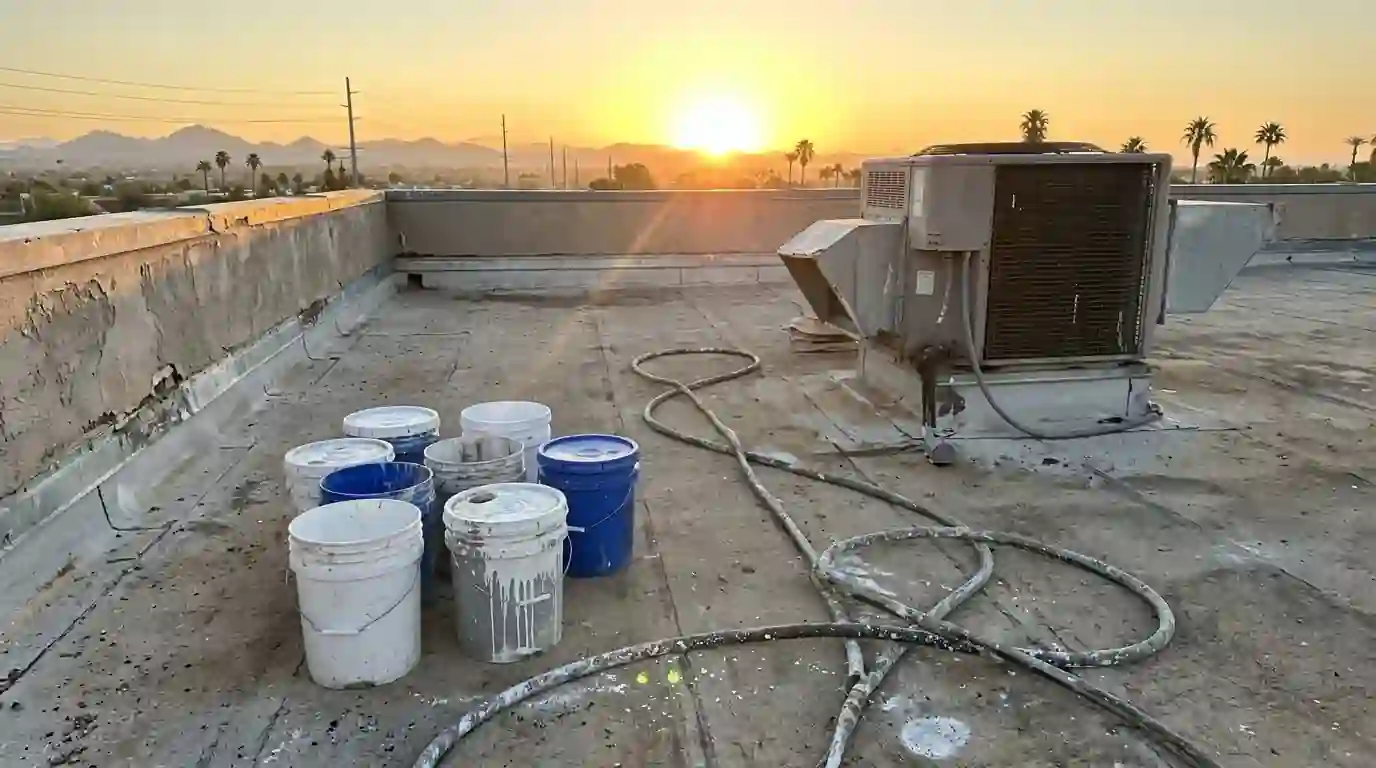
Mod bit pricing depends on tear-off, the number of plies, the attachment method and the cap you choose. It usually sits in the middle of the flat roof price range, above rolled roofing and often below premium single-ply or silicone systems. These are typical 2026 Valley figures.
Ranges are typical figures for Valley homes, not a quote. We price your roof after we see it.
Phone (602) 878-3594. Tell us the roof size, the existing material and any leaks, and we schedule a time to inspect and measure.
We check the deck, existing layers, parapets and scuppers, and look for ponding areas that need slope added before new roofing goes down.
You get options for torch, cold or self-adhered systems and cap colors, with pricing for each and our recommendation for your building.
Old roofing is removed, the deck repaired, tapered insulation installed where needed, and flashing details prepared at walls and penetrations.
Base sheet goes down first, then the cap sheet with laps sealed and checked. Flashing, curbs and scuppers get reinforced membrane details.
We check every lap by hand, water-test the drains, remove debris and record the product and installation date for future maintenance.
Most of our modified bitumen roofing calls come from these parts of the Valley. We also cover every other area on our service area list, from Anthem and Cave Creek down to Casa Grande.
A well-installed two-ply mod bit roof commonly lasts around 15 to 20 years here, sometimes more with a reflective coating and good drainage. Single-ply rolled versions and dark caps without coatings tend to wear out sooner in Valley heat, often showing cracked granules within the first decade.
Torch application can be done safely by experienced crews, but open flame near dry wood and debris is a real fire risk. On many homes we prefer cold-applied or self-adhered mod bit to avoid flame entirely, especially near wood fascia and parapet framing.
Yes. Mod bit takes reflective coatings well once it has weathered briefly and been cleaned. Some products need a primer to block asphalt bleed. Coating lowers surface temperatures, which helps both the roof and the rooms below it.
They serve different needs. Mod bit handles foot traffic and punctures well at a moderate price. Foam adds insulation and is easier to slope for drainage, but needs regular recoats. We compare both against your building and budget.
We clean and dry the lap, reheat or re-adhere it depending on the product, then add a reinforcing strip of compatible membrane over the seam. Granules are embedded or coating applied to protect the repair from sun.
Old tar and gravel roof in Phoenix? We repair, resurface or replace built-up roofs with fresh plies, flashing and a cool cap. Call (602) 878-3594 24/7.
Learn moreReplacing a worn flat roof in Phoenix? We compare foam, TPO, mod bit and built-up for your home, fix slope and drains, then rebuild. Call (602) 878-3594.
Learn moreTPO roofing for Phoenix commercial and flat homes: white single-ply membrane, hot-air welded seams, cooler in summer. Call (602) 878-3594 any time.
Learn moreFlat roof leaking in Phoenix? We find the source on foam, built-up, mod bit or TPO roofs and fix ponding, seams and drains. Call (602) 878-3594 24/7.
Learn moreCall us any hour. A real person answers, asks a few questions about your roof and sets up a visit.