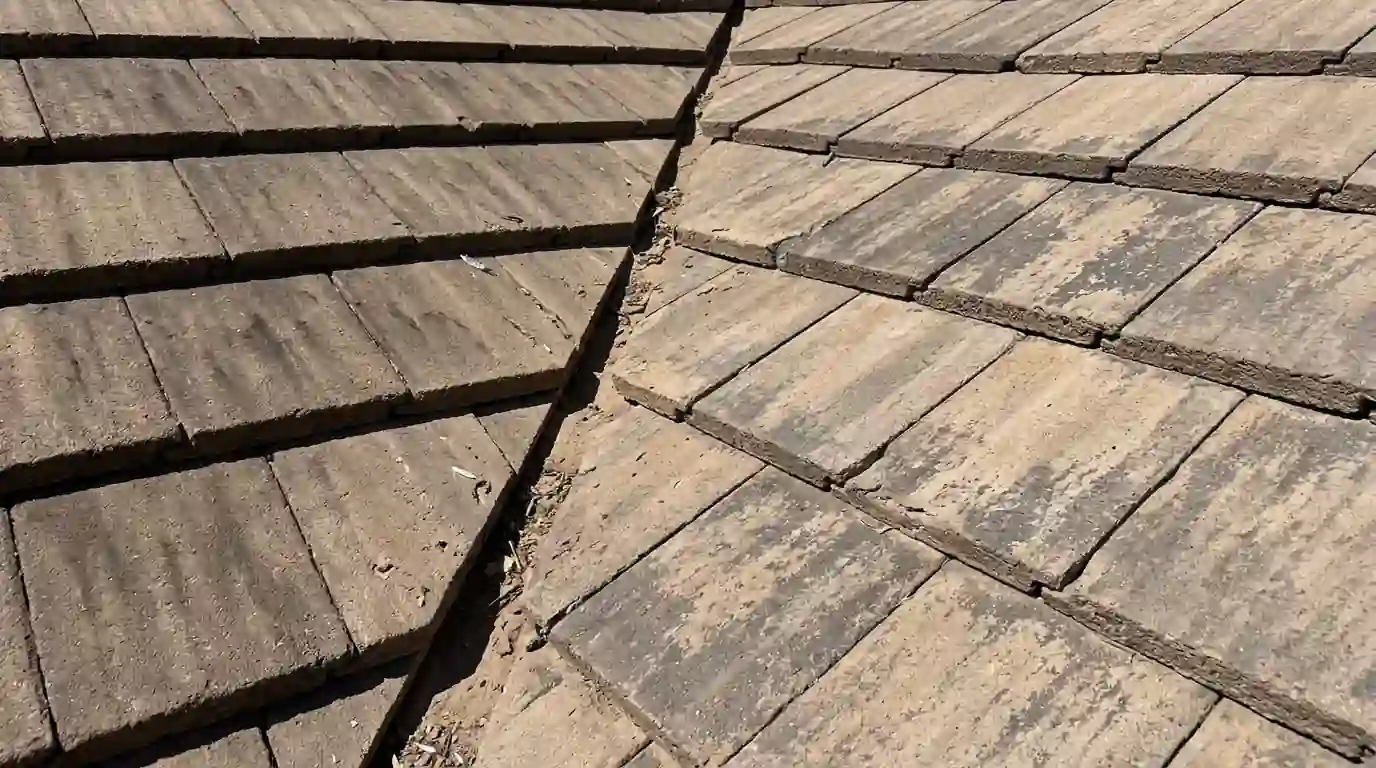
Slipped or broken tiles
A tile that has slid out of line or cracked lets sun and water reach the underlayment, which is the layer that actually keeps a tile roof dry.
See the fixRoof Repair
Tile Roofing
Flat & Foam Roofing
Shingle & Metal Roofing
Replacement & Inspections
Solar, Vents & Extras
Phoenix neighborhoods
Valley cities
Counties
Phoenix roofers, phone answered 24/7
Summer sun wears out a Valley roof long before it ever leaks. We repair, recoat and replace tile, foam, shingle, flat and metal roofs across Phoenix and the Valley, and someone picks up the phone at any hour.
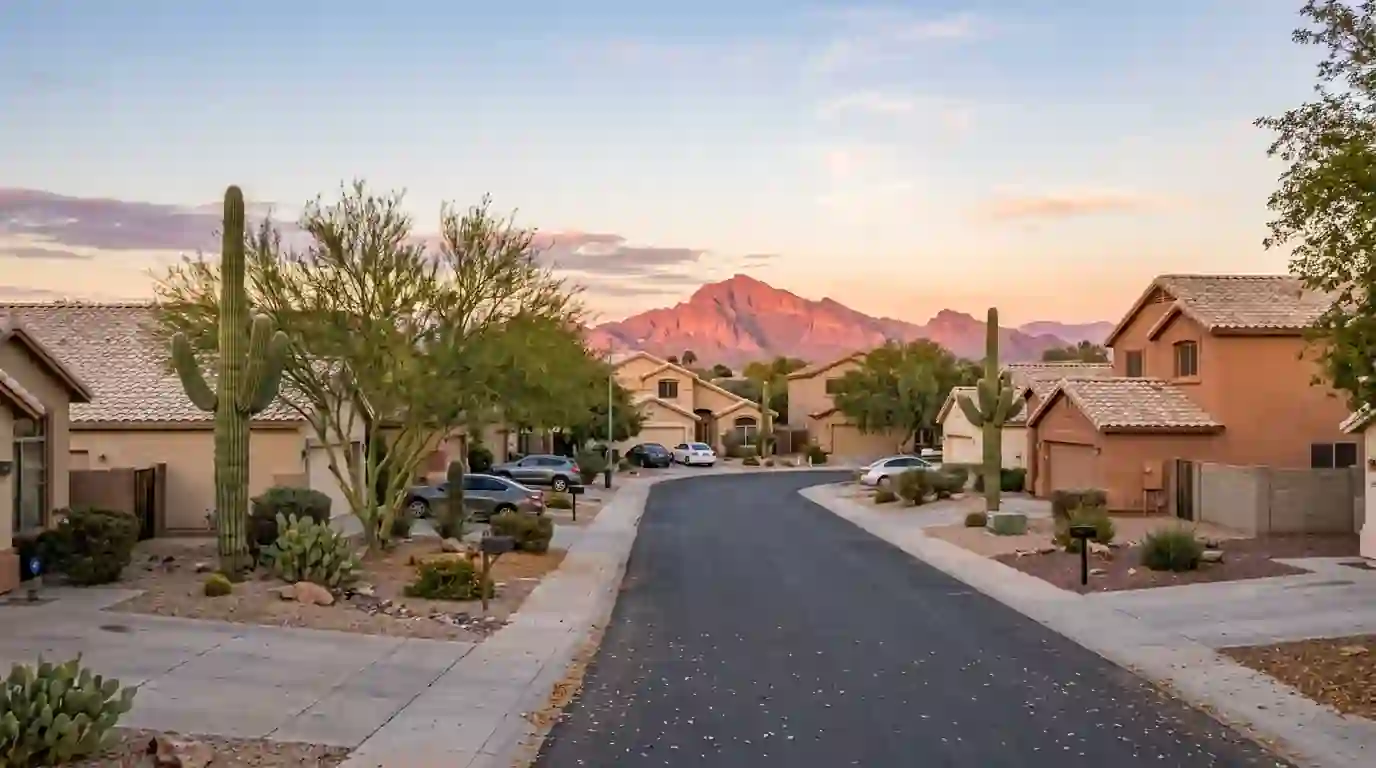
Roof surface on a July afternoon
Short answer
Most Phoenix roof problems trace back to heat and UV, not age alone. Tile roofs lose the felt underlayment beneath them at around 20 to 25 years, foam roofs need a fresh coat every 5 to 10 years, and dark shingles turn brittle early. We inspect, repair, recoat and replace all of these from offices in downtown Phoenix and Scottsdale. Call (602) 878-3594 any hour.
Materials we install and repair across the Valley
Every roof service we offer
Start with the kind of roof you have or the problem you are seeing. Every page explains how the work is done in Valley conditions, what it typically costs and what to ask before you hire anyone.
Roof-life estimator
Pick your roof type, its age, its color and how much sun it gets. The estimate uses how roofs commonly age in Phoenix heat, so it is a planning number, not a diagnosis. For more detail, open the full roof-life estimator page.
About 4 years left
Typical life in Valley heat.
This is a planning estimate based on how roofs commonly age in Phoenix heat, not an inspection. A roof that leaks, has slipped or broken tiles, blisters or soft spots needs a look sooner.
Details Call (602) 878-3594What to watch for
These are the problems we find most often on Valley roofs. None of them fixes itself, and most are cheaper to handle now than after a summer of storms.
A tile that has slid out of line or cracked lets sun and water reach the underlayment, which is the layer that actually keeps a tile roof dry.
See the fixMonsoon rain driven sideways finds gaps that a light winter shower never touches. A stain that grows after each storm means water is getting past the roof.
See the fixWhen the coating on a foam roof wears thin, UV starts breaking down the foam itself. Catching it at the coating stage keeps the job a recoat, not a replacement.
See the fixShingles shed their protective granules faster in Valley heat. Heavy granule loss leaves the asphalt exposed and the roof aging in fast forward.
See the fixPonding that lasts two days or more after rain wears coatings and seams, adds weight and points to a drainage or scupper problem worth fixing.
See the fixNests and droppings under an array trap debris and moisture against the roof and the wiring. Mesh guards keep birds out without drilling into the panels.
See the fix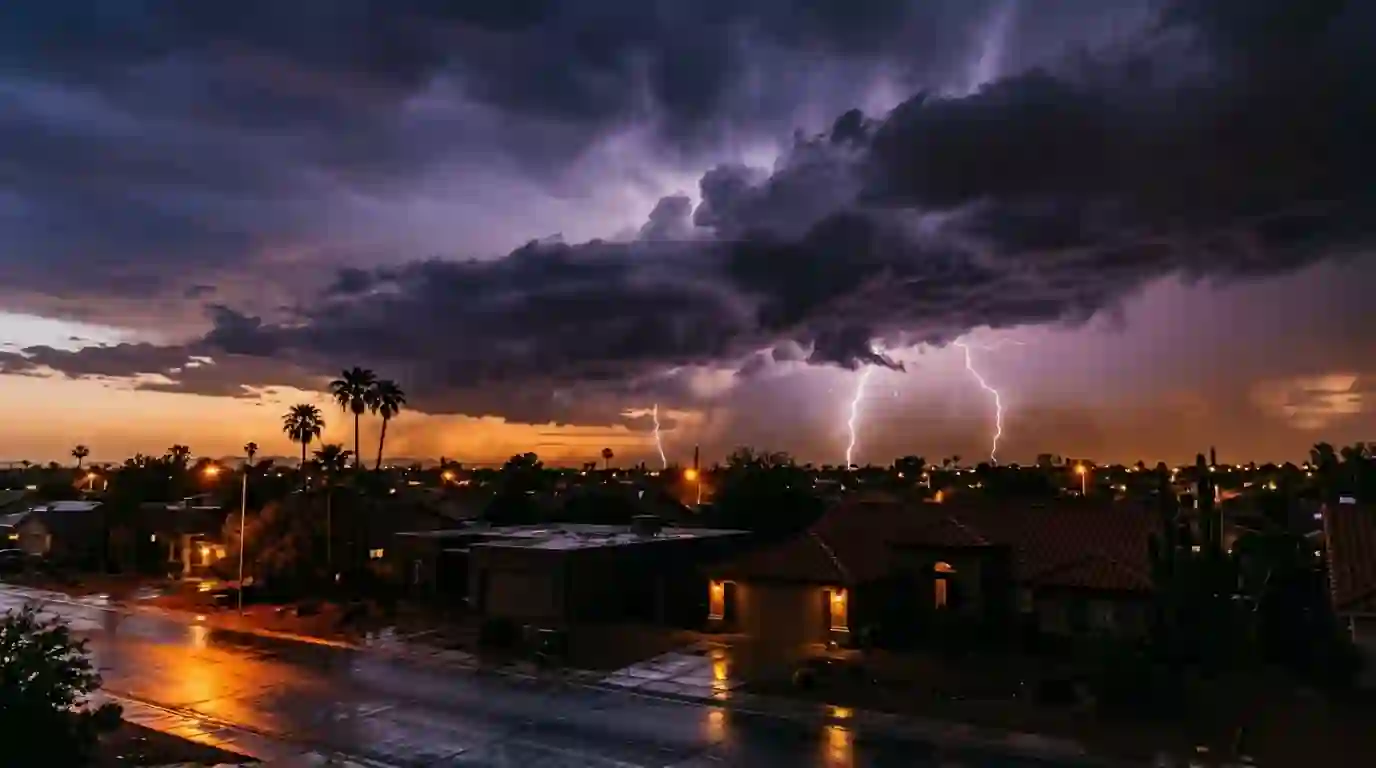
How a job runs
Day or night, a person picks up. We ask about the roof type, what you are seeing, the address and anything urgent, like water coming in right now.
We walk the roof, photograph what we find and check the attic when there is a leak, so the repair fixes the cause rather than the stain.
You get what is wrong, the options, the materials and a price in writing, with the typical life you can expect from each option in Valley heat.
Summer jobs start at first light. If a storm is coming before the work is done, we protect the open roof with tarps or temporary membrane.
Tear-off, deck repair, underlayment, flashing and then the finished surface. We do not cover a bad layer just to save a day.
We sweep the yard with a magnet, haul away debris, send photos of the finished roof and register manufacturer warranties when a product offers one.
Where we work
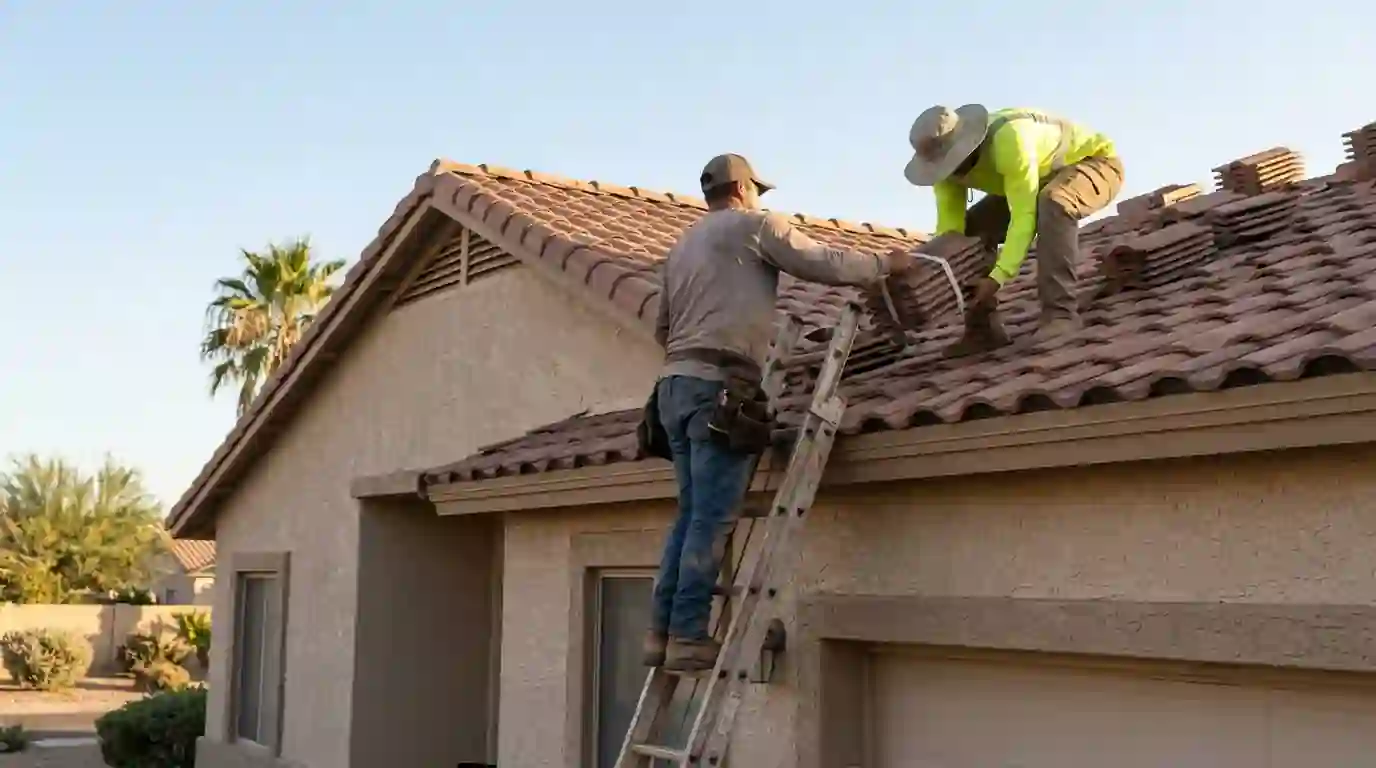
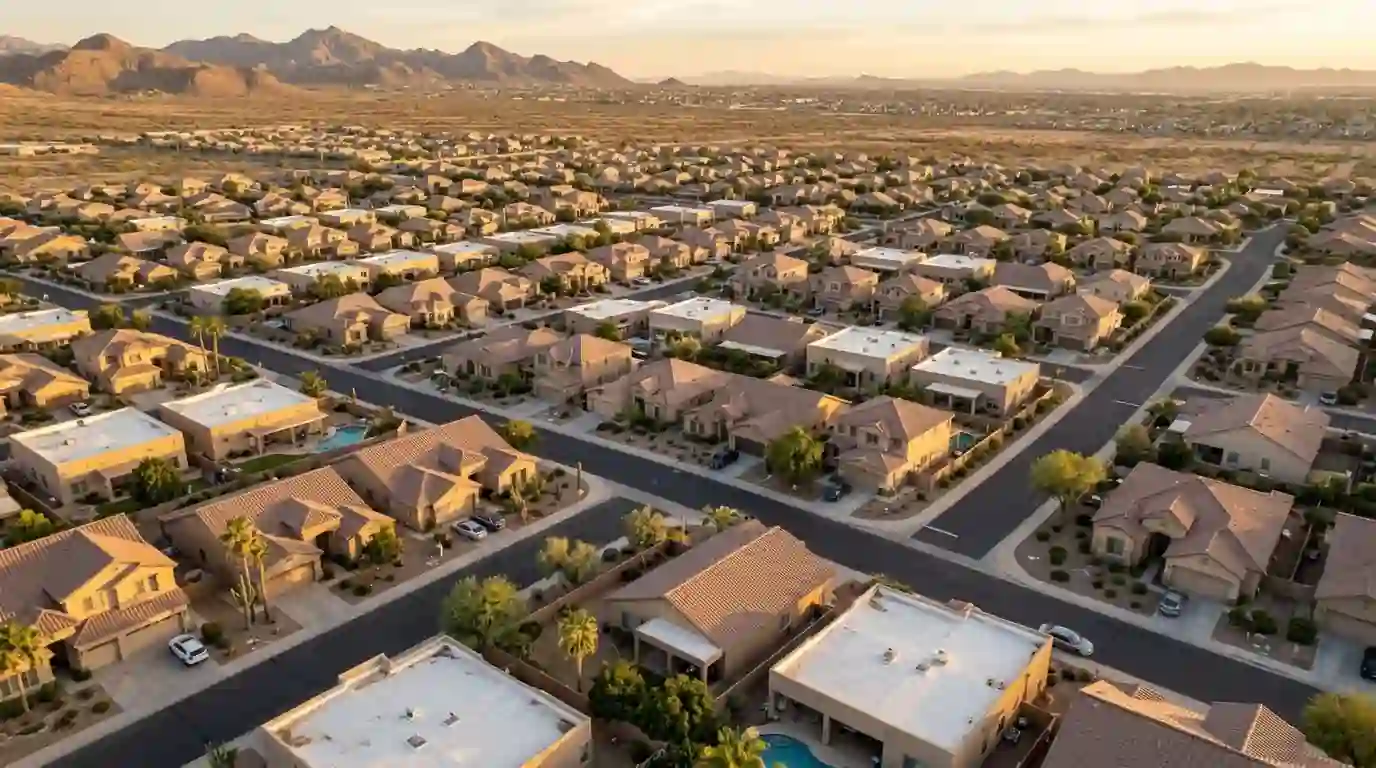
Our crews leave from downtown Phoenix and from Scottsdale, which puts most of Maricopa County and the north end of Pinal County within an easy drive. Type your ZIP to check, or pick your area below.
Built for the desert
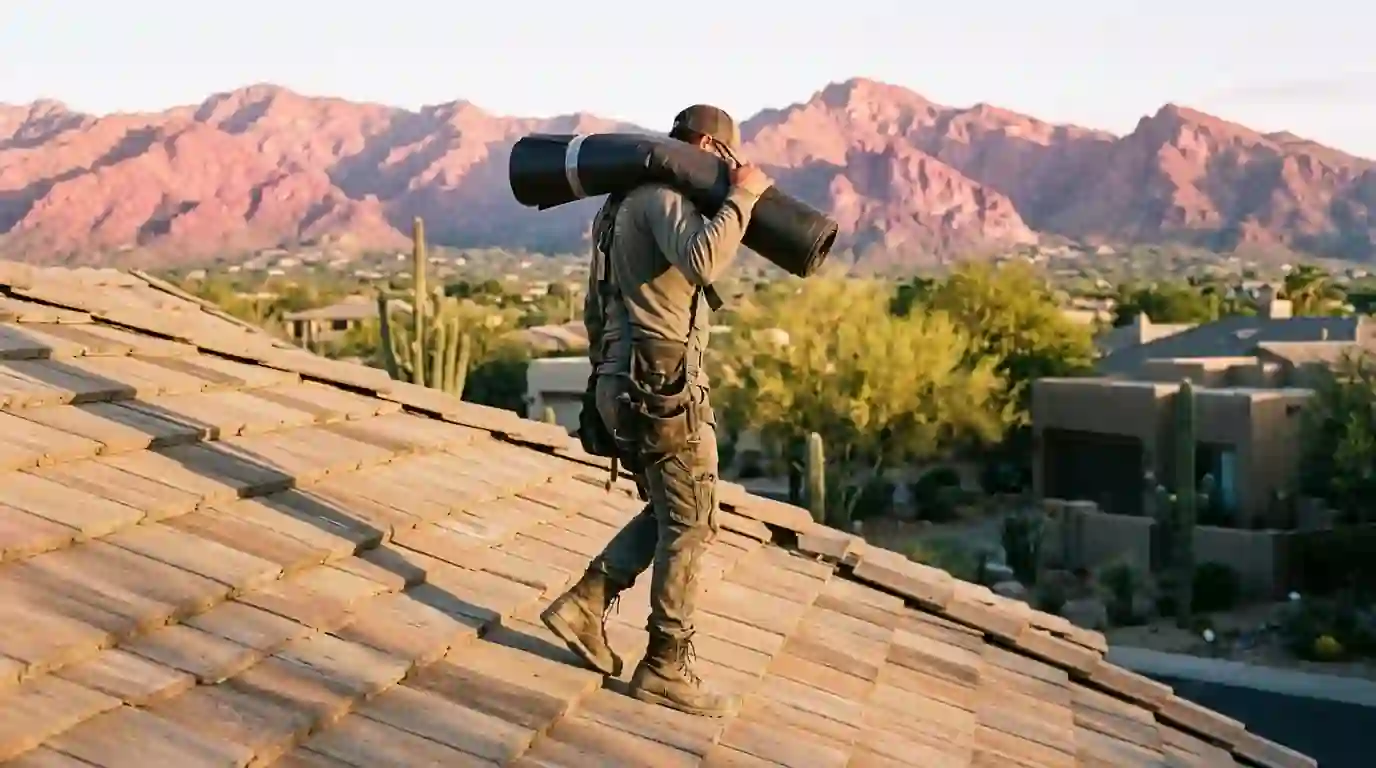
Rain is not the main enemy here. Heat and ultraviolet light are. A roof surface in July can run well past 150 degrees, day after day, and that slowly bakes the oils out of shingles, chalks the coating on a foam roof and turns the felt under a tile roof brittle. Then the monsoon arrives with wind that lifts edges and rain that comes in sideways, and the weak spots show.
That is why so much of our work is about the layers you cannot see from the street: underlayment under tile, coatings over foam, flashing at walls, parapets, scuppers and solar mounts. Calls to Sunset Valleywide Roofing are answered around the clock, and the first visit is always about finding the cause, not just patching the stain.
We install concrete tile from Eagle Roofing and Westlake Royal, shingles from GAF, Owens Corning and CertainTeed, foam coating systems from Gaco and Henry, and stone-coated steel from DECRA, and we repair the products already on your roof whatever brand they are.
Typical costs
These are typical ranges for Valley homes, not quotes. The real number depends on roof size, pitch, access, material and what we find under the surface.
| Job | Typical range | Basis |
|---|---|---|
| Roof Repair | $385 to $2,940 | per repair, most homes |
| Roof Leak Repair | $415 to $1,960 | per leak, most homes |
| Tile Underlayment Replacement | $17,480 to $32,860 | for a typical 1,800 to 2,600 sq ft tile roof |
| Foam Roof Recoating | $1.85 to $3.65 | per sq ft of roof surface |
| Flat Roof Repair | $435 to $2,180 | per repair, most residential roofs |
| Roof Replacement | $12,460 to $38,790 | per typical single-story home |
| Roof Inspection | $185 to $465 | per inspection |
Desert Roof Guide
Written for Valley homeowners by our guide editor, Lamar Baskin.
October 16, 2026
Product data sheets throw around reflectance, emittance and SRI as if everyone knows what they mean. Here is what each number measures and how to use them when choosing a roof.
Read the guide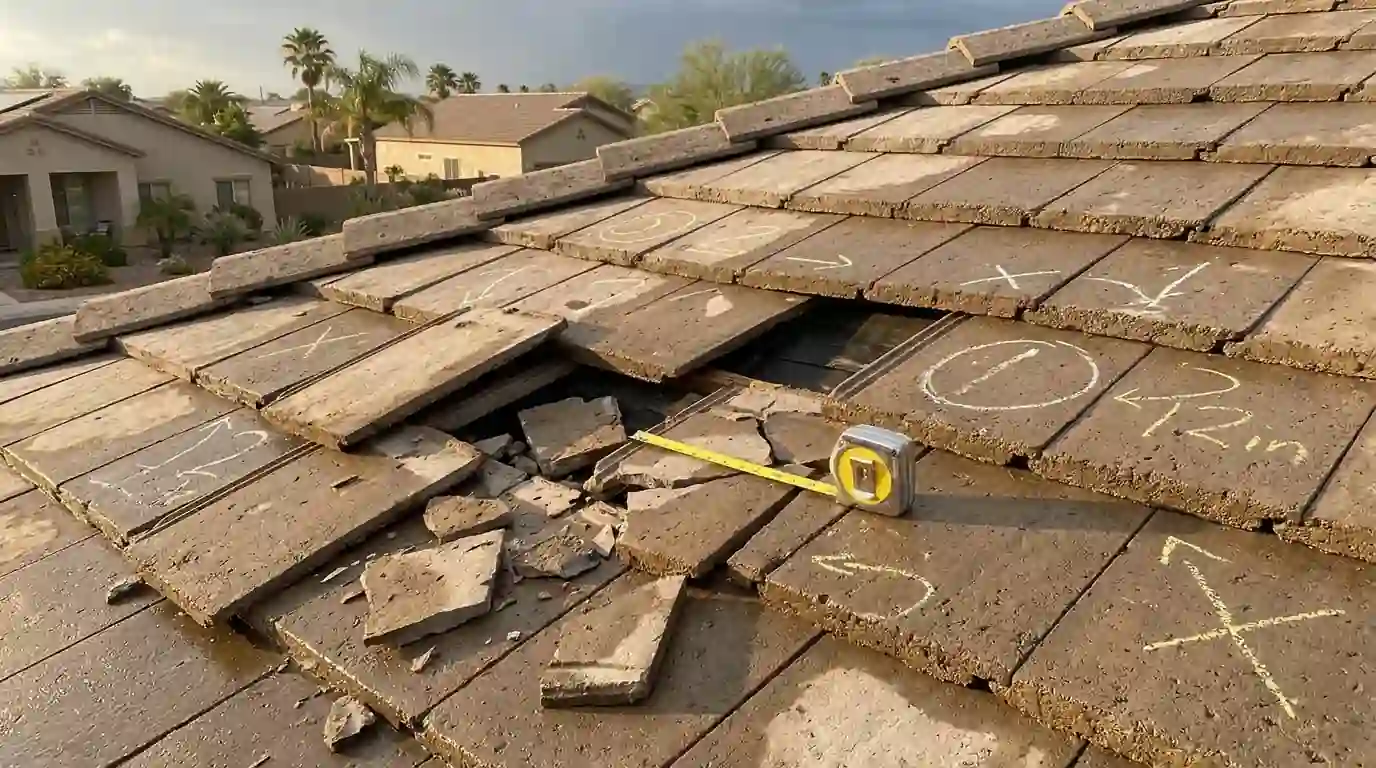
October 13, 2026
Monsoon wind, hail and falling branches can damage a Valley roof in minutes. Here is how a typical homeowner's roof claim moves from the first photo to the finished repair.
Read the guide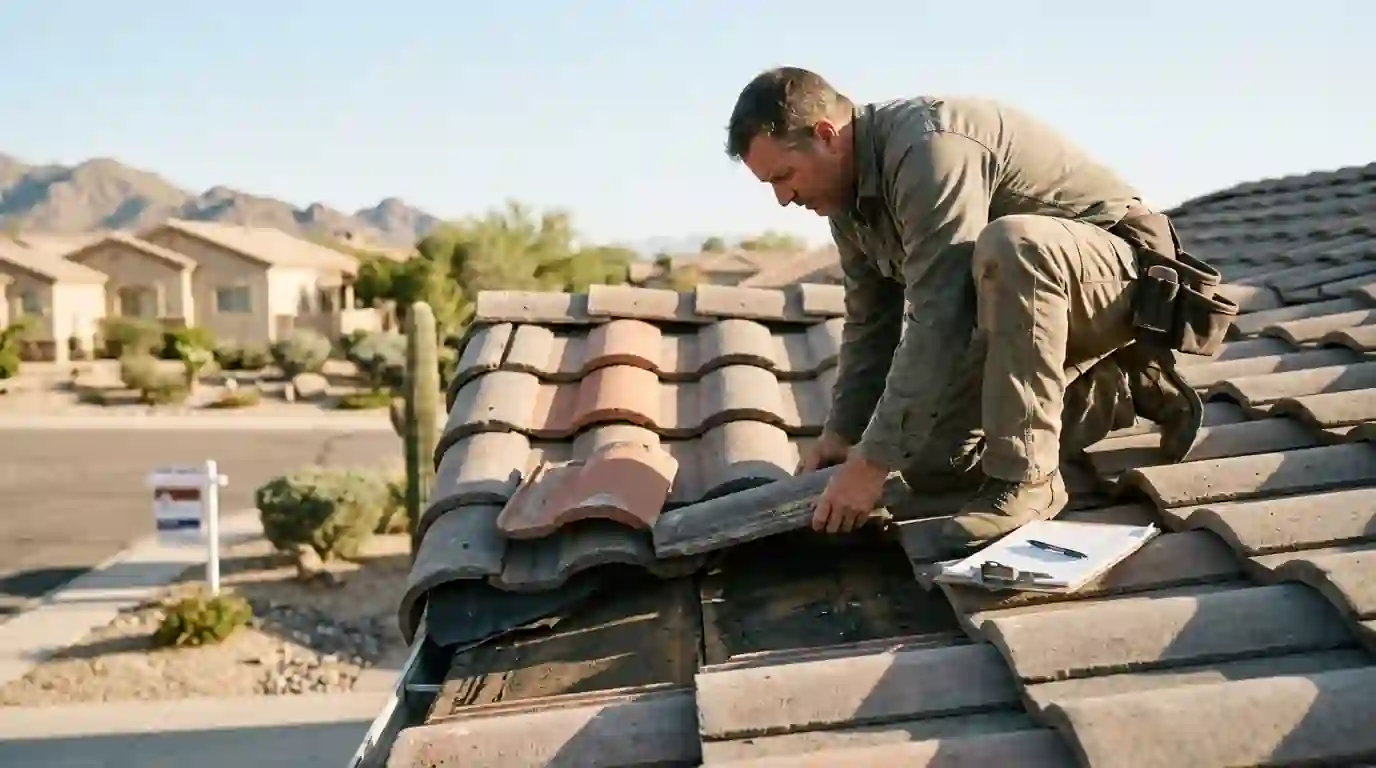
October 6, 2026
A roof certification can tell a Phoenix home buyer how many good years the roof has left. Here is what one includes, where its limits are and how to use it in a deal.
Read the guideYes. Most Valley homes have concrete or clay tile, spray foam, built-up or modified flat roofing, asphalt shingles or metal, and we repair, recoat and replace all of them. Many homes mix two systems, such as a tile main roof with a foam-covered flat section over a patio or addition, and we handle both on the same visit.
The phone is answered around the clock, and storm calls go to the front of the line. When water is coming in we aim to protect the roof the same day or night with a tarp or temporary seal, then schedule the permanent repair once the roof is dry and safe to work on.
Usually. Many concrete tile profiles and colors used on 1980s to 2000s Valley homes are still made or have close matches. When a color has been discontinued, we can pull good tiles from a hidden slope for the visible repair and use the close match where it will not be noticed.
If the foam underneath is still dry and firm, a recoat is almost always the better buy. Replacement makes sense when water has soaked into the foam, when there are widespread soft spots, or when so many coats have built up that the surface no longer drains. We check with a probe and moisture readings before we recommend either.
Not for most jobs. We need access to the yard, a way to reach an outlet if a tool calls for one, and a plan for pets. For leak tracing or attic work we do need someone to let us inside. We call before arriving and send photos of the finished roof when you are away.
Your address, the roof type if you know it, what you are seeing and where, and roughly how old the roof is. Photos from the ground or from inside the house help too. With that we can usually tell you on the call whether it sounds urgent and what the visit will cover.
Reach us