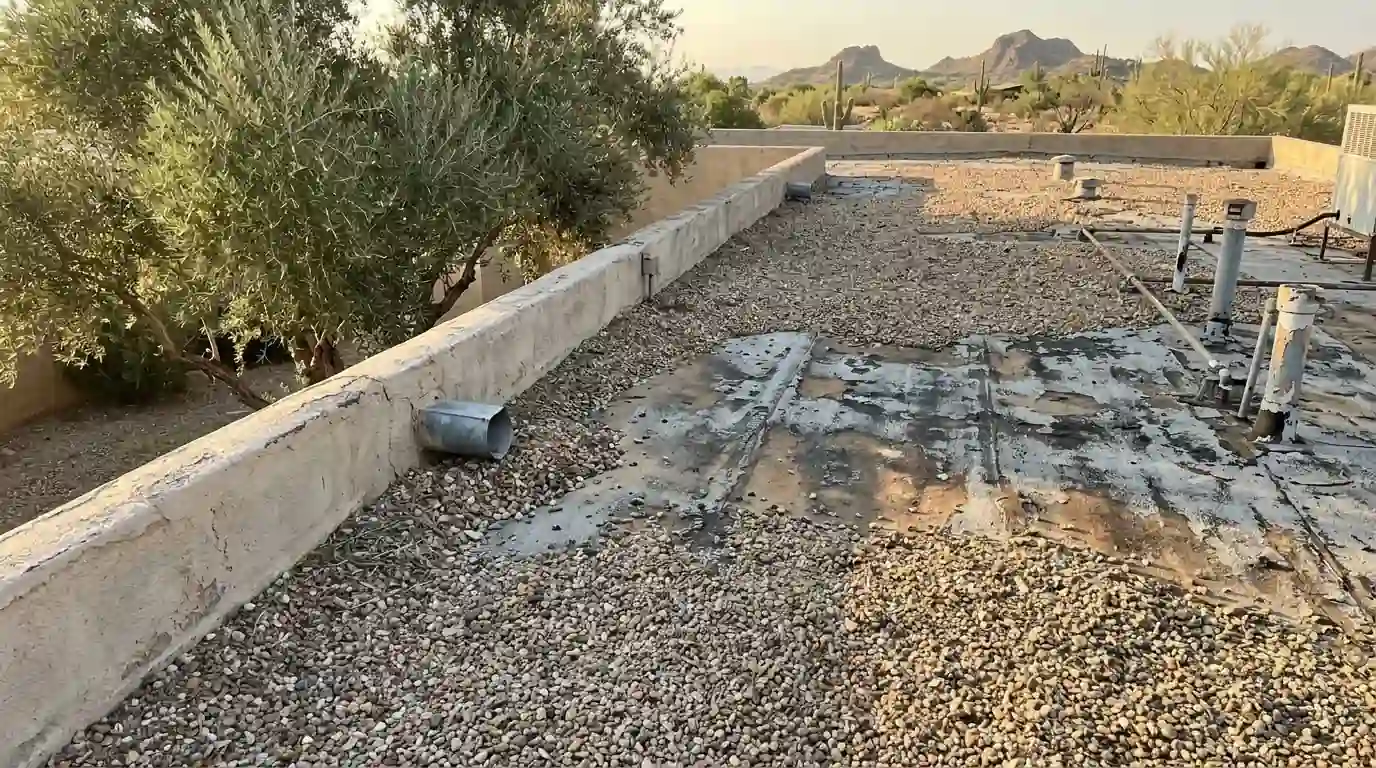
Bare spots with no gravel
Gravel shields the asphalt from UV. Where wind, monsoon runoff or foot traffic has swept it away, the exposed asphalt bakes, dries and cracks quickly.
Roof Repair
Tile Roofing
Flat & Foam Roofing
Shingle & Metal Roofing
Replacement & Inspections
Solar, Vents & Extras
Phoenix neighborhoods
Valley cities
Counties
Flat & Foam Roofing
Plenty of mid-century Phoenix homes and older commercial buildings still sit under tar and gravel. Built-up roofs are tough, but decades of sun dry out the asphalt, crack the plies and wash the gravel into the scuppers. We repair, resurface and rebuild built-up roofs the right way.
Short answer
A built-up roof (BUR) is several layers of roofing felt set in hot asphalt or cold adhesive, topped with gravel or a reflective cap. In Phoenix, these roofs often last 15 to 25 years before the top plies dry and crack. Repairs cut out damaged areas and rebuild the plies, while full replacement tears down to the deck and installs new layers, flashing and a cooler surface.
Materials we install and repair across the Valley
Through the 1950s, 60s and 70s, built-up roofing was the standard flat roof across Phoenix, Tempe and much of the older East and West Valley. Crews mopped hot asphalt between layers of felt, three or four plies deep, and spread gravel on top to protect it from sun. Done well, it was a tough roof with redundant layers, and some are still in service today after one or two rebuilds.
The trouble is age and heat. Asphalt slowly loses its volatile oils in the sun, and on a Valley roof that process runs fast. As the top plies dry, they shrink and crack, gravel loosens, and the layers below start taking the abuse. Many of these roofs have also been patched for decades with mismatched materials, so part of our job is figuring out which repairs to keep and which to undo. Roof cement smeared over cracks, rolled roofing laid on top of gravel, and coatings over wet plies are the usual suspects we find on these older homes.
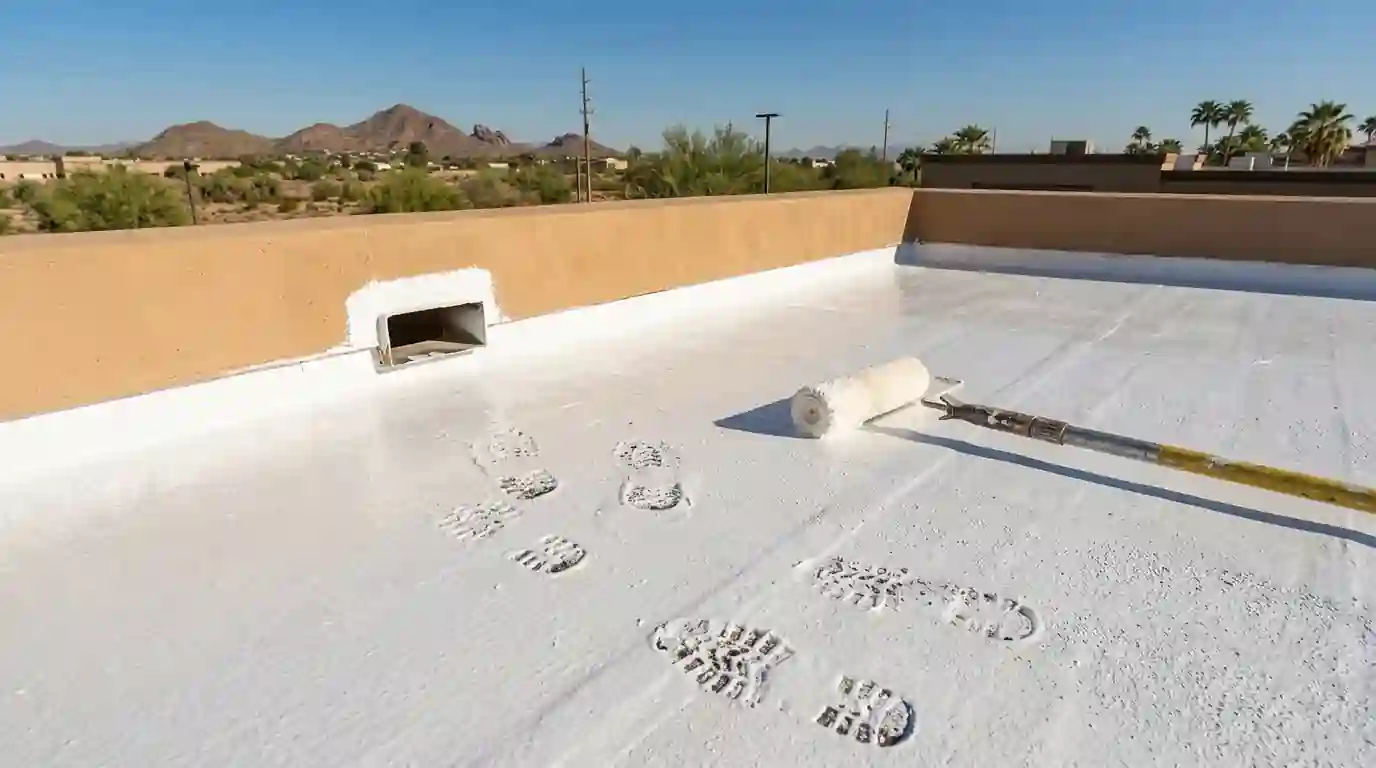
On flat and foam roofs we use coating systems from Gaco, Henry and Tremco, and single-ply membranes such as Carlisle TPO where a membrane is the better fit.
Small problems, like a split at a parapet or a single blister, can be cut out and rebuilt with new felt and asphalt, then re-graveled or coated to match. When the surface is aging but the plies below are still dry and firmly attached, resurfacing is an option: we clean and repair the roof, then apply a new reflective cap or coating to shield it from sun. That can buy years at a fraction of replacement cost.
When core samples show moisture between plies over large areas, or the roof has already been resurfaced several times, a full tear-off is the honest answer. Stacking another layer on a wet roof traps water against the deck. At that point we rebuild the built-up system from the deck up, or talk through switching to a modified bitumen roof or foam, depending on the building.
A new built-up roof starts with a sound deck, then a base sheet fastened down, then multiple plies of fiberglass felt set in asphalt or cold-process adhesive. We build slope where needed with tapered insulation so water reaches the scuppers, and we flash every parapet, curb and penetration with new metal and reinforced plies. Gravel or a reflective coating goes on top.
Traditional dark gravel works, but the roof under it still runs hot. Many Valley owners now choose a white reflective coating or a light-colored granule cap instead, which keeps surface temperatures lower and slows aging of the asphalt. If you are comparing the cost of rebuilding against other systems, our flat roof replacement page lays out the main options side by side.
Drainage needs fixing during any rebuild. Old built-up roofs often have small scuppers clogged by decades of gravel, and their low spots show as darker rings where water has sat. We enlarge or reset scupper boxes and tie in new metal so the new roof sheds water quickly, which matters more during a monsoon downpour than any other detail. Clearing gravel guards and adding a scupper and canale fix where needed is part of that work.
Built-up roofs give plenty of warning before they fail outright. These are the clues we look for on Valley tar and gravel roofs.
Gravel shields the asphalt from UV. Where wind, monsoon runoff or foot traffic has swept it away, the exposed asphalt bakes, dries and cracks quickly.
A crazed pattern like reptile skin means the top layer of asphalt has lost its oils. Water seeps into the cracks and works down into the felt layers.
Raised bubbles form when moisture or air trapped between layers expands in the heat. Once they split, water reaches deeper plies fast.
Gravel washing into drains blocks them, causing water to back up against parapets and overflow into walls during storms.
Base flashing where the roof turns up the parapet often separates first, letting water into the wall cavity and down to the ceiling.
Spongy areas suggest wet insulation or decking. They tend to grow each monsoon season if the source is not found and fixed.
Typical range in the Phoenix area
$6.85 to $11.20
per sq ft for tear-off and new built-up roof
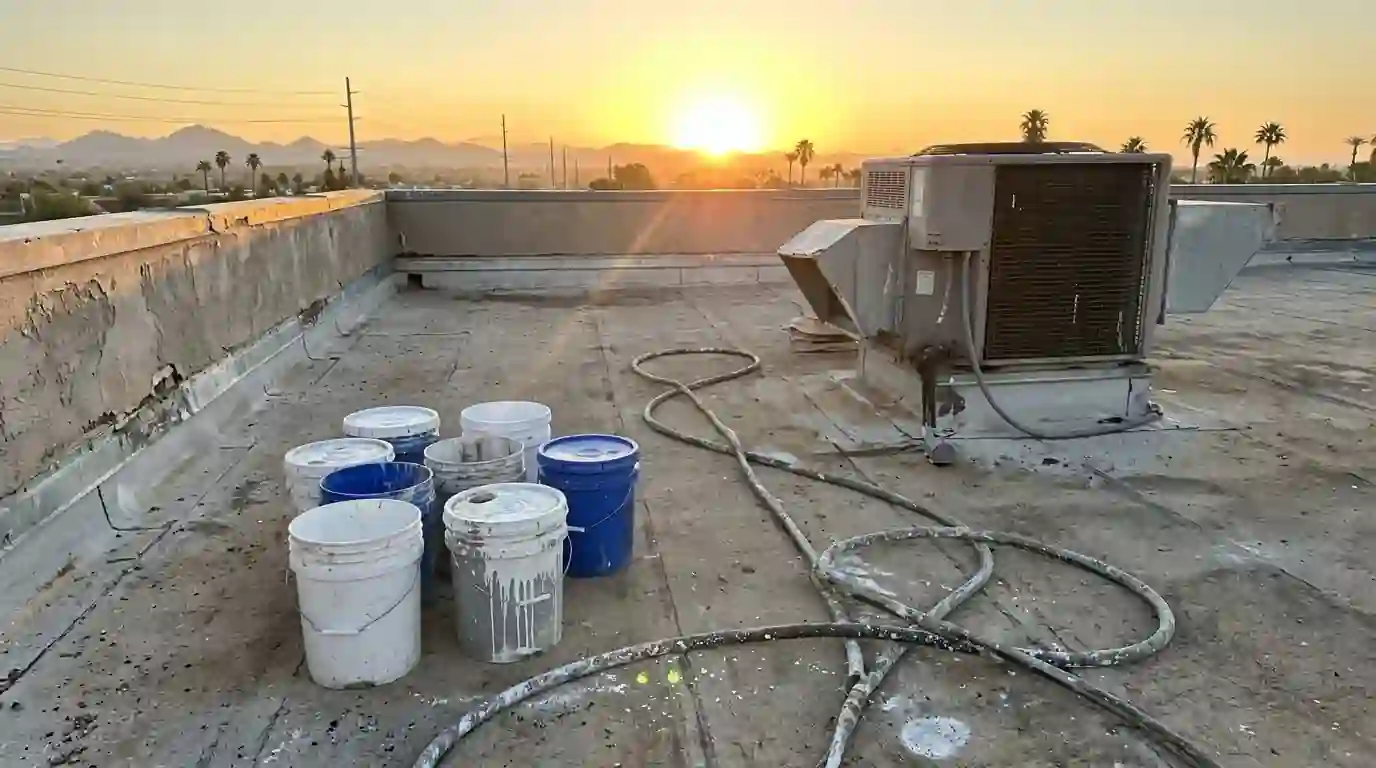
Built-up work varies widely depending on whether you need a targeted repair, a resurfacing or a tear-off and rebuild. Hot asphalt jobs need kettles and extra safety measures, while cold-process systems avoid open heat. These 2026 ranges reflect typical Valley residential and small commercial roofs.
Ranges are typical figures for Valley homes, not a quote. We price your roof after we see it.
Call (602) 878-3594 and tell us the age of the roof, any leaks and whether it has been coated or patched before. We set a time to walk it.
We cut small cores to count plies and check for moisture, inspect parapets and scuppers, and photograph cracks, blisters and bare spots.
You get a written comparison of repair, resurfacing and replacement where each applies, with expected service life for each choice.
We protect walls, landscaping and AC units from asphalt and debris, set up material hoists, and plan work around high heat and storm forecasts.
Damaged areas or the whole roof are stripped, the deck repaired, and new base and ply sheets installed with fresh flashing and slope corrections.
Gravel or reflective coating goes on, drains are tested with water, debris and loose gravel are removed, and you get photos of each stage.
Most of our built-up roofing calls come from these parts of the Valley. We also cover every other area on our service area list, from Anthem and Cave Creek down to Casa Grande.
Many built-up roofs here last around 15 to 25 years, depending on the number of plies, the surface protection and maintenance. Roofs that keep their gravel or get a reflective coating last longer. Ones left bare and cracked age much faster in Valley sun.
Often, yes, if the plies underneath are dry and firmly stuck together. We remove loose gravel, repair cracks and blisters, then apply a primer and reflective coating. If core samples show widespread moisture, coating would trap it, and replacement is the better choice.
Gravel loosens as the asphalt holding it dries out, then monsoon runoff, wind and foot traffic move it toward the edges and drains. Bare areas age quickly. Re-embedding gravel in fresh asphalt or switching to a coated surface solves the problem and keeps scuppers from clogging.
Hot-mopped asphalt is still used, especially on commercial buildings, but many residential built-up jobs now use cold-process adhesives or switch to modified bitumen. We pick the method that suits the building, the access and how close the neighbors are.
Foam is a common upgrade for older built-up roofs, especially on homes with parapets and ponding, since it adds insulation and slope. In some cases foam can go over the existing roof after prep. We compare costs and life spans for your specific building.
Modified bitumen roofing for Phoenix flat roofs: tough layered membrane, reflective cap and no-flame options. Call (602) 878-3594 any day.
Learn moreReplacing a worn flat roof in Phoenix? We compare foam, TPO, mod bit and built-up for your home, fix slope and drains, then rebuild. Call (602) 878-3594.
Learn moreFlat roof leaking in Phoenix? We find the source on foam, built-up, mod bit or TPO roofs and fix ponding, seams and drains. Call (602) 878-3594 24/7.
Learn moreAcrylic elastomeric roof coating for Phoenix flat, foam and metal roofs: bright white, flexible in heat, fairly priced. Call (602) 878-3594 any time.
Learn moreCall us any hour. A real person answers, asks a few questions about your roof and sets up a visit.