Historic and Spanish revival homes
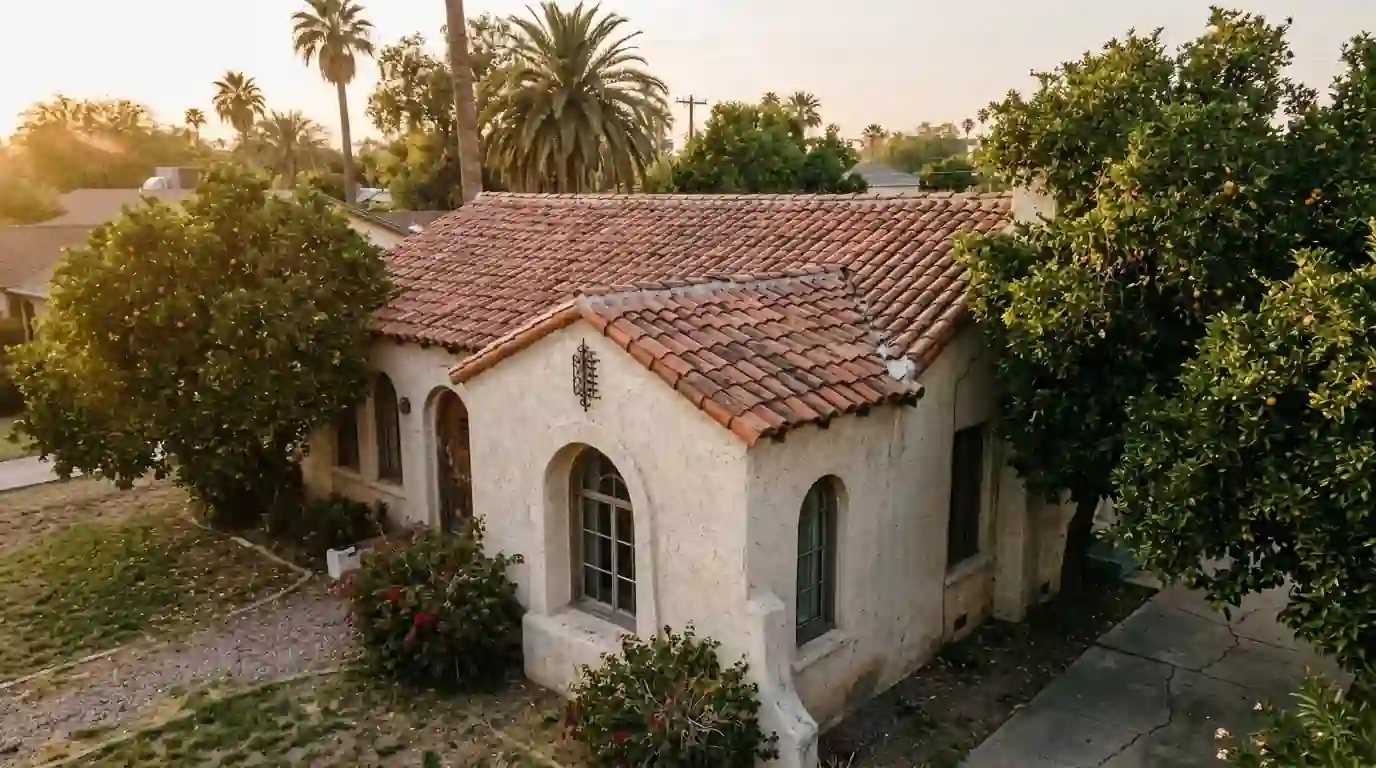
Older neighborhoods around central Phoenix and Arcadia have clay roofs that define the house. Keeping clay preserves character and often satisfies historic review.
Roof Repair
Tile Roofing
Flat & Foam Roofing
Shingle & Metal Roofing
Replacement & Inspections
Solar, Vents & Extras
Phoenix neighborhoods
Valley cities
Counties
Tile Roofing
Clay tile is the original Southwest roof, and it rewards careful hands. The fired tile can outlast the house, but it is brittle underfoot and unforgiving of shortcuts. We install, relay and repair clay tile roofs across the Valley with the patience the material needs.
Short answer
Clay tile roofing in Phoenix means kiln-fired tile, often in two-piece barrel or one-piece S profiles, laid over a heavy underlayment with battens and mortar or mechanical fasteners. The tile itself can last a century and holds color permanently, but it breaks easily under foot. Most clay roofs need underlayment work long before the tile wears out, so we reuse sound tile wherever we can.
Materials we install and repair across the Valley
Both materials handle Valley sun well, but they behave differently. Clay is fired, so it is denser, lighter per piece in many profiles, and permanently colored. It also chips and cracks more easily under a careless boot, and it typically costs well above concrete. Concrete tile is heavier, tougher underfoot and much cheaper, but its surface color can fade and its profile edges are thicker.
For most tract homes, concrete makes more financial sense. Clay earns its price on custom builds, historic houses and homes where the roof is a big part of the architecture. If you are weighing both, our concrete tile installation page explains that option in the same level of detail, so you can compare like for like. We are happy to bring a sample of each to the house so you can see them side by side in your own light.
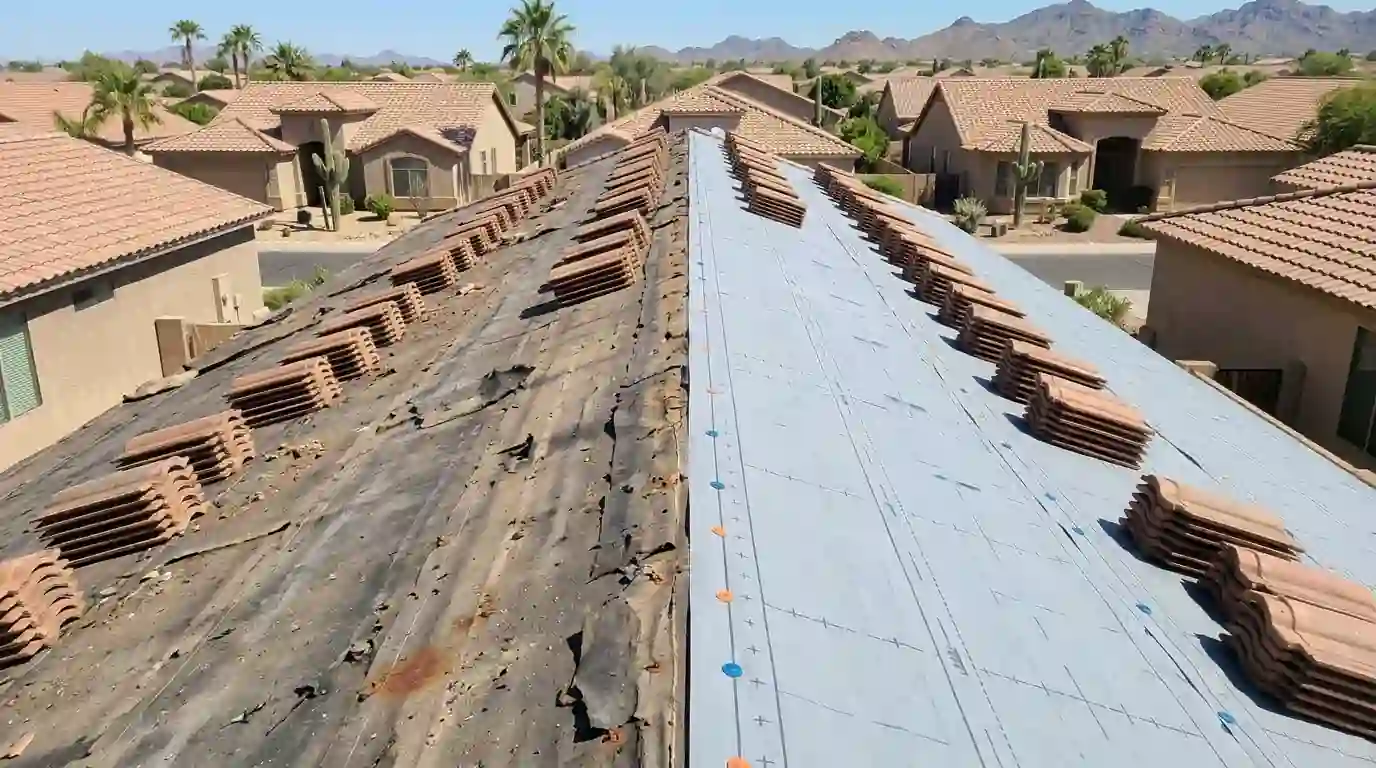
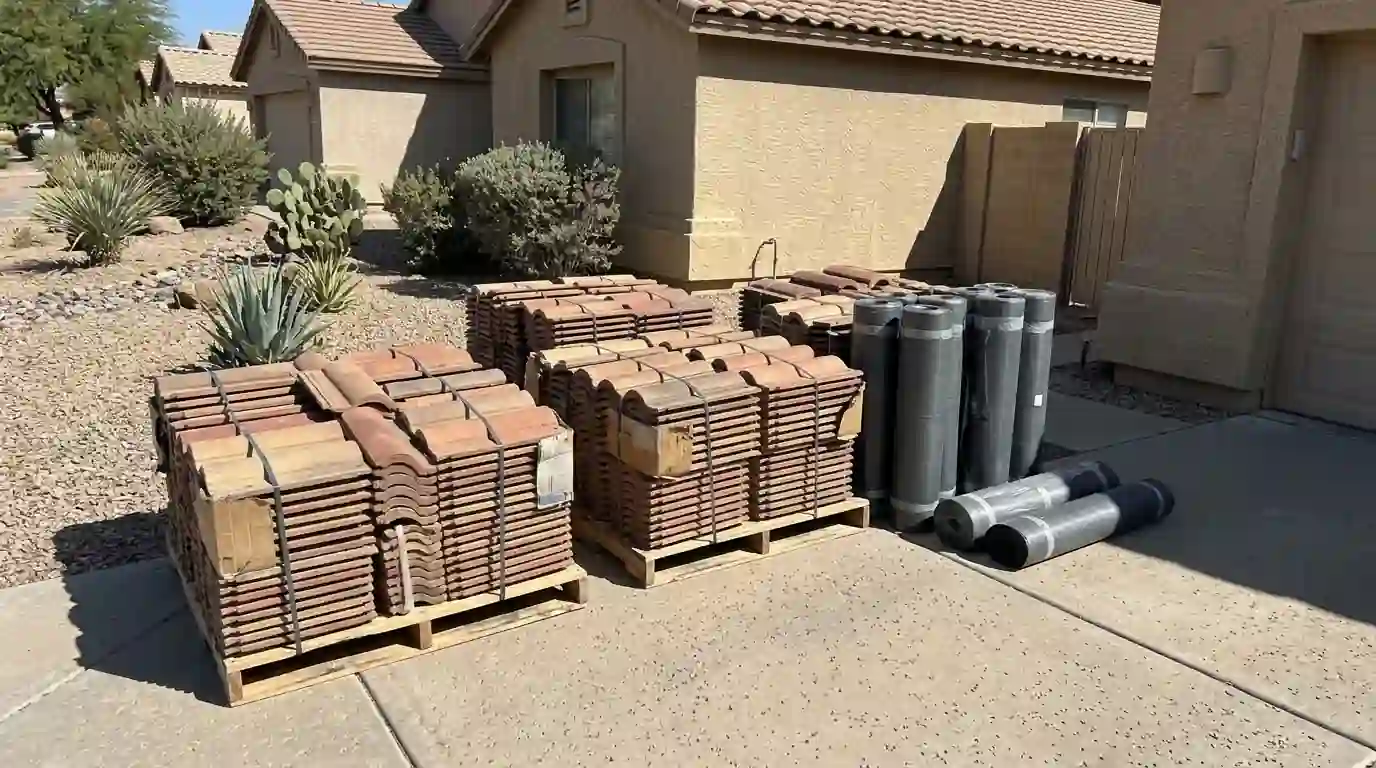
For tile work we source concrete tile from Eagle Roofing and Westlake Royal when a profile is still made, and we lay synthetic or two-ply underlayment from makers such as Polyglass under it.
Two-piece barrel roofs use a pan tile laid concave side up with a cover tile over each joint. They are set with mortar, wire ties or clips depending on the system and pitch, and the coverage changes with how much the tiles overlap. One-piece S tile combines pan and cover in a single piece and installs faster. It costs less and suits simpler roofs, though it lacks some of the deep shadow and irregular texture that make barrel roofs so recognizable on older Valley homes.
On barrel roofs, we stagger the cover tiles carefully, keep exposure even along every course, and use bird stops or mortar at the eave so the open ends do not become nests. Mortar is mixed and colored to blend with the tile and kept off the waterway so it does not block drainage. Ridges get the same attention, because a sloppy ridge is the first thing anyone notices on a clay roof.
Under all of it, we install a heavy two-ply underlayment or a high-temperature synthetic. Clay tile is a long-term roof, and the base needs to keep pace. We also check ventilation at the same time, since attic heat shortens the life of every layer above it. On homes with little or no soffit venting, we often add low-profile tile vents near the ridge so hot air has somewhere to go in August.
On an older clay roof, every tile we break may be hard to replace. Some handmade or regional tiles are no longer produced at all. When we relay a clay roof, we remove tiles by hand, cushion the stacks, and inventory breakage as we go. Replacement pieces come from reclaimed stock where possible, and we tuck new tiles into hidden areas. We keep a written count so you know exactly how many originals went back on.
Clay roofs also suffer from well-meant repairs: tiles set in thick black mastic, gaps filled with spray foam, or pans swapped for concrete pieces of a different curve. We undo those where we can. Each of those shortcuts traps water or blocks drainage over time. For isolated cracked pieces rather than a full job, our cracked tile swap service covers single-tile matching, and the same care applies to clay.
Clay is not for every roof or every budget. These are the projects where we most often recommend it, or recommend keeping the clay you already have.
Older neighborhoods around central Phoenix and Arcadia have clay roofs that define the house. Keeping clay preserves character and often satisfies historic review.
Two-piece barrel clay has a depth and shadow line that concrete imitations rarely match, especially on Santa Barbara and mission style designs.
Clay color is fired through the tile. It weathers into a patina rather than fading, which suits owners who dislike chalky, sun-washed roofs.
If your clay tiles are sound but the underlayment is failing, a careful relay keeps irreplaceable tile on the house.
Homeowners chasing an old-world look sometimes blend new and reclaimed clay. We lay out mixes so the color variation looks natural, not patchy.
Typical range in the Phoenix area
$18.70 to $31.40
per sq ft for new clay tile installed
Clay is a premium material and the labor is slower, so costs run higher than concrete. Relaying existing clay is much cheaper than buying new tile. These 2026 ranges are typical for Valley homes, before any structural or historic review work.
Ranges are typical figures for Valley homes, not a quote. We price your roof after we see it.
Call (602) 878-3594 and tell us whether this is a new clay roof, a relay of existing clay, or repairs. Photos of the tile and ridge help us plan.
We inspect from ladders and stepping points where possible, sample the underlayment, note tile type and breakage, and check attic framing and ventilation.
For new roofs we bring samples. For relays we estimate breakage and line up matching reclaimed or new tile before we start removing anything.
Tiles are removed by hand and stacked on padding. Old felt, battens and flashing come off, deck repairs are made, and new underlayment goes down.
Pan and cover tiles are set to even exposure with the right fastening, bird stops close the eaves, and ridges and hips are finished to blend.
We inspect for chipped tiles, clean mortar smears, haul debris and give you a photo record of the underlayment, flashing and finished roof.
Most of our clay tile roofing calls come from these parts of the Valley. We also cover every other area on our service area list, from Anthem and Cave Creek down to Casa Grande.
Clay and concrete perform similarly for heat, since both create an air gap above the deck that slows heat transfer. Light-colored tile of either type reflects more sun. On barrel profiles the deep curve adds airflow under the tile, which helps a little on hot afternoons.
Sometimes exactly, sometimes only closely. Many old tiles were regional or handmade and are no longer produced. We look for reclaimed stock first, then move original tiles to visible areas and place the closest new tile on hidden slopes so the street view stays authentic.
Kiln firing costs more than casting concrete, and many clay profiles are imported. Installation is slower too, since clay breaks more easily and barrel roofs often use mortar on every piece. You are paying for a tile that keeps its color and can outlast several underlayments.
Only carefully, and only in the right spots. Our crews step where tiles are supported, use pads and roof ladders on steep or fragile sections, and avoid walking cover tiles. Even then, older clay will lose a few pieces, which is why we line up spares before starting.
Clay handles normal monsoon hail reasonably well, but large hailstones can crack it, just as they can crack concrete. Thicker tiles and proper bedding help. The bigger concern is usually the underlayment beneath, which is why we pair clay with a heavy two-ply base.
New concrete tile roof for your Phoenix home: two-ply underlayment, raised battens, bird stops and HOA-approved colors. Call (602) 878-3594 any time.
Learn moreTiles fine but the felt under them is shot? We lift and relay Phoenix tile roofs with new two-ply or synthetic underlayment. Call (602) 878-3594 any time.
Learn moreCracked or missing roof tiles in Phoenix? We match the profile and color, replace single tiles and check the felt below. Call (602) 878-3594 day or night.
Learn morePhoenix roof inspections after monsoon storms, before buying or before solar: photos, attic checks and a plain written report. Call (602) 878-3594.
Learn moreCall us any hour. A real person answers, asks a few questions about your roof and sets up a visit.