Ponding water after rain
Water that stands for more than a couple of days after a monsoon storm stresses coatings and seams and often points to clogged drains or sagging decks.
Roof Repair
Tile Roofing
Flat & Foam Roofing
Shingle & Metal Roofing
Replacement & Inspections
Solar, Vents & Extras
Phoenix neighborhoods
Valley cities
Counties
Replacement & Inspections
Commercial roofs in the Valley take the full force of the sun across a wide, flat surface, and every rooftop unit, curb and drain is a place for water to get in. We repair, recoat and replace commercial roofs for offices, retail, warehouses and shops while keeping your business open.
Short answer
Most commercial buildings in Phoenix have low-slope roofs covered with spray foam, TPO, modified bitumen, built-up roofing or a coating system. The right choice depends on the existing roof, the building's use and the budget. Reflective surfaces cut heat gain, and rooftop unit curbs, drains and parapets need careful detailing. Recoating a sound roof often costs far less than tearing it off and replacing it.
Materials we install and repair across the Valley
Spray polyurethane foam is common across the Valley for good reason. It goes on as a liquid, expands into one continuous layer with no seams that insulates and sheds water, and it can be built up to improve drainage on flat roofs. It needs a protective coating renewed every 5 to 10 years, depending on the coating. TPO is a white single-ply membrane that reflects heat well, with heat-welded seams. It suits buildings where the deck is sound and drainage is already reasonable.
Modified bitumen and built-up roofs are older systems we still see on many buildings and still install in some cases. They are durable but heavier and hotter unless coated with a reflective finish. For many commercial roofs that are aging but not failing, a silicone or acrylic coating over the existing surface restores reflectivity and seals small cracks at much lower cost. Our pages on TPO membrane roofs and silicone coatings go deeper.
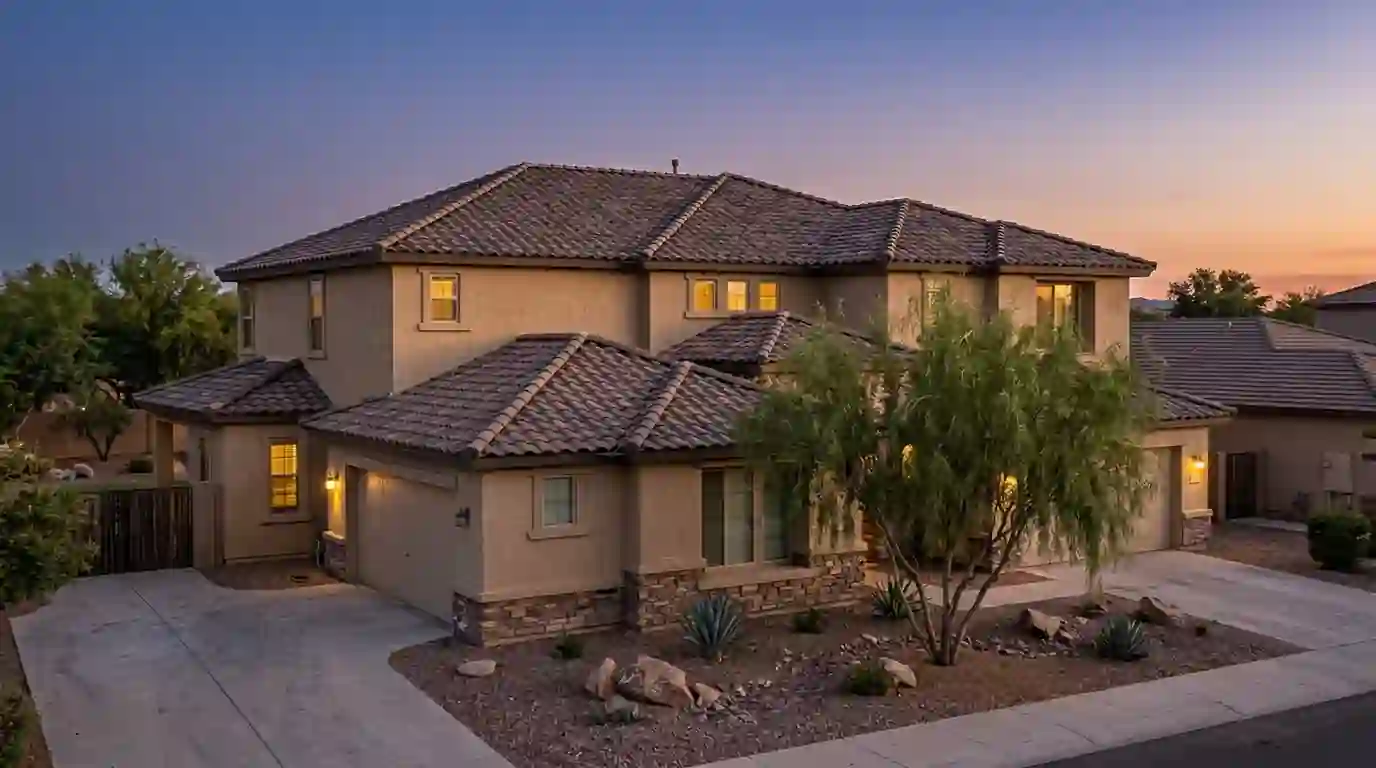
On full replacements we price the roof in more than one material when it helps, for example Eagle or Westlake Royal tile against GAF or CertainTeed shingles, so you can compare.
On most commercial roofs we visit, the field of the roof is in better shape than the details. HVAC curbs, exhaust fans, plumbing vents, skylights and conduit penetrations each need flashing that moves with the roof through heat cycles. Condensate lines that drain onto the roof surface instead of into a drain leave a constant wet spot that wears through coatings. We reflash curbs, reroute condensate and check every penetration on each visit.
Drains and scuppers matter just as much. A single clogged drain on a large flat roof can put inches of water on the surface during a monsoon, and that weight stresses the deck. We clear drains, check strainers and look at whether the roof slopes toward them. Parapets with failed coping or cracked stucco let water into the wall and onto the roof, and parapet repair is often part of a commercial roof project.
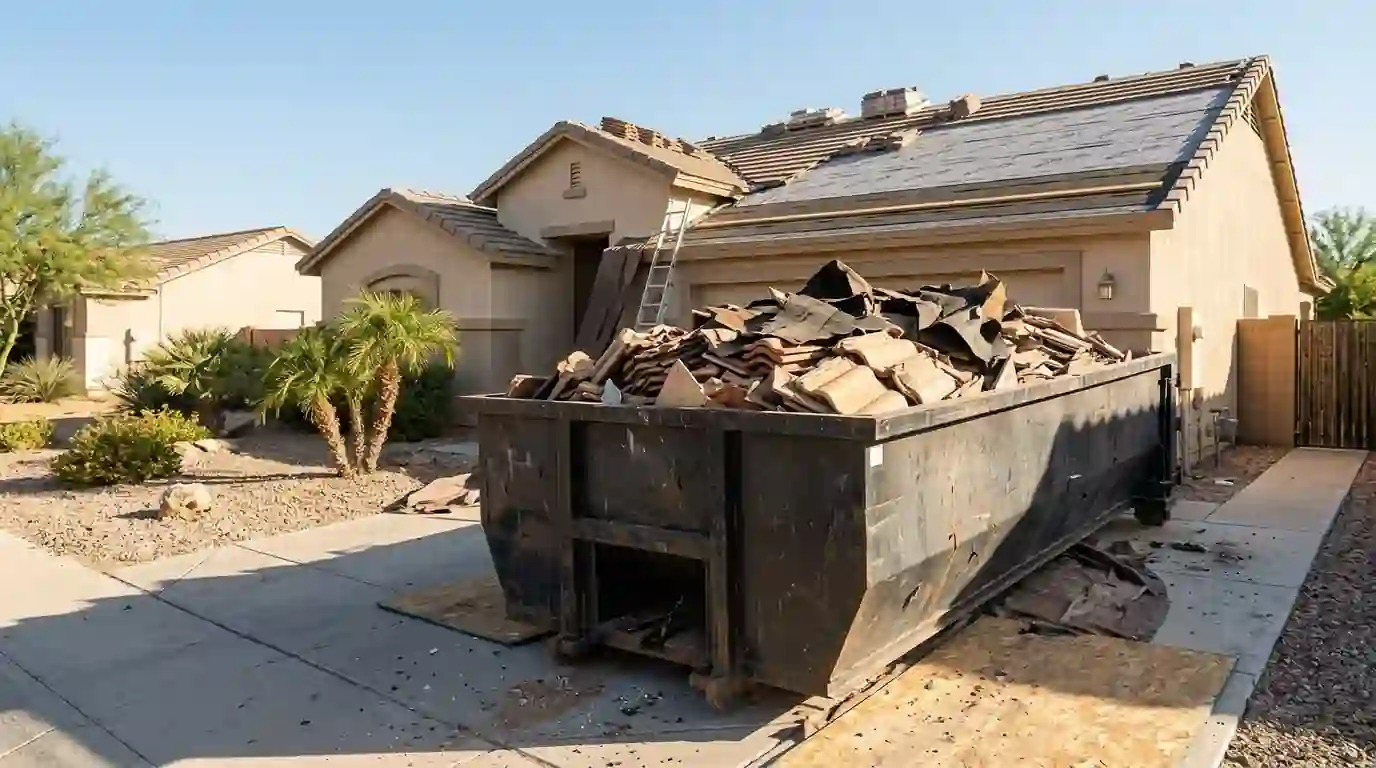
Most commercial roof work happens while the building stays open. We plan staging, material deliveries and dumpster placement around your parking, loading docks and customer entrances. In summer we start at dawn, which also keeps noise and smells away from peak business hours. For foam and coating work we manage overspray carefully, watch the wind and protect vehicles, rooftop units and neighboring buildings.
We coordinate with property managers, tenants and HVAC contractors so rooftop units are shut down or protected when needed. For larger buildings we phase the work section by section, keeping most of the roof dry and serviceable. Leaks during business hours get priority, and we answer 24/7 for emergencies. We work across the Valley, from office parks in Tempe to warehouses in the West Valley.
Owners and managers also get a clear paper trail. Each phase closes with photos of the finished section, notes on any deck or insulation we replaced and the product data for what went down. That record matters when a tenant asks about a leak, when a lender reviews the building or when the next manager inherits the property. It also sets up a sensible maintenance schedule, so the new roof or coating is checked after each monsoon season rather than forgotten until it leaks.
Commercial roof problems usually show up as a mix of slow leaks and visible wear. These are the ones we see most around the Valley.
Water that stands for more than a couple of days after a monsoon storm stresses coatings and seams and often points to clogged drains or sagging decks.
Drips under HVAC units, exhaust fans or curbs usually trace to failed flashing, cracked curb seals or condensate lines dumping water on the roof.
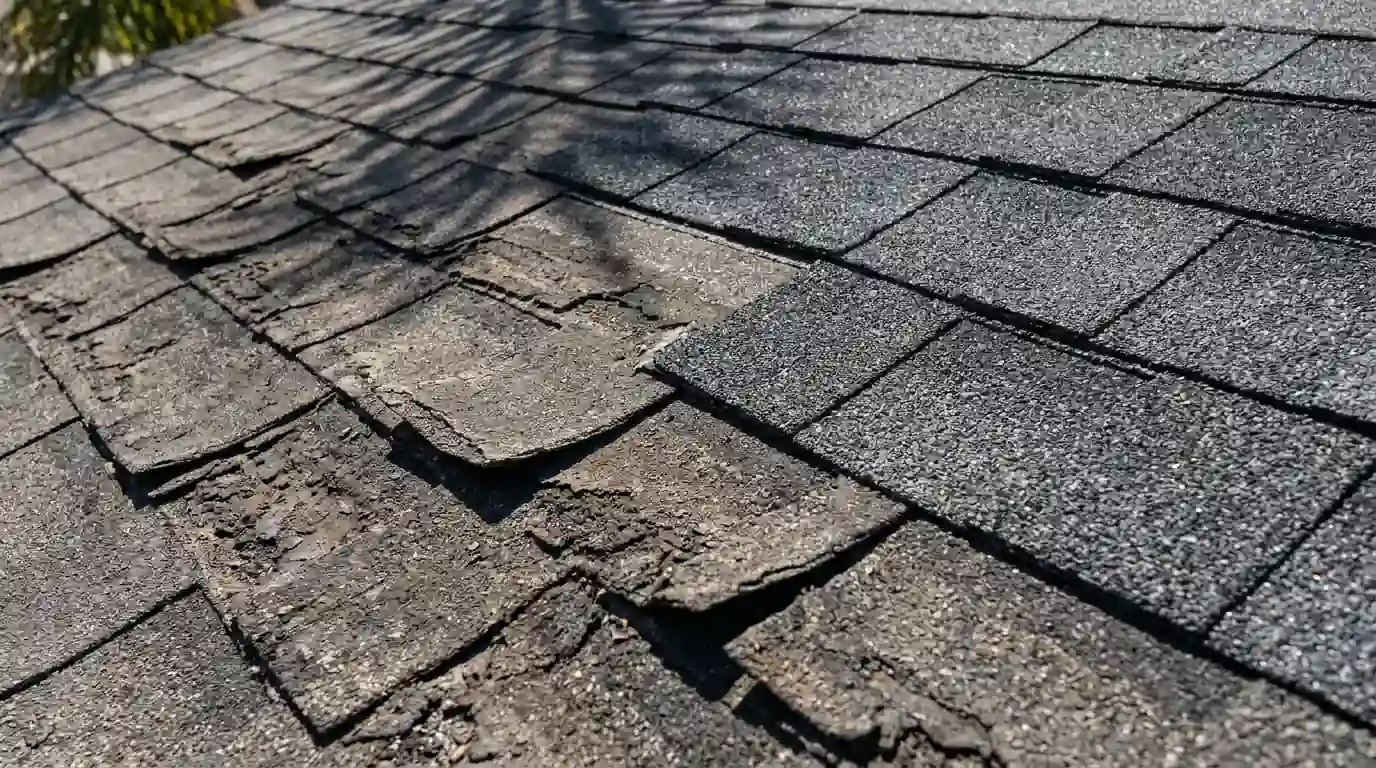
Bubbles, cracks or worn spots on foam or coated roofs let UV and water reach the material underneath and speed up deterioration.
TPO and modified bitumen seams that have opened or lifted at the edges let water travel under the membrane far from the visible entry point.
A roof that has lost its reflective surface absorbs far more heat, pushing up cooling costs in large spaces through the long summer.
Cracked stucco, loose coping caps and failed counterflashing on parapet walls let water into wall cavities and down onto the roof below.
Typical range in the Phoenix area
$2.85 to $11.65
per sq ft of roof
Commercial roof pricing is per square foot, and the spread is wide because recoating a sound roof costs far less than tearing off and replacing one. The low end of the range covers coating restorations, while the high end covers full tear-off and new foam or TPO systems.
Ranges are typical figures for Valley homes, not a quote. We price your roof after we see it.
Call (602) 878-3594 at any hour. Tell us the building type, roof size and current problems, and we schedule a roof survey.
We walk the roof, check details and drains, take core samples or moisture readings where needed and photograph problem areas.
You get a written proposal comparing repair, recoat and replacement options, with pricing, scope notes and expected service life for each one.
We set schedules, staging and phasing around your business hours, tenants, deliveries and rooftop equipment so disruption to daily operations stays minimal.
Crews complete the work in planned phases, with daily cleanup and the building kept dry at the end of each workday.
We walk the finished roof with your team, hand over documents and photos, register manufacturer warranties and set up maintenance if wanted.
Most of our commercial roofing calls come from these parts of the Valley. We also cover every other area on our service area list, from Anthem and Cave Creek down to Casa Grande.
The foam itself can last decades when its coating is maintained. The coating is what wears, and it typically needs renewal every 5 to 10 years depending on the product and thickness. Regular inspections and recoating on schedule are what keep a foam roof performing well through Valley summers.
Often, yes. If the existing roof is mostly dry and sound, cleaning it, repairing damaged areas and applying a silicone or acrylic coating can restore reflectivity and add years of service. We take moisture readings or core samples first, because coating over wet insulation traps the problem.
In most cases, yes. We plan staging, deliveries and work hours around your operations, start early in summer and phase larger roofs section by section. Noise, smells and parking impacts are discussed ahead of time with you and your tenants so nobody is caught off guard.
Yes. Many projects need units disconnected, raised or protected while we work around their curbs. We coordinate with your HVAC company so equipment is handled correctly, then reflash the curbs and penetrations properly before the units go back into service.
It depends on the deck, drainage and budget. Spray foam suits many warehouses because it insulates, adds slope and seals seams. TPO works well on sound decks with good drainage. Silicone coatings can restore older roofs at lower cost. We compare options after surveying the roof.
TPO roofing for Phoenix commercial and flat homes: white single-ply membrane, hot-air welded seams, cooler in summer. Call (602) 878-3594 any time.
Learn moreSpray foam roofing for flat and low-slope Phoenix homes: one continuous insulating layer sloped to drain, with a UV top coat. Call (602) 878-3594 24/7.
Learn moreSilicone roof coating for Phoenix flat roofs that pond or bake: holds up to standing water and UV over foam, TPO and metal. Call (602) 878-3594 any hour.
Learn moreFlat roof leaking in Phoenix? We find the source on foam, built-up, mod bit or TPO roofs and fix ponding, seams and drains. Call (602) 878-3594 24/7.
Learn moreCall us any hour. A real person answers, asks a few questions about your roof and sets up a visit.