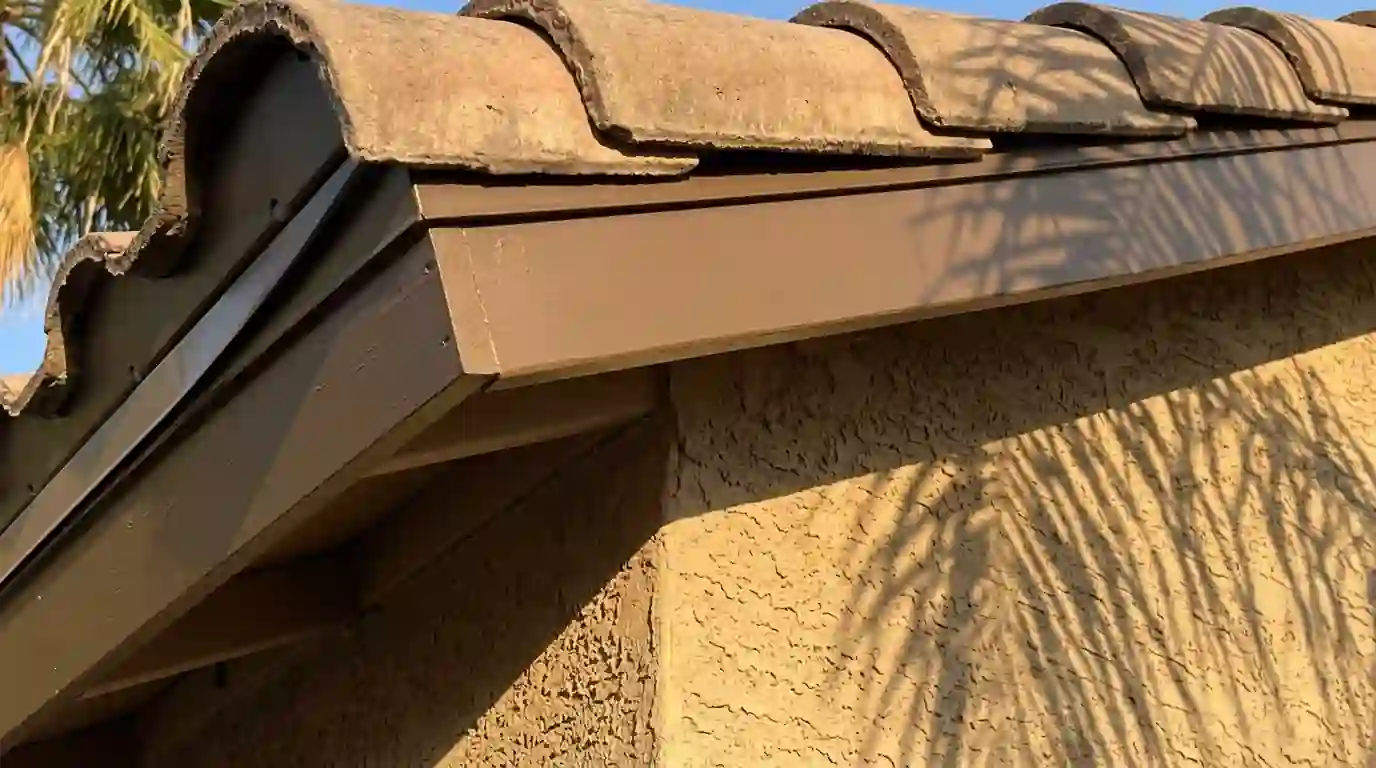
Peeling paint on fascia
Paint that flakes off in sheets along the roof edge usually means moisture is getting into the wood from behind or the board is splitting in the sun.
Roof Repair
Tile Roofing
Flat & Foam Roofing
Shingle & Metal Roofing
Replacement & Inspections
Solar, Vents & Extras
Phoenix neighborhoods
Valley cities
Counties
Roof Repair
The roof edge takes a beating in the Valley. Fascia boards split and peel in the sun, soffits sag where roof leaks have soaked them, and birds find every gap to nest in. We replace damaged wood, fix the roof leak that caused it and seal the edge so it stays tight.
Short answer
Fascia is the trim board along the roof edge; soffit is the underside panel between the wall and the eave. In Phoenix, sun splits and cups wood fascia, roof leaks rot it from behind, and pigeons and bees move into gaps in soffits. Repair means finding the cause, replacing damaged boards with primed wood or fiber cement, and sealing and painting. Most repairs cost $395 to $2,240 depending on length and height.
Materials we install and repair across the Valley
Wood fascia faces the sun for hours a day, and Phoenix sun is relentless. UV breaks down paint, and once the paint goes, the wood dries out, cracks along the grain and cups. South and west-facing edges fail first. Then a monsoon storm comes and rain soaks into those cracks, and the wood swells and shrinks again. After a few cycles, boards split at the nails and pull away from the rafter tails.
Water from the roof is the other cause. On tile roofs, the underlayment should lap over a drip edge so water drops into the gutter or onto the ground. If the felt is short, torn or brittle at the eave, water runs behind the fascia and into the rafter tails. On flat roofs, water that overflows a parapet or a blocked scupper can rot fascia below it. Replacing boards without fixing that is how rot comes back in a few years.
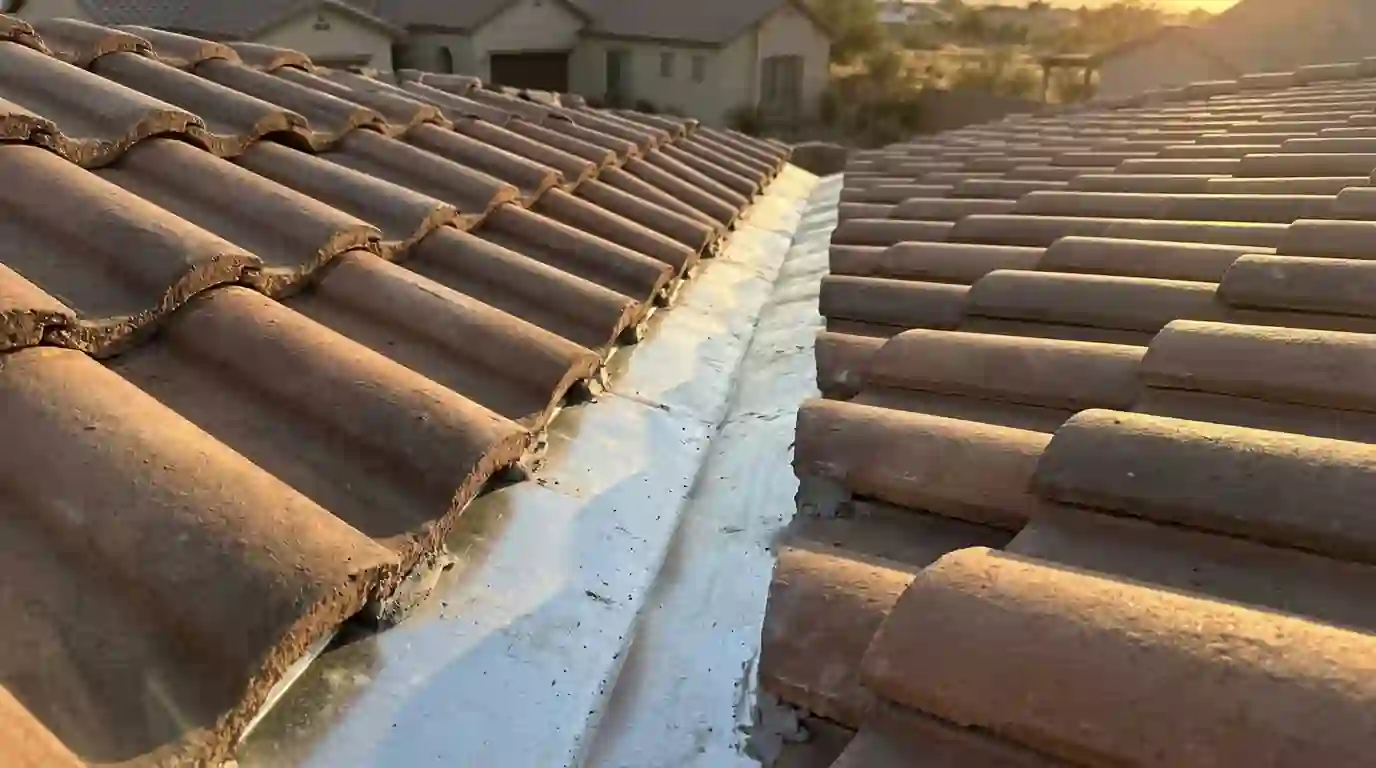
On repairs we match what is already on the roof, from Eagle and Westlake Royal concrete tile to GAF and Owens Corning shingles, and we seal flashing with roof-grade products from Henry and Tremco.
We start at the roof. On tile, we lift the first course or two of eave tiles to check the felt and drip edge and look at the bird stop, the piece that closes the gap under the first row of tiles. On shingle, we check the drip edge and starter course. If the roof edge is leaking, we repair it before replacing any wood. If you are seeing broader leaks along the roofline, our leak tracing service goes into how we find the source.
Then we cut out damaged fascia and soffit back to sound wood, check rafter tails for rot and sister or replace them if needed, and install new boards. We use primed wood that matches the profile or fiber cement boards that handle sun and moisture better. Joints are scarfed and sealed, nails are set and filled, and everything is primed and painted to match your trim color so the repair does not stand out.
Pigeons and sparrows love the shade under Valley eaves, and gaps in soffits or loose bird stop under tile give them a way in. Bees build combs inside soffit cavities, which can bring the weight and mess of honey. Once birds or bees are in, the nesting material and droppings hold moisture against the wood and stain the stucco. Removing bees safely is a job for a bee removal specialist, and we come in after they are gone.
We close gaps with new soffit panels, vent screens and properly installed bird stop at the tile eave, so the edge is sealed while attic ventilation keeps working. If birds are nesting under solar panels instead, that is a separate problem, and our solar panel bird proofing handles it with mesh around the array. Every vent we touch keeps its open area, so the attic still breathes.
New wood fascia is only as good as the paint on it. We back-prime boards on all sides before they go up, so moisture cannot wick in from the hidden face, and we seal cut ends, which soak up water fastest. A quality acrylic exterior paint in a lighter shade holds up better on sun-facing edges, since dark colors run noticeably hotter in July and break down sooner.
Small details matter too. A drip edge that extends past the fascia face throws water clear instead of letting it run down the board. Gutter hangers should be fastened into the rafter tails, not just the fascia, so a full gutter in a monsoon downpour does not pull the board loose. Soffit vents should stay open and screened so the attic can breathe without inviting birds.
Edge damage often looks cosmetic until you press on it. These signs usually mean the wood has failed or water is getting in from the roof above.
Paint that flakes off in sheets along the roof edge usually means moisture is getting into the wood from behind or the board is splitting in the sun.
If a screwdriver sinks into the fascia or soffit, the wood has rotted. That usually starts where roof water runs behind the edge.
Soffits that droop between rafters have lost their nailing or swollen from water, and they open gaps for birds and insects.
Pigeons, sparrows and bees in the soffit show there is an opening. Nesting debris also traps moisture against the wood.
Gutters are screwed into the fascia. If they lean or pull loose, the board behind them may be rotted or split.
Water marks on the soffit or the stucco just below it point to a roof edge leak, often at the drip edge or a valley end.
Typical range in the Phoenix area
$395 to $2,240
per repair, most homes
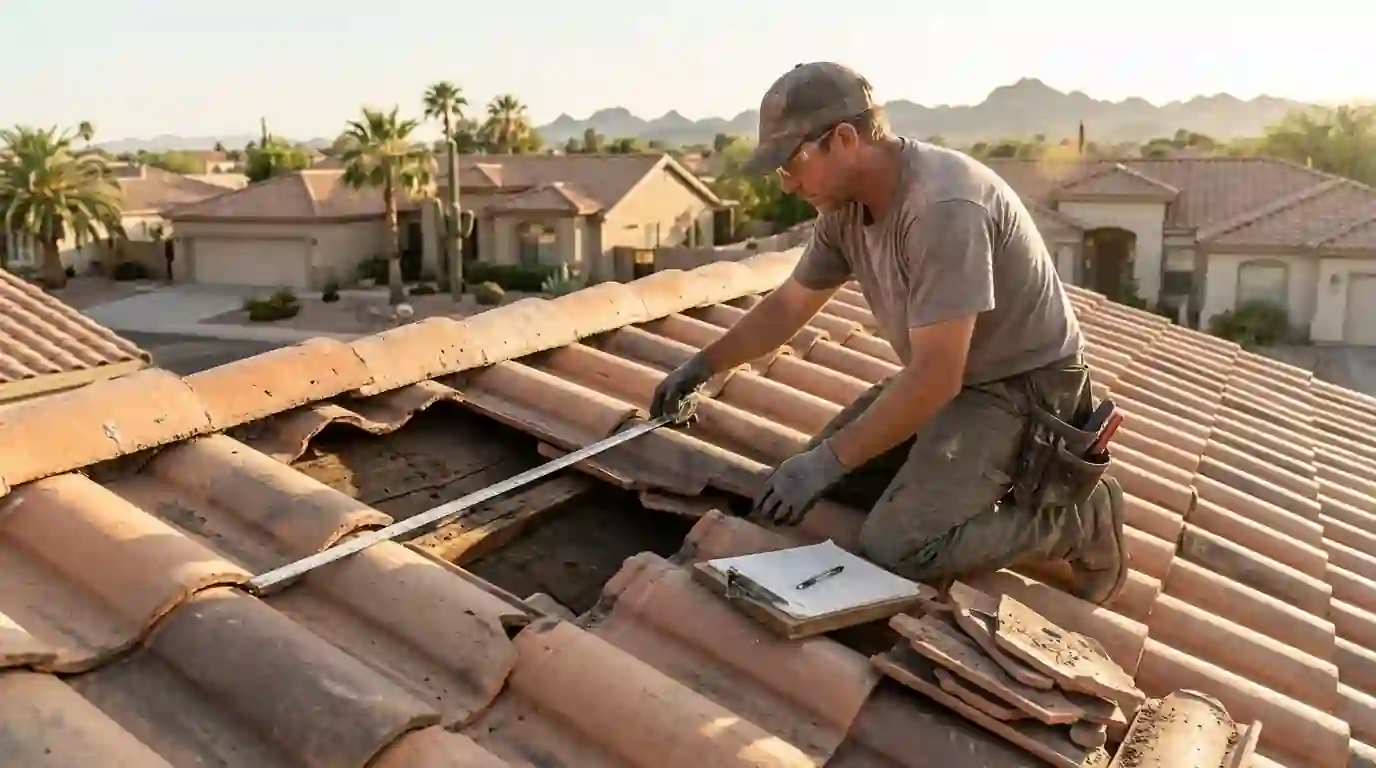
Edge repairs are priced mostly by the linear feet of fascia and soffit replaced and whether rafter tails or roof edges need repair too. The range below covers typical residential jobs. A single split board with no rot behind it sits near the low end.
Ranges are typical figures for Valley homes, not a quote. We price your roof after we see it.
Call (602) 878-3594 and describe where the damage is. A photo of the edge helps us bring the right board profiles.
We check the eave tiles or shingles, drip edge and felt to see whether a roof leak is feeding the damage.
Any leak at the edge is repaired first, so new wood is not exposed to the same water that rotted the old boards.
Rotted fascia, soffit panels and rafter tails are cut out and replaced with primed wood or fiber cement boards cut to fit.
Gaps are closed with soffit panels, vent screens and bird stop so nesting animals cannot get back in to nest.
New boards are primed and painted to match your trim, and you get photos of the finished edge and eave.
Most of our fascia & soffit repair calls come from these parts of the Valley. We also cover every other area on our service area list, from Anthem and Cave Creek down to Casa Grande.
West-facing fascia takes the hottest afternoon sun, which breaks down paint and dries the wood faster than any other side. Once paint fails, the wood cracks and soaks up monsoon rain. A good primer, a quality exterior paint and repainting every few years keep it in shape.
Yes. We cut back to sound wood and splice in new boards with angled, sealed joints so they blend. If most of a run is soft or split, replacing the full length often looks cleaner and holds up better.
Fiber cement resists rot, insects and sun damage better than wood and holds paint longer. It costs more and is heavier to install. For sun-facing edges that keep failing, it is often worth the extra cost.
Stains, rot or sagging right at the eave usually trace to water coming off the roof edge. We lift the first row of tiles or shingles to check the felt and drip edge. If the roof is dry there, the cause is likely sun or pests.
Yes. Pigeons and other birds push into gaps, and their nesting material and droppings hold moisture against the wood and stain stucco. Closing the gaps with proper soffit panels and bird stop keeps them out and protects the wood.
Monsoon runoff hitting your stucco or foundation in Phoenix? We install and repair gutters and downspouts where they actually help. Call (602) 878-3594.
Learn moreRoof leak repair in Phoenix: we trace the water to its true entry point on tile, foam, shingle or flat roofs and fix the cause. Call us 24/7.
Learn morePigeons nesting under your solar panels in Phoenix? We clean out nests and droppings, then clip mesh to the panel frames with no drilling. Call us 24/7.
Learn moreRoof deck repair in Phoenix: soft, sagging or rotted sheathing replaced under tile, foam or shingle before it spreads. Call (602) 878-3594 day or night.
Learn moreCall us any hour. A real person answers, asks a few questions about your roof and sets up a visit.