Elastomeric Roof Coating
Acrylic elastomeric roof coating for Phoenix flat, foam and metal roofs: bright white, flexible in heat, fairly priced. Call (602) 878-3594 any time.
Learn moreRoof Repair
Tile Roofing
Flat & Foam Roofing
Shingle & Metal Roofing
Replacement & Inspections
Solar, Vents & Extras
Phoenix neighborhoods
Valley cities
Counties
Desert Roof Guide
A bright white coating can make a flat roof far cooler to the touch in July. Whether it shows up on your power bill depends on your roof, your insulation and your ductwork.
By Lamar Baskin, Desert Roof Guide EditorUpdated August 25, 20266 min read
The short version
A reflective cool roof coating can lower the surface temperature of a Phoenix flat or low-slope roof dramatically, and that often trims cooling load, especially on homes with thin insulation or ductwork in a shallow attic or under the roof deck. The savings vary widely by house. Coatings also protect the roof from UV. They help most on flat foam, built-up and modified roofs, not on tile.
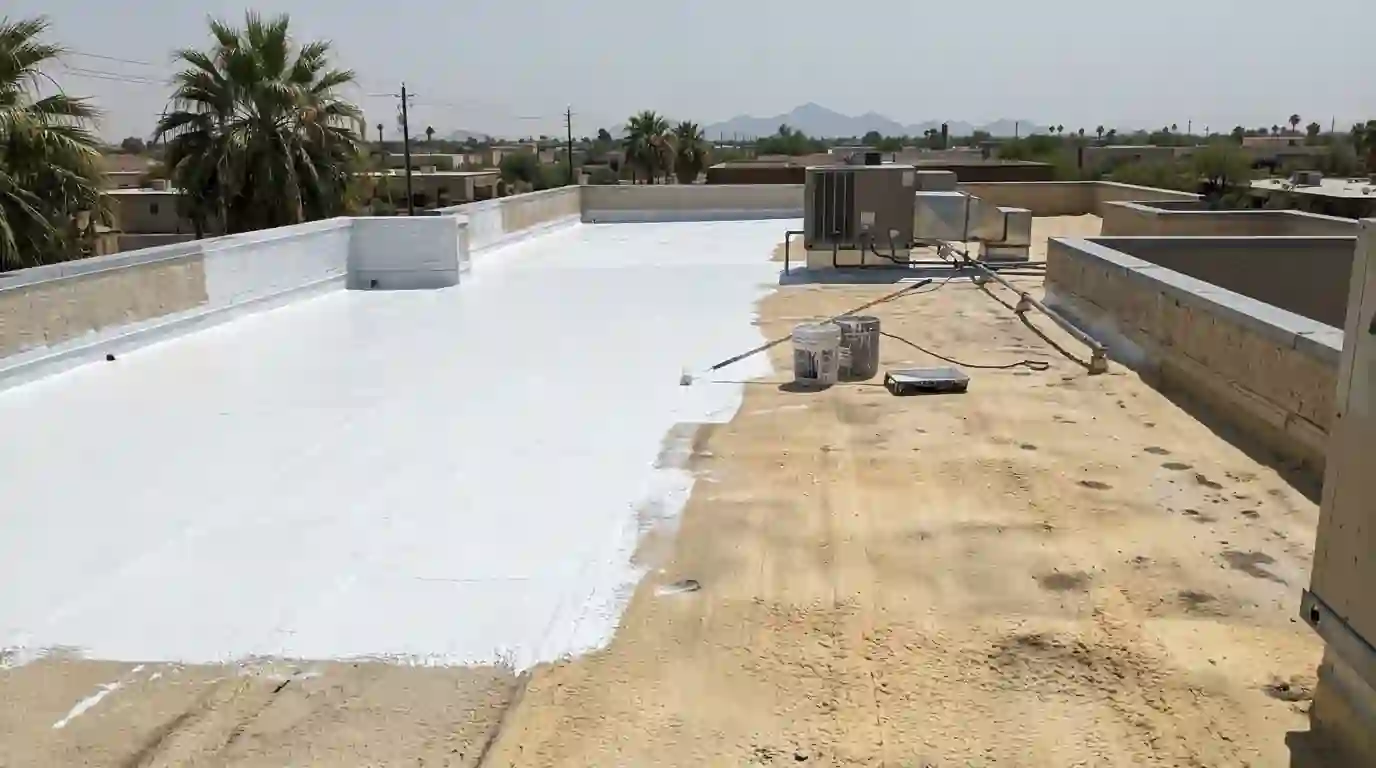
A cool roof coating is a thick, light-colored liquid applied over an existing roof surface. Once cured, it reflects a large share of sunlight instead of absorbing it, and it releases the heat it does absorb more readily. The two common families on Valley homes are acrylic elastomeric coatings and silicone coatings, with urethane used in some commercial work.
On a dark roof in July, surface temperatures can run 150 F to 170 F. A fresh white coating keeps the same roof much cooler to the touch. That difference is real and easy to feel with your hand on a summer morning. The question homeowners actually care about is how much of that cooler roof makes it down to the thermostat.
Heat moves from a hot roof into the house through the deck, the attic or roof cavity, the insulation and, on many Phoenix homes, the ductwork. If the house has deep attic insulation and ducts inside the conditioned space, a cooler roof makes a modest difference. If the insulation is thin, or the ducts run through a hot attic or a tight space under a flat roof, a cooler roof can make a noticeable one, because those ducts are carrying cold air through an oven.
That is why two neighbors can coat the same kind of roof and report very different results. Older flat-roof homes in central Phoenix, with little room for insulation between the ceiling and the deck, tend to feel the change the most. A newer pitched home with a vented attic and radiant barrier may barely notice it on the bill. Anyone promising a fixed percentage savings on your house is guessing. A fairer way to judge it is to compare a few summer bills before and after, at similar thermostat settings, and to notice whether the rooms under the roof feel different in the late afternoon.
Coatings make the most sense on surfaces that are already flat or low slope and already in decent shape. Think of these as the usual short list. A roof outside this list is not ruled out, but it deserves a closer look at the surface, the drainage and the age of the system before anyone opens a bucket.
Homeowners sometimes ask whether a white coating can go over concrete tile to cool the house. We don't recommend it. Tile roofs are built to shed water through the gaps and channels between pieces, with the underlayment below doing the real waterproofing. A coating over tile does nothing for that underlayment, can trap moisture, changes the look in ways most HOAs won't approve, and complicates future repairs.
If a tile home is running hot, the better levers are in the attic. Improving attic ventilation and radiant barrier tackles the same heat without touching the tile. Lighter tile colors help at the next replacement too, which our roof material comparison covers in more detail.
Acrylic elastomeric coatings are the long-time standard on Valley foam roofs. They are bright white when new, accept recoats well, and cost less. Their weak point is standing water: ponding areas can soften and wear acrylic faster. Silicone holds up better where water sits after a monsoon storm and resists UV well, but it collects dust more readily, and future recoats generally need to be silicone too.
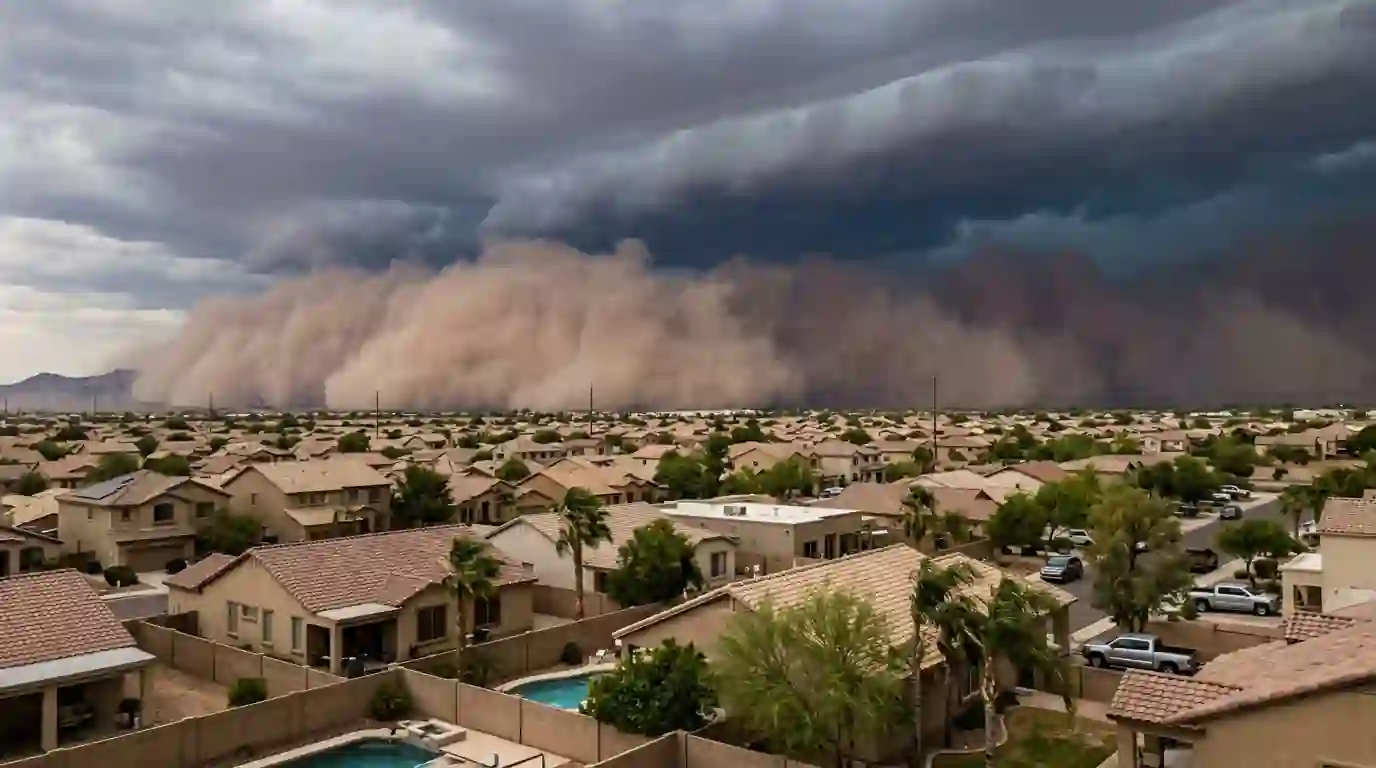
Both work when the roof is prepared properly. Most coating failures we see come from poor prep: dirt, dust from a haboob and loose material left under the new coat. Our elastomeric coating work starts with cleaning, repairing blisters and cracks, and sealing seams before any coating goes on. Thickness matters as much as product choice, because a thin coat looks fine for a year and then wears through.
For a typical Phoenix home, coating a flat roof in 2026 often runs about $2.35 to $4.85 per sq ft, depending on the product, the number of coats, how much repair the surface needs first, and how easy the roof is to reach. Silicone usually sits toward the higher end. A foam roof recoat falls in a similar range since it is the same basic job.
Expect a coating to last roughly 5 to 10 years depending on product, thickness and how much water sits on it. The roof will tell you when it is time: chalky surface, thin spots where the foam color shows through, or cracking at seams and edges. Recoating on time is far cheaper than repairing foam or a membrane that the sun has been cooking for a few summers.
A coating is not a repair for a roof that is already failing. If the deck is soft, the insulation under a membrane is wet, or the roof is near the end of its life, coating it only hides the problem for a season. We check for those conditions first and will tell you plainly if a replacement makes more sense.
Keep expectations realistic as well. The roof will be cooler and better protected from UV, and many homes feel the difference upstairs or in rooms under a flat roof. The bill effect depends on the rest of the house. If you want an honest read on whether your roof is a good coating candidate, call (602) 878-3594 any hour and our crew will take a look.
Not perfectly. Dust from summer storms and haboobs settles on any flat roof, and a dirty coating reflects less sun. Gentle rinsing and clearing debris during routine maintenance restores much of the reflectivity. Silicone tends to hold dirt more than acrylic, which is one factor in choosing between them.
It can help on small surface cracks when the roof is properly prepared, but it is not a leak repair by itself. Leaks usually start at seams, drains, penetrations or parapet walls. Those spots need actual repair first, then the coating protects the finished surface.
Utility and government incentive programs change from year to year, and some have covered reflective roofing at times. Check with your electric utility and any current federal or state programs before you schedule work, and keep the product data sheet and invoice in case a program asks for them.
Acrylic elastomeric roof coating for Phoenix flat, foam and metal roofs: bright white, flexible in heat, fairly priced. Call (602) 878-3594 any time.
Learn moreSilicone roof coating for Phoenix flat roofs that pond or bake: holds up to standing water and UV over foam, TPO and metal. Call (602) 878-3594 any hour.
Learn moreFoam roof turning brown, blistered or pecked in Phoenix? We clean, patch and recoat before UV eats the foam. Call (602) 878-3594 any hour to set a visit.
Learn morePhoenix attics can top 140 F to 150 F in summer. We balance intake and exhaust vents and add radiant barrier to cut heat load. Call (602) 878-3594.
Learn more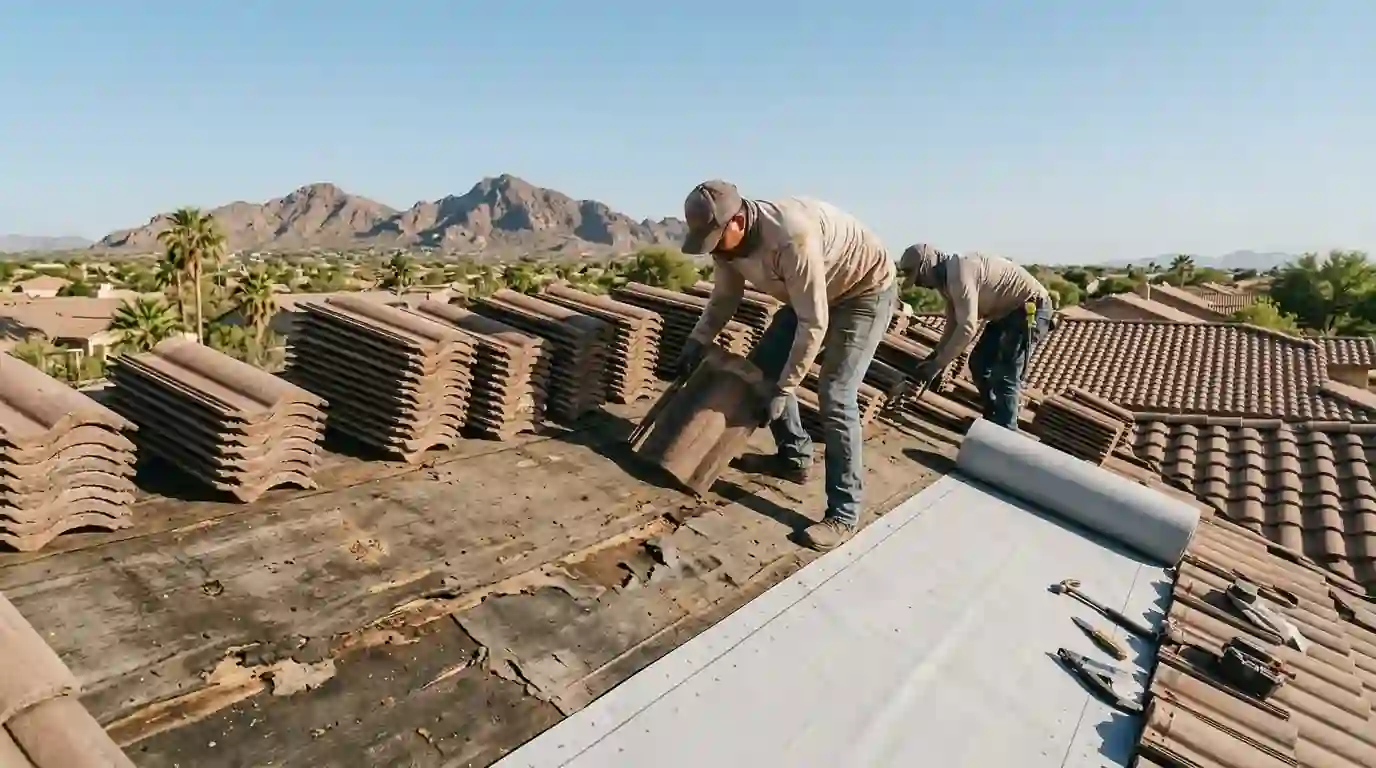
May 11, 2026
Concrete and clay tile can outlast the house, but the felt under it usually gives out around 20 to 25 years in Valley heat. Here's how to read the signs and plan ahead.
Read the guide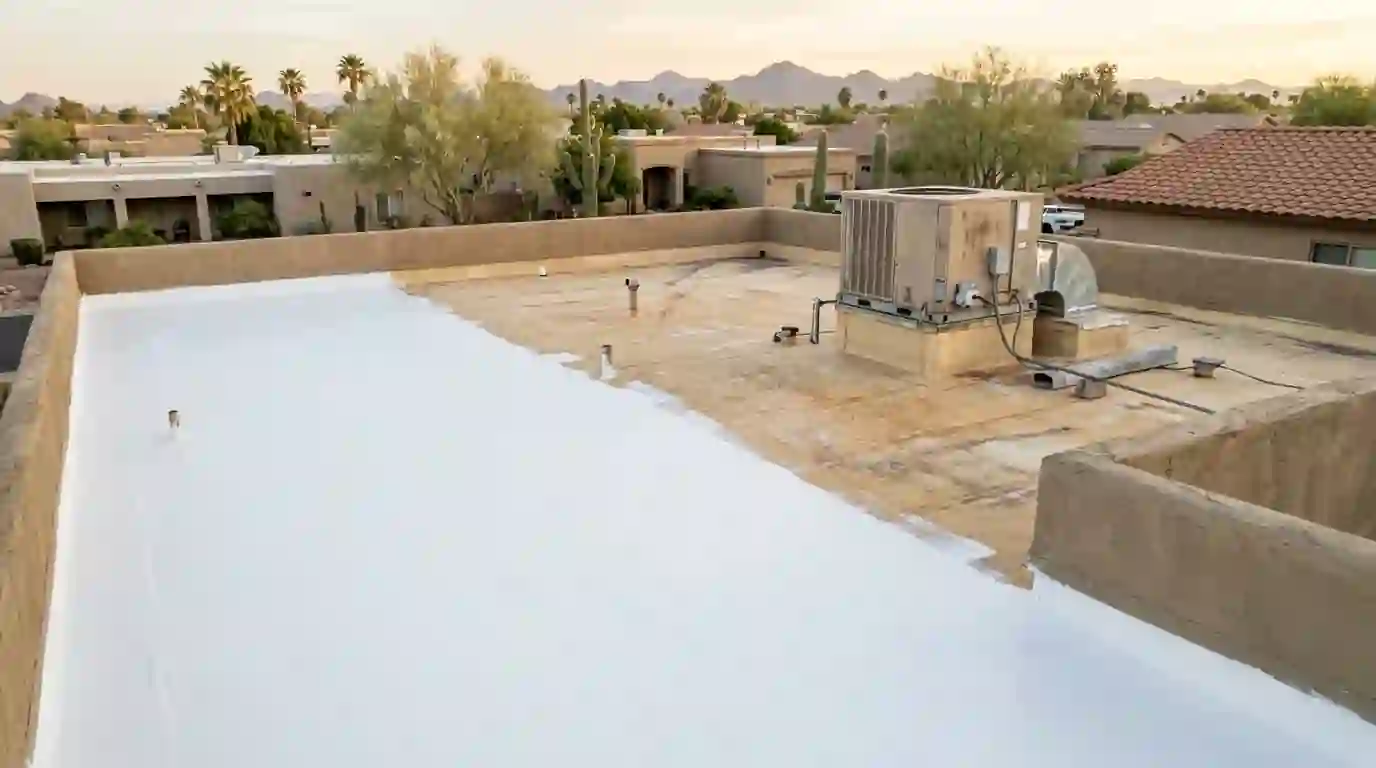
June 2, 2026
A foam roof can last decades in Phoenix, but only if its coating is renewed every 5 to 10 years. Here's how to read the surface and time the next recoat.
Read the guide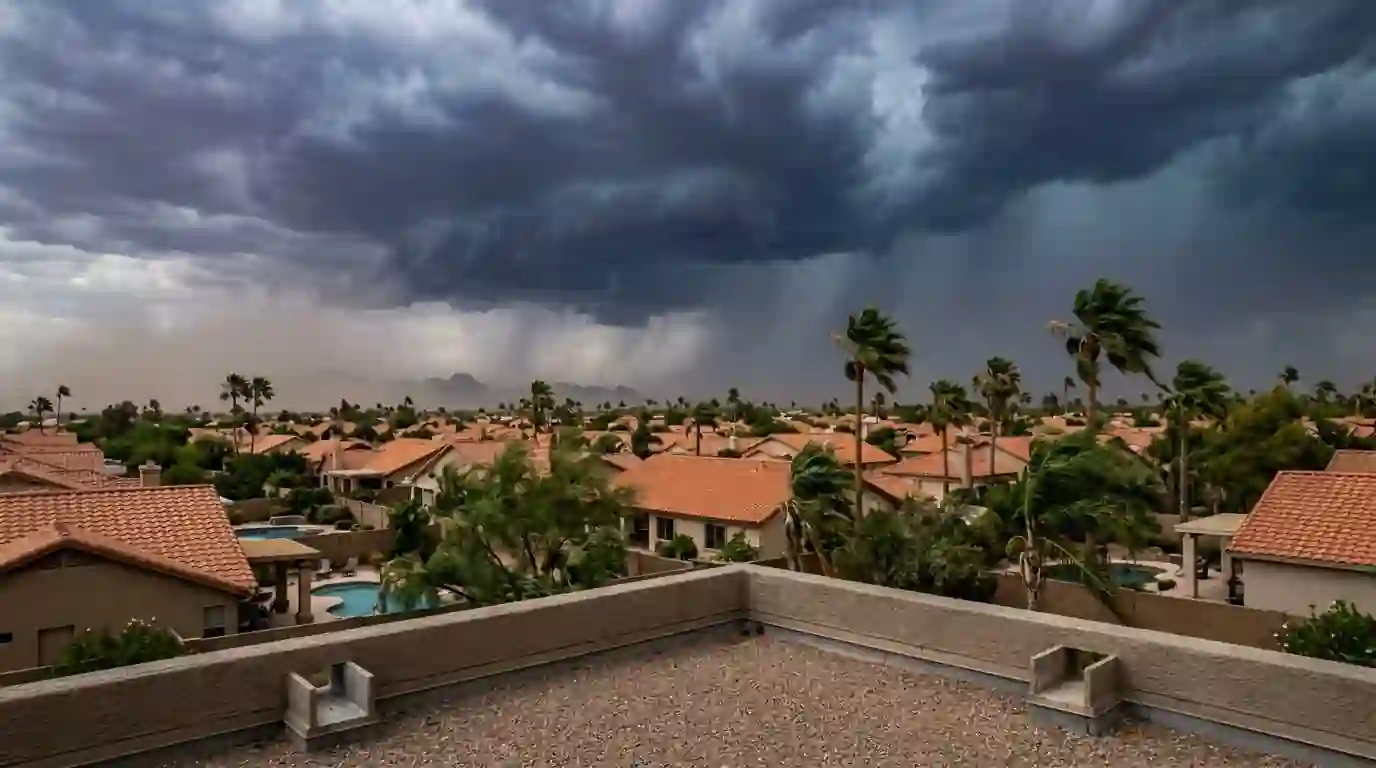
June 9, 2026
Monsoon storms bring wind, dust, hail and sudden downpours. This checklist covers what to look at on your roof before mid June and what to leave to a roofer.
Read the guideCall (602) 878-3594. We answer around the clock and can usually tell you over the phone whether it needs a visit.