Solar Panel Removal & Reinstall
Roof work under a solar array in Phoenix? We detach, stage and reset your panels, then reflash every mount so it stays dry. Call (602) 878-3594.
Learn moreRoof Repair
Tile Roofing
Flat & Foam Roofing
Shingle & Metal Roofing
Replacement & Inspections
Solar, Vents & Extras
Phoenix neighborhoods
Valley cities
Counties
Desert Roof Guide
Solar panels sit on your roof for decades. If the roof under them has only a few good years left, fixing it first can save you a removal and reinstall bill down the road.
By Lamar Baskin, Desert Roof Guide EditorUpdated August 18, 20266 min read
The short version
Before solar goes on an older Phoenix roof, have the roof inspected for remaining life. On tile roofs, the underlayment is the usual weak point, and replacing it under the future array area first often makes sense once it passes about 15 to 20 years. On shingle and foam roofs, fix worn surfaces and flashings first. Otherwise you may pay to remove and reinstall the panels when the roof fails.
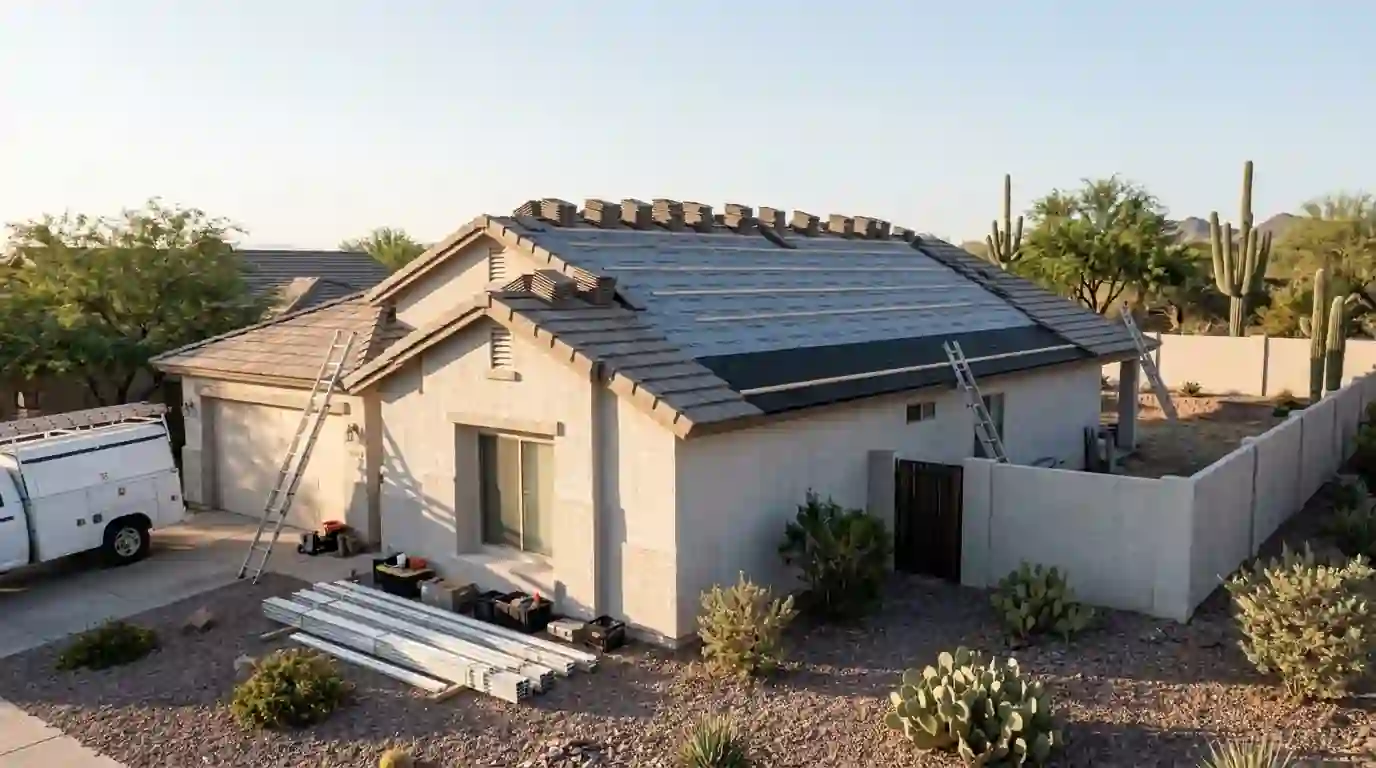
A solar array in Phoenix is built to produce power for a long time, often 25 years or more. Your roof may not have that long. When the roof under an array wears out, the panels, rails and wiring have to come off before anyone can fix it, then go back on afterward. That detach and reset work is a real cost, and it lands right on top of the roof repair or replacement itself.
Solar sales conversations tend to focus on panel output and monthly savings. Few of them spend much time on whether the roof underneath will outlast the system. That is not a knock on solar, which suits Valley sunshine well. It is a reason to bring a roofer into the conversation before the contract is signed, not after the first leak shows up under a panel.
Start with the age of the roof covering, not the age of the house. A 1998 home may have had a new roof in 2015, or it may still have the original. Look for permits, ask the previous owner, or check the paperwork from your home purchase. Then match that age against how each roof type wears out in Valley heat.
For tile roofs, the tile is usually not the issue. The felt underlayment beneath it commonly wears out around 20 to 25 years here, and that is the layer solar mounts penetrate. For asphalt shingles, look at granule loss, curling and brittleness, especially on south and west slopes, where most arrays end up. For foam roofs, the age of the last coating matters more than the age of the foam itself.
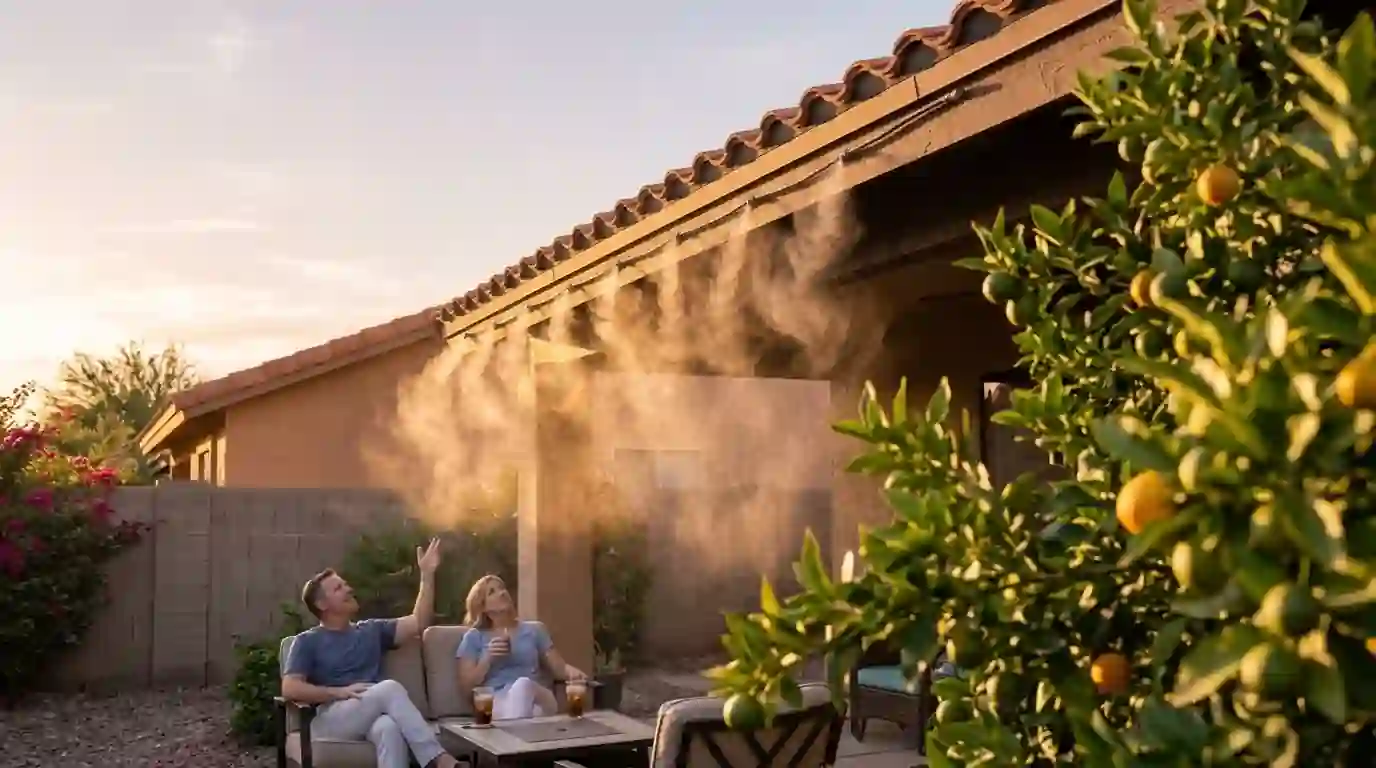
A useful pre-solar visit focuses on the slopes where the panels will sit and on everything that will be hard to reach once they are installed. We walk those areas, lift a few tiles where it is safe to, and look at the underlayment, the battens and the deck for heat damage, brittleness and old leak stains.
If the roof is under about 10 years old and in good shape, solar can usually go straight on. Ask that the installer use flashed mounts suited to your roof type, and keep photos of the roof before installation so you have a record of its condition.
If it is a tile roof in roughly the 15 to 25 year range, we often recommend replacing the underlayment on the slopes that will carry panels, and sometimes the whole roof while the crew is already set up. The tile usually goes back on, so the look does not change. Doing it now costs far less than doing it later with an array in the way.
If it is a shingle roof showing wear, or a foam roof overdue for its coating, the cleanest path is usually to replace the shingles or recoat the foam before the panels arrive. Waiting a few weeks for the roof work is a small delay compared to working around a finished array.
The installer will be drilling through your roof. Ask how they attach mounts on your specific roof type, especially on tile, where cracked tiles around mounts are a common problem. Ask what flashing method they use, who is responsible if a mount leaks, and how they handle tiles they break during installation. Get those answers in writing.
Also ask about the conduit route. Pipe runs across a roof can dam water, block drainage on low-slope sections, and create new places for leaks. On flat roofs, ask how the racking is supported so it doesn't crush or puncture the foam or membrane. A roofer and a solar installer who talk to each other before work starts will save you most of these headaches.
The order matters more than people expect. Roof work first, then permits and solar installation, is the cleanest sequence. If you sign a solar contract before the roof is done, tell the installer about the roof plan right away so they don't schedule mounting while tile is stacked on the slopes. Leave some room between the two jobs for inspections and for any delays in getting matching tile or accessories.
Weather plays a part too. Heavy roof work is harder on crews and materials in the peak of July, and monsoon storms from June 15 to September 30 can interrupt a half-finished roof. Fall through spring is the friendliest window for a re-roof followed by solar. If you are already in summer and the roof needs attention, we can still do it, with the slopes dried in at the end of each day.
Plenty of homeowners call us after solar is in place and the roof is showing its age. That is a workable situation, not a disaster. The panels come off in sections, get stored safely, the roof work gets done, and the array goes back on with new flashing at each mount. Our solar removal and reinstall work is set up for exactly that.
While the panels are off, it is also a good time to deal with birds. As our piece on pigeons and panels explains, birds nest under arrays across the Valley, and the debris they leave clogs drains and stains tiles. Screening the array edges at reset is simpler than doing it later. If you are planning solar and want the roof checked first, call (602) 878-3594 any hour and we will look at the slopes the panels will cover.
Yes, and many Valley homes have them. The installer uses mounts made for tile, often replacing the tile at each mount with a flashed base or a modified tile. The main risk is cracked tiles around the mounts and gaps in the underlayment, so ask how they handle both before work starts.
For a typical residential array, detach and reset often runs about $2,385 to $5,940, depending on panel count, roof type, access and whether mounts or wiring need updates. That is on top of the roof work itself, which is why fixing an older roof before installation usually saves money.
Not usually, but read your solar agreement. Some installers or warranty providers want their installation crew or an approved company to do the detach and reset. Check the terms before roof work is scheduled so you know who should handle the panels and what records to keep.
Roof work under a solar array in Phoenix? We detach, stage and reset your panels, then reflash every mount so it stays dry. Call (602) 878-3594.
Learn moreTiles fine but the felt under them is shot? We lift and relay Phoenix tile roofs with new two-ply or synthetic underlayment. Call (602) 878-3594 any time.
Learn morePhoenix roof inspections after monsoon storms, before buying or before solar: photos, attic checks and a plain written report. Call (602) 878-3594.
Learn morePigeons nesting under your solar panels in Phoenix? We clean out nests and droppings, then clip mesh to the panel frames with no drilling. Call us 24/7.
Learn more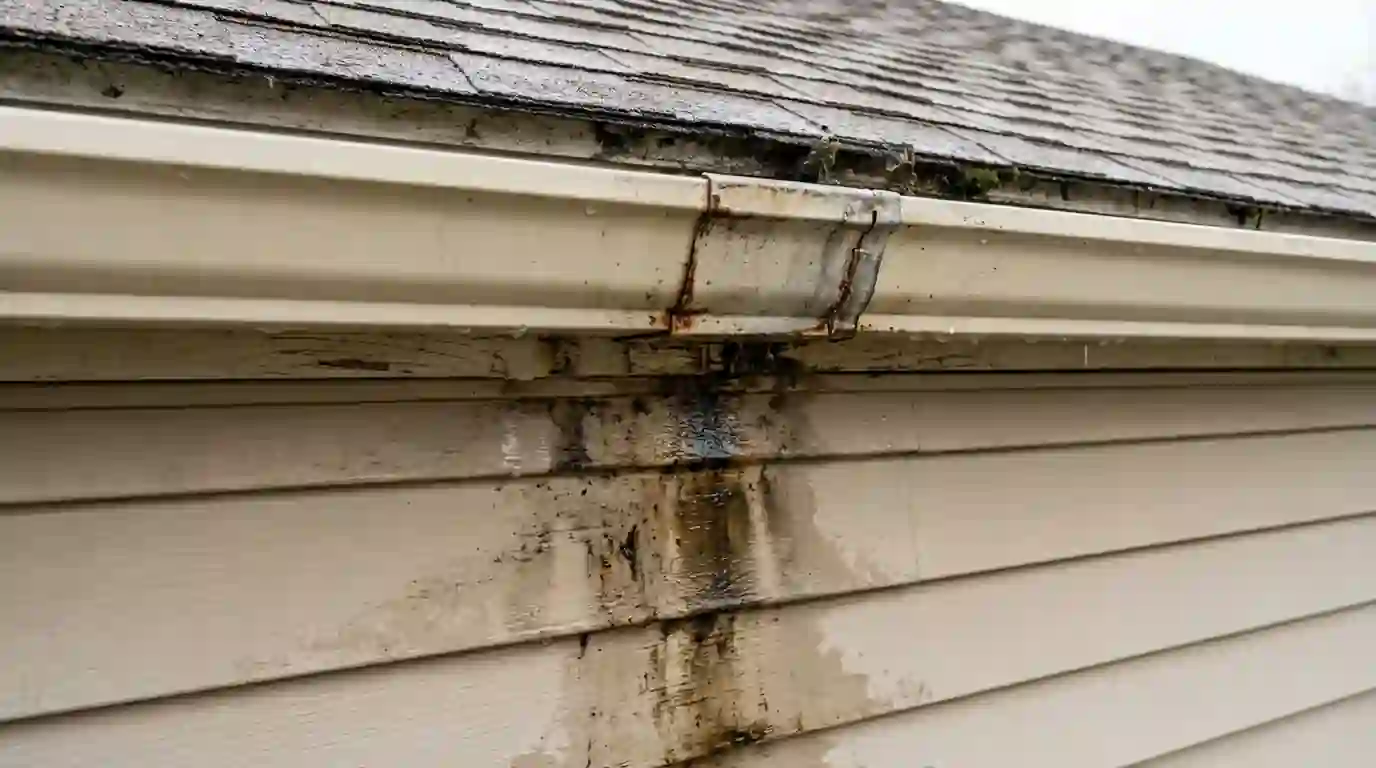
August 4, 2026
Most Valley neighborhoods with an HOA want to see your roof plans before work starts. Here is what architectural review committees usually ask for and how to get through it without losing weeks.
Read the guide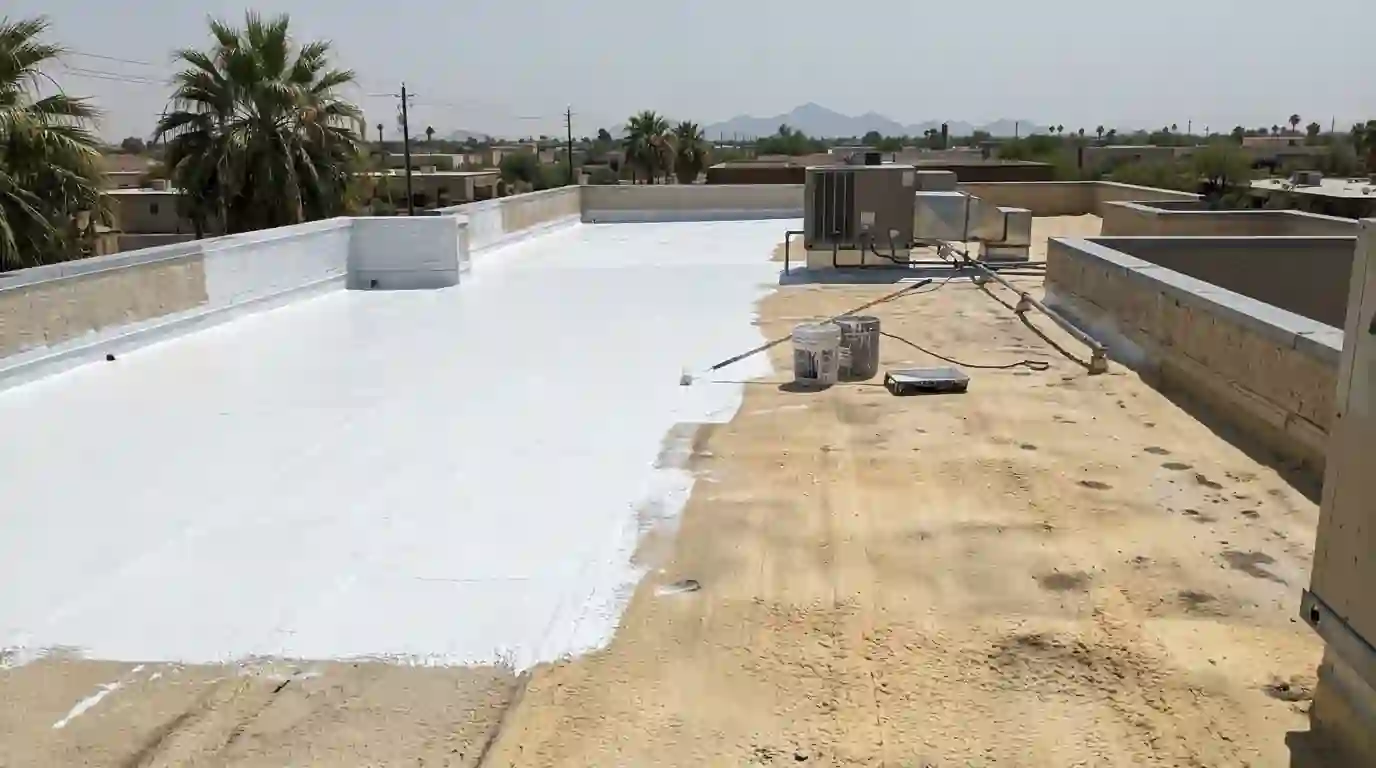
August 25, 2026
A bright white coating can make a flat roof far cooler to the touch in July. Whether it shows up on your power bill depends on your roof, your insulation and your ductwork.
Read the guide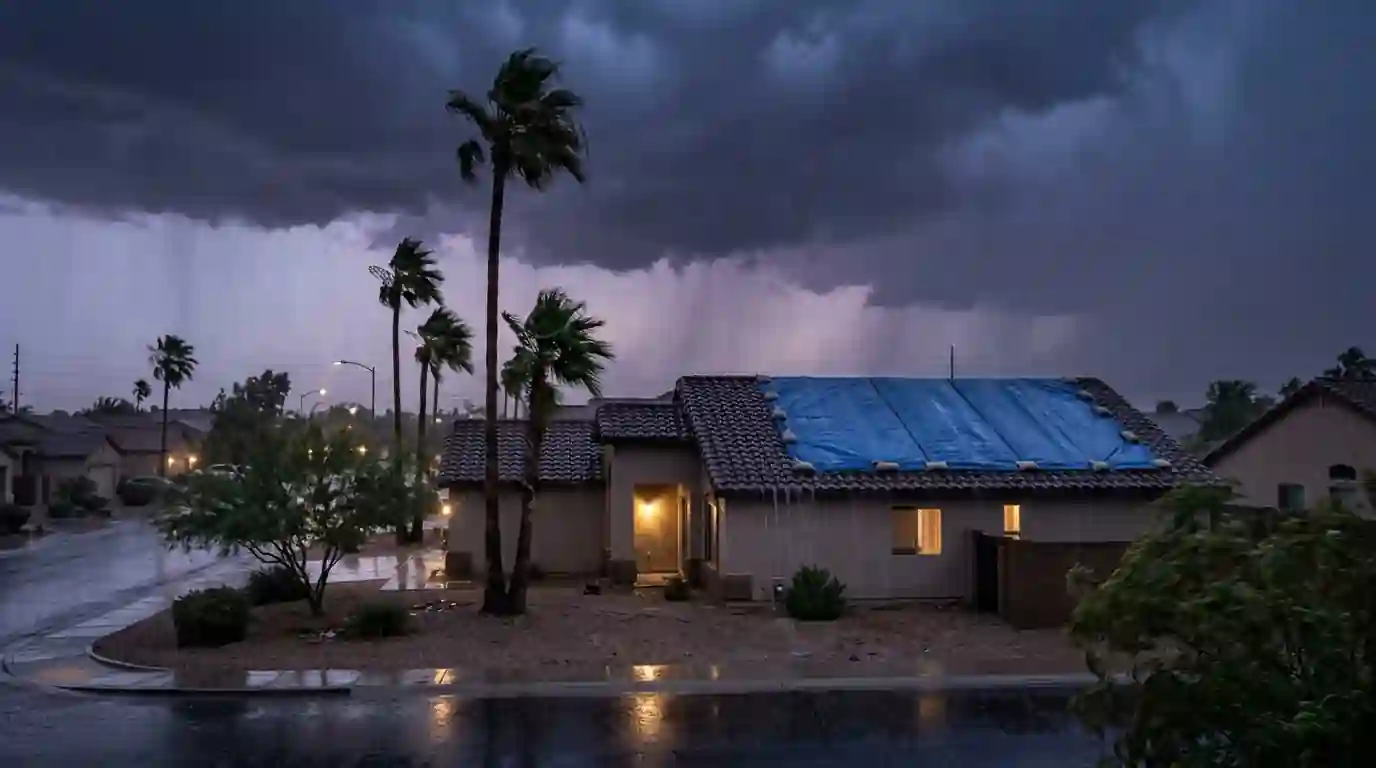
September 8, 2026
Water dripping through the ceiling at 10 at night is stressful. Here is a calm, hour-by-hour plan for Phoenix homeowners, from the first bucket to the permanent repair.
Read the guideCall (602) 878-3594. We answer around the clock and can usually tell you over the phone whether it needs a visit.