Swamp Cooler Removal & Roof Patch
Old swamp cooler sitting dead on your Phoenix roof? We lift it off, close the duct opening and patch tile, foam or shingle to match. Call us 24/7.
Learn moreRoof Repair
Tile Roofing
Flat & Foam Roofing
Shingle & Metal Roofing
Replacement & Inspections
Solar, Vents & Extras
Phoenix neighborhoods
Valley cities
Counties
Desert Roof Guide
Plenty of Valley homes still carry an evaporative cooler on the roof, running or not. Here is how that box affects the roof under it, and how to decide its future.
By Lamar Baskin, Desert Roof Guide EditorUpdated September 15, 20266 min read
The short version
If your rooftop swamp cooler still runs and you use it in the dry months, it can stay, as long as the stand, curb, water line and bleed-off are kept in good order. If it sits unused because central AC took over, removing it and patching the opening usually helps the roof: it ends the drips, the dead weight and a large hole that leaks more as it ages.
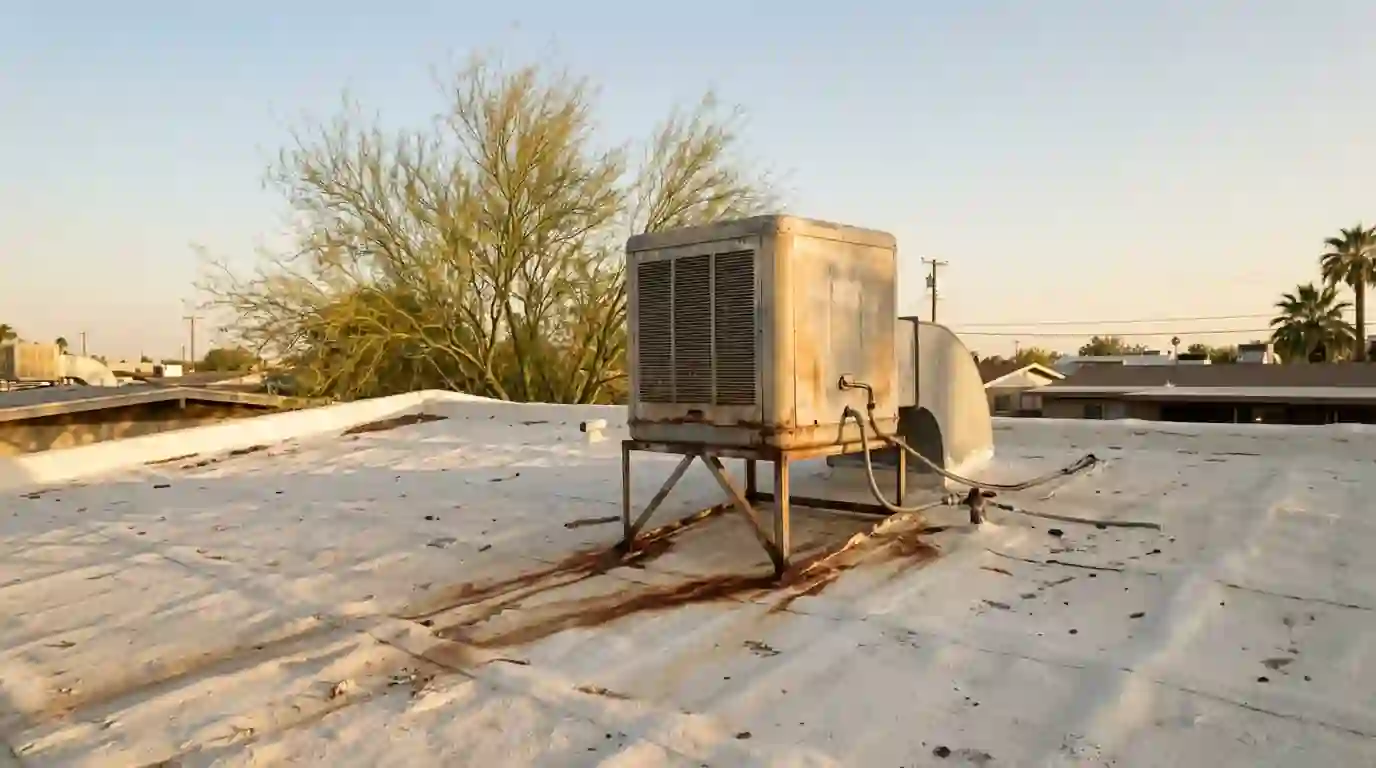
An evaporative cooler pulls hot, dry outside air through wet pads and pushes the cooled air down a duct into the house. To do that from the roof, it needs an opening big enough for the supply duct, a water line, a power line, a drain or bleed-off line and a stand or curb strong enough to carry it. That is five separate ways the roof gets involved, and each one ages on its own schedule in Valley sun.
Weight is the part people forget. A residential unit with wet pads and a full pan can weigh a few hundred pounds, and it sits in one spot for years. On a flat roof that is often enough to create a shallow dip around the curb, and a dip means standing water. On a pitched tile or shingle roof, the stand legs press into the surface, and the flashing around them gets pushed and pulled every time someone climbs up to service the unit.
Most of the harm from a rooftop cooler happens slowly, which is why it tends to show up as a ceiling stain long after the real cause started. If you can safely see the unit from a ladder at the eave or an upstairs window, look for these clues:
Inside, the warning is usually a water stain or soft drywall around the ceiling register the cooler blows through. That register sits almost directly below the roof opening, so a leak at the curb nearly always shows up there first, often after the first big monsoon storm of the year.
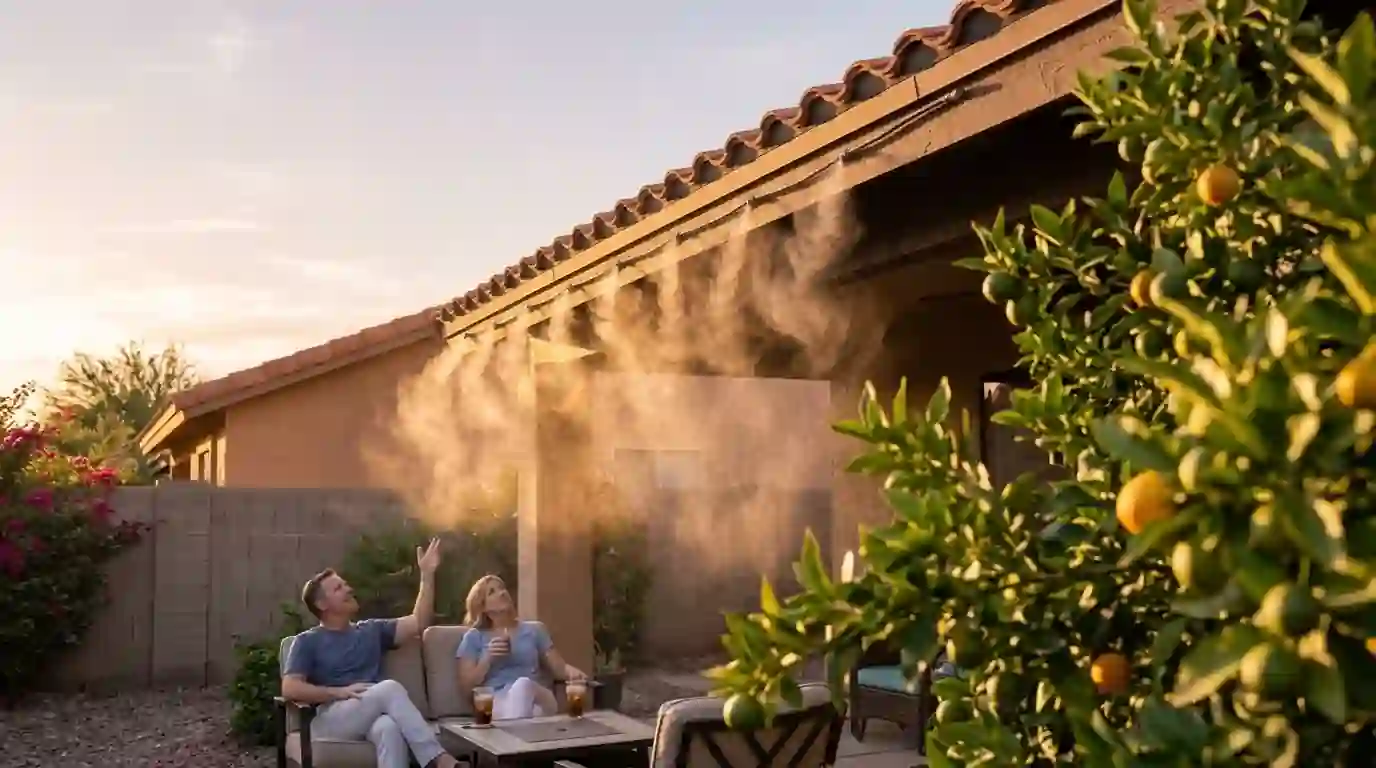
Evaporative cooling still has fans in the Valley, and for good reason. In the dry weeks of late spring and early summer it moves a lot of air for very little electricity, and some homes, shops and garages without ducted AC rely on it. Monsoon humidity takes much of the punch out of it, which is why many owners run the cooler in May and June and switch to refrigerated air from July into September.
If you use yours, keep it, and keep it from hurting the roof. That means a pan without rust holes, a float valve that shuts off instead of overflowing, and a bleed-off line routed to a drain or gutter rather than onto the roof. The curb flashing should be tight, and the stand should rest on pads rather than bare coating. On flat roofs where water collects on the high side of the curb, a small cricket solves the pooling, and our drainage and cricket work handles exactly that.
The strongest case for removal is the cooler nobody has switched on since the central air went in. It still weighs on the roof, the pan still rusts, and the opening still depends on aging flashing and sealant, yet it gives nothing back. We see this constantly on 1960s and 1970s ranch homes in the older parts of Phoenix, Mesa and Glendale, and on rentals where a tenant moved to AC years ago and the old box simply stayed.
There are other good reasons, too. You may be re-roofing or recoating anyway, the cooler may need a new pan and motor you aren't sure you want to pay for, or you may be selling and want the roof to look clean on a buyer's inspection. If a new flat roof is coming within a year or two, pulling the cooler at the same time saves a separate trip and gives a cleaner finished surface.
Lifting the cooler off is the easy part. The value is in what happens to the hole. Done well, the old opening disappears into the roof. Done poorly, it becomes a soft square that leaks every summer. Our cooler removal and roof patch visits follow the same order every time:
Inside, the old register still hangs from the ceiling. Most owners have it taken out and the ceiling patched and painted once the roof side is closed. On a foam roof the patch is new foam sprayed into the framed opening and coated. On built-up or rolled roofing it is a layered membrane patch. On tile it is fresh underlayment lapped into the old, with tiles relaid over it.
Removing a rooftop cooler and patching the opening on a typical Phoenix home often runs about $745 to $2,180 in 2026. Single-story flat roofs with easy access sit toward the low end. The price climbs with tile roofs, second-story access, rotted decking under the curb, a separate stand with several leg penetrations to seal, or a roof surface that needs more than a local patch to blend in.
Compare that with what a neglected cooler tends to cost. A slow leak at the curb can soak insulation, stain drywall and rot the decking around the opening for several seasons before anyone notices. By the time it drips into the living room, the repair is bigger than the removal would have been. If you're unsure what is happening under yours, a roof inspection answers that question quickly.
Ask yourself three questions. Did the cooler run last summer? Is the curb dry, level and well flashed? Would you pay for a new pan, pads and pump if it needed them this year? Three yeses mean keep it and maintain it. Any no is worth a closer look, and two or more usually point toward removal.
Whichever way you lean, have the roof checked before monsoon season rather than after the first storm. If the cooler is still connected but unused, shutting off its water supply is a sensible step you can take today. When you're ready to talk it through, call (602) 878-3594, day or night, and we'll look at the cooler, the curb and the roof around it.
Removal itself rarely draws objections, since it makes the roof look cleaner, but some associations want notice of any exterior work, and the patch has to match approved colors and materials. Check your CC&Rs or call the management company before the visit. We can provide photos and a written scope if the committee asks for one.
Often, yes. Side-draft coolers can sit on a pad beside the house and feed a duct through the wall, which keeps water and weight off the roof entirely. You need a workable duct route and a spot to set the unit. The old roof opening still has to be framed in and patched once the rooftop cooler comes down.
The water supply is shut off and capped at a point that stays accessible, so it can't drip into the attic or onto the roof later. Power to the unit is disconnected and the wiring is ended safely in a junction box or removed. Both happen before the cooler is lifted, so nothing is left live or under pressure.
Old swamp cooler sitting dead on your Phoenix roof? We lift it off, close the duct opening and patch tile, foam or shingle to match. Call us 24/7.
Learn moreFlat roof leaking in Phoenix? We find the source on foam, built-up, mod bit or TPO roofs and fix ponding, seams and drains. Call (602) 878-3594 24/7.
Learn moreWater ponding on your Phoenix flat roof after a monsoon? We build crickets, add tapered slope and widen scuppers so the roof drains. Call (602) 878-3594.
Learn moreFoam roof turning brown, blistered or pecked in Phoenix? We clean, patch and recoat before UV eats the foam. Call (602) 878-3594 any hour to set a visit.
Learn more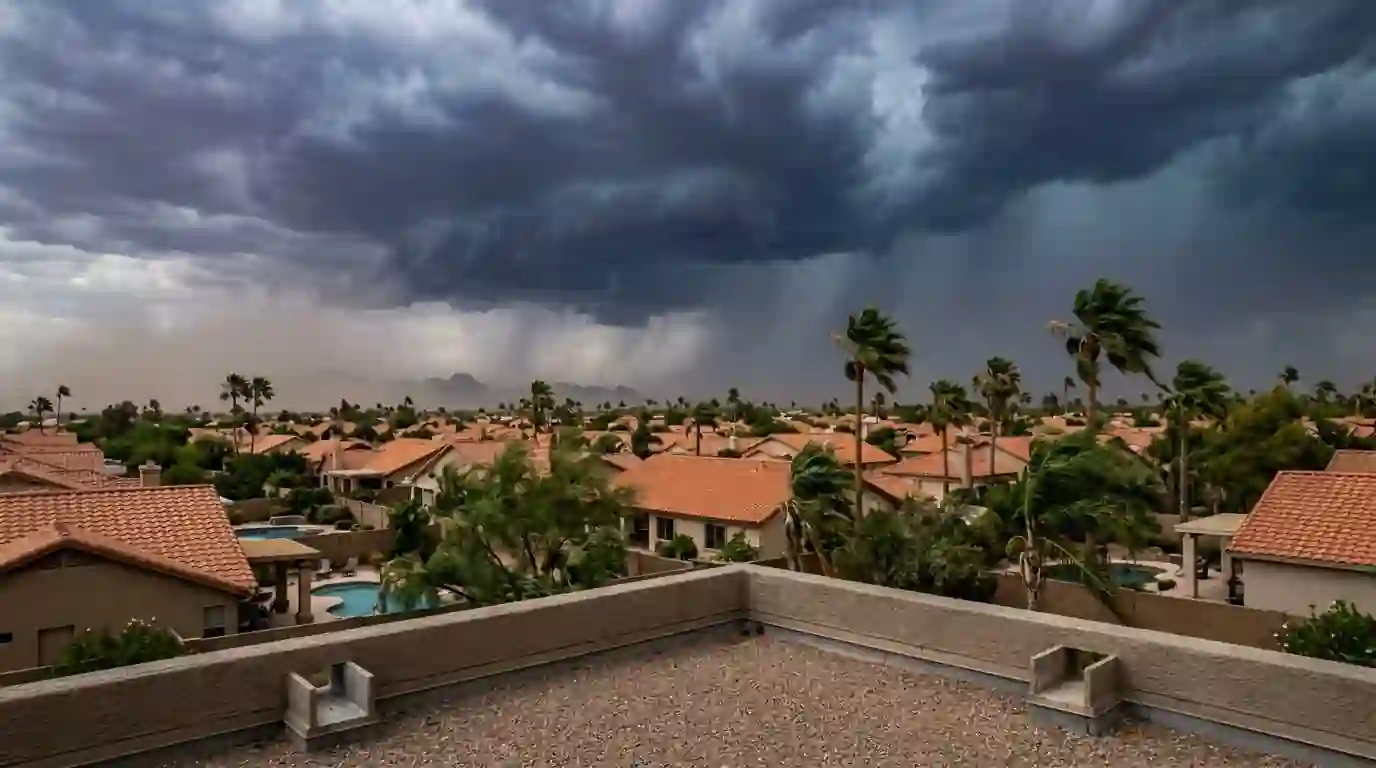
June 9, 2026
Monsoon storms bring wind, dust, hail and sudden downpours. This checklist covers what to look at on your roof before mid June and what to leave to a roofer.
Read the guide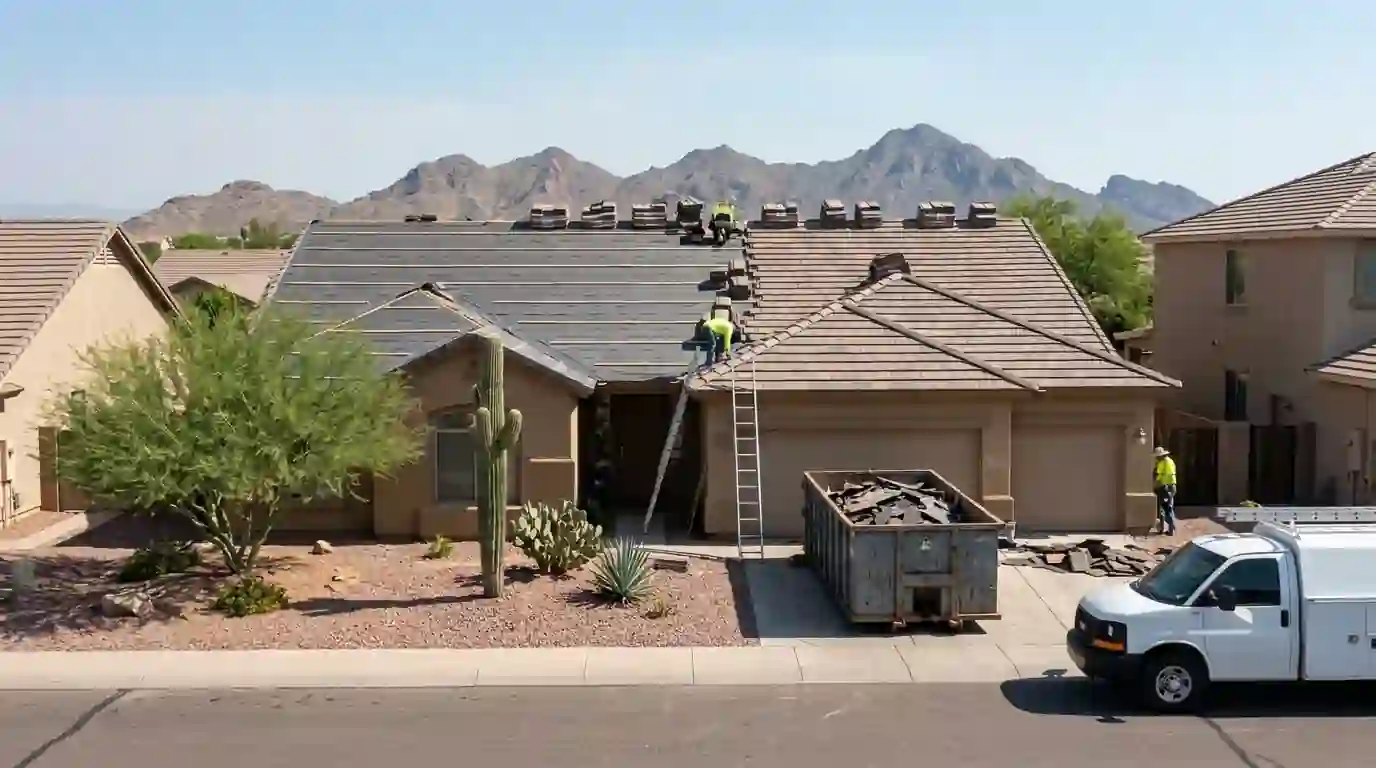
July 14, 2026
Roof replacement prices in the Valley vary a lot by material, roof size and what's under the old roof. Here are realistic 2026 ranges and what drives them.
Read the guide
July 28, 2026
Concrete tile, asphalt shingle and sprayed foam all work in the Valley, but they age in very different ways. Here is how we help Phoenix homeowners choose between them.
Read the guideCall (602) 878-3594. We answer around the clock and can usually tell you over the phone whether it needs a visit.