Tile Roof Bird Stop & Eave Closure
Pigeons or sparrows nesting under the bottom row of tile on your Phoenix roof? We clear the nests and fit bird stop shaped to your tile. Call us 24/7.
Learn moreRoof Repair
Tile Roofing
Flat & Foam Roofing
Shingle & Metal Roofing
Replacement & Inspections
Solar, Vents & Extras
Phoenix neighborhoods
Valley cities
Counties
Desert Roof Guide
Cooing at the eaves, twigs hanging from the first row of tile, droppings on the patio. The opening pigeons use is small, and the piece that closes it is simple.
By Lamar Baskin, Desert Roof Guide EditorUpdated September 29, 20266 min read
The short version
A bird stop is a formed metal or foam piece that fills the gap between the first row of roof tiles and the roof deck at the eave. Curved tiles leave open pockets there, and in Phoenix pigeons and sparrows use them as shaded nesting spots. When the bird stop is missing or damaged, nests sit right on the underlayment and hold water against it. Closing the eaves properly ends the cycle.
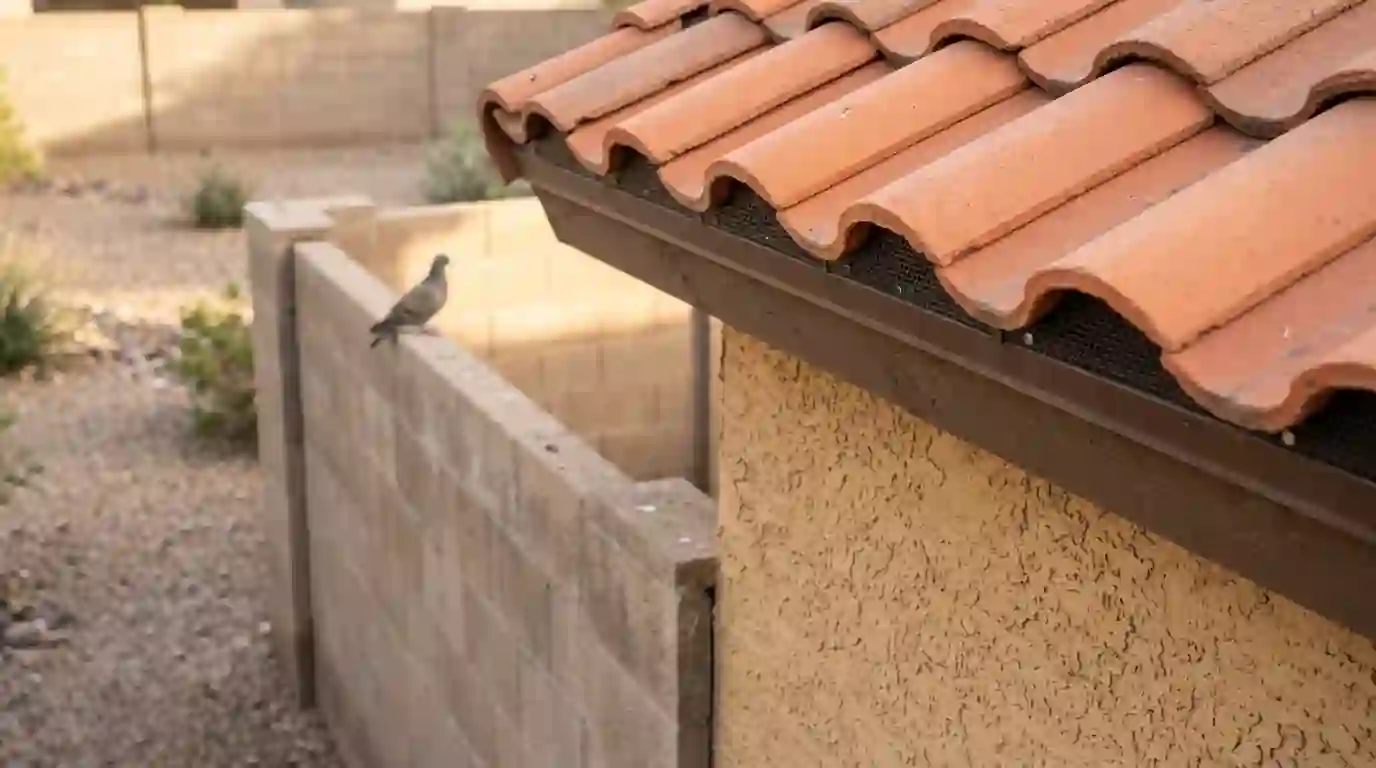
Stand in the street and follow the bottom edge of your roof. On S-tile and barrel tile, every high point of the profile leaves an arched opening between the tile and the roof below it. Along a typical eave that adds up to dozens of fist-sized pockets, each one shaded, dry and several inches deep. Flat concrete tile leaves a thinner slot, but it still leaves one.
A bird stop closes those openings. It is usually a strip of formed metal or dense foam cut to the same wave as the tile, fastened at the eave so the first course rests on it or against it. Good versions keep small weep openings at the bottom, so any water that gets under the tile can still drain out. On some clay and barrel roofs the same job is done with mortar packed into each opening, often called a mortared or boosted eave.
Feral pigeons nest on ledges with cover overhead, and a tile eave is a ready-made row of them. Each pocket faces outward, so adults can fly straight in. The tile above blocks the sun, the fascia below blocks the wind, and hawks have no easy angle of attack. Pools, misters, drip lines and pet bowls keep water close by in most Valley neighborhoods.
Sparrows, starlings and finches use the same gaps, and so do roof rats and the odd bee swarm. Pigeons also come back to the same nest year after year and raise several broods in a season, so a colony tends to grow right where it started. One open eave over a two-story garage can hold a handful of nests by the end of spring.
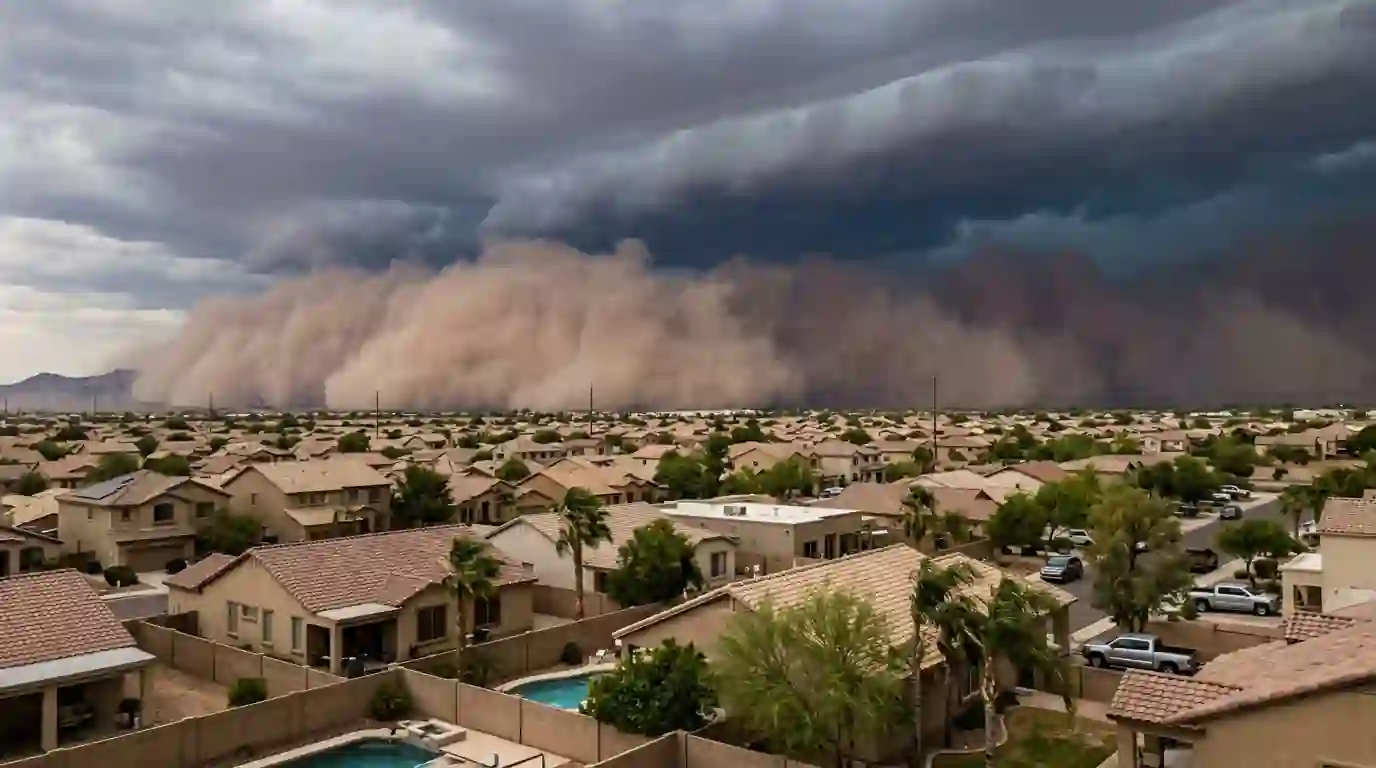
The tile isn't the waterproof layer on a Phoenix tile roof. The underlayment beneath it is, and the eave is where all the water from above finally drains off. A nest built in that last pocket sits on top of the underlayment, in the one place every drop running down that course has to pass. Twigs, feathers and droppings form a dam. In a monsoon downpour, water backs up behind it and finds the laps and nail holes in the felt.
Droppings make it worse. They are acidic, stay damp longer than the tile around them and break down organic felt over time. Birds also tug at loose underlayment edges for nesting material. On a roof where the felt is 20 years old and brittle from heat, the eave is often the first place it fails, and the damage shows up as rot in the fascia board, stains on the soffit or a damp patch on the ceiling near an outside wall. When we find that, the fix may grow into new underlayment along the eave rather than a closure alone.
Some roofs never had bird stops. Others had them and lost them over the years. These are the patterns we run into most often across the Valley:
If birds are already living under your solar panels, the eaves are often their next stop once the array is screened off. Our post on birds nesting beneath a solar array covers that side of things, and the eave is really the same fight on a different edge of the roof.
Formed metal bird stop is our usual pick on concrete S-tile and flat tile. It holds its shape in heat, doesn't rot or crumble, and can be finished in a color close to the tile so it nearly disappears from the street. It is fastened along the eave, and the first course of tile sits on it at the correct height, which also keeps that bottom row from tipping down over time.
Foam closures cost less and fit tight profiles well, but the cheaper kinds harden and shrink in Valley sun and need replacing sooner. Mortared eaves suit some clay barrel roofs and Spanish-style homes where that look is part of the design or an HOA rule. Whatever the material, it needs weep openings at the bottom and must not block the airflow some roofs rely on at the eave for attic ventilation.
Retrofitting is routine work. We clear birds and nests first, checking that no active nests of protected native species are involved, since those have to wait until the young have flown. Then the first course or two of tile along the eave is lifted, the nest debris is bagged and hauled off, and the underlayment and drip edge get a close look while they are exposed.
Damaged felt is patched or replaced, the new closure is fastened, and the tile goes back in its original order, with any broken pieces swapped for matching tile. On a typical single-story home this is a one-day visit. Our bird stop and eave closure service covers the cleanout, the underlayment check and the closure together, so the eave is done once.
Adding bird stops to an existing tile roof around Phoenix usually runs about $9.40 to $16.80 per linear foot of eave in 2026, or roughly $1,165 to $3,290 for a typical home. Two-story eaves, heavy nest buildup, damaged underlayment, broken tile and mortared closures push the number higher. Short runs over a patio or garage can often be handled on their own.
Late fall and winter are the easiest times, when nesting slows and the roof is comfortable to work on. Closing the eaves before spring keeps birds from settling in at all. If the fascia behind old nests has gone soft, it belongs in the same visit. Call (602) 878-3594 at any hour and we'll walk the eaves with you.
They shouldn't. Some tile roofs draw air in at the eave and let it out at the ridge, and a solid closure in the wrong place can choke that flow. Vented bird stops and closures with open weep areas keep air and water moving while still blocking birds. We look at how the attic breathes before choosing the piece.
Sometimes a closure can slide in from the eave on flat tile or where the gap is generous, but on most S-tile and barrel roofs the first course has to come up. Lifting it also lets us clear the nest debris underneath and check the underlayment, which is usually the real reason the job is worth doing.
It can. Birds that lose an eave look for the next ledge nearby: under solar panels, on top of a patio beam, inside a rake end or around a vent. That's why we walk the whole roof edge, not just the eave where you saw them, and point out other openings worth closing during the same visit.
Pigeons or sparrows nesting under the bottom row of tile on your Phoenix roof? We clear the nests and fit bird stop shaped to your tile. Call us 24/7.
Learn moreTiles fine but the felt under them is shot? We lift and relay Phoenix tile roofs with new two-ply or synthetic underlayment. Call (602) 878-3594 any time.
Learn moreFascia and soffit repair in Phoenix: sun-split boards, rot from roof leaks and pigeon damage fixed and sealed to match your trim. Call (602) 878-3594.
Learn morePigeons nesting under your solar panels in Phoenix? We clean out nests and droppings, then clip mesh to the panel frames with no drilling. Call us 24/7.
Learn more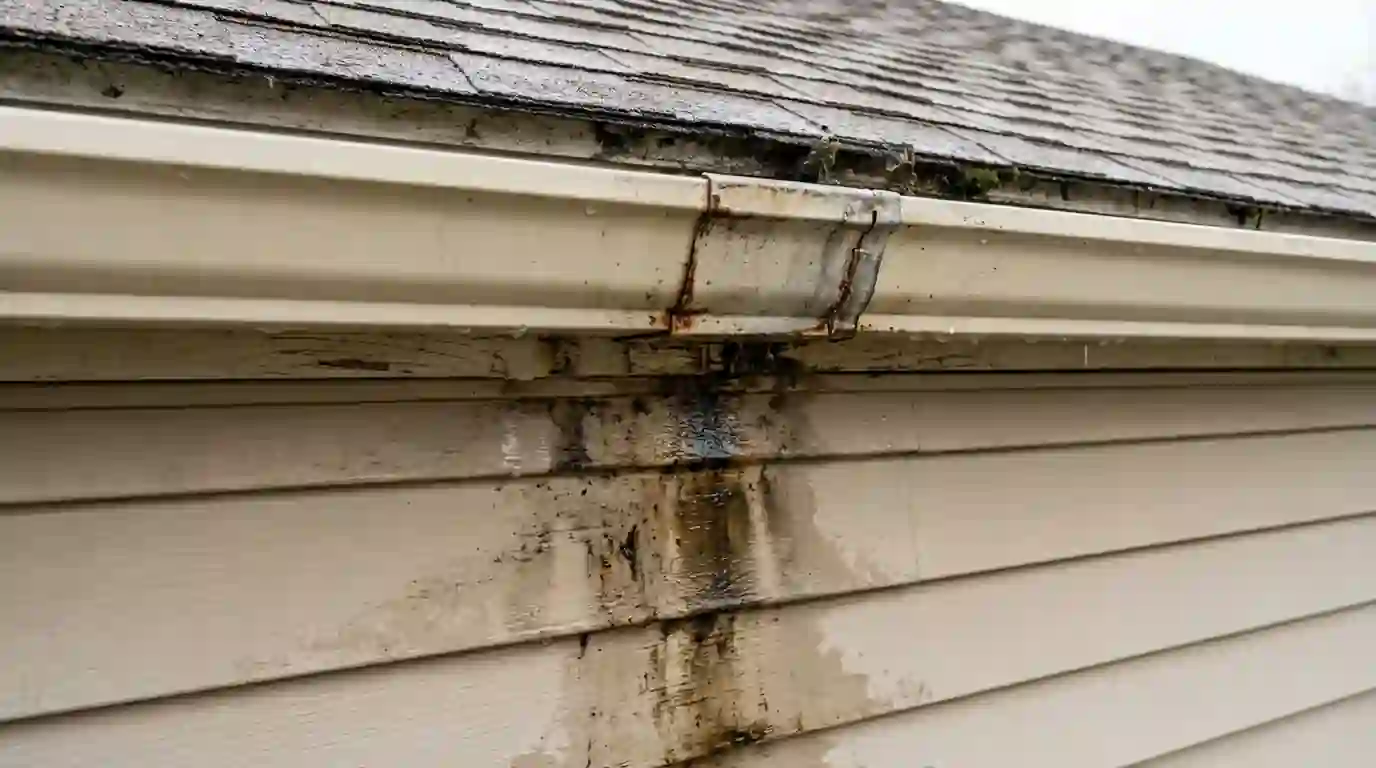
August 4, 2026
Most Valley neighborhoods with an HOA want to see your roof plans before work starts. Here is what architectural review committees usually ask for and how to get through it without losing weeks.
Read the guide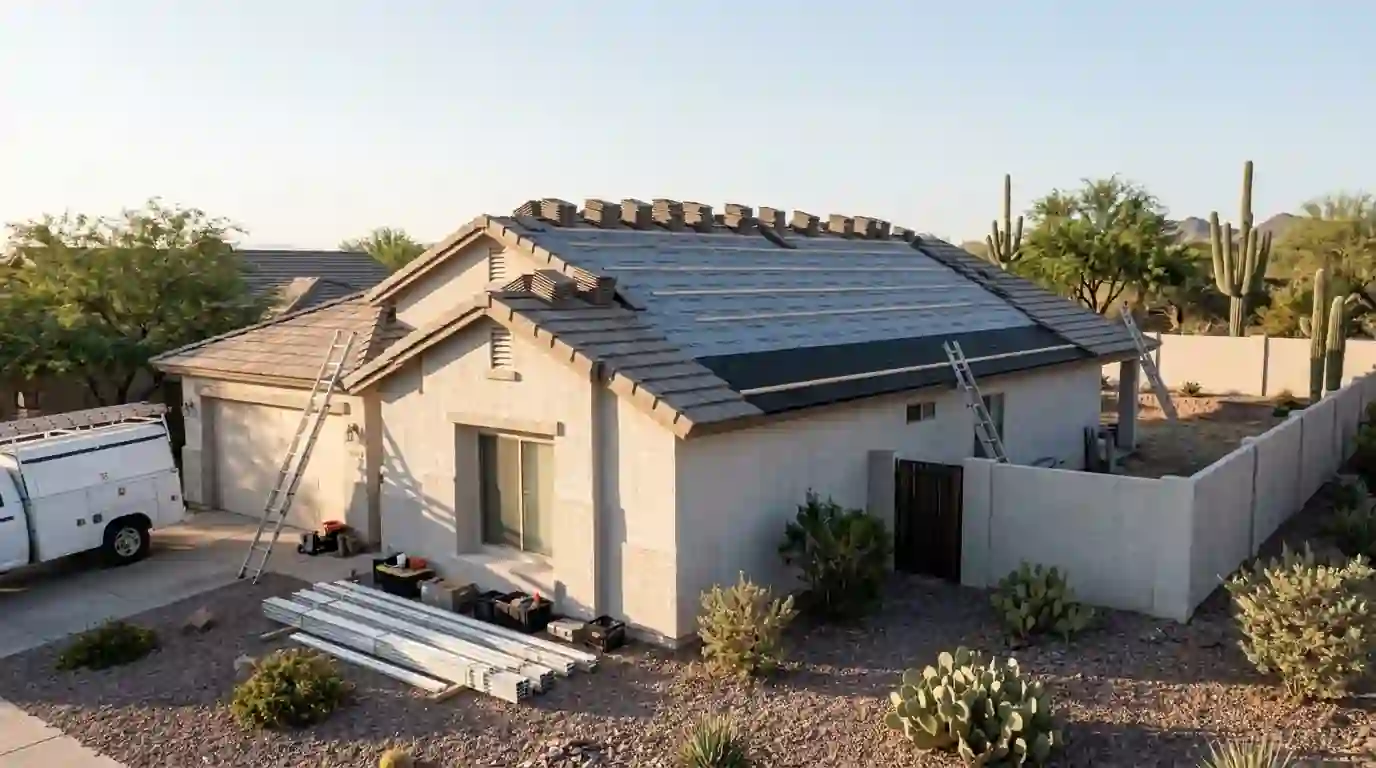
August 18, 2026
Solar panels sit on your roof for decades. If the roof under them has only a few good years left, fixing it first can save you a removal and reinstall bill down the road.
Read the guide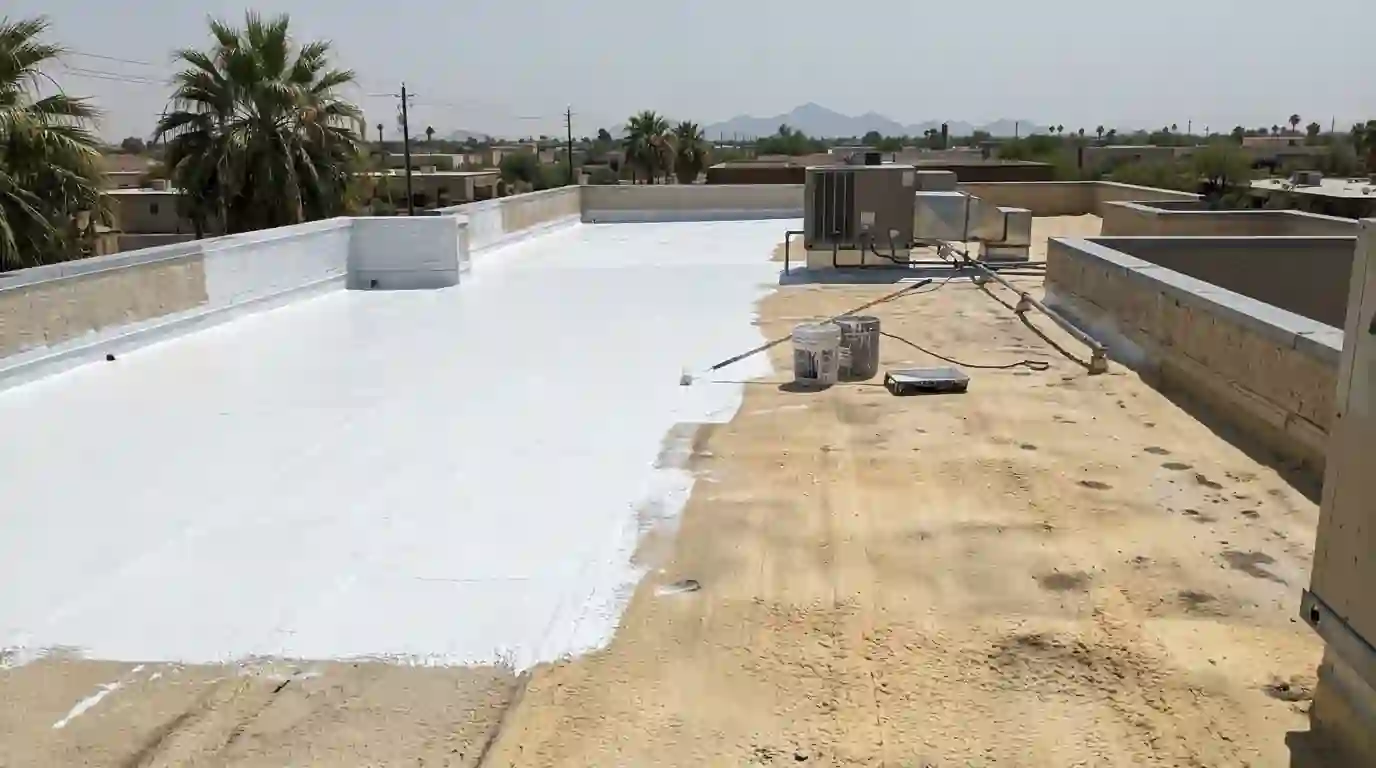
August 25, 2026
A bright white coating can make a flat roof far cooler to the touch in July. Whether it shows up on your power bill depends on your roof, your insulation and your ductwork.
Read the guideCall (602) 878-3594. We answer around the clock and can usually tell you over the phone whether it needs a visit.